
When choosing how to power your smartphone on the road, deciding between a wireless car charger and a traditional wired cable involves balancing raw performance against daily convenience. Wired connections typically deliver faster raw charging speeds and higher energy efficiency, as they transfer power directly through physical copper contacts. In contrast, wireless pads prioritize cabin convenience, offering a clutter-free environment and reducing wear on your device’s charging port. The optimal choice for your vehicle depends on verifying your specific daily commute length, continuous navigation needs, and device compatibility rather than searching for a single universal winner. By evaluating how each technology handles power delivery, heat, and physical integration, you can select the charging method that seamlessly fits your driving routine.
Comparing Charging Speed and Power Delivery
To understand the practical differences in charging speed, you must first look at how power is delivered to your device. Wired charging relies on a direct physical connection between the car’s power source and your phone. This direct path allows for high wattage transfer with minimal resistance. To determine the maximum speed your setup can support, check the rated input and output specifications printed on your phone’s retail box or manufacturer website, and compare them with the labels on your car charger. A wired charger might support fast-charging protocols like USB Power Delivery (PD) or Quick Charge (QC), which can deliver high wattages such as 18W or 30W, depending on your phone’s maximum intake capacity.
On the other hand, a car wireless charger utilizes electromagnetic induction to transfer power across an air gap between coils in the charger and the phone. This process is inherently limited by industry standards. Most standard wireless car chargers deliver power at rates of 5W, 7.5W, 10W, or 15W. Even if a wireless charger is labeled as 15W, the actual power received by your phone’s battery is often lower due to induction limits and alignment.
Products mentioned in this guide
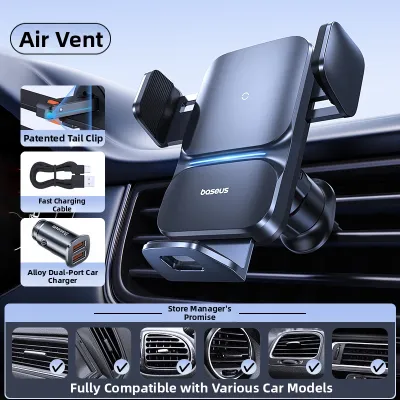
2 Lazada user ratings
The biting force feels a bit on the weaker side.
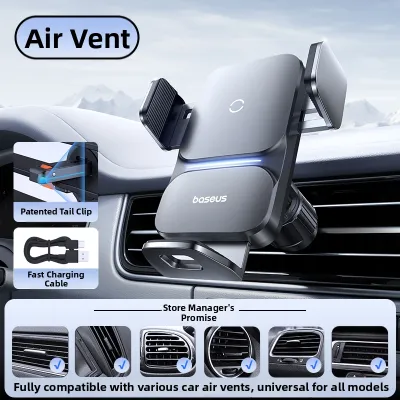
43 Lazada user ratings
Overall rating: Excellent, User experience: Great, Installation: Simple and convenient, Craftsmanship: Very good, Product material: High qua…Read full reviewShow less
Overall rating: Excellent, User experience: Great, Installation: Simple and convenient, Craftsmanship: Very good, Product material: High quality
The product feels really high-quality, the sensors and charging are very responsive, and the suction cup is strong. Definitely worth buying!
I trust Baseus, I trust the brand. Many electronics choose Baseus, they work great and charge really fast.
The stand is really good quality, easy to use, stable and sturdy, and it works well in practice.
Most of the stuff in the car is from Baseus because I trust the quality. I believe in the brand.
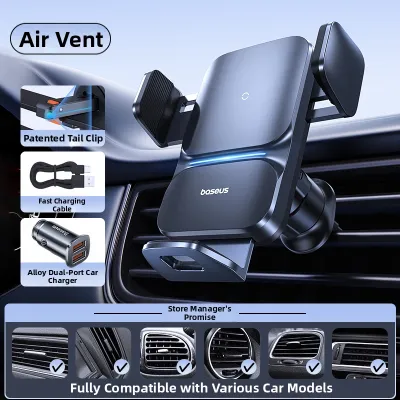
3 Lazada user ratings
Holds the phone steady, doesn't wobble while driving. Charging is a bit slow, but works great overall.
Great design, high charging efficiency, and stable quality.
Installation is really easy and saves time and effort.
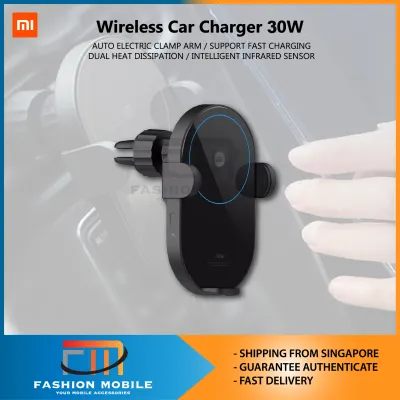
8 Lazada user ratings
Hopefully can fit in nicely in my ride and strong enough on a bumpy ride
Great product. Works perfectly. Cheaper than Xiaomi store.
Very good for cars
6 Lazada user ratings
Thanks. Good quality and very useful

4 Lazada user ratings
Functionality:very good. mechanical button for release serves better than touch sensor in my opinion.
👌Ease of Use:Excellent 🔌Compatibility:Excellent
Prices are valid at publication and may change. Please refer to the product page for the latest price.
Furthermore, wireless charging is highly susceptible to thermal throttling. As the induction process generates heat, your phone’s internal battery management system will automatically reduce the incoming power to protect the battery cells. This means that while a wired connection can sustain its peak charging speed for a longer duration, a wireless charger may quickly scale down its speed, resulting in significantly longer overall charging times during your drive.
Evaluating Energy Efficiency and Heat Management
Energy efficiency is another critical factor where wired and wireless systems diverge. Wired charging is highly efficient, with very little electrical energy lost as waste heat during transmission. Wireless charging, however, suffers from notable energy conversion losses. When electrical energy is converted into a magnetic field and then back into electrical energy, a portion of that power is lost. This lost energy is dissipated directly as heat, warming both the charging pad and the back of your smartphone.

In warm tropical climates, managing this heat is essential for maintaining both charging speed and battery health. High cabin temperatures can exacerbate heat buildup during wireless charging. To mitigate this, inspect your vehicle’s cabin layout and consider choosing a wireless charger that mounts directly onto an air conditioning vent. The cool airflow from the vent can help dissipate heat from the back of the phone, allowing the device to charge more consistently without triggering thermal safety limits.
You should also learn to recognize your phone’s thermal throttling signals, which include a noticeably dim screen, sluggish performance, or a warning message stating that charging is on hold. If your phone becomes excessively hot to the touch, establish a habit of removing it from the wireless charger to let it cool down, thereby preventing premature battery degradation.
Matching Convenience to Your Daily Commute
Your choice of charger should align closely with your daily driving habits and how you interact with your phone. If your typical commute consists of short, frequent trips—such as driving to local shops, dropping off family members, or running quick errands—a car wireless charger offers unmatched convenience. You can simply place your phone onto a motorized or magnetic mount when you get in, and lift it off when you exit, without the repetitive hassle of plugging and unplugging a cable. This hands-free placement also reduces physical wear on your phone’s charging port over time.
Conversely, if your routine involves long drives, highway travel, or continuous use of power-hungry applications like GPS navigation and music streaming, a wired connection is highly advantageous. Running navigation apps with the screen on high brightness drains the battery rapidly. A wired charger provides the stable, high-output power necessary to charge the battery even while the phone is under heavy load.
Additionally, when using wireless charging, you must verify the compatibility of your phone case. Thick cases, those made of metal, or cases with integrated ring holders or credit card slots can block the electromagnetic induction field entirely or cause dangerous heat buildup. For reliable wireless charging, ensure your phone case is thin, non-metallic, and compatible with magnetic alignment systems that keep the charging coils perfectly centered.
Pre-Purchase Compatibility and Safety Checks
Before purchasing any car charging accessory, performing a few compatibility and safety checks can prevent installation issues and safety hazards. First, verify the power output capacity of your vehicle’s built-in USB ports. Many older vehicles feature USB ports designed primarily for data transfer, which may output only 5W of power. This is insufficient to power a fast wireless charging mount or a high-speed wired charger. If your built-in ports are underpowered, you will need to purchase a high-quality adapter that plugs into your vehicle’s 12V auxiliary power outlet (the cigarette lighter socket) to ensure the charger receives adequate input wattage.
Next, carefully plan the mounting location of your charger. Whether you choose a dashboard, windshield, or air vent mount, ensure it does not obstruct your clear line of sight through the front windscreen or side windows. Crucially, verify that the mount and the phone do not interfere with your vehicle’s airbag deployment zones. Consult your vehicle’s owner manual to locate where the front and side curtain airbags deploy.
Finally, perform regular maintenance checks: inspect wired cables for any signs of fraying, cracking, or exposed wires, and ensure that wireless mounts are securely attached to the vent or dashboard according to the manufacturer’s instructions to prevent the device from coming loose during sudden braking or sharp turns.
Decision Framework: Choosing the Right Charger
To finalize your decision, evaluate your priorities against the specific characteristics of each charging method. A wired car charger is the most suitable option if your primary goals are achieving the fastest possible charging speeds, maximizing energy efficiency, and maintaining a stable power supply during long drives with continuous navigation. This setup ensures your phone charges quickly and reliably, even under heavy usage.
On the other hand, a car wireless charger is the preferred choice if you prioritize cabin convenience, want to minimize cable clutter around your center console, and frequently get in and out of your vehicle during short trips. This option provides a seamless, modern mounting experience that keeps your phone visible and charging without the need for physical cables. Before making your purchase, always verify that your phone model, phone case material, and your vehicle’s power outlet specifications are fully compatible with the charger you select.
Frequently Asked Questions (FAQ)
Does leaving a wireless car charger plugged in drain the car battery?
Whether a plugged-in wireless charger drains your car battery depends entirely on your vehicle’s electrical design. In many modern vehicles, the 12V auxiliary power outlets and USB ports automatically shut off when the ignition is turned off or shortly after the vehicle is locked. However, some vehicles keep these ports constantly powered. If your vehicle’s ports remain active, a wireless charger left plugged in will continue to draw a small amount of standby power. To verify your vehicle’s behavior, check if the charger’s LED indicator light remains on after you turn off the engine and lock the car, and consult your vehicle’s owner manual for specific details on standby power draw.
Can I use a wired and wireless car charger at the same time?
While you can physically place your phone on a wireless charging pad while a charging cable is plugged into its port, modern smartphones are engineered to prioritize only one power source at a time. Typically, the phone’s internal battery management system will prioritize the wired connection because it offers a more stable and direct power flow. However, attempting to use both methods simultaneously is not recommended. It can cause the phone’s internal circuits to generate excess heat as the device manages multiple connections, potentially leading to thermal throttling or accelerated battery wear. Always refer to your phone manufacturer’s official guidelines and stick to one charging method at a time.

Community discussion
Share your experience or ask a question. Comments are reviewed before publication.