
Choosing the right portable tyre inflator requires matching your vehicle’s specific tyre volume and pressure needs with the compressor’s output capabilities. While compact, battery-powered air compressors offer excellent convenience, selecting the ideal model depends on whether you are maintaining a high-volume SUV tyre, a standard sedan tyre, or a high-pressure bicycle tyre. By verifying your vehicle’s specifications and comparing them against the pump’s rated performance, you can ensure quick, safe, and reliable inflation during routine maintenance or roadside emergencies.
Identify Your Vehicle's Tire Size and Pressure Requirements
Before evaluating any portable air compressor, you must determine the exact tyre specifications and pressure requirements of your vehicle. This information is crucial because using an underpowered pump on a large tyre can lead to overheating, while using an incorrect setting on a small tyre can cause over-inflation.
To find your vehicle’s recommended tyre pressure, locate the manufacturer’s placard, which is typically found on the driver’s side door jamb, inside the fuel filler flap, or within the owner’s manual. This placard lists the recommended cold inflation pressure, usually measured in pounds per square inch (PSI) or Bar. It is important to note that cold pressure refers to tyres that have been stationary for at least three hours or driven less than 1.6 kilometres, as driving heats up the air inside the tyres and temporarily increases the pressure reading.
Products mentioned in this guide
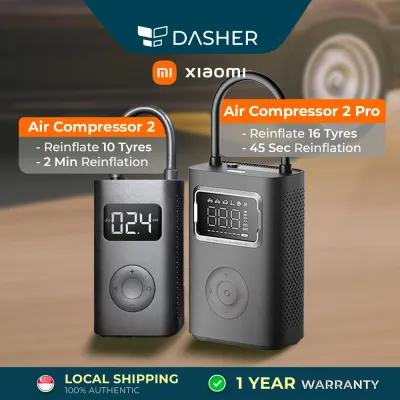
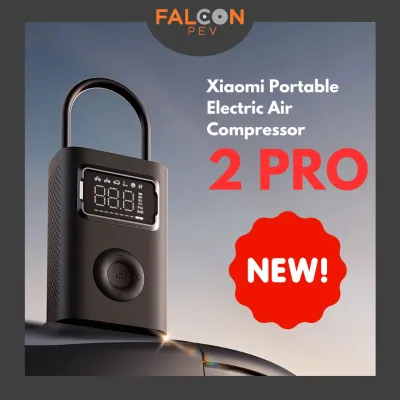
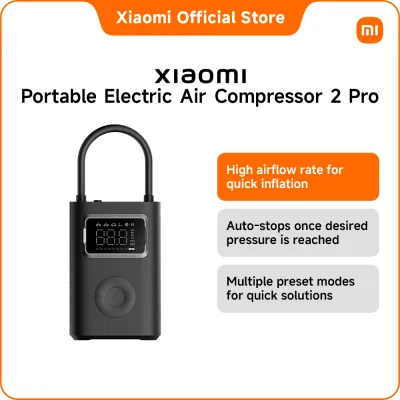
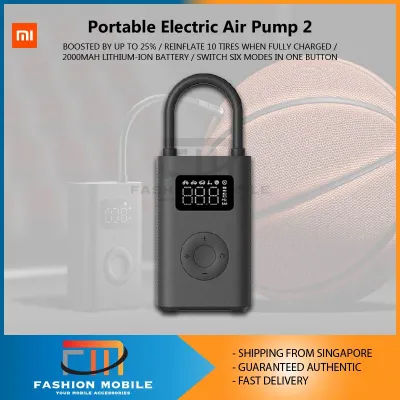
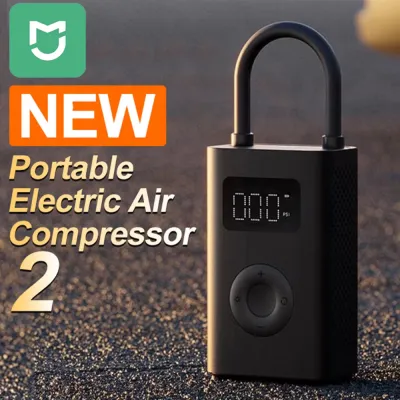
![[2025] Xiaomi Pump 2 MiJia Portable Handheld Electronic Air inflator/Pump Suitable For Car Motorcycle EBike Scooter Instock](https://img.lazcdn.com/g/p/3e082dd3fde1bc260eb18bfa0cd19ce7.jpg_400x400q80.jpg_.webp)
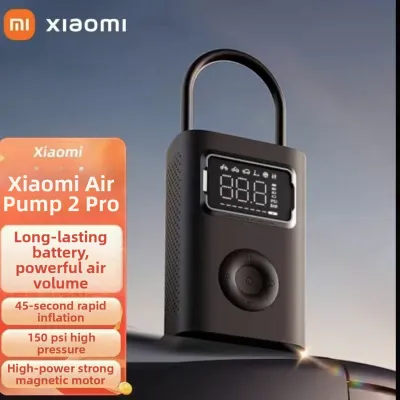
Prices are valid at publication and may change. Please refer to the product page for the latest price.
Do not confuse the manufacturer’s recommended pressure with the maximum inflation pressure molded onto the tyre sidewall. The sidewall figure represents the absolute maximum pressure the tyre can safely hold under maximum load, not the optimal pressure for daily driving. Inflating your tyres to this maximum limit can result in a harsh ride, reduced traction, accelerated tread wear, and an increased risk of tyre damage from road debris.
Next, identify the valve type used on your wheels. The vast majority of passenger cars, motorcycles, and utility vehicles use Schrader valves, which feature a wide stem with a spring-loaded internal pin. Many high-performance road bicycles, however, use Presta valves, which are narrower and require a locknut to be unscrewed before inflation. Ensure that the tyre pump kit you select includes the necessary brass adapters or a multi-valve chuck to connect securely to your specific valve stems without air leakage.
Finally, consider the physical volume of air inside your tyres. A standard sedan tyre contains a moderate volume of air, whereas a large SUV or light truck tyre contains a significantly larger volume. Even if both tyres require the same target pressure of 35 PSI, the SUV tyre requires a much greater mass of air to reach that target. This volume difference directly dictates the inflation time and the thermal load placed on the portable compressor’s motor.
Key Specifications to Verify on Xiaomi Air Compressors
When shopping for a portable compressor, you must verify several key specifications on the product packaging or the official store listing to ensure compatibility with your vehicle. Because portable pumps rely on compact internal motors and lithium-ion batteries, understanding these specifications helps prevent purchasing an underpowered unit.

First, check the maximum pressure rating of the compressor, which is commonly listed up to 150 PSI (or approximately 10.3 Bar). While this maximum limit is far higher than the 30 to 40 PSI required for most passenger cars, a higher maximum rating generally indicates a more robust internal piston assembly. However, you should also look for the airflow rate, typically measured in litres per minute (L/min). A higher airflow rate means the pump can move a larger volume of air quickly, reducing the time you spend waiting by the roadside.
Second, evaluate the battery capacity and the manufacturer’s stated duty cycle. Portable compressors are powered by internal lithium-ion batteries, with capacities often specified in milliampere-hours (mAh) or watt-hours (Wh). Rather than focusing solely on the raw battery capacity, look for the manufacturer’s performance estimates, such as how many empty tyres the unit can fully inflate, or how many top-ups it can perform on a single charge. Keep in mind that these estimates are established under controlled laboratory conditions, so real-world performance may be lower in cold weather or when inflating larger tyres.
Third, examine the physical design of the inflation hose and the connection mechanism. A high-quality, braided high-pressure hose is essential for durability and heat resistance. Some models feature a convenient storage slot where inserting the hose automatically powers down the unit, preventing accidental activation in your glovebox. Additionally, verify whether the pump uses a screw-on connector or a quick-release thumb-lock chuck; screw-on connectors provide a more secure, leak-free seal but can release a small amount of air when unscrewed, while quick-release chucks are faster to attach and detach.
Lastly, look for intelligent digital features such as preset inflation modes and an automatic shut-off function. A clear digital display that shows both the real-time pressure and the target pressure is invaluable for accurate inflation. The automatic shut-off feature ensures that the pump stops operating the moment it reaches your preset target, preventing dangerous over-inflation and allowing you to step back safely while the pump is running.
Match Pump Capabilities to Your Vehicle Type
To select the right pump tier, you must match the compressor’s capabilities to your specific vehicle category and typical usage patterns. Different vehicles place distinct demands on a portable pump’s motor, battery, and thermal management systems.
For standard sedans, hatchbacks, and compact city cars, a standard compact portable pump is highly suitable. These vehicles require moderate tyre pressures and standard air volumes, meaning a basic model can easily handle routine pressure checks and occasional top-ups. The primary advantages of a compact pump for these vehicles are its small footprint, which allows it to fit easily into a glovebox or door pocket, and its lightweight design. A standard battery capacity is more than sufficient to maintain all four tyres on a single charge, making it an excellent choice for daily commuters.
For larger SUVs, crossovers, and light commercial trucks, you must prioritize air volume delivery and thermal endurance. Because of the large volume of air required to inflate these tyres, a small, entry-level pump may struggle, running continuously for too long and potentially overheating before completing the job. For these larger vehicles, look for a high-capacity compressor model that features a larger cylinder diameter, enhanced heat dissipation vents, and a more robust battery configuration. Ensure the specifications confirm that the pump can run continuously for at least 15 to 20 minutes to accommodate the high volume demands of larger tyres.
For motorcycles, scooters, and bicycles, portability and precise pressure control are the most critical factors. Motorcycle tyres require moderate volume but precise pressure maintenance, while road bicycle tyres require exceptionally high pressures but very low volume. A lightweight, pocket-sized portable pump is ideal for these riders, as it can be carried easily in a backpack, pannier, or frame bag. Ensure the pump allows for fine-grained manual pressure adjustments, as small-volume tyres can over-inflate rapidly if the pump’s output is too high or if the automatic shut-off is not highly sensitive.
Safety Boundaries and Maintenance for Portable Pumps
Operating a portable air compressor safely requires adhering to specific operational limits and performing regular maintenance. Because these devices compress air mechanically, they generate substantial heat and rely on sensitive internal electronics that must be protected from environmental extremes.
Always respect the manufacturer’s maximum continuous run time to prevent the motor from overheating. Most portable compressors are designed to run for a maximum of 5 to 10 minutes before requiring a cooling-off period of 10 to 15 minutes. Running the pump continuously beyond these limits can melt internal seals, degrade the piston assembly, and permanently damage the motor. If the pump body or the hose connector feels excessively hot to the touch, turn off the unit immediately and allow it to cool completely before resuming operation.
Proper battery storage is critical, especially in Singapore’s hot and humid climate. The interior of a closed vehicle parked in direct sunlight can quickly reach temperatures exceeding 60°C, which is highly damaging to lithium-ion batteries. Prolonged exposure to extreme heat accelerates battery degradation, reduces the overall lifespan of the cells, and in extreme cases, can present a thermal runaway hazard. To protect the battery, store the portable pump in a shaded, cooler part of the vehicle, such as under a seat or in a dedicated boot organizer, and never leave it exposed on the dashboard or parcel shelf.
Perform routine visual inspections of the pump and its accessories before each use. Check the high-pressure hose for any signs of cracking, bulging, or wear, particularly near the joints where the hose connects to the pump body. Inspect the threaded connectors and rubber seals inside the valve adapters to ensure they are clean and free of debris, as a damaged seal will cause air leaks and inaccurate pressure readings. Additionally, keep the air intake and exhaust vents on the pump housing clear of dust and lint to ensure the internal cooling fan can operate at maximum efficiency.
Finally, maintain the internal battery by charging it periodically, even if the pump has not been used. Lithium-ion batteries naturally self-discharge over time, and storing a battery at zero charge for an extended period can lead to deep discharge damage, rendering the unit unable to hold a charge. To ensure the pump is ready for an emergency, check the battery level every three to six months and recharge it to approximately 50% to 80% capacity for long-term storage.
Frequently Asked Questions (FAQ)
Can a portable Xiaomi pump inflate a completely flat car tire?
Yes, a portable pump can inflate a completely flat car tyre, but you must manage the operational load carefully to prevent damage to the unit. Inflating a tyre from zero PSI to its recommended operating pressure requires a continuous run time that may approach or exceed the pump’s thermal limit. Refer to your specific model’s manual to verify its maximum continuous operating time. If the inflation process takes longer than the recommended limit, pause the pump midway to let the motor and battery cool down before resuming.
Why does the pump stop before reaching the target pressure?
Premature shutdown typically occurs due to three main factors: thermal protection, low battery voltage, or connection issues. If the internal temperature sensor detects overheating, the unit will shut down automatically to protect the motor. Additionally, a battery with low charge may experience a sudden voltage drop under the heavy load of compression, triggering a low-power shutdown. Finally, ensure the hose is securely connected; a loose connection can cause air leaks or false pressure readings, prompting the digital sensor to stop the pump prematurely.

Community discussion
Share your experience or ask a question. Comments are reviewed before publication.