
Selecting the right portable air pump requires matching the device’s output capabilities to your vehicle’s specific tire dimensions and pressure requirements. A pump that lacks adequate pressure range or flow rate will struggle to inflate larger tires or take an impractically long time, while an over-specified unit may be unnecessarily bulky. To make an informed choice, you must understand how your vehicle’s specific tire size and pressure requirements interact with a pump’s technical specifications, power source, and safety features.
Proper tire inflation directly impacts your vehicle’s handling, braking distance, fuel economy, and tire lifespan. By establishing your vehicle’s baseline needs and comparing them against verifiable product specifications, you can select a reliable tool that ensures safety and convenience during routine maintenance or roadside emergencies.
Understanding Your Tire's Pressure and Size Requirements
To establish a baseline for your search, you must first locate your vehicle’s recommended cold tire inflation pressure. This information is typically found on the tire placard, which is a sticker located on the driver’s side door jamb (B-pillar), inside the fuel filler flap, or in the owner’s manual. This placard lists the precise pressure requirements for both front and rear tires under normal load conditions.
Products mentioned in this guide
![[SG Stock] Air Pump Car Inflator Compressor Portable Ball Bike Bicycle Rechargeable Basketball Soccer Volleyball Tyre Wheel Tire 12V LED Fast Auto Shut-off Emergency](https://img.lazcdn.com/g/p/cc7d92c566c3860fbbfa1d535cc6f3bb.jpg_400x400q80.jpg_.webp)
![[SG Seller]Portable Car Electric Inflator portable air pump car electric pump wireless air pump car electric pump汽车充气泵](https://img.lazcdn.com/g/p/11d7062f8a657612c19945cd3cdafcdb.jpg_400x400q80.jpg_.webp)
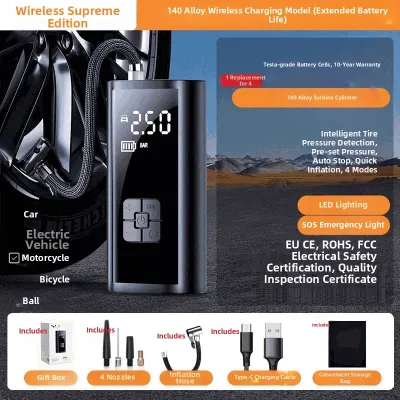
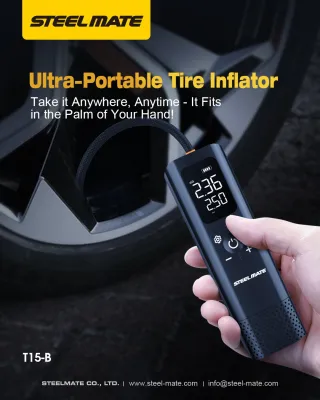
Prices are valid at publication and may change. Please refer to the product page for the latest price.
It is critical to understand that “cold tire pressure” refers to measurements taken before the vehicle has been driven, or after it has been parked for at least three hours. Driving even a short distance generates friction, heating the air inside the tires and causing it to expand, which results in an artificially high pressure reading. Adjusting your tire pressure when the tires are hot can lead to under-inflation once they cool down.
Never use the maximum PSI printed on the tire sidewall as your inflation target. This number represents the maximum pressure the tire can safely hold under its maximum load capacity, not the optimal pressure for your specific vehicle. Over-inflating to this maximum limit reduces the tire’s contact patch with the road, leading to a harsh ride, accelerated center tread wear, and compromised traction, especially on wet roads.
Next, you need to decode your tire size, which is printed on the sidewall in a standard format such as 215/55 R17. The first number represents the tire’s width in millimeters, the second is the aspect ratio (the height of the sidewall as a percentage of the width), and the final number is the wheel rim diameter in inches. These dimensions determine the overall air volume inside the tire.
Tire volume is the primary factor that dictates how much work an air pump must perform. A wide tire with a tall sidewall, such as those found on SUVs or pickup trucks, holds a significantly larger volume of air than a low-profile tire on a compact hatchback, even if both require the same operating pressure of 32 PSI. Consequently, larger tires require a pump with a higher flow rate to achieve reasonable inflation times.
Key Specifications to Check on a Portable Air Pump
When evaluating portable air pumps, it is essential to distinguish between maximum PSI output and continuous working pressure. Many budget-friendly pumps advertise high peak ratings, such as 120 PSI or 150 PSI, on their packaging. However, this peak rating represents the absolute limit the pump can reach before stalling, rather than what it can sustain during normal operation. For passenger cars, ensure the pump’s continuous working pressure rating comfortably exceeds your tire’s recommended cold pressure.

Flow rate is another critical specification, typically measured in Liters per Minute (L/min) or Cubic Feet per Minute (CFM). This metric indicates the volume of air the pump can deliver over a set period. A pump with a low flow rate of 15 L/min will take a long time to inflate a standard tire from flat, whereas a pump rated at 35 L/min or higher will complete the task much faster. If you have larger tires, a low flow rate can cause the pump to run continuously for too long, leading to overheating.
Power source options also play a major role in the pump’s usability and performance. Pumps powered by a 12V DC plug connect directly to your vehicle’s accessory socket (cigarette lighter). This is a highly reliable power source because it draws directly from the car’s electrical system. However, you must check your vehicle’s owner’s manual to verify the maximum amperage rating of the 12V socket (usually 10A or 15A). If the pump draws more current than the socket is rated for, it will blow the vehicle’s fuse. Always keep the vehicle’s engine running while operating a 12V pump to prevent draining the car battery.
Rechargeable lithium-battery-powered pumps offer cordless convenience. They are excellent for quick pressure top-offs and are easy to maneuver around the car without dealing with tangled cords. However, their run time is limited by battery capacity, and they may struggle to inflate multiple flat tires on a single charge. Additionally, storing lithium batteries in a hot car trunk for extended periods can accelerate battery degradation and pose safety risks, so regular maintenance and storage checks are necessary.
Dual-power models or those with USB-C charging inputs provide added flexibility, allowing you to charge the unit at home or use the vehicle’s electrical system when the battery is low.
Finally, pay close attention to the pump’s duty cycle and thermal management. The duty cycle is the percentage of time a pump can operate continuously before it must be turned off to cool down. For example, a pump with a 10-minute duty cycle requires a cool-down period after 10 minutes of continuous running. Exceeding this limit can cause the motor to overheat, melting internal seals and permanently damaging the unit. Look for pumps with built-in thermal overload protection, which automatically shuts the motor off if it reaches unsafe temperatures.
Matching Pump Capacity to Different Vehicle Types
To narrow down your choices, you can match the pump’s capacity to your primary vehicle class. Compact cars, hatchbacks, and small crossovers typically use tires with moderate volume and standard pressure requirements, usually between 30 and 33 PSI. For these vehicles, a standard single-cylinder 12V pump or a compact cordless battery-powered pump with a flow rate of 15 to 25 L/min is usually sufficient. These units are lightweight, easy to store in a small trunk, and can top off a tire in a few minutes.
Large SUVs, pickup trucks, and off-road vehicles present a much greater demand. These vehicles feature high-volume tires that require a substantial amount of air to inflate. A small, low-flow pump will run hot and may exceed its duty cycle before fully inflating even a single flat tire. For these larger vehicles, a heavy-duty pump with a flow rate of 35 to 50 L/min is recommended. Many of these high-output pumps utilize dual-cylinder designs and must be connected directly to the vehicle’s battery terminals using alligator clips, as their current draw exceeds the capacity of standard cabin 12V sockets.
If you plan to use your portable air pump for secondary applications, such as inflating motorcycle, bicycle, or sports equipment tires, versatility is key. Bicycles, particularly road bikes, require very high pressures (often 80 to 110 PSI) but extremely low air volume. A pump designed for high-pressure, low-flow applications is ideal here. Ensure the pump comes with a variety of nozzle adapters, including Schrader-to-Presta valve adapters for bicycles and needle adapters for sports balls. Precise low-pressure control is also important to avoid over-inflating delicate items like sports equipment or motorcycle tires.
Essential Features for Safety and Convenience
Several supplementary features can greatly improve the safety, accuracy, and convenience of a portable air pump during roadside or garage use. An auto-shutoff (preset pressure) function allows you to set your target tire pressure on the pump’s interface before starting. The pump will automatically stop running once it detects that the target pressure has been reached. This prevents accidental over-inflation and allows you to monitor the process without standing directly over the pump. However, built-in pressure sensors can have calibration tolerances, so it is a critical safety practice to verify the final pressure using a dedicated, high-quality standalone tire pressure gauge.
The choice between digital and analog displays also affects usability. Digital displays are highly readable, especially in low-light environments like underground parking garages or roadside emergencies at night. They typically display pressure in clear, numerical increments (such as 0.5 PSI steps) and allow you to switch between different units of measurement (PSI, Bar, kPa). Analog dial gauges are rugged and do not require battery power to display readings, but they can be difficult to read accurately if the scale is small or compressed.
High-pressure inflation generates significant heat, making thermal management a key safety consideration. Pumps with metal cylinder housings and integrated cooling fins dissipate heat much more effectively than those enclosed entirely in plastic. Look for models with a protective heat shield or insulated handle areas to prevent accidental burns when disconnecting the hose after extended use.
Practical design elements can also make a significant difference in an emergency. An integrated LED work light is an invaluable safety feature for nighttime roadside use, illuminating the tire valve stem and making you more visible to passing traffic. Consider how the air hose and power cords are stored; built-in storage compartments help prevent damage to cords and keep the unit tidy. The type of air chuck (the connector that attaches to the tire valve) also matters. Screw-on brass chucks provide a secure, leak-free connection but can become very hot during use, while quick-release thumb-lock chucks are faster to attach and detach but may wear out over time.
Building Your Shortlist: What to Verify Before Buying
Before finalizing your purchase, there are several critical verification steps to ensure the pump is compatible, safe, and reliable. First, cross-reference the product’s stated maximum tire size compatibility with your vehicle’s actual tire dimensions. Many manufacturers explicitly list the maximum tire size or vehicle class the pump is designed to handle (e.g., “suitable for tires up to 245/70 R16” or “not intended for commercial truck tires”). Choosing a pump that is rated below your actual tire size will result in poor performance and potential motor failure.
Next, verify that the combined length of the power cord and the air hose is sufficient to comfortably reach all four tires from a single power outlet location. Measure your vehicle’s wheelbase and overall length. For standard passenger cars, a minimum combined reach of 4 meters is recommended to avoid stretching or straining the cables. If you are using a pump that connects directly to the battery terminals under the hood, ensure the power cord is long enough to reach the rear tires of your vehicle.
It is also wise to check the warranty terms, return policies, and the availability of replacement parts or customer support from the manufacturer or authorized online retailers. A standard 12-month warranty provides peace of mind, and the availability of replacement parts, such as internal fuses or air hoses, can extend the lifespan of your pump.
Finally, analyze user reviews on ecommerce platforms, focusing on feedback regarding long-term pressure accuracy, the durability of the air chuck, and real-world inflation speeds. Look past the overall star rating and search for detailed comments about how hot the unit gets during a full inflation cycle. Avoid models with frequent reports of melted power plugs, broken plastic gears, or significant discrepancies between the pump’s digital reading and independent tire gauges.
Frequently Asked Questions (FAQ)
Can I use a standard portable air pump for run-flat tires?
Yes, you can use a standard portable air pump to inflate run-flat tires, as they use standard Schrader valves. However, run-flat tires have extremely stiff, reinforced sidewalls designed to support the vehicle’s weight when pressure is lost. Because of this structural rigidity, inflating a run-flat tire from completely flat can require more effort and time from the pump. Always check the pump’s manual to ensure it is rated for continuous operation under high resistance. Crucially, if a run-flat tire has been driven on while completely uninflated, do not simply pump it back up and continue driving. Driving on a deflated run-flat tire can cause severe, invisible internal structural damage. You must have the tire inspected by a qualified tire professional at a workshop to determine if it is safe to reuse or if it must be replaced.
How often should I check and adjust my tire pressure?
You should check and adjust your tire pressure at least once a month, as well as before embarking on any long-distance road trips. Always measure the pressure when the tires are cold—meaning the vehicle has been parked for at least three hours or driven less than 1.6 kilometers. Ambient temperature changes significantly affect tire pressure; for every 10 degrees Celsius drop or rise in temperature, tire pressure can fluctuate by approximately 1 to 2 PSI. In tropical environments like Singapore, where temperatures remain consistently warm but can spike under direct sunlight or drop during heavy rainstorms, regular monthly checks ensure your tires maintain optimal contact with the road, maximizing fuel efficiency and tread life.
Does a higher maximum PSI rating mean faster inflation?
No, a higher maximum PSI rating does not mean a pump will inflate your tires faster. The maximum PSI rating indicates the peak pressure the pump is capable of generating before its motor stalls or fails, which is important for high-pressure, low-volume applications like road bicycle tires. Inflation speed, however, is determined by the pump’s flow rate, measured in liters per minute (L/min) or cubic feet per minute (CFM). A portable air pump with a lower maximum rating of 80 PSI but a high flow rate of 35 L/min will inflate a standard passenger car tire significantly faster than a compact pump rated at 150 PSI that only delivers 15 L/min. When choosing a pump for passenger cars, prioritize a higher flow rate over an excessively high maximum PSI.
Community discussion
Share your experience or ask a question. Comments are reviewed before publication.