
Selecting the correct Steelmate Tire Pressure Monitoring System (TPMS) for your vehicle in Singapore requires a clear understanding of your vehicle’s specifications, your daily driving habits, and the physical characteristics of your wheels. With Singapore’s tropical climate, characterized by high ambient temperatures and sudden heavy downpours, maintaining optimal tire pressure is critical for safety, fuel efficiency, and tire longevity. Whether you navigate tight multi-storey car parks daily or drive a commercial vehicle transporting goods across the island, a reliable TPMS provides real-time alerts that prevent unexpected tire failures. Before purchasing any aftermarket system, verifying compatibility with your specific car make, wheel valve types, and existing onboard electronics is the essential first step to ensure accurate monitoring and safe operation.
Understanding Steelmate TPMS Sensor and Display Options
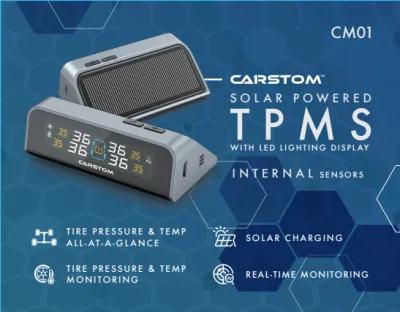
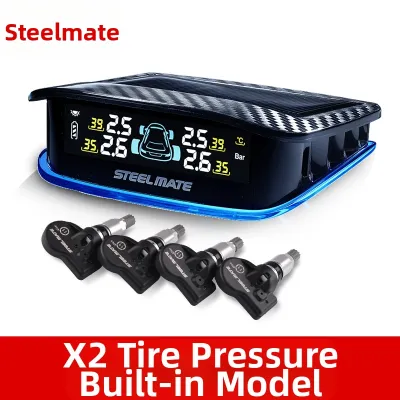
When exploring the Steelmate product range, the first major decision is choosing between internal and external sensors. Internal sensors are installed inside the tire cavity, replacing the original rubber or metal valve stems. This positioning offers excellent protection against environmental hazards, road debris, and opportunistic theft, while also delivering highly stable temperature and pressure readings. However, installing internal sensors requires professional tire shop equipment to dismount the tires, fit the sensors, and perform precise wheel balancing.
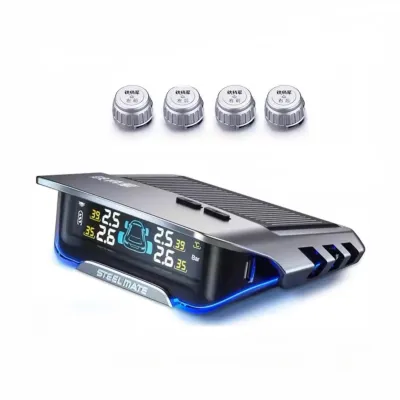
External sensors, on the other hand, screw directly onto your existing valve stems in place of the standard valve caps. This design allows for straightforward, do-it-yourself installation and simple battery replacements without visiting a workshop. The trade-offs include exposure to Singapore’s highly humid air and road grime, a slightly higher profile that requires checking clearance against alloy wheel spokes, and the necessity of using anti-theft lock nuts to secure them.
Products mentioned in this guide
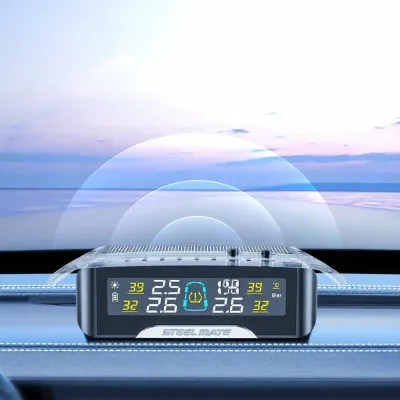
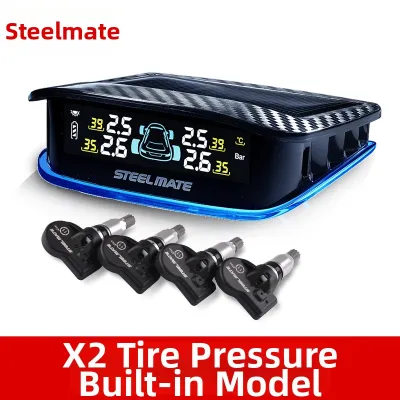
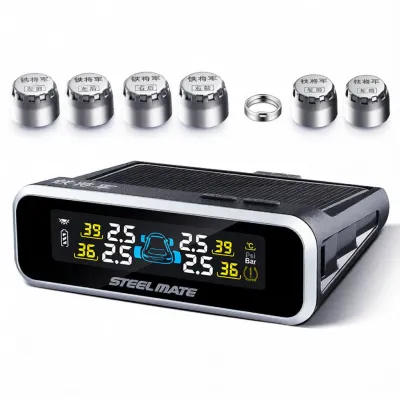
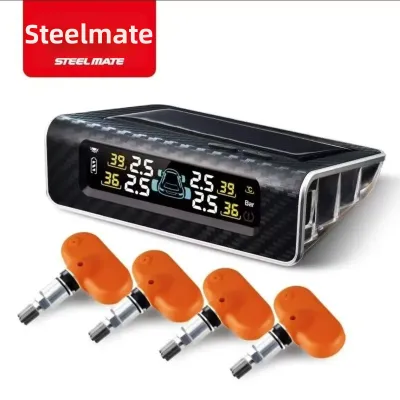
Prices are valid at publication and may change. Please refer to the product page for the latest price.
The next consideration is how the receiver display is powered. Solar-powered dashboard displays are highly popular because they eliminate unsightly wires and keep your 12V accessory socket free. These units use a built-in solar panel to trickle-charge an internal battery during daytime driving. For drivers who frequently park in covered HDB multi-storey car parks, basement shopping mall lots, or sheltered office garages, a display with an alternative USB charging port is essential to maintain power during extended periods without direct sunlight. Alternatively, cigarette lighter plug-in displays or hardwired receivers offer continuous, reliable power directly from the vehicle’s electrical system, though they require dedicated space or professional routing of wires.
Signal transmission range is another critical factor, particularly for larger passenger vehicles or those equipped with heavy aftermarket window films. Many Singapore drivers install high-performance solar control window tints to combat tropical heat, but some metallic or ceramic films can inadvertently degrade radio frequency signals. If you drive a long-wheelbase vehicle or experience intermittent sensor dropouts, incorporating a signal repeater or booster can ensure a stable, uninterrupted connection between the wheel sensors and the dashboard receiver.
Matching TPMS Specifications to Your Vehicle Type
Different vehicle categories demand distinct TPMS configurations to handle varying tire counts, load capacities, and operating pressures. Selecting a system that matches your vehicle’s specific footprint ensures that the sensors operate within their designed pressure thresholds and transmit signals reliably. Before purchasing any kit, always locate your vehicle’s tire placard—typically found on the driver’s door pillar or inside the fuel filler cap—to verify the manufacturer’s recommended cold inflation pressures and ensure the aftermarket TPMS can accommodate those exact specifications.

Sedans and Hatchbacks
For standard passenger cars like sedans and hatchbacks, a classic four-sensor TPMS kit paired with a compact solar-powered dashboard display is generally the most practical choice. These vehicles typically operate at moderate tire pressures, usually ranging between 30 and 36 PSI (approximately 2.1 to 2.5 bar), which falls well within the standard operating limits of entry-level aftermarket sensors.
When opting for external sensors on a sedan or hatchback, it is vital to check the physical clearance between the installed sensor and the wheel assembly. Some compact cars feature tight clearances between the valve stem and the brake calipers or suspension components, especially on aftermarket alloy wheels. Ensuring that the external sensor does not protrude past the outer edge of the tire or contact any stationary parts during wheel rotation is crucial to prevent catastrophic valve stem failure.
SUVs, MPVs, and Crossovers
Larger passenger vehicles such as sport utility vehicles (SUVs) and multi-purpose vehicles (MPVs) often carry heavier passenger loads and operate at higher tire pressures, particularly when fully loaded for family outings. For these vehicles, you must select a TPMS kit that supports a wider pressure monitoring range and allows you to customize the high and low-pressure warning thresholds.
Because SUVs and MPVs have longer wheelbases and larger cabin volumes, the physical distance between the rear wheels and the dashboard-mounted display is significantly greater than in a standard hatchback. Additionally, the presence of luggage, rear air-conditioning units, and extensive passenger seating can create physical barriers for wireless signals. When configuring a system for a large MPV, verifying signal strength during a test drive or opting for a model compatible with a signal repeater will help prevent frustrating signal dropouts from the rear axle.
Commercial Vehicles and Light Trucks
Commercial vans, light trucks, and goods vehicles operating in Singapore face demanding driving cycles, heavy payloads, and frequent encounters with rough industrial roads. These vehicles often utilize dual rear wheel configurations (duallys) or have more than four wheels, requiring specialized six-wheel or eight-wheel TPMS kits to monitor every contact patch on the road.
Commercial tires operate at significantly higher inflation pressures than passenger cars, often exceeding 60 PSI (4.1 bar) or even 100 PSI (6.9 bar) depending on the load rating. Standard passenger car TPMS sensors will fail or trigger constant false alarms under these conditions, making it mandatory to verify that the selected Steelmate kit is explicitly rated for high-pressure commercial applications.
Furthermore, external sensors installed on commercial vehicles are highly vulnerable to damage from road debris, curb strikes, and impacts at tight loading docks. If your commercial vehicle frequently navigates industrial estates, choosing heavy-duty internal sensors or robust external sensors with reinforced brass threads and protective metal housings is highly recommended to ensure long-term durability.
Pre-Purchase Compatibility and Safety Checks
Before finalizing your purchase of a Steelmate TPMS, you must conduct several compatibility and safety checks to prevent system conflicts and mechanical issues. First, determine if your vehicle is already equipped with a factory-installed TPMS. Many modern vehicles utilize indirect TPMS, which calculates tire pressure changes using the anti-lock braking system (ABS) wheel speed sensors rather than physical pressure sensors. Adding an aftermarket direct TPMS to these vehicles is generally straightforward and provides highly accurate, real-time pressure and temperature readouts without interfering with the factory system. However, if your car has a factory direct TPMS with sensors inside the wheels, installing an aftermarket system may lead to redundant displays or dashboard warning lights that cannot be easily cleared.
Second, inspect your vehicle’s valve stems. If you plan to install internal TPMS sensors, you must ensure they are compatible with your wheel rims. Internal sensors typically come with either rubber snap-in valves or metal clamp-in valves. High-speed driving and centrifugal forces place significant stress on valve stems; therefore, matching the sensor’s valve design to your rim’s valve hole diameter is critical to prevent air leaks or sudden stem failure.
Finally, consult your vehicle’s owner’s manual to identify the recommended cold tire inflation pressures for various loading conditions. This information is essential for programming the high and low-pressure alarm thresholds on your new TPMS display. Setting these thresholds correctly ensures you receive timely warnings for slow leaks or over-inflation before they escalate into dangerous driving situations.
Installation Boundaries and Sensor Maintenance
Proper installation and ongoing maintenance are vital to the longevity and accuracy of your tire pressure monitoring system. For internal TPMS sensors, professional installation at a qualified tire shop is highly recommended. The process involves lifting the vehicle, deflating the tires, breaking the bead to access the valve stem, replacing the old valve with the sensor unit, and remounting the tire. Because the sensor adds weight to one side of the wheel, professional wheel balancing must be performed immediately afterward to prevent steering wheel vibrations and uneven tire wear at highway speeds.
For external sensors, routine owner maintenance is simple but necessary. Periodically check the tightness of the anti-theft lock nuts to ensure they have not vibrated loose over time. Inspect the sensor threads for signs of corrosion or road grime buildup, which can cause the sensor to seize onto the valve stem. Applying a tiny amount of dry lubricant or anti-seize compound to the threads can prevent this issue, but avoid getting any lubricant inside the sensor’s pressure port.
Keeping the system clean is also essential for optimal performance. For solar-powered displays mounted on the dashboard, regularly wipe the solar panel with a soft, damp microfiber cloth to remove dust and windshield film buildup that can block sunlight. When washing your vehicle, avoid spraying high-pressure water jets directly at external sensors, as extreme pressure can force water past the seals and damage the internal electronics. Use mild soapy water and a soft brush to clean the wheels and sensors, avoiding harsh chemical wheel cleaners that can degrade the sensor’s plastic housing or rubber seals.
Frequently Asked Questions (FAQ)
Can I use external TPMS sensors on cars with factory-installed TPMS?
Yes, you can install external TPMS sensors on a vehicle that already has a factory-installed system, but you must understand how the two systems interact. If your car uses an indirect TPMS (which monitors wheel speed via ABS), the aftermarket external sensors will operate independently and provide precise pressure and temperature readings on your dashboard display without any conflict. However, if your vehicle has a factory direct TPMS with active sensors, adding external sensors to the same valve stems is physically impossible, as the external sensor must screw onto the valve stem that already houses the factory internal sensor. Attempting to bypass or replace a factory direct system with aftermarket sensors may trigger persistent dashboard warning lights unless the factory system can be recalibrated or disabled by a professional technician.
Do solar-powered TPMS displays work reliably in covered parking?
Solar-powered TPMS displays are designed with built-in rechargeable lithium batteries that store power to keep the display running when sunlight is unavailable. Under typical driving conditions in Singapore, where vehicles are frequently parked in covered HDB multi-storey car parks, basement commercial garages, or sheltered driveways, the display will rely on this battery backup. Most modern solar displays can operate for several weeks on a single full charge without direct sunlight. However, prolonged parking in dark environments will eventually deplete the battery. To ensure uninterrupted operation, select a display model that includes a micro-USB or USB-C charging port, allowing you to manually recharge the unit using a standard car charger or power bank when the battery indicator runs low.
How often do internal TPMS sensor batteries need replacement?
Internal TPMS sensors are engineered with sealed, non-replaceable lithium batteries to protect the delicate electronic components from the extreme pressures, centrifugal forces, and moisture inside the tire. Because the batteries cannot be replaced individually, the entire sensor unit must be replaced once the battery is depleted. Under normal driving conditions, these sealed batteries typically last between three to five years, depending on daily mileage and signal transmission frequency. To minimize maintenance costs and vehicle downtime, it is highly practical to check the battery status of your sensors periodically and plan their replacement to coincide with your scheduled tire changes, as the tires must be dismounted from the rims to access the internal sensors anyway.

Community discussion
Share your experience or ask a question. Comments are reviewed before publication.