
Selecting the correct motorcycle chain lubricant is one of the most critical maintenance decisions you can make for your bike. The chain transfers the engine’s power directly to the rear wheel, operating under immense tension, high rotational speeds, and constant exposure to the elements. Using a product tailored to your specific riding conditions ensures that your drivetrain operates smoothly, minimizes power loss, and achieves its maximum possible service life.
Motul offers a diverse range of chain lubricants, each engineered with distinct chemical properties to address specific riding environments and application preferences. While a high-adhesion spray is designed to cling to metal at highway speeds, an off-road formula focuses on repelling abrasive particles, and a manual paste provides highly targeted, mess-free coverage. Choosing the wrong variant can lead to excessive fling-off, rapid dirt accumulation, or inadequate protection against moisture and wear.
To make an informed decision, you must evaluate your primary riding environment, the type of chain installed on your motorcycle, and your preferred maintenance routine. Modern motorcycle chains typically feature internal rubber seals—such as O-rings, X-rings, or Z-rings—that trap factory grease inside the chain rollers. The primary role of an external lubricant is to keep these rubber seals pliable, protect the outer metal rollers and sprockets from friction, and prevent rust, all without degrading the delicate rubber compounds.
Products mentioned in this guide
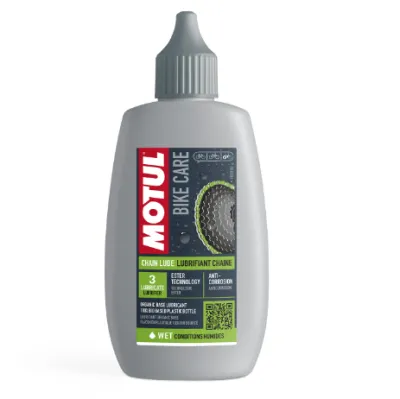
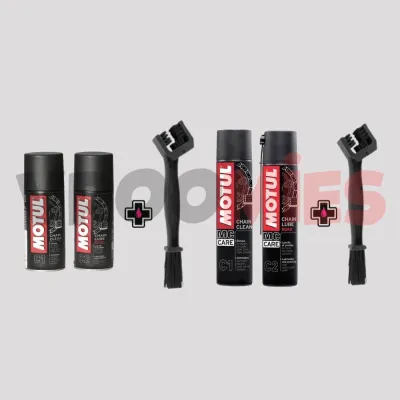
Prices are valid at publication and may change. Please refer to the product page for the latest price.
Understanding the Core Motul Chain Lube Variants
The Motul motorcycle maintenance lineup categorizes its chain care products using a clear numbering system, making it easier to identify the design intent of each formula. The process begins with preparation, where Motul C1 Chain Clean serves as the foundational solvent. This specialized cleaner is formulated to dissolve stubborn grease, road grime, and old lubricant without damaging the sensitive rubber seals of O-ring, X-ring, or Z-ring chains, preparing the metal surfaces for fresh lubrication. Always refer to the product label for authorized uses and avoid contact with painted bodywork, plastic fairings, or brake components unless explicitly permitted by the manufacturer.
For street riders, Motul C2 Chain Lube Road is the standard aerosol option. This formula is engineered with high-adhesion properties, leaving a tacky, protective film that resists the centrifugal forces generated at highway speeds. It is designed to displace water and resist road salt, making it highly effective for daily commuting and long-distance touring on paved surfaces where wet weather is a constant factor.
When pavement gives way to dirt, sand, or mud, Motul C3 Chain Lube Off Road becomes the appropriate choice. Unlike its street-focused counterpart, the off-road variant is formulated to dry to a non-sticky, low-tack finish. This design prevents abrasive soil, sand, and grit from adhering to the chain, which would otherwise form an abrasive grinding paste that accelerates sprocket and roller wear.
For track enthusiasts and high-performance sportbikes, Motul C4 Chain Lube Factory Line offers a specialized racing formula. It contains solid additives, often visible as a white coating upon application, designed to provide extreme pressure protection and minimize friction under intense mechanical loads. This variant is optimized for high-temperature stability at extreme rotational speeds, though it requires more frequent cleaning and reapplication than standard road lubricants.
For riders who prefer a manual, highly precise application method, Motul C5 Chain Paste provides an alternative to aerosol sprays. Packaged in a convenient squeeze tube with an integrated brush applicator, this thick paste allows you to apply the lubricant exactly where it is needed. It is highly resistant to fling-off and is particularly popular among touring riders who need a compact, travel-friendly maintenance solution that keeps the rear wheel and swingarm clean.
Before purchasing any variant, always inspect the product label to verify compatibility with your specific chain type. High-quality lubricants explicitly state their compatibility with O-ring, X-ring, and Z-ring chains, ensuring that the carrier solvents used to deliver the lubricant will not cause the rubber seals to swell, crack, or dry out prematurely.
Matching the Lube to Your Riding Environment and Motorcycle Type
Selecting the right lubricant requires a realistic assessment of where and how you ride your motorcycle. For street and touring motorcycles operating in urban environments or highway networks, such as those in Singapore, the primary challenges are high speeds, stop-and-go heat buildup, and sudden tropical rain showers. In these conditions, a high-adhesion lubricant like C2 Road or C5 Paste is essential to prevent the product from flinging off onto the rear tire or bodywork while providing continuous water displacement.

For off-road, dual-sport, and adventure motorcycles, the environmental challenges are entirely different. Riding through dirt, sand, or mud exposes the drivetrain to highly abrasive particles that can quickly destroy rubber seals and metal sprockets if trapped by a sticky lubricant. Using a dry-type formula like C3 Off Road ensures that these particles slide off the chain rather than sticking to it, preserving the integrity of the drivetrain during trail rides and off-road excursions.
Track days and high-performance riding demand a lubricant that can withstand extreme thermal and mechanical stress. Under rapid acceleration and sustained high speeds, standard lubricants can break down or be thrown off the chain due to extreme centrifugal forces. A racing-specific formula like C4 Factory Line provides a robust boundary layer that reduces frictional drag and resists thermal degradation, helping to maintain consistent power delivery to the rear wheel under closed-course conditions.
Spray vs. Paste: Choosing the Right Application Format
The choice between an aerosol spray and a manual paste is largely a matter of convenience, application precision, and maintenance habits. Aerosol sprays, such as Motul C2, C3, and C4, offer rapid coverage and excellent penetration. The pressurized spray, combined with low-viscosity carrier solvents, allows the lubricant to flow deep into the tight clearances between the rollers, bushings, and side plates before the solvent evaporates and leaves behind a thicker, protective film.
However, aerosol sprays require careful handling to avoid overspray. The fine mist can easily drift onto the rear brake rotor, brake pads, or the shoulder of the rear tire, creating a severe safety hazard. To prevent this, riders must use protective barriers, such as a piece of cardboard placed behind the chain, and apply the spray with controlled, short bursts while manually rotating the wheel.
In contrast, Motul C5 Chain Paste offers exceptional precision and virtually eliminates the risk of overspray. The integrated brush applicator allows you to paint the paste directly onto the inner rollers and side plates, ensuring that every drop of product is utilized without waste. This format is highly valued by riders who take pride in keeping their motorcycles pristine, as it produces almost zero fling-off when applied correctly and allowed to cure.
Regardless of whether you choose a spray or a paste, proper chain preparation is non-negotiable. Applying fresh lubricant over a layer of old grease, road dust, and moisture traps contaminants against the metal and rubber surfaces, accelerating wear rather than preventing it. The chain must be thoroughly cleaned, rinsed, and allowed to dry completely so the new lubricant can establish a strong, direct bond with the metal.
Step-by-Step Selection and Application Checklist
To simplify your maintenance routine, use the following decision framework to select the correct Motul variant for your motorcycle:
- Select Motul C2 (Road) or C5 (Paste) if your riding consists of daily commuting, highway touring, or urban riding on paved surfaces.
- Select Motul C3 (Off Road) if you ride a dirt bike, dual-sport, or adventure motorcycle on unpaved trails, gravel roads, or muddy terrain.
- Select Motul C4 (Factory Line) if you participate in track days, closed-course racing, or operate a high-performance sportbike under extreme loads.
- Select Motul C5 (Paste) if you travel frequently, have limited storage space for maintenance gear, or want to completely avoid lubricant fling-off on your rear wheel.
Once you have selected the appropriate product, follow these steps to apply it safely and effectively:
- Secure the Motorcycle: Place the motorcycle on a stable center stand or a rear paddock stand on a level surface. Ensure the engine is switched off, the ignition key is removed, and the transmission is in neutral. Never run the engine and spin the rear wheel in gear while servicing the chain, as this can cause severe, irreversible finger injuries.
- Clean the Chain: Spray Motul C1 Chain Clean generously over the entire length of the chain. Use a soft-bristled chain brush to agitate stubborn dirt and grime, paying close attention to the areas around the rubber seals. Wipe the chain clean with a lint-free microfiber cloth.
- Allow to Dry: Wait at least 10 to 15 minutes for the cleaning solvents to evaporate completely. Applying lubricant to a damp chain prevents proper adhesion and can trap moisture, leading to internal corrosion.
- Apply the Lubricant: Slowly rotate the rear wheel backward by hand. If using a spray, direct the nozzle at the inside run of the chain (the lower span, spraying downward onto the top of the chain) to target the space between the inner and outer side plates where the seals are located, as well as the center rollers. If using paste, squeeze a small amount onto the brush and spread it evenly along the inner rollers.
- Wipe Away Excess: Use a clean, dry cloth to gently wipe away any excess lubricant from the outer side plates. The lubricant is only needed on the rollers and seals; excess product on the outside of the plates serves no protective purpose and will only attract dirt or fling off onto your bike.
- Allow to Cure: Let the motorcycle sit for at least 15 to 30 minutes before riding. This curing period allows the carrier solvents in sprays to evaporate, leaving behind a highly adhesive, protective barrier that will remain on the chain during operation.
Always maintain strict safety boundaries during this process. Keep all lubricants, cleaners, and greasy rags completely away from your brake discs, brake calipers, and tire treads. If any product accidentally contacts these areas, clean them immediately with a dedicated brake cleaner and verify that no slippery residue remains before riding.
Frequently Asked Questions (FAQ)
Can I use off-road chain lube on a street motorcycle?
While using an off-road chain lubricant on a street motorcycle will not damage the metal or rubber components, it is not recommended for regular highway use. Off-road formulas are specifically designed to dry to a non-sticky finish to prevent dirt and sand from adhering to the chain. Because they lack the high-tack adhesive agents found in road-specific formulas, they will fling off rapidly at highway speeds and offer very limited resistance to rain and wet road spray, requiring much more frequent reapplication to prevent rust and wear.
How often should I reapply Motul chain lube?
Rather than relying on a strict mileage schedule, you should inspect your chain’s visual and tactile condition before every ride. A dry, shiny appearance, increased mechanical noise from the drivetrain, or light surface rust are clear indicators that the chain requires lubrication. Under normal street riding conditions, a high-quality lubricant typically lasts between 500 and 800 kilometers; however, riding through heavy rain, wet coastal environments, or dusty off-road trails will significantly shorten this interval, requiring immediate inspection and reapplication.
Is it necessary to clean the chain before applying a new layer of lube?
Yes, thorough cleaning is essential for the long-term health of your drivetrain. Applying fresh lubricant directly over a dirty chain traps abrasive road grit, dust, and metal particles against the delicate rubber O-rings or X-rings. As the chain moves, these trapped particles act as an abrasive compound, wearing down the rubber seals and allowing the factory-installed grease to escape, which leads to tight spots, uneven stretching, and premature chain failure. Always use a dedicated cleaner and allow the chain to dry completely before applying fresh lubricant.

Community discussion
Share your experience or ask a question. Comments are reviewed before publication.