
To choose the right portable air compressor, you must ensure its maximum PSI rating exceeds the highest inflation pressure your tires require. For standard passenger cars, SUVs, and motorcycles, a compressor rated for 80 to 100 PSI is generally ideal, as these tires typically require between 30 and 42 PSI. However, if you need to inflate high-pressure bicycle tires or heavy-duty trailer tires, you will need a compressor rated for 120 to 150 PSI. Matching these specifications correctly ensures that your compressor can complete the inflation process efficiently without overheating or stalling.
Understanding Tire PSI Requirements vs. Compressor Output
Before purchasing a portable air compressor, you must distinguish between the target pressure of your tires and the maximum output capacity of the compressor. To find your vehicle’s correct inflation level, look at the tire information placard on the driver’s side door jamb or consult your owner’s manual. This document lists the recommended cold inflation pressure, which is the optimal setting for safety, handling, and tire longevity. Avoid using the maximum pressure number molded onto the tire sidewall itself, as this figure represents the absolute limit the tire can safely hold under maximum load, not the daily operating pressure.
Once you know your tire’s target pressure, compare it to the compressor’s specifications. Portable air compressors are rated by their peak maximum PSI, but their continuous working pressure is often much lower. As a tire fills and the internal pressure rises, the compressor must work harder against that backpressure. This resistance causes the airflow rate to drop significantly as the tire nears its target pressure. If a compressor is rated for a maximum of 100 PSI, it may struggle or slow down dramatically when trying to push a tire past 80 PSI.
Products mentioned in this guide
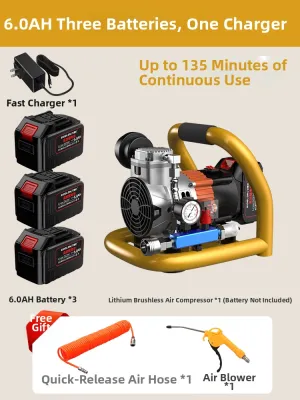
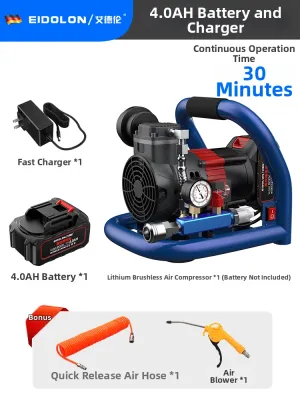
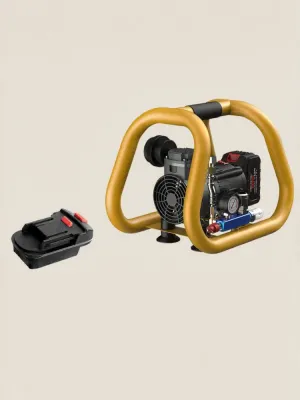
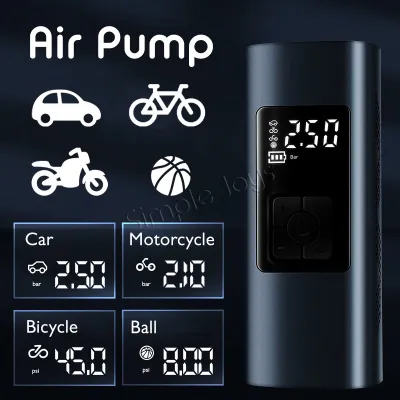
Prices are valid at publication and may change. Please refer to the product page for the latest price.
To ensure efficient and complete inflation, apply the safety margin rule. Your compressor’s rated maximum PSI should be at least 20 to 30 PSI higher than the highest target pressure of your tires. For example, if your vehicle requires 35 PSI, a compressor rated for 100 PSI provides an ample safety margin, allowing the motor to run efficiently without straining. If you attempt to use a compressor with a maximum rating that is too close to your tire’s target pressure, the unit will run hot, take an excessively long time to finish, and suffer premature wear on its internal seals.
Matching Compressor PSI to Different Vehicle Tires
Different types of vehicles have vastly different tire volumes and pressure requirements. Understanding these differences helps you select a compressor that balances pressure capability with volume delivery. Always verify compatibility with your specific vehicle model, tire dimensions, and mounting positions by consulting your vehicle documentation and the compressor’s product manual before purchase.

Car and Motorcycle Tires
Standard passenger cars, crossovers, and motorcycles typically require moderate tire pressures, usually ranging from 30 to 42 PSI. Because these pressures are relatively low, almost any entry-level portable air compressor on the market can reach them. However, standard car tires contain a large volume of air compared to smaller tires, meaning the primary challenge for the compressor is volume rather than high pressure.
When shopping for a car or motorcycle compressor, shift your decision focus from the maximum PSI rating to the airflow rate and duty cycle. A compressor with a high maximum PSI but a very low airflow rate will take a long time to inflate a large car tire, which can be frustrating during an emergency on the side of the road. Additionally, ensure that the compressor’s included nozzle adapters or chucks fit standard Schrader valves, which are the universal valve type found on almost all passenger vehicles and motorcycles.
Bicycle Tires (Mountain vs. Road)
Bicycle tires present a unique challenge because their pressure requirements vary wildly depending on the style of riding. Mountain bike tires are wide and hold a high volume of air at low pressures, typically between 20 and 40 PSI. In contrast, road and gravel bike tires are narrow and require much higher pressures to minimize rolling resistance and prevent pinch flats. Road bike tires often require pressures ranging from 80 to over 100 PSI, which demands a compressor capable of sustaining high-pressure output.
If you plan to use your portable compressor for road bikes, verify that the unit can reliably reach and sustain these high pressures without overheating. Many compact, battery-powered compressors have automatic thermal shutoff features that trigger when the motor gets too hot, which can happen quickly when pushing air into a high-pressure road tire. Furthermore, road and gravel bikes frequently use Presta valves instead of the standard Schrader valves found on cars. You must ensure the compressor comes with a Presta valve adapter or has a dual-purpose chuck to establish a secure, airtight connection.
Key Specifications to Check Beyond Maximum PSI
While the maximum PSI rating is an important baseline, several secondary specifications dictate how well a portable air compressor performs in real-world scenarios. Evaluating these metrics prevents you from purchasing a unit that is painfully slow or prone to overheating.
The first critical specification to check is the airflow rate, which is measured in Cubic Feet per Minute (CFM) or Liters per minute (L/min). This metric tells you how much air the compressor can move into the tire per minute. A higher CFM or L/min rating means the tire will inflate much faster. For larger tires, such as those on SUVs, vans, or light trucks, a low-airflow compressor can take over ten minutes to inflate a single tire, whereas a high-airflow model can complete the task in a fraction of the time.
Another essential factor is the duty cycle, which represents the percentage of time a compressor can run continuously before it must be turned off to cool down. For instance, a compressor with a 15% duty cycle can run for about 3 minutes before requiring a 17-minute rest period. If you need to inflate multiple tires in a single session, a low duty cycle will turn a simple maintenance task into a lengthy chore. Look for units with built-in thermal protection, which automatically shuts down the motor if it begins to overheat, protecting your investment from permanent damage.
Finally, consider the power source of the compressor. Portable units generally fall into two categories: 12V DC plug-in models that connect to your vehicle’s accessory outlet, and cordless, battery-powered units. While battery-powered models offer unmatched portability, their performance can degrade as the battery charge depletes. A low battery can lead to a drop in voltage, reducing the compressor’s maximum achievable PSI and slowing down inflation times. In contrast, 12V DC models provide consistent power as long as your vehicle’s engine is running, making them highly reliable for roadside emergencies.
Safe Operation and Pressure Verification
Operating a portable air compressor safely requires adhering to basic inspection and maintenance protocols. Before you connect the compressor hose to your tire, perform a thorough visual inspection of the tire’s exterior. Look for severe damage, deep cuts, visible cords, unusual bulges, or embedded objects like nails or screws. If you suspect the tire has suffered structural failure, do not attempt to inflate it, as adding pressure to a compromised tire can lead to a sudden and dangerous blowout. In these situations, it is safest to install your spare tire or call for professional roadside assistance.
Once you begin the inflation process, do not rely solely on the pressure gauge built into the compressor. The sensors inside portable compressors can drift over time due to vibrations, temperature changes, and rough handling. To ensure accuracy, use a dedicated, calibrated digital tire pressure gauge to cross-verify the pressure readings. Check the pressure when the tire is cold, as driving even a short distance heats up the air inside the tire and temporarily inflates the pressure reading, leading to under-inflation once the tire cools down.
Lastly, pay close attention to the temperature of the compressor during operation. Portable air compressors generate a significant amount of heat, especially around the cylinder head and the connection point of the air hose. If the hose or the unit itself becomes excessively hot to the touch, pause the inflation process immediately. Allow the compressor to cool down completely before resuming. This simple precaution prevents the internal seals from melting and extends the overall lifespan of your portable equipment.
Frequently Asked Questions (FAQ)
Can I use a standard car tire compressor for a high-pressure road bike?
Yes, you can use many standard car tire compressors for a road bike, provided the compressor’s maximum PSI rating exceeds the bike tire’s target pressure (which is often 80 to 100 PSI). However, because car compressors are designed to move larger volumes of air at lower pressures, they may struggle to push the final, high-pressure volume of air into a small road bike tire. You must also ensure you have a compatible Presta valve adapter, as most automotive compressors are equipped only with Schrader chucks.
Does a higher maximum PSI rating mean the compressor inflates tires faster?
No, a higher maximum PSI rating does not mean the compressor will inflate tires faster. The PSI rating indicates the maximum amount of pressure the unit can generate, whereas the inflation speed is determined by the airflow rate, measured in CFM or L/min. If you want to minimize the time spent inflating your tires, especially larger SUV or truck tires, look for a compressor with a higher CFM or L/min rating rather than simply focusing on a high maximum PSI.

Community discussion
Share your experience or ask a question. Comments are reviewed before publication.