
To keep your motorcycle running smoothly, choosing the correct motorbike chain lube is one of the most critical maintenance decisions you will make. The ideal formulation is not a one-size-fits-all solution; instead, the optimal choice depends entirely on your local weather patterns, the typical road conditions you encounter, and how much time you are willing to dedicate to regular chain maintenance. By matching the physical properties of your lubricant to your specific riding environment, you can significantly extend the lifespan of your chain and sprockets while ensuring optimal power transfer to the rear wheel.
You can determine your ideal lubricant type by evaluating your primary riding scenarios against three distinct formulation categories:
- Choose Wet Lube if: You frequently ride in heavy downpours, high-humidity environments, or consistently wet conditions. This formulation is designed to resist water wash-off, making it the most reliable option when moisture and rust prevention are your primary concerns.
- Choose Dry Lube if: Your rides take place mostly in dry, dusty, or sandy environments, or on clean closed tracks. This type is formulated to keep your motorcycle's swingarm, rear wheel, and chain free from sticky, oily grime, reducing abrasive wear from airborne particles.
- Choose Wax-Based Lube if: You want a clean-running chain but still require moderate water resistance. This option is highly suitable for daily commuters who face variable weather conditions but want to minimize the messy cleanup associated with oily residues.
Ultimately, there is no single superior motorbike chain lube on the market. Every formulation represents a deliberate engineering trade-off between water resistance, dirt attraction, ease of application, and longevity. Understanding these trade-offs is the key to maintaining a quiet, efficient, and long-lasting drivetrain.
Products mentioned in this guide
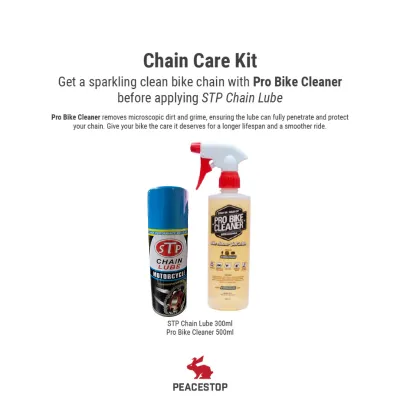
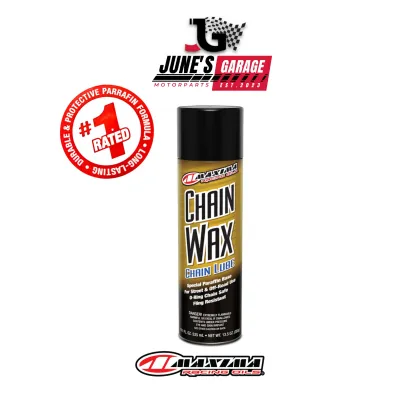
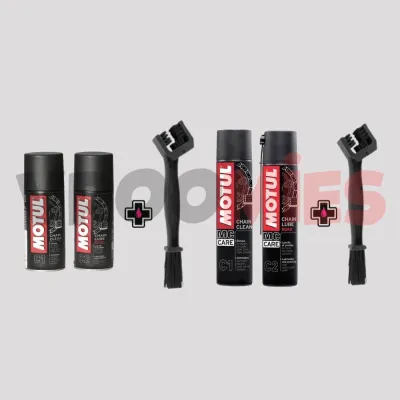
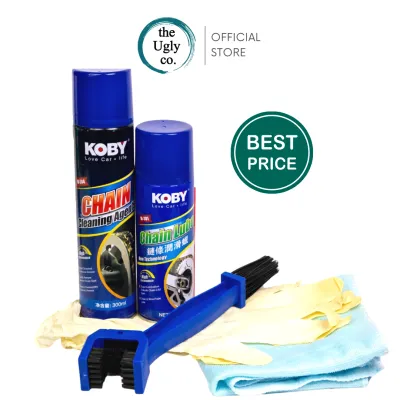
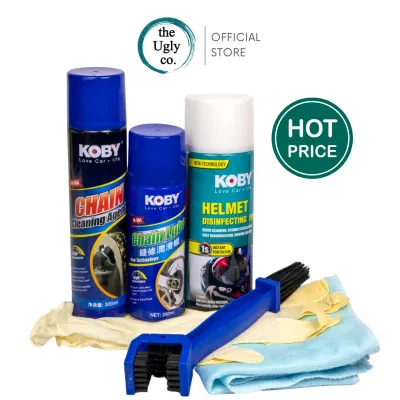
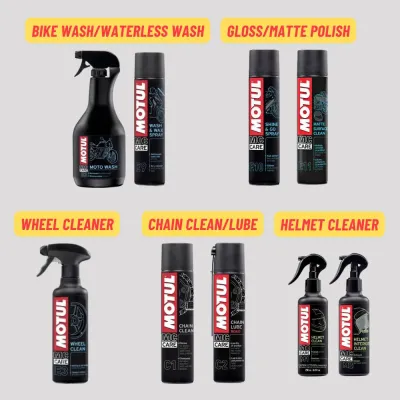
Prices are valid at publication and may change. Please refer to the product page for the latest price.
The Three Main Formulations: Wet, Dry, and Wax
To make an informed decision, it is essential to understand how these three lubricants function at a mechanical level. Each type uses a different chemical carrier and active lubricating agent, resulting in distinct physical behaviors once applied to your motorcycle’s drive chain.
Wet Chain Lube
Wet chain lubricants are high-viscosity, oil-based formulations that remain in a liquid or semi-liquid state long after they are applied to the chain. These lubricants are engineered with heavy synthetic oils and tackiness agents designed to cling tenaciously to the metal surfaces of the inner and outer chain links, rollers, and pins. Because the lubricant does not dry, it continuously flows into the tight clearances between moving parts, providing constant hydrodynamic lubrication that dampens chain noise and absorbs high-impact mechanical forces during gear shifts and acceleration.
The primary advantage of a wet formulation is its exceptional durability and resistance to water. When riding through deep puddles or heavy rain, the hydrophobic nature of the heavy oils prevents water from displacing the lubricant, protecting the bare steel of your chain from rapid oxidation and rust. This makes wet lube highly reliable for long-distance touring and riding in regions with unpredictable weather patterns.
However, the continuous liquid state of wet lube is also its greatest drawback. The sticky, viscous film acts like a magnet for road dust, sand, grit, and metal shavings. Over time, this airborne debris mixes with the oil to form a highly abrasive grinding paste. If this paste is not regularly cleaned off, it will wear down the chain rollers, damage the delicate rubber seals of sealed chains, and rapidly erode the teeth of your front and rear sprockets, leading to premature drivetrain replacement.
Dry Chain Lube
Dry chain lubricants take a completely opposite approach to drivetrain protection. These formulations consist of active lubricating solids—typically polytetrafluoroethylene (PTFE), ceramic particles, or specialized synthetic polymers—suspended in a highly volatile liquid carrier solvent. When you apply a dry lube, the low-viscosity solvent quickly penetrates deep into the chain’s internal rollers and pins. Within a few minutes to an hour, the carrier solvent evaporates completely, leaving behind a thin, dry, and slippery microscopic film on the metal surfaces.
The standout benefit of a dry lubricant is its clean operation. Because there is no wet, sticky residue left on the exterior of the chain, dust, dirt, and road grime cannot adhere to the links. This keeps your motorcycle’s rear wheel, swingarm, and sprocket area remarkably clean, preventing the formation of the destructive abrasive paste associated with wet lubes. For riders who operate in arid, dusty, or sandy conditions, dry lube is highly effective at minimizing abrasive wear and keeping the drivetrain looking pristine.
The trade-off for this cleanliness is a severe vulnerability to moisture. Because the dry lubricating film is thin and lacks the heavy, water-repelling mass of an oil-based lubricant, it is easily washed away by water. Even a brief ride through a sudden rain shower or a damp road surface can strip the dry film from the chain, leaving the metal exposed to friction and rust. Consequently, dry lubes require much more frequent reapplication, often after every wet ride or every few hundred kilometers in damp climates.
Wax-Based Chain Lube
Wax-based chain lubricants represent a middle ground, blending elements of both wet and dry formulations. These products typically consist of paraffin wax particles, ceramic additives, and PTFE suspended in a liquid carrier fluid or formulated as a thick paste. Upon application, the carrier fluid allows the wax to flow into the internal clearances of the rollers. As the carrier evaporates, the wax solidifies into a hard or semi-hard, non-sticky coating that encapsulates the chain components.
The unique advantage of wax is its ability to shed contaminants. Instead of attracting dirt, the waxy barrier resists dust adhesion. As the chain rotates and flexes over the sprockets, the outermost layer of wax gradually flakes off, carrying away any small dust particles that may have settled on the surface. This self-cleaning mechanism keeps the chain clean while still offering a substantial physical barrier against water ingress, providing much better moisture protection than a standard dry lube.
Nevertheless, wax-based lubricants have their own set of challenges. They require a meticulously clean, completely degreased chain to adhere properly; if any residual oil or grease remains on the metal, the wax will fail to bond and will quickly flake off. Additionally, applying wax lubricants can be more time-consuming, as they often require specific ambient temperatures to flow effectively during application and need several hours to cure fully before the motorcycle can be ridden. During deep maintenance, removing old, hardened wax buildup from the chain links and sprocket teeth can also require more physical scrubbing and specialized cleaning agents compared to oil-based residues.
Comparing Performance: Water Resistance, Dirt, and Longevity
To help you visualize the practical differences between these three formulations, we can compare their performance across several key operational dimensions. The table below outlines how each lubricant type behaves under standard operating conditions.

| Lube Type | Water Resistance | Dirt Attraction | Longevity | Cleaning Effort |
|---|---|---|---|---|
| Wet Lube | High | High | High | High |
| Dry Lube | Low | Low | Low | Low |
| Wax Lube | Medium-High | Low-Medium | Medium | Medium-High |
Beyond these core characteristics, a major factor to consider is the “fling-off” effect. Fling-off occurs when the centrifugal force of the rapidly spinning chain throws excess lubricant off the links, splattering it onto the rear wheel rim, swingarm, and potentially the rear tire tread or brake rotor.
Fling-off is directly related to the viscosity and drying time of the formulation. Wet lubes, because they remain liquid, are highly prone to flinging off if applied too heavily or if the bike is ridden immediately after application. This not only creates a difficult-to-clean mess on your motorcycle’s bodywork but also poses a serious safety hazard if the oil migrates to the contact patch of your rear tire or the surface of your rear brake disc. Dry and wax-based lubes, once fully cured and dry to the touch, exhibit virtually zero fling-off, keeping your motorcycle cleaner and reducing the risk of tire or brake contamination.
It is important to note that modern chemical engineering has blurred some of these traditional boundaries. Many premium manufacturers now include proprietary synthetic additives, tackiness improvers, or nano-ceramic particles designed to reduce fling-off in wet lubes or improve the water resistance of dry and wax formulations. Always read the specific product label to understand the unique properties and recommended curing times of the specific formulation you choose.
Choosing the Right Motorbike Chain Lube for Tropical Climates
When selecting a motorbike chain lube, your local climate and regional road conditions should play a decisive role in your final choice. In tropical environments, such as Singapore, the combination of high relative humidity, intense year-round heat, and sudden, torrential monsoon downpours creates a highly demanding environment for motorcycle drivetrains.
In these tropical conditions, a standard dry lube often struggles to provide adequate protection. A sudden afternoon cloudburst can instantly wash away a dry lubricating film, leaving your chain vulnerable to rapid rusting in the humid air that follows. Unless you are a fair-weather rider who strictly commutes on dry days and is prepared to inspect and reapply lubricant after every unexpected damp patch, dry lube may prove too high-maintenance for daily tropical riding.
Conversely, wet chain lube is highly effective at shielding your chain from heavy tropical rain. The thick, water-repellent barrier ensures that even during prolonged rides through standing water, the chain’s metal surfaces remain protected from moisture and corrosion. However, using wet lube in an urban tropical environment requires a strict commitment to maintenance. The combination of high humidity and fine road dust from heavy traffic means your chain will quickly accumulate a thick layer of black, abrasive sludge. If you choose a wet lube, you must be prepared to degrease and clean your chain regularly to prevent this sludge from accelerating drivetrain wear.
For many daily commuters in tropical regions, wax-based chain lube offers an excellent compromise. It provides sufficient water resistance to withstand sudden downpours without washing off immediately, while its dry, non-sticky surface prevents road grit from adhering to the chain. This significantly reduces the messy swingarm cleanup and allows for longer intervals between deep cleanings compared to wet lubricants.
Verify first if your chain is compatible: Before purchasing any lubricant or cleaning solvent, always consult your motorcycle’s owner’s manual to identify the exact type of chain installed on your bike. Modern motorcycles typically use sealed chains, which contain internal rubber seals (such as O-rings, X-rings, or Z-rings) to lock in factory grease. Some solvents, penetrating oils, or aggressive chemical additives found in generic lubricants can degrade, swell, or crack these rubber seals. Once the seals fail, the factory grease escapes, dirt enters the internal pins, and the chain will wear out rapidly, regardless of how much external lube you apply. Always ensure the product you select is explicitly labeled as safe for your specific chain type.
Safe Application and Maintenance Steps
Proper application technique is just as important as choosing the right formulation. Following a safe, methodical maintenance routine ensures that your lubricant penetrates where it is needed most while protecting you from severe injury.
Safety First: Never, under any circumstances, clean or lubricate a motorcycle chain while the engine is running and the motorcycle is in gear on a stand. It can be tempting to let the engine spin the rear wheel to speed up the process, but this practice has resulted in numerous severe injuries, including finger amputations, when hands or cleaning brushes get caught between the chain and the spinning rear sprocket. Always turn the engine off, remove the key from the ignition, and rotate the rear wheel solely by hand.
To apply your chosen motorbike chain lube safely and effectively, follow these steps:
- Clean the chain: Before applying new lubricant, you must remove the old, dirty residue. Spray a dedicated, O-ring-safe motorcycle chain cleaner onto the chain. Use a soft-bristled chain brush to gently agitate and break up stubborn dirt, wax buildup, or grease.
- Wipe and dry completely: Use a clean, lint-free rag to wipe away the dissolved grime and excess cleaner. Allow the chain to dry completely for at least 10 to 15 minutes, as any remaining solvent will break down and neutralize your new lubricant upon application.
- Apply the lubricant: Position the spray nozzle or applicator on the inside run of the chain (the lower stretch of chain moving toward the engine). Direct the spray directly onto the inner rollers and the edges of the side plates where the rubber seals are located. Slowly rotate the rear wheel backward by hand to ensure even coverage along the entire length of the chain. Avoid overspraying onto the sides of the plates, as this does not aid lubrication and only attracts dirt.
- Wipe off the excess: Use a clean cloth to gently wipe down the outer side plates of the chain. This removes excess surface lubricant that would otherwise fling off onto your rear tire, brake disc, or bodywork.
- Allow to cure: Let the motorcycle sit for the duration specified on the product label. Dry and wax-based lubricants typically require 15 minutes to several hours to allow the carrier solvents to evaporate fully and the lubricating film to bond to the metal.
There is no universal mileage interval for reapplying chain lubricant, as wear rates depend heavily on weather, speed, and road dust. Instead, develop the habit of visually inspecting your chain before every ride. If the rollers appear dry, shiny, or begin to squeak, it is time for a fresh application.
Frequently Asked Questions (FAQ)
Can I mix wet and dry chain lubes on the same chain?
No, you should never mix different chain lubricant formulations directly on your chain. Wet and dry lubricants rely on fundamentally different chemical bases and carrier solvents. Applying a wet lube over a dry film, or vice versa, will prevent either product from adhering correctly to the metal surfaces. The carrier solvents in one lube may dissolve the active agents of the other, resulting in a sticky, ineffective mixture that fails to lubricate the internal rollers while attracting excessive road dirt. If you decide to switch from one type of lubricant to another, always perform a thorough deep cleaning of your chain and sprockets using a dedicated chain cleaner to remove all old residues before applying the new formulation.
How do I know if my chain has O-rings or X-rings, and why does it matter for lube?
Sealed chains, such as O-ring and X-ring designs, feature tiny rubber seals sandwiched between the inner and outer metal link plates. You can identify them by visually inspecting the gaps between the chain plates; you will see small black rubber rings nestled between them. X-ring chains use a modified seal profile with a cross-shaped cross-section to reduce friction compared to standard round O-rings.
This matters because these rubber seals are highly sensitive to harsh chemicals. Using unapproved solvents, penetrating oils, or lubricants that contain aggressive petroleum distillates can cause the rubber seals to swell, dry out, or disintegrate. Once these seals are damaged, the internal factory-sealed grease escapes, allowing moisture and dirt to enter the pin-and-bushing assembly, which leads to rapid chain stretching, tight spots, and eventual chain failure. Always verify that both your chain cleaner and chain lube are explicitly certified as safe for O-ring, X-ring, and Z-ring chains before use.

Community discussion
Share your experience or ask a question. Comments are reviewed before publication.