
Finding the right sunshade for a Volkswagen Touran requires a clear understanding of this multi-purpose vehicle’s unique cabin architecture. As a family-oriented MPV, the Touran features an exceptionally large, steeply raked front windshield and an expansive glasshouse designed to maximize visibility. However, this generous glass area also acts as a greenhouse, rapidly trapping heat and exposing the interior to damaging ultraviolet rays when parked under the sun. To combat this, owners must select sunshades that offer precise coverage, robust heat rejection, and secure mounting mechanisms. Choosing the correct sunshade involves evaluating the specific dimensions of your Touran’s model year, comparing custom-fit options against universal alternatives, and selecting materials that physically block and reflect solar radiation without damaging the vehicle’s interior surfaces or advanced safety sensors.
Checking Your VW Touran Generation for Accurate Sizing
Before purchasing any sunshade, it is critical to identify the exact generation and model year of your Volkswagen Touran. The Touran has undergone significant design evolutions since its initial launch, resulting in distinct body shapes, windshield dimensions, and window profiles. The first-generation Touran (Typ 1T), produced from approximately 2003 through 2015, features a different windshield curvature and A-pillar angle compared to the second-generation model. The second-generation Touran (Typ 5T), introduced around 2015 and built on the modular MQB platform, is physically wider and longer. Consequently, its front windshield is substantially larger, and the side passenger windows have completely different geometric profiles.
Attempting to use a single “universal” sunshade size across these different generations often leads to poor results. The Touran’s front windshield is notably taller and wider than that of a standard sedan or compact hatchback. A universal shade designed for a typical passenger car will almost certainly leave significant gaps along the top edge, the bottom corners near the dashboard, or around the A-pillars. These gaps allow direct sunlight to penetrate the cabin, heating up the massive dashboard surface which then acts as a radiator, warming the entire interior. Furthermore, a shade that is too small will constantly slip out of place, failing to stay secured behind the sun visors.
Products mentioned in this guide

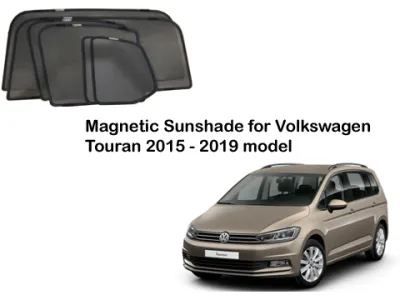
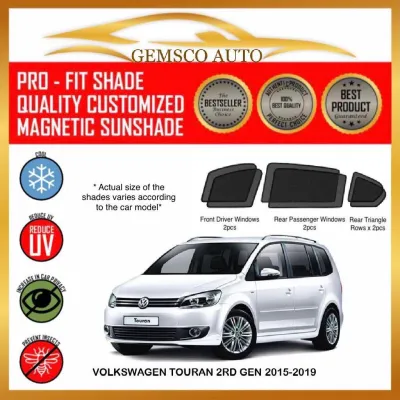
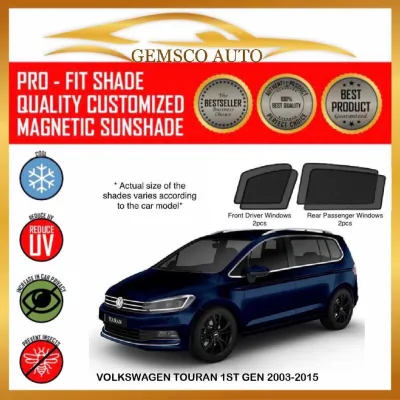
Prices are valid at publication and may change. Please refer to the product page for the latest price.
To ensure a perfect physical fit, you must verify your Touran’s exact model year and trim level. This information can be found on your vehicle registration documents, the owner’s manual, or the vehicle identification number (VIN) plate located near the bottom of the windshield. When browsing online marketplaces or manufacturer catalogs, always cross-reference this specific model year with the product’s fitment compatibility list. Do not rely solely on generic product titles that claim to fit “all VW models,” as these rarely account for the unique, expansive glass dimensions of the Touran MPV.
Choosing Front Windshield Sunshades: Custom-Fit vs. Universal
When selecting a front windshield sunshade for the Touran, the primary decision lies between custom-fit and universal options. Custom-fit sunshades are laser-measured and manufactured to match the exact contours of the Touran’s windshield frame. These shades are typically constructed from rigid, multi-layered materials or flexible spring-wire frames that pop open to fill every square centimeter of the glass. Because they are tailored to the specific generation of your Touran, they slide smoothly into the deep corners where the glass meets the dashboard and hug the A-pillars tightly, leaving virtually no gaps for sunlight to bypass.

In contrast, universal accordion-style or roll-up shades are designed to fit a broad range of vehicles. While they are generally more affordable and widely available, they require significant manual adjustment to stay in place. Because the Touran’s windshield is exceptionally tall, a standard universal shade may not reach the top of the glass, forcing you to stretch the sun visors to their absolute limits to pin the shade down. Over time, this constant tension can wear out the visor hinges. Additionally, universal shades often lack a dedicated cutout for the rearview mirror assembly, forcing you to bend or fold the material around the mirror, which can loosen the shade and cause it to sag in the center.
A critical area of concern is the coverage around the rearview mirror and the A-pillars. The Touran’s deep dashboard is highly susceptible to fading, cracking, and heat buildup when exposed to direct sunlight over long periods. A custom-fit shade will feature a precise cutout that fits snugly around the rearview mirror housing, ensuring that the delicate electronics inside the mirror and any adjacent rain sensors are shielded from direct solar heat. It also ensures that the entire width of the dashboard is covered, preventing the plastic and soft-touch materials from absorbing thermal energy.
Storage is another practical factor to consider when choosing between these two types. Because of the Touran’s massive windshield size, a custom-fit rigid shade can be quite bulky when folded or rolled up. Some custom options fold into a neat accordion shape, while others roll into a cylinder secured by a strap. You must evaluate where you will store the shade when passengers are in the vehicle. The Touran is known for its clever interior storage solutions, including deep door bins, under-seat drawers, and rear passenger footwell compartments. Before purchasing, check the folded dimensions of the sunshade to ensure it can be tucked away conveniently into a door pocket or the boot without cluttering the passenger cabin.
Selecting Side Window Sunshades: Attachment Methods and Coverage
Protecting the side windows of the VW Touran is essential for passenger comfort, especially when carrying children or rear-seat passengers who are highly sensitive to sun glare and heat. The Touran’s side glasshouse consists of the front door windows, the rear passenger door windows, the small rear quarter windows, and the large tailgate glass. Choosing the right attachment method for these windows depends on how often you need to operate the windows and the level of durability you require.
Static-cling and suction-cup sunshades are common, budget-friendly options for the rear passenger windows, with basic sets often starting around S$15 to S$30 on local online marketplaces. Static-cling shades use electrostatic force to adhere directly to the glass, requiring no adhesive or mechanical clips. While they are easy to apply and remove, they must be kept completely clean; dust and fingerprints will quickly cause them to lose adhesion and peel off. Suction-cup shades offer a more secure physical attachment, but they are highly sensitive to temperature fluctuations. In hot, humid climates like Singapore, the intense heat radiating through the glass can cause the air inside the suction cups to expand, leading them to pop off unexpectedly. Additionally, both static-cling and suction-cup shades prevent you from rolling down the windows; attempting to open the window with these shades attached can damage the window regulator mechanism or trap the shade inside the door panel.
For a more integrated and functional solution, magnetic or frame-mounted mesh sunshades are highly recommended. These shades feature a flexible metal frame wrapped in a tightly woven mesh fabric. The frame is designed to match the exact shape of the Touran’s window frame, snapping securely onto the exposed metal of the door frame using small, integrated magnets or low-profile plastic clips. Because these shades attach to the door frame rather than the glass itself, you can roll the windows down completely while the shades remain firmly in place. This allows fresh air to circulate through the cabin while still blocking harsh sunlight, glare, and insects from entering.
The Touran’s rear quarter windows and tailgate glass present unique challenges due to their non-rectangular shapes. The small triangular quarter windows behind the C-pillar are often overlooked by universal shade manufacturers, leaving a gap where sunlight can beam directly onto third-row passengers or cargo. When shopping for side window protection, look for complete multi-piece sets specifically tailored for the Touran. These sets typically include custom-shaped mesh inserts for the rear quarter windows and a large, single-piece shade for the tailgate glass. A custom tailgate shade is particularly important as it protects the entire boot area from solar heating, keeping groceries or luggage cool and preventing rear-view obstruction.
Evaluating Sunshade Materials and UV Protection Labels
The effectiveness of a sunshade depends heavily on its material composition and how it manages solar energy. To make an informed purchase, you must understand the functional differences between reflective and absorptive materials. Reflective sunshades typically feature an outer layer of polished aluminum foil or a silver-coated polyester fabric. These materials work by reflecting radiant heat and light back out through the windshield before it can be absorbed by the cabin’s interior surfaces. Reflective shades are highly efficient at keeping the cabin temperature down when the vehicle is parked in direct sunlight for extended periods.
On the other hand, dark fabric or mesh shades work primarily by absorbing light and reducing glare. These are commonly used for side windows because they allow passengers to see outside while filtering out the harshest rays. However, because they absorb heat rather than reflect it, they can become warm to the touch. For the front windshield, a multi-layered composite shade is often the most effective option. These shades combine a highly reflective outer layer with an insulating foam core and a soft, non-abrasive inner backing. The foam core acts as a thermal barrier, slowing down the transfer of heat from the hot outer layer to the interior of the car.
When evaluating sunshade options, do not rely on vague marketing claims such as “maximum heat block” or “total sun protection.” Instead, look for verified specifications on the product packaging or manufacturer labels. Reliable manufacturers will often state a UPF (Ultraviolet Protection Factor) rating, such as UPF 50+, which indicates that the material blocks approximately 98 percent of harmful UVA and UVB radiation. Protecting your Touran’s interior from UV rays is crucial for preventing the premature aging, fading, and cracking of the leather seats, dashboard plastics, and steering wheel cover.
Additionally, pay close attention to the build quality and construction details of the sunshade. The binding edges, stitching, and folding creases are the most common failure points. A high-quality shade will feature heavy-duty fabric binding along the entire perimeter to prevent the reflective layers from delaminating or fraying. The stitching should be tight and even, with no loose threads. For foldable accordion-style shades, the creases should be reinforced to withstand thousands of folds without tearing or losing their structural rigidity. Investing in a well-constructed shade ensures that it will maintain its shape and effectiveness over years of daily use.
Installing Sunshades Safely and Protecting Your Interior
Proper installation and handling of your sunshades are essential to prevent accidental damage to your VW Touran’s interior components and to ensure overall driving safety. When installing a rigid or wire-frame front sunshade, always handle it with care. The spring-steel wires inside pop-up shades can unfold with significant force. If opened carelessly inside the cabin, the frame can snap against the delicate plastic trim of the A-pillars, scratch the leather steering wheel, or scuff the dashboard surface. Always unfold the shade outside or in a clear space within the cabin before positioning it gently against the glass.
If you choose to use suction cups or adhesive mounts for your side window shades, it is important to maintain them properly. Over time, suction cups can leave unsightly circular marks on the glass, and adhesive mounts can melt under intense heat, leaving a sticky residue that attracts dust and is difficult to clean. Periodically remove these mounts to clean both the glass and the suction cups with a mild glass cleaner. This not only ensures a stronger hold but also prevents permanent staining or damage to the glass surface. Be especially careful on the rear tailgate glass, as scraping off old adhesive or pulling aggressively on stuck suction cups can damage the delicate copper lines of the integrated rear defogger grid.
Most importantly, you must strictly adhere to safety and legal regulations regarding sunshade usage while driving. All front windshield sunshades and front-side window shades must be completely removed and safely stowed away before you operate the vehicle. Driving with any form of sunshade on the front or front-side windows severely restricts your field of vision, blocks your view of the side mirrors, and creates dangerous blind spots. In many regions, including Singapore, obscuring the driver’s view through the front or front-side glass is a serious traffic offense. Mesh side shades should only be used on the rear passenger windows while the vehicle is in motion, ensuring that the driver retains a clear, unobstructed view of the road and surrounding traffic at all times.
Frequently Asked Questions (FAQ)
Can I use a universal sunshade if I cannot find a custom fit for my Touran?
Yes, you can use a universal sunshade as a temporary or budget-friendly alternative if a custom-fit option is not readily available. To do this successfully, you must first measure the height and width of your Touran’s front windshield at its widest points using a tape measure. Select a universal shade that is slightly larger than these measurements rather than smaller. When installing it, press the shade as close to the glass as possible and pull down both the driver and passenger sun visors to pin the top edge of the shade securely against the windshield. While this method will help block a significant portion of incoming heat, keep in mind that you will likely experience some gaps around the edges and the rearview mirror where sunlight can still enter.
Will leaving a sunshade on the windshield damage the glass or sensors?
A properly installed sunshade will not damage your Touran’s windshield glass, but you must exercise caution around the sensitive electronic sensors mounted near the rearview mirror. Modern VW Tourans are equipped with advanced driver assistance systems (ADAS), rain sensors, and automatic headlight sensors housed in a plastic console behind the rearview mirror. When installing a rigid or tight-fitting custom sunshade, avoid forcing or jamming the material tightly against this sensor housing. Excessive pressure can misalign the cameras, loosen the sensor mounts, or scratch the protective plastic casing. Always choose a sunshade with a generous, soft-edged cutout for the rearview mirror, and position it gently to ensure it protects the cabin without putting physical stress on the vehicle’s onboard electronics.

Community discussion
Share your experience or ask a question. Comments are reviewed before publication.