
Choosing how to store your sunglasses in your vehicle involves balancing convenience, interior design, and safety. A dedicated sunglass clip for your car prevents your eyewear from sliding around in open cubbies, getting scratched in door pockets, or overheating in a glove box. However, the effectiveness of any mount depends heavily on how well it integrates with your vehicle’s specific cabin geometry and your personal driving habits.
Accessibility while driving is the primary functional requirement of any interior accessory. A driver should be able to retrieve and store their sunglasses with a single hand, keeping their eyes focused on the road ahead. The physical distance between your driving position and the mounting location dictates how easily you can reach your glasses without shifting your posture or stretching uncomfortably.
Visual obstruction is a critical safety factor that must not be overlooked. Any accessory added to the cabin must keep the driver’s sightline completely clear of distractions. Visor mounts can sometimes hang low enough to clip the top edge of your forward field of vision, especially for taller drivers or in cars with low rooflines. Dashboard mounts, if placed incorrectly, can create blind spots on the windshield or block essential displays.
Products mentioned in this guide
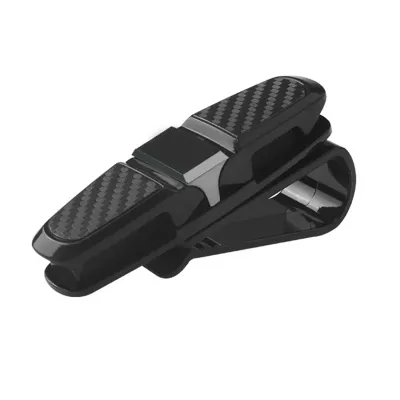
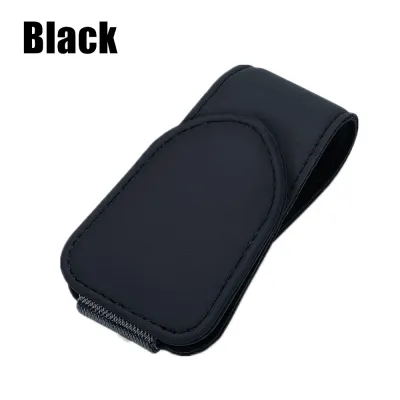
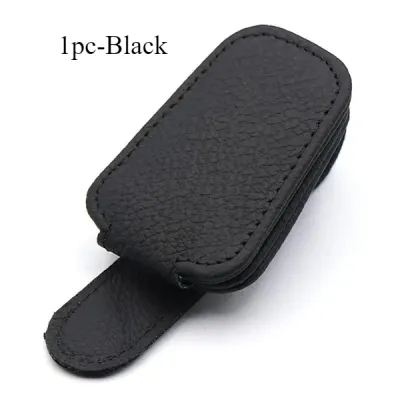
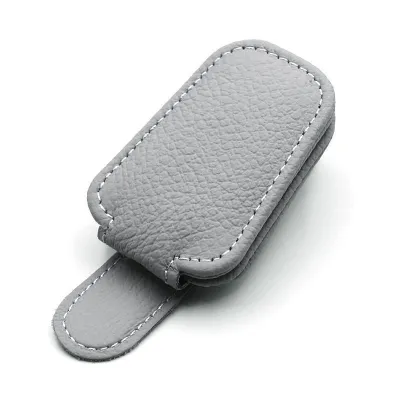
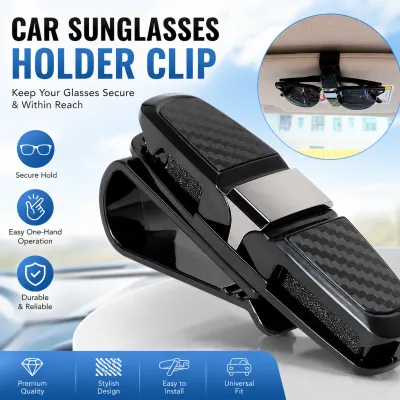

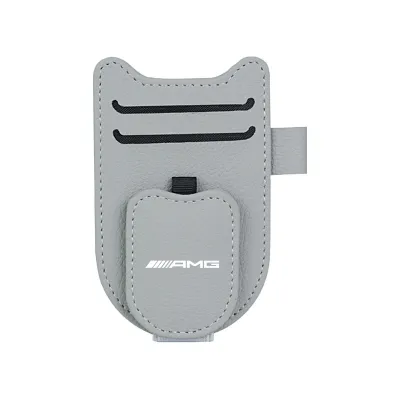
Prices are valid at publication and may change. Please refer to the product page for the latest price.
Space utilization varies significantly between vehicle classes and designs. Compact hatchbacks and sedans often have limited headroom, making overhead accessories feel intrusive or cramped. Larger sports utility vehicles (SUVs) and multi-purpose vehicles (MPVs) frequently feature deep dashboards and high ceilings, offering more physical space but also placing the sun visor further out of the driver’s natural reach.
The depth of your dashboard and the slope of your windshield also play a major role in your choice. A steeply raked windshield limits the vertical clearance above the dashboard, making it difficult to mount items there without touching the glass. Conversely, a flat, shallow dashboard might not offer a suitable flat surface for adhesive or suction mounts, forcing you to look upward to the visor.
Key Usability and Layout Factors for Sunglass Mounts
When evaluating where to place your sunglass clip, you must first map out your vehicle’s interior geometry. The distance between your shoulder and the sun visor or dashboard determines the physical effort required to reach your glasses. An ideal mounting location allows you to maintain your driving posture with your back fully supported by the seat.
Sightline safety is the most critical factor when choosing a mounting position. A mount that requires you to look away from the road for more than a split second poses a driving hazard. Visor-mounted clips keep your glasses high, which can block your view of overhead traffic signals if you are a taller driver. Dashboard mounts must be positioned so they do not obstruct your view of the hood or the corners of the windshield.
Space utilization is about maximizing the efficiency of your cabin without creating clutter. Visor clips take advantage of underutilized overhead space, keeping your dashboard clean and free of visual distractions. Dashboard mounts, on the other hand, occupy highly visible real estate but can make accessing your glasses much faster if you frequently transition between sunny and shaded driving conditions.
Your vehicle’s roofline and windshield angle dictate which mounting style is physically possible. Sports cars with low, swept-back windshields have very little clearance between the visor and the glass, making visor clips difficult to use. Conversely, family vehicles with upright windshields and deep dashboards provide ample room for both mounting styles, leaving the choice down to personal preference and ergonomics.
When to Choose a Visor-Mounted Clip
If your vehicle features a traditional cabin layout with ample headroom and a clean, uncluttered dashboard, a visor-mounted clip is often the most practical solution. This style keeps your sunglasses completely out of your forward line of sight when they are not in use, preserving the clean lines of your dashboard. It utilizes otherwise dead space on the sun visor, making it a popular choice for drivers who prefer a minimalist interior.

Before purchasing a visor-mounted clip, you must perform several physical checks on your vehicle’s sun visor. Measure the thickness of the visor and compare it to the jaw opening of the clip you are considering to ensure a snug fit without crushing the internal structure. Many modern visors feature integrated vanity mirrors with sliding covers, ticket straps, or built-in garage door opener buttons, all of which must remain fully functional.
Overhead console clearance is another critical factor to verify. If your car has a central overhead console housing map lights, sunroof controls, or a built-in sunglasses holder, a visor clip might interfere with these features when the visor is folded up. You should test the full range of motion of your visor to ensure it can still swing to the side window without the clip hitting your head or the grab handle.
Be aware of the limitations of thin or soft visor materials. Some budget-friendly or weight-optimized vehicles use visors filled with lightweight foam or thin plastic boards that can bend under tension. Heavy metal clips can leave permanent indentations on these soft materials or cause the visor to sag over time, especially when holding heavier, polarized sunglasses.
For drivers in compact cars, a visor-mounted clip can noticeably reduce headroom. If your head sits close to the headliner, adding a clip and a pair of sunglasses directly overhead can create a cramped feeling and pose a minor safety hazard in the event of a sudden jolt. If your visor is already low, a dashboard mount may be a more comfortable alternative.
When to Choose a Dashboard-Mounted Clip
A dashboard-mounted clip is highly suitable for modern vehicles equipped with panoramic glass roofs, where traditional sun visors are either extremely thin, absent, or highly stylized. It is also an excellent choice for drivers who prefer eye-level access and want to avoid reaching overhead while navigating busy roads. This mounting style keeps your eyewear within a natural, lateral reach.
To verify if your dashboard can support a mount, closely examine its curvature and surface texture. Many modern dashboards feature curved, organic shapes that offer very few flat areas for mounting. Additionally, soft-touch plastics, textured synthetic leather, and open-pore wood trims do not bond well with standard double-sided adhesives or suction cups, which can lead to the mount detaching during warm weather.
Proximity to climate control vents and instrument clusters must be carefully managed. Mounting a clip too close to an air vent can expose your sunglasses to extreme temperature fluctuations from the air conditioning or heater, which can warp plastic frames or damage lens coatings. Ensure the mount does not block your view of the speedometer, infotainment screen, or side-view mirrors.
Safety must be your absolute priority when choosing a dashboard location. You must strictly avoid placing any accessory within the deployment zone of the passenger airbag or any knee airbags. If the clip is launched by a deploying airbag, it can cause severe injury to cabin occupants.
If you are unsure about the compatibility of your dashboard material with adhesives, stop and consult your vehicle owner’s manual. Some manufacturers explicitly warn against applying chemical adhesives or suction devices to specific dashboard coatings, as removing them can tear the surface material or leave permanent, unsightly discoloration.
Visor vs Dashboard: Compatibility and Safety Matrix
To help you quickly evaluate which mounting style fits your vehicle’s physical constraints, use the comparison matrix below. Focus on matching your car’s layout with the corresponding verification steps and potential obstructions.
| Mounting Style | Ideal Car Layout | Key Verification Checks | Potential Obstructions |
|---|---|---|---|
| Visor-Mounted | Standard headroom, traditional rooflines, and uncluttered dashboards. | • Measure visor thickness against clip jaw width.<br>• Check for integrated vanity mirror clearance.<br>• Verify visor swing path to the side window. | • Overhead grab handles.<br>• Map lights and sunroof controls.<br>• Driver headroom clearance. |
| Dashboard-Mounted | Low headroom, panoramic glass roofs, and flat or deep dashboard designs. | • Assess surface flatness and material texture.<br>• Check adhesive compatibility with dashboard coatings.<br>• Verify line of sight from the driving position. | • Airbag deployment zones.<br>• Climate control air vents.<br>• Infotainment and instrument screens. |
When using this matrix, prioritize safety boundaries such as maintaining clear airbag deployment paths and avoiding air vent blockages. Always measure your specific sunglasses and vehicle components rather than relying on generic compatibility claims.
Final Decision Framework for Your Car Interior
To make a definitive choice for your car interior, apply these conditional rules based on your specific vehicle layout and daily needs.
Choose Visor-Mounted if… your car has standard headroom, a traditional roofline, and thick visors that can support a tension clip without sagging. This option is ideal if you want to keep your dashboard completely clear of accessories and prefer your sunglasses to be tucked away out of your forward field of vision.
Choose Dashboard-Mounted if… your vehicle has a panoramic glass roof, low ceiling clearance, or exceptionally thin visors that cannot support a clip. This style is also best if you prefer eye-level, minimal-reach access and have a flat, non-porous dashboard surface that is compatible with automotive-grade adhesives.
Neither may fit if… your car’s interior features highly specialized, delicate materials such as hand-stitched leather, alcantara, or sensitive soft-touch coatings that cannot tolerate adhesives, alongside ultra-thin visors that cannot support tension clips. In such cases, utilizing a dedicated center console tray or a protective case in the door pocket is a safer alternative to prevent interior damage.
Verify First if… your dashboard has complex curves or soft-touch materials. Before applying any adhesive mount, clean the target surface thoroughly according to your vehicle manufacturer’s guidelines. Measure your target surface and read the clip’s tension or adhesive specifications before finalizing placement to ensure a secure, damage-free installation.

Community discussion
Share your experience or ask a question. Comments are reviewed before publication.