
Selecting the correct engine oil is one of the most critical decisions you can make to maintain your motorcycle’s health and longevity. When browsing SPC engine oil options, the array of numbers and letters on the bottle—such as 10W-40 or 20W-50—can seem confusing at first glance. These figures represent the oil’s viscosity grade, which dictates how the fluid flows under different temperature conditions. Understanding these grades allows you to choose a lubricant that matches your engine’s design, protecting internal components from friction while optimizing overall performance.
Decoding the Viscosity Numbers on SPC Oil Labels
The alphanumeric codes printed on SPC engine oil bottles are established by the Society of Automotive Engineers (SAE). This universal grading system allows riders to understand the flow characteristics of a lubricant without relying on proprietary brand terminology. Every multi-grade oil label features two main numbers separated by the letter “W”, which stands for “Winter” rather than weight.
The number preceding the “W” indicates how well the oil flows at low temperatures. A lower number, such as 10W, means the oil remains fluid and pumps easily during cold starts, ensuring rapid lubrication to critical engine parts when you first turn the key. Conversely, a higher number like 20W indicates a thicker fluid at startup, which is more suitable for warmer climates where sub-zero temperatures are never an issue.
Products mentioned in this guide
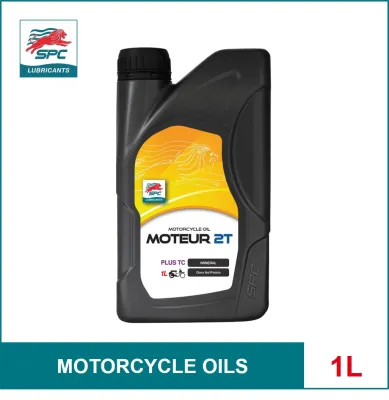
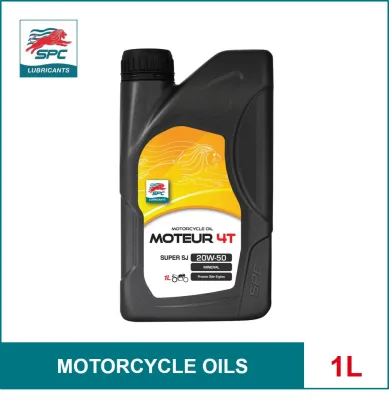
Prices are valid at publication and may change. Please refer to the product page for the latest price.
The number following the “W” represents the oil’s viscosity at normal engine operating temperatures, typically measured at 100 degrees Celsius. A higher second number, such as 50, indicates a thicker oil film that resists thinning under extreme heat and heavy mechanical loads. A lower second number, like 30, indicates a thinner oil film that reduces internal drag but may offer less protection under severe thermal stress.
These SAE grades serve as a standardized baseline for physical flow behavior rather than a direct measurement of oil quality or additive performance. When you look at an SPC oil label, these numbers tell you how the fluid will physically react to temperature changes inside your engine. This standard ensures that a 10W-40 oil from one brand will share the same basic flow characteristics as a 10W-40 oil from another.
How Viscosity Impacts Engine Protection and Performance
The viscosity of your SPC engine oil directly influences how your motorcycle performs on the road and how well its internal components are protected. Lower viscosity grades, such as 10W-30 or 10W-40, flow rapidly through the engine’s oil passages immediately after startup. This quick circulation minimizes the initial metal-on-metal wear that occurs before the engine reaches its optimal operating temperature.

Thinner oils also reduce internal fluid resistance within the engine, allowing moving parts to operate with less drag. This reduction in mechanical friction can lead to slightly better throttle response and improved fuel economy. However, if the viscosity is too low for your specific engine design, the oil film may become excessively thin under high operating temperatures, leading to accelerated wear on bearings and pistons.
Higher viscosity grades, such as 20W-50, provide a robust, thick oil film that excels at cushioning heavily loaded engine components. This extra thickness is particularly beneficial for older motorcycle engines with wider internal clearances, as it helps maintain proper oil pressure and prevents oil from bypassing worn piston rings. The thicker film also acts as an effective seal within the combustion chamber, preserving engine compression.
Despite these benefits, using an oil that is too thick can introduce performance drawbacks. High-viscosity oil increases internal drag, which can make the engine run slightly hotter and consume more fuel. It also takes longer to reach critical components during a cold start, potentially increasing wear during those first few seconds of operation. Deviating significantly from your manufacturer’s recommended viscosity can lead to inadequate lubrication, abnormal oil pressure, or even oil starvation in tight passages.
Choosing the Right SPC Viscosity Grade for Your Motorcycle
Selecting the ideal SPC engine oil viscosity requires balancing your motorcycle’s engineering requirements with your typical riding conditions. Your primary guide should always be the owner’s manual provided by the motorcycle manufacturer. Manufacturers design engines with specific internal clearances and oil pump capacities, and they explicitly list the approved SAE viscosity ranges for various operating temperatures.
Environmental factors play a significant role in this decision, especially in regions with consistently hot tropical climates like Singapore. Because ambient temperatures remain high year-round, you do not need to worry about sub-zero cold starts. In this environment, choosing a viscosity grade at the higher end of your manufacturer’s recommended range—such as a 10W-40 or 15W-50 instead of a 10W-30—can provide a more stable protective barrier during long commutes or heavy traffic.
The age and physical condition of your motorcycle should also influence your choice. High-mileage engines that have experienced natural wear may benefit from a slightly thicker oil grade to help seal clearances and maintain stable oil pressure. However, before making any adjustments to the recommended viscosity, it is wise to have a qualified mechanic assess your engine’s condition to ensure the change is appropriate.
Finally, always look beyond the viscosity numbers to verify other critical specifications on the SPC product label. For motorcycles with wet clutches, ensure the oil meets the appropriate JASO standard, such as JASO MA or MA2, to prevent clutch slippage. Additionally, check the API service category to confirm that the oil meets or exceeds the performance standards required for your motorcycle’s model year.
Frequently Asked Questions (FAQ)
Can I mix different SPC viscosity grades in my motorcycle?
Mixing different viscosity grades alters the overall flow characteristics of the oil and is not recommended for routine maintenance. Each grade is formulated with a specific balance of base oils and additives designed to perform within a set temperature range. You should only mix different viscosities in an emergency to prevent oil starvation when the correct grade is unavailable. If you must top up with a different viscosity, perform a complete oil and filter change as soon as possible to restore the correct formulation.
Does a higher viscosity number mean better engine protection?
A higher viscosity number does not automatically translate to superior engine protection. While thicker oil provides a stronger film under extreme heat, it also increases mechanical drag, reduces cooling efficiency, and takes longer to circulate during startup. Optimal protection is achieved only by matching the viscosity grade to the specific internal clearances and operating parameters engineered by your motorcycle’s manufacturer. Using an excessively thick oil can lead to delayed lubrication and increased wear.

Community discussion
Share your experience or ask a question. Comments are reviewed before publication.