
The numbers on a bottle of Castrol Power1, such as 10W-40 or 10W-50, indicate the oil’s viscosity, or its resistance to flow at different temperatures. The first number represents cold-start performance, while the second indicates protection at operating temperatures. Choosing the correct grade is not about picking the thickest oil available; it requires matching the specific viscosity range recommended in your motorcycle manufacturer’s owner’s manual to ensure proper lubrication and clutch compatibility.
Decoding the Viscosity Numbers on Castrol Power1 Bottles
The Society of Automotive Engineers (SAE) rating system standardizes how motor oils behave under thermal stress. This system uses a dual-number format to describe multigrade oils, which are designed to protect engines across a wide range of operating temperatures.
The “W” stands for Winter. The number preceding it, such as 5W, 10W, or 15W, indicates the oil’s flow characteristics at low temperatures. A lower cold-rating number means the oil remains more fluid in cold conditions, allowing it to pump quickly to critical engine components during startup. Even in warm tropical climates like Singapore, where cold starts do not involve freezing temperatures, a proper low-temperature rating ensures rapid oil pressure buildup when the engine has been sitting idle.
Products mentioned in this guide
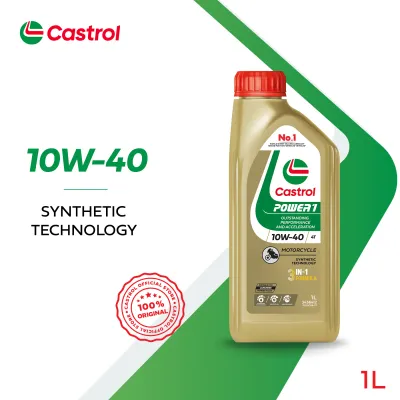
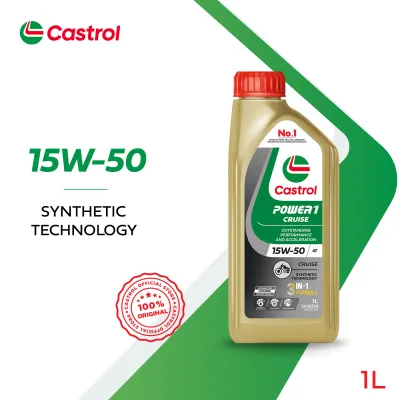
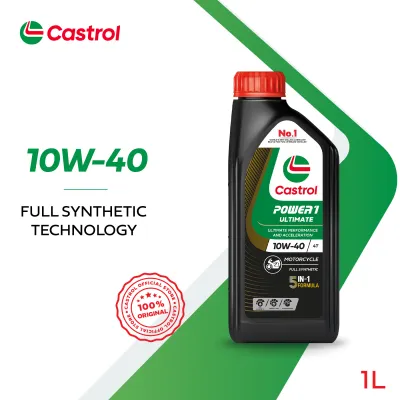
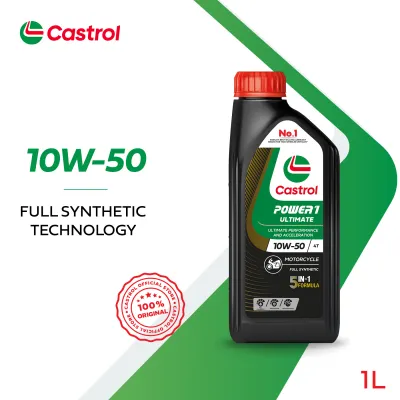
![[TWIN PACK] Castrol POWER1 ULTIMATE 4T 10W-40 (1L) Motorcycle Full Synthetic API SP JASO MA2](https://img.lazcdn.com/g/p/f764729b4d79cf52e77b76d49e4d78ec.jpg_400x400q80.jpg_.webp)
![[TWIN PACK] Castrol POWER1 4T 10W-40 (1L) Motorcycle Synthetic Technology API SP JASO MA2](https://img.lazcdn.com/g/p/304692cfde138b9d79f0458621b9567b.jpg_400x400q80.jpg_.webp)
![[TWIN PACK] Castrol POWER1 ULTIMATE 4T 10W-50 (1L) Motorcycle Full Synthetic API SP JASO MA2](https://img.lazcdn.com/g/p/0401f2a9d09f99b908e60178ba27beb3.jpg_400x400q80.jpg_.webp)
![[TWIN PACK] Castrol POWER1 Cruise 4T 15W-50 (1L) Synthetic Technology API SP JASO MA2](https://img.lazcdn.com/g/p/8789b8270838e4ddeed40686aef40866.jpg_400x400q80.jpg_.webp)
Prices are valid at publication and may change. Please refer to the product page for the latest price.
The second number, such as 30, 40, or 50, represents the oil’s kinematic viscosity at 100 degrees Celsius, which is the standard operating temperature for a warmed-up engine. This rating determines how thick the protective oil film remains under high heat and heavy mechanical loads. A higher second number indicates a thicker, more robust oil film at operating temperatures, which resists thinning under extreme stress.
Comparing 10W-40 and 10W-50 illustrates this balance. Both oils share the same “10W” cold-start rating, meaning they flow similarly when you first start the motorcycle. However, at operating temperature, a 10W-50 oil remains thicker than a 10W-40 oil. While the 10W-50 grade offers a heavier protective barrier that can be beneficial in air-cooled engines or under high-load conditions, it also introduces more internal fluid drag, which can slightly affect fuel efficiency and throttle response compared to a 10W-40. Neither is universally superior; each serves a specific engine design.
How to Match the Right Grade to Your Motorcycle
The primary rule of selecting motorcycle oil is to prioritize the original equipment manufacturer (OEM) owner’s manual over general online advice, forum opinions, or marketing claims. Engine designers calculate internal clearances, oil pump capacities, and operating pressures based on specific viscosity ranges. Deviating from these recommendations can lead to oil starvation, accelerated wear, or clutch slippage.

Ambient temperatures and riding conditions play a secondary role, but always within the boundaries set by the manufacturer. In Singapore’s consistently hot, humid climate, motorcycles often face prolonged idling in heavy traffic, which raises engine temperatures. If your owner’s manual lists multiple acceptable viscosity grades for warm climates—such as allowing both 10W-40 and 10W-50 above 30 degrees Celsius—you might opt for the higher viscosity grade to maintain film strength during extended urban commuting. Conversely, for short trips where the engine rarely reaches full operating temperature, the lower approved viscosity may offer better immediate protection.
High-mileage engines present another scenario where viscosity choices might shift. As an engine wears over time, the physical clearances between moving parts like pistons and bearings can widen slightly. If you notice increased oil consumption or minor mechanical noise, consult a qualified mechanic. A professional can assess whether transitioning to a slightly thicker approved viscosity grade is appropriate, or if physical repairs are required to address the underlying wear.
Understanding Castrol Power1 Formulations and Engine Types
Motorcycle engines have distinct lubrication requirements compared to passenger cars, and even within the motorcycle category, formulations vary drastically. The most critical distinction is between four-stroke (4T) and two-stroke (2T) oils. Four-stroke engines require oil that circulates continuously through the crankcase to lubricate the engine, transmission, and clutch. Two-stroke engines burn oil along with the fuel and require specialized 2T formulations designed to combust cleanly without leaving heavy deposits. Using 4T oil in a 2T engine, or vice versa, can cause catastrophic engine failure.
When reading Castrol Power1 labels, you will also encounter different base oil types: fully synthetic, part synthetic (often labeled as synthetic technology), and mineral oils. Fully synthetic oils offer the highest thermal stability and resistance to breakdown under extreme heat, making them suitable for high-performance motorcycles. Part synthetic options provide a balance of performance and cost, while mineral oils are typically reserved for older engines or specific break-in periods. Always verify which base type aligns with your manufacturer’s specifications.
Furthermore, you must check the bottle for Japanese Automotive Standards Organization (JASO) certifications. Most modern motorcycles share a single oil reservoir for the engine, gearbox, and wet clutch. These systems require JASO MA or MA2 certified oils, which contain specific friction modifiers that prevent the clutch from slipping. Scooters with dry clutches and continuously variable transmissions (CVTs) require JASO MB certified oils, which are formulated for low friction to maximize efficiency. Using a JASO MB oil in a wet-clutch motorcycle will cause severe clutch slippage and damage.
Pre-Change Checks and Safe Maintenance Boundaries
Before performing an oil change, establish a safe inspection routine to evaluate your engine’s health. Park the motorcycle on a level surface, using the center stand or a paddock stand rather than the side stand, to ensure an accurate reading. Check the oil level and condition through the engine sight glass or by using the dipstick, depending on your model’s design.
Pay close attention to the appearance and smell of the used oil. If the oil appears milky or cloudy, it indicates coolant contamination, suggesting a failed head gasket or water pump seal. A strong smell of gasoline points to fuel dilution, which thins the oil and compromises lubrication. Finding visible metal flakes or particles in the oil or on the magnetic drain plug indicates severe internal component wear. If you observe any of these warning signs, stop immediately and seek a professional mechanical inspection before proceeding with the oil change.
When you are ready to change the oil, always consult your motorcycle’s service manual for the exact torque specifications, drain plug washer requirements, and filter replacement steps. Over-tightening the drain plug can strip the engine casing threads, while under-tightening can lead to dangerous oil leaks on the road. Always replace the oil filter and the drain plug crush washer during every oil change to maintain a reliable seal and ensure clean oil circulation.
Frequently Asked Questions (FAQ)
Can I mix 10W-40 and 10W-50 Castrol Power1 oils?
Mixing different viscosity grades of Castrol Power1 is generally discouraged because it alters the oil’s physical properties in an unpredictable manner. While mixing them will not cause immediate chemical reactions, the resulting fluid will have an intermediate viscosity that may not meet the precise requirements of your engine. Only mix different grades in an absolute emergency when the oil level is dangerously low and no matching grade is available. If you must do this, perform a complete oil and filter change as soon as possible to restore the correct viscosity.
Does a higher viscosity number mean better engine protection?
A higher viscosity number does not automatically translate to better engine protection. While a thicker oil provides a more robust film under extreme heat, an oil that is too thick for your engine’s design cannot flow quickly enough through tight internal clearances, especially during cold starts. This slow flow can cause localized oil starvation, increased internal drag, higher operating temperatures, and reduced fuel economy. True protection comes from using the exact viscosity grade recommended by your motorcycle’s manufacturer, which is optimized for the engine’s specific oil pump capacity and bearing clearances.

Community discussion
Share your experience or ask a question. Comments are reviewed before publication.