
The viscosity rating on 2T (two-stroke) engine oil indicates how easily the fluid flows at specific temperatures. Unlike four-stroke oils that remain in a closed sump, two-stroke oil must mix with fuel or inject directly into the engine, lubricate critical moving parts, and then burn cleanly in the combustion chamber.
Choosing the correct viscosity ensures your motorcycle receives adequate lubrication without suffering from excessive carbon buildup or spark plug fouling. Using an incorrect grade can lead to poor fuel mixing, oil pump starvation, or even catastrophic engine seizure.
Decoding the Viscosity Numbers on 2T Engine Oil
The Society of Automotive Engineers (SAE) viscosity grading system measures how resistant a fluid is to flowing. On a bottle of engine oil, you might see numbers like 10W-30, 20W-50, or single numbers like SAE 30. The “W” stands for winter, indicating cold-start flow. A lower number before the “W” means the oil remains more fluid in cold weather, which is crucial for oil injection pumps to deliver the lubricant reliably during a cold start.
Products mentioned in this guide
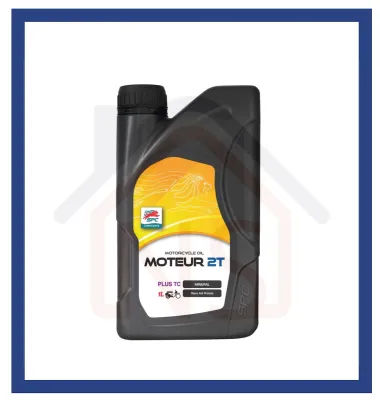
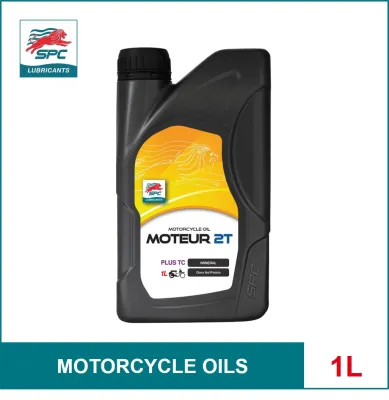
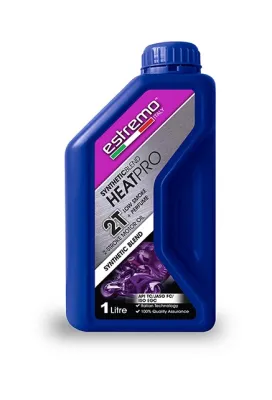
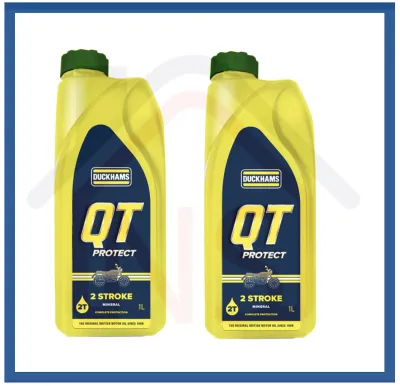
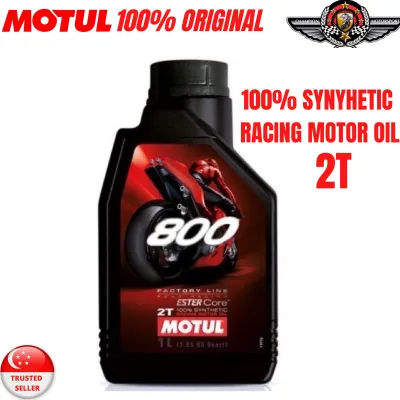
Prices are valid at publication and may change. Please refer to the product page for the latest price.
The second number, such as 30, 40, or 50, represents the oil’s viscosity at high operating temperatures, specifically measured at 100 degrees Celsius. A higher number indicates a thicker oil film that provides more resistance to thinning under extreme heat. For two-stroke motorcycles, this thickness determines how well the oil clings to the cylinder walls and bearings when the engine is running hot.
While four-stroke engines almost exclusively use multi-grade oils, two-stroke engines often utilize single-grade oils or specialized formulations. Single-grade 2T oils are optimized for a narrower temperature range, which is common in tropical climates where cold starts are not a concern. Multi-grade 2T oils are designed to flow consistently across a broader temperature spectrum, ensuring the oil injection system functions correctly in cold conditions.
It is vital to understand that these viscosity numbers only measure flow resistance and physical thickness. They do not indicate the overall quality of the oil, the base oil type (such as mineral, semi-synthetic, or fully synthetic), or the specific additive packages included. An SAE 30 mineral oil and an SAE 30 fully synthetic oil have the same flow resistance at test temperatures, but their thermal stability and wear protection differ significantly.
How Viscosity Impacts 2-Stroke Engine Performance
Two-stroke engines operate on a fundamentally different lubrication principle than four-stroke engines. Instead of circulating oil from a closed sump, a two-stroke engine requires the oil to be mixed directly with the incoming fuel charge or injected into the intake tract. The oil must flow easily enough to mix thoroughly with petrol or pass through fine injector nozzles, yet remain robust enough to coat the cylinder walls and bearings.

If the 2T oil is too thick for your specific engine setup, it will not mix evenly with the fuel in a premix system, or it may struggle to pass through the narrow lines of an autolube injection pump. This leads to incomplete combustion, resulting in heavy smoke, rapid carbon buildup in the exhaust ports, and sticky deposits on the piston rings. Over time, these deposits can cause the piston rings to seize, leading to a loss of compression and fouled spark plugs.
Conversely, using an oil that is too thin poses severe mechanical risks. An excessively thin oil cannot maintain a strong protective film under high loads and high operating temperatures. Without this barrier, metal-to-metal contact occurs between the piston and the cylinder wall, leading to rapid wear, localized overheating, and eventually a catastrophic engine seizure.
Because two-stroke oil is designed to be burned along with the fuel, its viscosity must balance mechanical protection with clean combustibility. High-quality 2T oils are formulated to leave minimal ash and residue when they burn. Choosing the correct viscosity ensures that the oil performs its lubricating duties perfectly before exiting the combustion chamber as a clean-burning vapor, keeping the internal engine components free of performance-robbing deposits.
How to Select the Correct 2T Oil Grade for Your Motorcycle
Selecting the right 2T oil starts with consulting your motorcycle’s official documentation. The owner’s manual, engine casing stamps, or official manufacturer service bulletins will specify the exact viscosity grade required for your vehicle. Manufacturers determine these specifications based on the engine’s tolerances, cooling system design, and whether the bike uses a premix or oil-injection system. Never infer compatibility from a category term alone.
In addition to the viscosity rating, you must verify the two-stroke specific performance certifications printed on the bottle. Standards such as JASO (Japanese Automotive Standards Organization) grades (FA, FB, FC, and FD) and ISO ratings (EGB, EGC, and EGD) measure lubricity, exhaust smoke, and system cleanliness. A high-viscosity oil that lacks the correct JASO FD or ISO-L-EGD certification may not burn cleanly enough for modern, low-emission two-stroke engines, regardless of how thick the oil is.
When riding in regions with varying ambient temperatures, refer strictly to the manufacturer’s approved viscosity chart rather than guessing. In warmer climates, a slightly thicker oil within the manufacturer’s approved range might be recommended to maintain film strength under high ambient heat. However, you should never exceed the maximum viscosity limit specified by the manufacturer, as doing so can restrict oil flow in injection systems and cause engine starvation.
If you do not have access to the owner’s manual, or if your motorcycle has undergone significant engine modifications, do not rely on generic advice. Consult a qualified motorcycle mechanic or the engine builder to determine the safest oil viscosity and mixing ratio for your specific setup.
Common Viscosity Mistakes to Avoid
One of the most damaging mistakes a rider can make is using four-stroke (4T) motorcycle oil in a two-stroke engine. Even if a 4T oil matches the exact viscosity number recommended for your 2T engine, its chemical composition is entirely different. Four-stroke oils contain metallic detergents, anti-wear additives, and ash-forming agents designed to remain stable in a crankcase. When burned in a two-stroke combustion chamber, these additives create hard, abrasive ash deposits that quickly destroy spark plugs, clog exhaust ports, and score cylinder walls.
Another common misconception is that a higher viscosity number automatically translates to superior engine protection, especially in hot climates. While a thicker oil film can offer more resistance to metal-to-metal contact, an excessively thick oil will restrict flow through the oil pump and fail to mix properly with fuel. This actually increases friction and heat due to lubrication starvation, defeating the purpose of using a thicker lubricant. Always stay within the manufacturer’s approved viscosity range.
Finally, always consider your motorcycle’s oil delivery system when selecting a lubricant. Autolube or oil-injection systems rely on a mechanical or electronic pump to deliver a precise amount of oil to the engine. These systems require an oil with specific flow characteristics to prevent pump cavitation and line blockages. Premix systems, where you manually mix the oil with petrol in the fuel tank, are slightly more forgiving of higher viscosities but still require thorough mixing to prevent the oil from settling at the bottom of the tank.
Frequently Asked Questions (FAQ)
Can I use 4-stroke oil in my 2-stroke motorcycle?
No, you should never use four-stroke (4T) engine oil in a two-stroke (2T) motorcycle. Four-stroke oils are formulated with metallic detergents and zinc-based anti-wear additives designed to stay in a closed crankcase without burning. If introduced into a two-stroke engine, these additives burn incompletely, generating heavy carbon deposits, blocking exhaust ports, fouling spark plugs, and potentially causing pre-ignition that can destroy the piston. Always use oil specifically labeled for 2T or two-stroke use.
Does 2T oil viscosity change the fuel-to-oil mix ratio?
No, the viscosity of the 2T oil does not alter the required fuel-to-oil mixing ratio. The mixing ratio (such as 30:1, 40:1, or 50:1) is determined by the motorcycle manufacturer’s engine design, bearing tolerances, and operating conditions. While some high-performance synthetic oils may state they can be mixed at leaner ratios, you should always follow the ratio specified in your motorcycle’s owner’s manual to ensure adequate lubrication and prevent engine damage.

Community discussion
Share your experience or ask a question. Comments are reviewed before publication.