
Selecting the correct motor oil is vital for preserving your engine’s health and ensuring long-term reliability. The 15W-50 viscosity rating represents a heavy-duty, multi-grade lubricant designed to provide robust protection under high-temperature and high-load conditions. While it offers exceptional film strength when your engine is running hot, it is not a universal solution for every vehicle. Understanding how this specific viscosity behaves helps you determine whether it aligns with your vehicle manufacturer’s requirements or if a lighter oil is necessary.
What the 15W-50 Viscosity Rating Actually Means
The alphanumeric code on a motor oil bottle indicates its flow characteristics under specific testing conditions standardized by the Society of Automotive Engineers (SAE). These numbers do not measure the quality of the oil, but rather its resistance to flow, which is known as viscosity. Multi-grade oils like 15W-50 are formulated to perform reliably across a wide temperature range, changing their flow behavior as the engine warms up.
The “15W” portion of the rating designates the oil’s low-temperature or winter performance, with the “W” standing for winter. The number 15 indicates how easily the oil can be pumped and how well it flows at cold startup temperatures before the engine reaches its normal operating state. While a 15W oil flows adequately in moderate cold, it is thicker at startup than a 0W, 5W, or 10W oil, meaning it requires more energy to circulate through the engine block during initial ignition in freezing climates.
Products mentioned in this guide
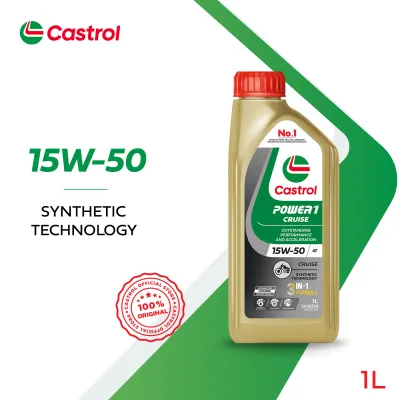
![[TWIN PACK] Castrol POWER1 Cruise 4T 15W-50 (1L) Synthetic Technology API SP JASO MA2](https://img.lazcdn.com/g/p/8789b8270838e4ddeed40686aef40866.jpg_400x400q80.jpg_.webp)
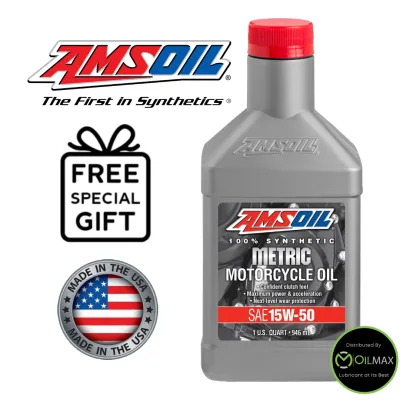
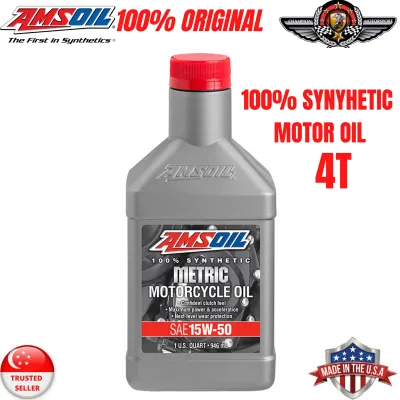
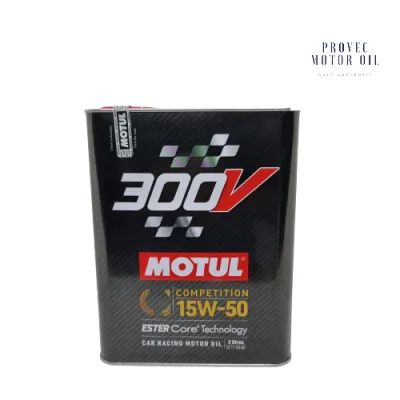
Prices are valid at publication and may change. Please refer to the product page for the latest price.
The “50” represents the high-temperature operating viscosity, measured at a standardized engine operating temperature of 100 degrees Celsius. A rating of 50 indicates a highly viscous, thick oil film that resists thinning even under extreme thermal stress. This thick barrier helps keep moving metal components separated, protecting critical engine parts like bearings, pistons, and camshafts from direct friction when temperatures soar.
It is crucial to recognize that these SAE numbers are standardized flow resistance measurements rather than absolute performance or quality guarantees. Two different brands of 15W-50 oil might share the same viscosity rating but feature entirely different additive packages, base oils, and manufacturer approvals. Therefore, matching the viscosity rating is only the first step in selecting the correct lubricant for your vehicle.
When to Choose 15W-50 for Your Engine
Choosing a 15W-50 motor oil is typically reserved for specific mechanical configurations and demanding operating environments. High-performance, track-driven, or heavily modified engines are prime candidates for this grade because they generate extreme internal heat. Under these intense conditions, lighter oils can thin out excessively, whereas a 15W-50 oil maintains its structural integrity to prevent metal-on-metal contact.

Older, high-mileage engines also frequently benefit from a thicker oil film. Over years of operation, internal engine components experience natural wear, which gradually widens the clearances between moving parts like bearings and cylinder walls. A 15W-50 oil can help seal these wider gaps, reducing oil consumption, minimizing internal leaks, and helping to maintain stable oil pressure throughout the system.
Environmental factors and driving habits play an equally significant role in this decision. In hot tropical climates like Singapore, ambient temperatures remain consistently high year-round, which naturally elevates baseline engine temperatures. When you combine this warm climate with demanding driving conditions—such as stop-and-go city traffic, carrying heavy loads, or towing—the engine operates under sustained stress that a thicker high-temperature oil is well-equipped to handle.
However, general use-case assumptions should never replace the explicit guidelines provided by your vehicle’s manufacturer. Modern engines are engineered with incredibly precise tolerances and oil passages designed for specific flow rates. Using an oil that is too thick can restrict flow, increase internal friction, and cause premature wear, making it essential to verify compatibility before making any changes.
How to Verify if 15W-50 Is Right for Your Vehicle
Before purchasing or pouring 15W-50 motor oil into your engine, you must perform a series of compatibility checks to prevent mechanical damage. Your primary source of truth is always the vehicle owner’s manual or the oil filler cap located under the hood. Manufacturers explicitly list the approved SAE viscosity grades for various temperature ranges, and you should only use 15W-50 if it is officially listed as an acceptable option.
Next, examine the product label on the back of the oil bottle to verify its performance certifications. Modern engines require specific chemical formulations to protect emissions systems and internal components. Ensure the oil meets the exact API (American Petroleum Institute), ACEA (European Automobile Manufacturers’ Association), or proprietary OEM specifications mandated by your vehicle manufacturer.
If your vehicle has aftermarket modifications, exhibits high oil consumption, or has active oil leaks, consult a qualified mechanic before switching to a higher viscosity. A professional can assess whether a thicker oil will safely mitigate these issues or if physical repairs are required. They can also evaluate how a viscosity change might affect variable valve timing systems, which are highly sensitive to oil thickness.
Always stop and seek professional advice if your owner’s manual explicitly forbids high-viscosity oils or if there is a conflict between the manual and aftermarket part instructions. Forcing a thick oil like 15W-50 into an engine designed strictly for ultra-low viscosity oils can starve critical components of lubrication during startup. Prioritizing manufacturer specifications ensures your engine remains protected and your warranty stays intact.
Common Questions About 15W-50 Motor Oil (FAQ)
Can I mix 15W-50 with a different viscosity grade?
Mixing 15W-50 with a different viscosity grade is generally not recommended because it alters the overall flow characteristics of the lubricant. Blending different grades can result in an unpredictable intermediate viscosity that may not meet your engine’s requirements, and it can dilute the specific additive packages formulated by each manufacturer. While you can mix grades in an absolute emergency to top up low oil levels, you should schedule a complete oil and filter change as soon as possible to restore the correct formulation.
Is 15W-50 always full synthetic?
No, 15W-50 motor oil is not exclusively full synthetic; it is available in conventional, synthetic blend, and full synthetic formulations. The viscosity rating only describes how the oil flows at specific temperatures, not how the base oil was manufactured. To determine the base stock type and the specific additive technology used, you must carefully check the product label and technical data sheet provided by the manufacturer.
Will using 15W-50 improve fuel economy?
Using a high-viscosity oil like 15W-50 will generally not improve fuel economy and may actually decrease it. Thicker oils create more fluid drag and resistance within the engine, requiring more energy from the fuel to move internal components. However, in high-heat or heavy-duty applications where 15W-50 is specified, the priority is maximizing engine protection and component longevity rather than achieving marginal fuel savings.

Community discussion
Share your experience or ask a question. Comments are reviewed before publication.