
Selecting the correct motorcycle engine oil is one of the most critical decisions you can make to ensure the longevity and performance of your bike. The letters and numbers on an oil bottle—such as 10W-40 or 15W-50—represent the oil’s viscosity grade, which measures its resistance to flow at specific temperatures. Choosing the wrong viscosity can lead to poor lubrication during cold starts, excessive engine wear under high heat, or even clutch slippage in motorcycles with wet clutches.
What Viscosity Numbers Actually Mean
The numbers on a bottle of motorcycle engine oil are defined by the Society of Automotive Engineers (SAE) and represent a multi-grade rating system. These ratings tell you how the oil behaves under both cold startup conditions and normal engine operating temperatures.
The first number, followed by the letter “W” (which stands for Winter), indicates the oil’s low-temperature viscosity. A lower number, such as 5W or 10W, means the oil remains more fluid in cold temperatures. This allows the oil to pump quickly through the engine during a cold start, protecting vital components from friction before the engine reaches its operating temperature.
Products mentioned in this guide
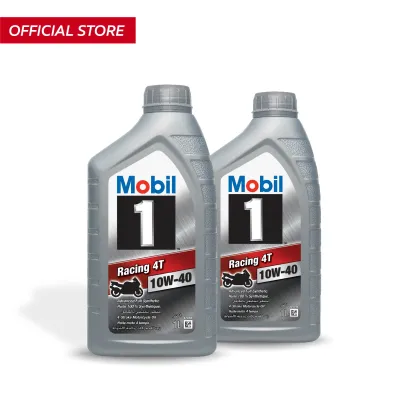
![[Automotive Parts SG] Motorcycle Mobil 1 4T engine oil 10w40 grade (1 liter pack)](https://img.lazcdn.com/g/ff/kf/Seea6d0353e7d43008483b5830a08a80dr.jpg_400x400q80.jpg_.webp)
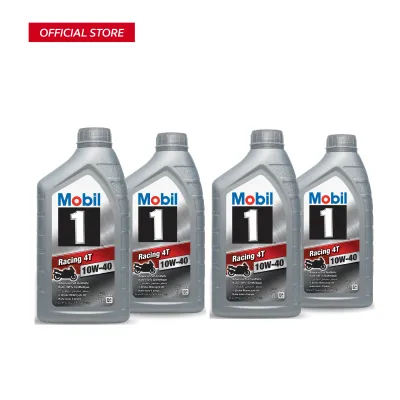
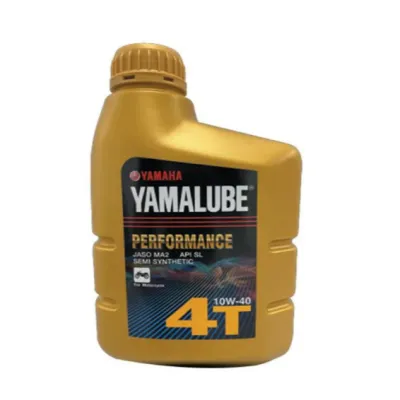
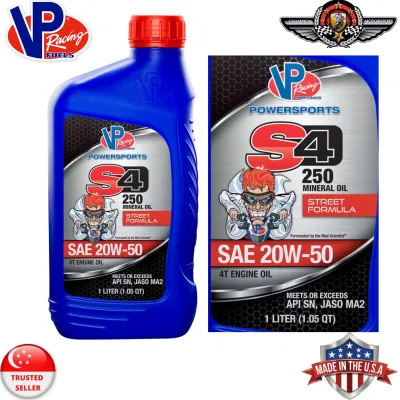
![[Automotive Parts SG] NASA 10w40 engine oil (1 liter ) suited for motorcycles cars van trucks lorry use.](https://img.lazcdn.com/g/ff/kf/S1b6d45fba19e4e9e8629e49c818a1e15q.jpg_400x400q80.jpg_.webp)
![[local srock] Castrol Edge A3 5W40 Engine Oil 4 Litre](https://img.lazcdn.com/g/p/98b3ebee3442b5cf0d8ed56b9aa7673e.jpg_400x400q80.jpg_.webp)
Prices are valid at publication and may change. Please refer to the product page for the latest price.
The second number, such as 30, 40, or 50, represents the oil’s viscosity at high temperatures, specifically measured at 100°C (the typical operating temperature of an engine). A higher second number indicates a thicker, more viscous oil film at high temperatures. This thicker film provides a robust barrier to protect engine bearings and gears under heavy loads and extreme heat.
Multi-grade oils are formulated with viscosity index improvers, allowing them to function efficiently across a wide temperature range. Unlike single-grade oils, which are designed for narrow temperature bands and are rarely used in modern motorcycles, multi-grade oils flow easily when cold but resist thinning out when the engine gets hot.
How to Select the Correct Viscosity for Your Motorcycle
The primary rule for choosing the right viscosity is to consult your motorcycle’s owner’s manual. Manufacturers design engines with specific internal clearances between moving parts, and they specify the viscosity range that will safely lubricate those clearances.

Ambient temperature plays a significant role in your choice. In regions with freezing winters, a lower “W” number is essential to prevent engine damage during cold starts. Conversely, in consistently warm tropical climates like Singapore, cold starts are less of a concern because ambient temperatures rarely drop. In these environments, riders often focus on the high-temperature rating to ensure the oil film does not break down during stop-and-go urban commuting or long highway rides under the sun.
Engine wear and mileage can also influence your selection over time. As a motorcycle engine ages and accumulates high mileage, the physical clearances between internal components can widen slightly due to natural wear. Under the guidance of a qualified mechanic or within the limits permitted by your owner’s manual, switching to an oil with a slightly higher high-temperature viscosity can sometimes help maintain oil pressure and reduce oil consumption.
Beyond viscosity, you must verify motorcycle-specific certifications on the product label. Most motorcycles use a wet clutch system, where the engine oil also lubricates the clutch and gearbox. You must look for JASO MA or JASO MA2 certifications, which guarantee the oil has the correct frictional properties to prevent clutch slippage.
Common Viscosity Grades and Typical Applications
While you should always follow your manual, understanding common viscosity grades can help you navigate the options available at your local workshop.
The 10W-30 and 10W-40 grades are highly versatile multi-grade options. They are widely recommended for modern, liquid-cooled commuter motorcycles and sportbikes. These grades offer a balanced performance, flowing quickly upon startup while providing reliable protection at standard operating temperatures.
The 15W-50 and 20W-50 grades are thicker formulations. They are typically used in air-cooled engines, large-displacement cruisers, or motorcycles operating in exceptionally hot climates. Air-cooled engines run hotter than liquid-cooled engines and rely heavily on the oil to dissipate heat, making a thicker oil film necessary to prevent metal-on-metal contact.
Remember that these applications are general industry patterns. A grade that works perfectly for a heavy cruiser might cause poor lubrication and drag in a lightweight scooter. Always verify compatibility with your specific vehicle documentation before purchasing.
Mistakes to Avoid When Buying Motorcycle Oil
One of the most common mistakes is using automotive engine oil in a motorcycle. Car engines and motorcycle engines have different lubrication requirements. Many modern car oils contain friction modifiers designed to improve fuel economy. If poured into a motorcycle with a wet clutch, these modifiers will cause the clutch plates to slip, leading to a loss of power, acceleration issues, and premature clutch wear.
Another pitfall is assuming that “thicker is always better.” Using an oil with a higher viscosity than recommended can restrict oil flow through narrow passages during startup, increase internal engine drag, and lower fuel efficiency. It can also cause the engine to run hotter because thicker oil moves more slowly and is less effective at carrying heat away from critical components.
Finally, never ignore the certification labels in favor of the viscosity numbers alone. An oil might have the exact viscosity grade your manual recommends, but if it lacks the required JASO MA/MA2 or API standards, it could damage your gearbox or clutch. Always check the back label for these specifications before making a decision.
Frequently Asked Questions (FAQ)
Can I mix different viscosity grades of motorcycle oil?
Mixing different viscosity grades or mixing mineral oil with synthetic oil is generally discouraged. Different formulations contain unique additive packages that may not interact well, potentially reducing the oil’s effectiveness. In an emergency where your oil level is dangerously low, it is safer to top up with a different viscosity of motorcycle oil than to run the engine dry. However, you should schedule a complete oil and filter change as soon as possible afterward to restore the correct specification.
Does synthetic oil change the viscosity grade I should use?
No, synthetic oil does not change the viscosity grade you should use. Viscosity ratings are standardized across all oil types. A 10W-40 fully synthetic oil has the same flow characteristics at low and high temperatures as a 10W-40 mineral oil. However, synthetic oils offer superior thermal stability, resist breaking down under extreme heat, and maintain their rated viscosity longer than mineral oils, making them an excellent choice for high-performance or heavily used motorcycles.
Community discussion
Share your experience or ask a question. Comments are reviewed before publication.