
Choosing the right On-Board Unit (OBU) mount adapter for your vehicle is essential for maintaining a clear view of the road while ensuring your payment device remains securely in place. The ideal choice between a suction cup and an adhesive mount depends primarily on your dashboard’s material, surface texture, and exposure to intense cabin heat. While suction cups provide excellent reusability and leave no residue behind, they require a highly smooth, non-porous surface to maintain their vacuum seal. Conversely, adhesive mounts offer a highly stable, semi-permanent bond that can conform to textured surfaces, but they carry a risk of damaging delicate dashboard finishes when removed. By evaluating your vehicle’s interior characteristics, you can select an adapter that stays secure without compromising your dashboard’s condition.
Assessing Your Dashboard Material and Texture
Dashboards are not uniform. Modern vehicles feature a variety of materials, ranging from hard, smooth plastics to textured vinyl, soft-touch synthetic polymers, and genuine leather. Identifying your specific surface is the critical first step. Smooth, hard plastics are highly receptive to suction cups because they allow the rubber or silicone pad to form an airtight seal. However, if your dashboard has a grain, micro-texture, or soft-touch coating, air will slowly seep under a suction cup, causing it to fail.
The physical shape of your dashboard also plays a significant role. Curved surfaces or steep slopes reduce the contact area of a flat suction base, placing uneven structural stress on the mount. Under these conditions, a rigid suction cup may struggle to hold the weight of an OBU, especially when driving over speed bumps or uneven roads.
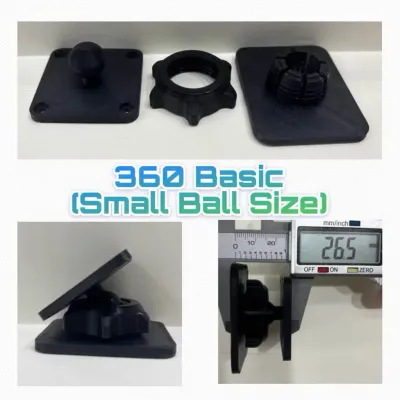
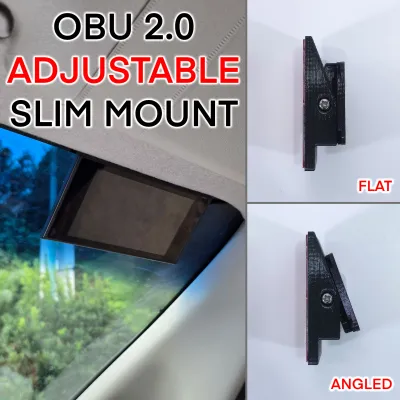
Products mentioned in this guide
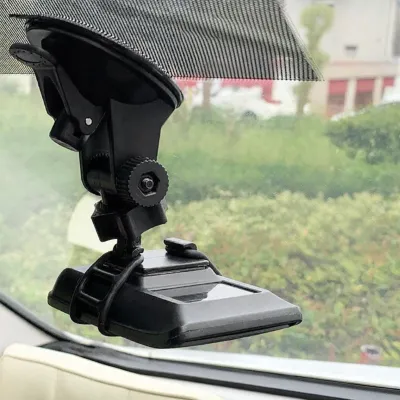
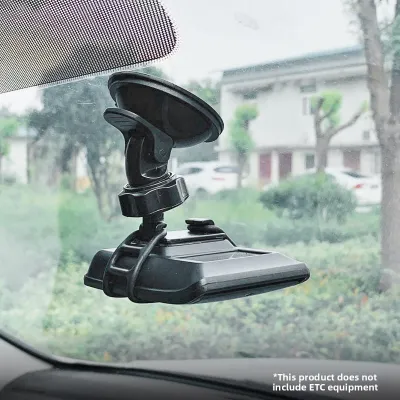
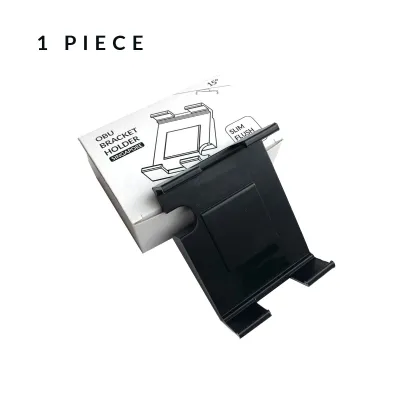
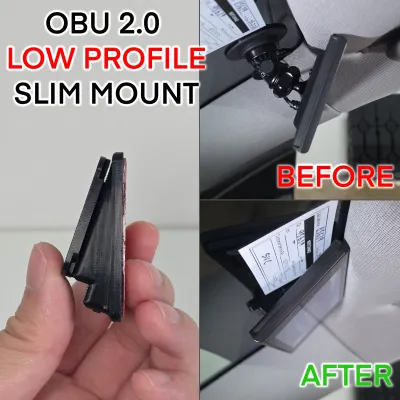
![[Readystock] OBU ERP2.0 Display Mount Casing (Case only)](https://img.lazcdn.com/g/ff/kf/S5a5fb223703d4dfaa6f798ab25e70453b.jpg_400x400q80.jpg_.webp)

Prices are valid at publication and may change. Please refer to the product page for the latest price.
Furthermore, environmental factors heavily influence mounting performance. In Singapore’s tropical climate, parked vehicles act as greenhouses, with cabin temperatures frequently soaring. This intense heat accelerates the degradation of both suction cup materials and adhesive chemical bonds. High temperatures cause suction cup plastics to expand and soften, leading to vacuum loss, while simultaneously causing low-grade adhesives to melt or slip. Understanding how these materials interact with heat and texture will guide you toward the most reliable mounting method.
Suction Cup OBU Mount Adapters: When They Work Best
Suction cup OBU mount adapters rely on a simple physical principle: creating a low-pressure vacuum chamber between a flexible rubber or silicone cup and a hard, non-porous surface. When you press the cup against the dashboard and engage the locking lever, air is forced out, and atmospheric pressure holds the mount firmly in place. For this mechanism to function reliably, the mounting surface must be highly smooth and free of microscopic gaps.

The primary advantage of a suction cup mount is its exceptional flexibility. Because it does not rely on chemical bonding agents, you can reposition the adapter as often as needed to find an optimal line of sight. This makes suction cups a practical choice for drivers of leased vehicles, rental cars, or those who frequently swap their OBU between different family cars. When it is time to return or sell the vehicle, you can simply release the lever and pull the tab, leaving absolutely zero residue or damage behind.
However, suction cups are not without their limitations. Their reliance on a strong vacuum means that even the smallest micro-texture on a dashboard will eventually allow air to leak in, leading to gradual loss of grip. Over time, you may find the mount detaching unexpectedly. This risk is compounded by prolonged exposure to direct sunlight and extreme cabin heat, which can dry out the silicone pad, causing it to warp, crack, or lose its elasticity, resulting in sudden detachment while driving.
Adhesive OBU Mount Adapters: When They Work Best
Adhesive OBU mount adapters utilize pressure-sensitive adhesive (PSA) tapes, often featuring high-bond acrylic foam, to secure the bracket to your vehicle’s interior. Unlike suction cups, which require a flat and non-porous surface, these foam-backed adhesives are designed to conform to slight surface irregularities, grain patterns, and minor curves. This makes them highly versatile and capable of establishing a strong, reliable bond on a wider variety of dashboard materials, including textured plastics and vinyl.
The main benefit of an adhesive mount is its enhanced long-term stability. Once fully cured, a high-quality adhesive bond is highly resistant to vibrations, road shocks, and the typical temperature fluctuations experienced inside a parked car. It provides a low-profile, permanent mounting solution that keeps your OBU securely positioned without the risk of sudden, unexpected drops.
Despite their reliability, adhesive mounts present distinct trade-offs, particularly regarding removal. The very strength that keeps the mount secure can make it difficult to detach. Removing an adhesive adapter can leave behind a stubborn, sticky residue that requires careful cleaning. More importantly, on delicate surfaces such as soft-touch coatings, synthetic leather, or genuine leather, the strong chemical bond can tear, peel, or discolor the material during removal. Additionally, achieving a secure hold requires meticulous surface preparation, including cleaning the area thoroughly with isopropyl alcohol and allowing the adhesive to cure undisturbed—often for up to 24 hours—before attaching the weight of the OBU.
Suction Cup vs. Adhesive Mounts: Feature Comparison
To help you weigh your options, the following comparison table outlines how suction cup and adhesive mounts perform across key operational dimensions. Note that actual performance may vary depending on the specific product specifications and your vehicle’s interior materials.
| Feature | Suction Cup Mounts | Adhesive Mounts |
|---|---|---|
| Hold Strength | High on smooth surfaces; poor on textured surfaces | High and consistent across most flat or slightly textured surfaces |
| Surface Compatibility | Limited to smooth, hard, non-porous plastics and glass | Broad; works on textured plastics, vinyl, and flat metal |
| Reusability | Excellent; can be moved and reinstalled infinitely | Extremely limited; typically requires a new adhesive pad for reinstallation |
| Heat Resistance | Moderate; vacuum seal can fail under extreme cabin temperatures | High; quality acrylic foam adhesives resist heat degradation once cured |
| Removal Cleanliness | Excellent; leaves no residue or marks on compatible surfaces | Variable; may leave sticky residue or damage delicate coatings |
| Best Suited For | Leased cars, shared vehicles, and smooth plastic dashboards | Permanent installations, textured dashboards, and high-vibration environments |
Decision Framework: Choosing the Right Adapter for Your Car
To determine the most suitable mounting solution for your vehicle, consider how your driving habits, ownership status, and dashboard design align with each adapter type.
Choose a Suction Cup Adapter if:
- Your vehicle's dashboard features a completely smooth, flat, hard-plastic section or you plan to mount the adapter directly to the windshield glass.
- You drive a leased vehicle, a rental, or a company car where permanent modifications or adhesive residues are prohibited.
- You frequently share a single OBU across multiple vehicles and require a mount that can be transferred in seconds without tools.
Choose an Adhesive Adapter if:
- Your dashboard has a textured, grained, or matte finish that prevents a suction cup from forming an airtight vacuum seal.
- You prioritize maximum, long-term stability and want to ensure the OBU remains securely in place during daily commutes without maintenance.
- Your dashboard has a steep slope or complex angles where a suction cup cannot sit flat, but a small adhesive footprint can easily conform.
Verify First if:
- Your vehicle's dashboard is wrapped in genuine leather, synthetic leather, or features a delicate soft-touch coating. In these cases, consult your vehicle's owner manual or check with the manufacturer before applying strong adhesives.
- You are unsure of the optimal placement. Always check the OBU manufacturer's official mounting guidelines and local traffic regulations to ensure the adapter does not obstruct your view or interfere with safety systems.
Installation and Safe Removal Guidelines
Proper installation and careful removal are critical to ensuring a secure hold and protecting your vehicle’s interior from permanent damage. Regardless of the mount type you choose, always begin by thoroughly cleaning the mounting area. Use a clean microfiber cloth and a mild cleaning solution or isopropyl alcohol (if safe for your specific dashboard material) to remove dust, oils, and dashboard protectants. Allow the surface to dry completely before proceeding.
For suction cup mounts, press the cup firmly against the clean, dry surface, then engage the locking mechanism to expel air and create the vacuum. For adhesive mounts, peel the backing paper, position the adapter carefully, and press it down firmly for at least 30 seconds. To ensure a lasting bond, avoid mounting the OBU immediately; let the adhesive cure undisturbed for the duration recommended on the product label, typically 24 hours.
When removing an adhesive mount, never pry it off with sharp tools or flathead screwdrivers, as this will scratch or gouge your dashboard. Instead, use a piece of dental floss or high-strength fishing line. Slide the line underneath the mount’s base and use a gentle sawing motion to slice through the foam adhesive core. Once the mount is detached, you can roll off the remaining adhesive residue with your thumb or apply a mild, label-authorized adhesive remover. Always test any cleaner on an inconspicuous area first to ensure it does not discolor or strip your dashboard’s protective coating.
Frequently Asked Questions (FAQ)
Can I use an adhesive mount on a leather-wrapped dashboard?
It is highly discouraged to apply strong adhesive mounts directly to genuine or synthetic leather-wrapped dashboards. The chemical bonding agents in high-strength adhesives can react with the leather’s natural oils or synthetic finishes, leading to permanent discoloration, staining, or peeling when you attempt to remove the mount. If your vehicle has a leather dashboard, consider using a suction cup mount attached to the windshield, or use a dedicated suction cup paired with a smooth, non-adhesive dashboard mounting disk designed specifically for delicate surfaces. Always consult your vehicle manufacturer’s guidelines for approved accessory mounting locations.
Will the heat inside a parked car cause the OBU mount to fail?
Yes, extreme cabin heat can cause both suction cup and adhesive mounts to fail over time. Intense heat softens the rubber or silicone of suction cups, causing them to lose their elasticity and vacuum seal. For adhesive mounts, prolonged exposure to high temperatures can degrade the chemical bonds of low-quality adhesives, causing the mount to slip or fall. To minimize this risk, look for high-temperature-rated mounts, park in shaded areas or covered car parks whenever possible, use a reflective front windshield sunshade, and verify the temperature tolerance specifications on the product label before purchasing.
Does mounting an OBU adapter block the driver's view or violate traffic rules?
Mounting any accessory on your dashboard or windshield must comply with local traffic safety regulations. In Singapore, accessories must not obstruct the driver’s clear line of sight or interfere with the safe operation of the vehicle. When positioning your OBU mount adapter, ensure it is placed outside your primary field of view and completely clear of any airbag deployment zones, such as the passenger-side dashboard or A-pillars. Always refer to your vehicle’s manual to identify airbag locations and consult the official OBU installation guidelines to ensure compliant and safe placement.

Community discussion
Share your experience or ask a question. Comments are reviewed before publication.