
Selecting the right portable tire inflator in Singapore requires balancing your vehicle’s tire volume against the mechanical capabilities of the pump. While a Steelmate air pump is a popular choice for standard passenger cars, hatchbacks, and motorcycles, it is essential to compare its specifications with alternative designs to ensure you do not overload the motor. The ideal inflator should match your vehicle’s power output, fit comfortably within your storage space, and provide sufficient airflow without overheating.
By evaluating key performance metrics such as power source, airflow rate, and duty cycle, you can determine whether a compact Steelmate unit or a heavy-duty alternative best suits your driving habits. This guide breaks down these critical factors, compares general design categories, and provides a clear framework to help you make an informed decision for your vehicle.
Key Decision Factors for Portable Tire Inflators
To choose a reliable tire inflator, you must first understand the technical specifications that govern how these devices operate. The most fundamental choice is the power source, which typically falls into two categories: 12V DC plug-in models and cordless battery-operated units. A 12V DC inflator draws power directly from your vehicle’s accessory socket, offering continuous operation without the risk of a dying battery, though its reach is limited by the power cord. Cordless models rely on internal lithium-ion batteries, providing unmatched portability, but they require regular recharging and can degrade over time in warm climates.
Products mentioned in this guide
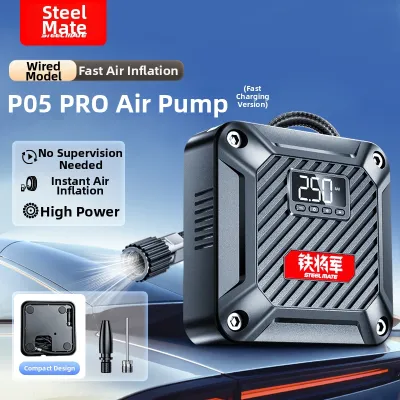
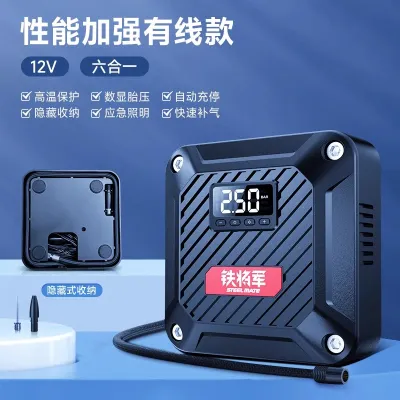
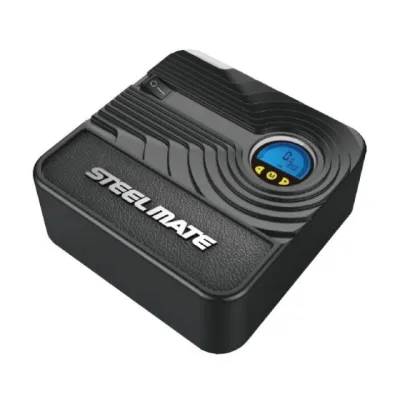
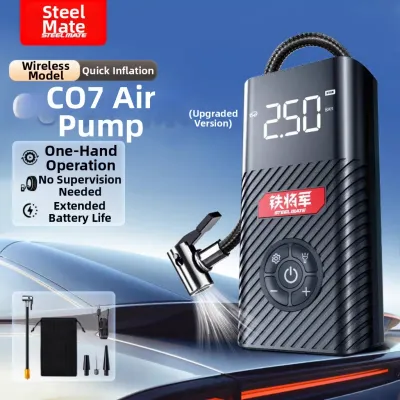
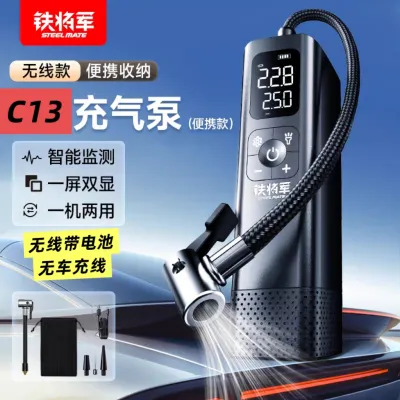
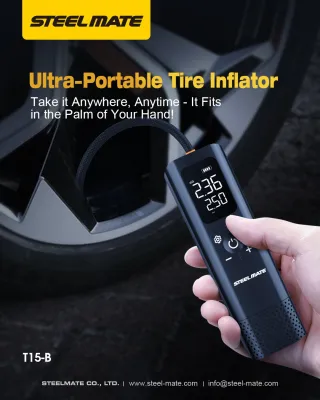
Prices are valid at publication and may change. Please refer to the product page for the latest price.
Airflow rate, measured in liters per minute (L/min), determines how quickly the pump can fill a tire. High-volume tires, such as those found on sports utility vehicles (SUVs) or multi-purpose vehicles (MPVs), require a higher airflow rate to inflate within a reasonable timeframe. If the airflow rate is too low, the pump must run longer, which brings the duty cycle into play.
The duty cycle is the amount of time an inflator can run continuously before it must cool down. Many compact consumer inflators have a duty cycle of 10 to 15 minutes, requiring an equal or greater amount of rest time afterward. Exceeding this limit can cause thermal overload, permanently damaging the internal seals and motor.
Finally, physical design factors like portability, storage footprint, and the length of the air hose are critical for practical use. In urban environments where parking spaces can be tight, a compact unit that stores neatly in a side compartment is highly advantageous. The air hose must also be long enough to reach the tire valve comfortably when it is positioned at the top of the wheel rotation.
Evaluating the Steelmate Air Pump
Steelmate is well-known for producing compact, user-friendly automotive accessories, and their air pumps generally reflect this design philosophy. Most models feature a lightweight, handheld form factor that prioritizes ease of storage and quick deployment. The build quality typically utilizes high-impact plastics and integrated cable management systems to keep cords and hoses tidy when not in use.

Standard packages from the brand usually include essential accessories to expand the tool’s utility. These typically consist of a standard Schrader valve connector, specialized adapters for Presta valves (commonly used on road bicycles), sports ball needles, and inflatable toy nozzles. Many models also come with a dedicated carry bag to protect the unit from dust and moisture in your vehicle’s boot.
The ideal user profile for a Steelmate air pump consists of daily commuters, sedan drivers, and motorcycle riders who require a dependable tool for routine pressure maintenance. These users benefit from the quick setup and straightforward operation when topping up tires by a few pounds per square inch (PSI) each month.
However, these compact units have inherent limitations when applied to high-volume or specialized tires. If you attempt to inflate a large, completely flat off-road tire or a commercial van tire, the small motor may struggle to provide the necessary volume within its standard duty cycle. For these demanding applications, the thermal limits of a compact pump can lead to premature wear or automatic thermal shutdown before the target pressure is reached.
How Steelmate Compares to Other Portable Inflators
When comparing Steelmate to the broader market of portable tire inflators, several distinct performance and usability trade-offs emerge. Inflation speed is the most noticeable difference; heavy-duty, dual-cylinder competitors generally move a much larger volume of air per minute than compact single-cylinder units. While a compact pump is perfectly adequate for minor pressure adjustments, a dual-cylinder model will significantly reduce the waiting time when inflating a tire from a completely flat state.
Noise and vibration levels also vary considerably across different brands and designs. Compact, lightweight pumps tend to vibrate more during operation, sometimes moving across the pavement if they lack adequate rubber dampening feet. Heavier, metal-bodied competitors often run more smoothly and quietly, though they sacrifice portability and are much bulkier to store.
The user interface is another key point of comparison. Many modern inflators, including several Steelmate models, feature digital screens with auto-shutoff capabilities. This allows you to preset your desired target pressure, and the unit will automatically stop pumping once that limit is reached, preventing over-inflation. In contrast, simpler or more budget-oriented generic competitors may use analog dial gauges, which require you to monitor the pressure constantly and manually switch off the device.
To help visualize these differences, the table below outlines how standard compact inflators compare to other common categories available on ecommerce platforms:
| Feature Category | Compact 12V / Cordless (Steelmate Style) | Heavy-Duty Dual-Cylinder | Handheld Cordless Mini |
|---|---|---|---|
| Power Source | 12V DC or Rechargeable Battery | 12V DC (often direct battery clamps) | Internal Rechargeable Battery |
| Airflow Rate | Moderate (optimized for standard passenger tires) | High (designed for large SUVs and light trucks) | Low (designed for bicycles and quick top-ups) |
| Duty Cycle | Limited (requires cooling after short intervals) | Extended (longer continuous run times) | Very Limited (designed for small volumes) |
| Best Application | Daily sedans, hatchbacks, compact SUVs | Large SUVs, commercial vans, off-road | Bicycles, motorcycles, emergency glovebox |
Matching the Inflator to Your Specific Vehicle Type
To select the most appropriate tool, you should apply a conditional decision framework based on the specific vehicles you own and how you plan to use the device.
You should choose a Steelmate or a similar compact 12V model if you primarily drive standard sedans, hatchbacks, or motorcycles. These vehicles have relatively low tire volumes, meaning a compact pump can easily handle routine pressure adjustments well within its duty cycle limits. The small physical size of these inflators also makes them ideal for vehicles with limited boot space.
You should choose a heavy-duty or dual-motor competitor if you drive a large SUV, a pickup truck, or a commercial vehicle. These larger tires require a substantial volume of air to reach proper inflation levels. A compact pump running continuously on a large tire will heat up rapidly, potentially damaging its internal components before completing the task. A heavy-duty unit, often powered by direct connection to the vehicle’s battery terminals, provides the sustained airflow and robust thermal management needed for these demanding tasks.
You should choose a cordless, handheld mini-alternative if your primary focus is extreme portability for non-automotive applications, such as road bicycles, e-scooters, or sports equipment. These ultra-compact devices can be stored in a glovebox or backpack and do not require access to a 12V vehicle socket. However, they are not suitable for major automotive inflation tasks due to their limited battery capacity and low airflow rates.
It is important to note that neither consumer-grade portable inflators nor heavy-duty portable pumps are suitable for specialized high-pressure bead-seating or reinflating run-flat tires that have suffered structural damage. These situations require specialized workshop equipment and professional intervention to ensure road safety.
What to Verify Before You Buy
Before purchasing any portable tire inflator, you must perform several compatibility and safety checks to ensure the tool is safe for your specific vehicle setup. First, consult your vehicle’s owner manual to identify the recommended cold tire pressure (measured in PSI or kPa) and verify the type of tire valves installed on your wheels.
Next, check the electrical specifications of both the inflator and your vehicle. Standard vehicle 12V accessory sockets are typically fused at 10 to 15 amperes. If an inflator draws more current than your socket is rated for, it will instantly blow the vehicle’s fuse. For high-draw inflators, ensure the product includes, or is compatible with, an adapter that connects directly to the vehicle’s battery terminals using alligator clamps.
Additionally, verify the manufacturer’s stated duty cycle and thermal protection features. Opt for models that include an automatic thermal shutdown sensor, which prevents the motor from burning out if the unit gets too hot during extended use.
Finally, establish a clear safety boundary for DIY tire maintenance. If you observe visible tire damage, sidewall bulging, deep cuts, or if a tire has been run completely flat, do not attempt to reinflate it. Operating a tire inflator on a structurally compromised tire can lead to sudden, catastrophic tire failure. In these situations, always stop and consult a qualified tire professional or contact a roadside assistance service to inspect or replace the tire safely.
Frequently Asked Questions (FAQ)
Can a portable tire inflator damage my car's 12V socket?
Yes, a portable tire inflator can damage your car’s 12V socket or blow its fuse if the device’s current draw exceeds the socket’s electrical rating. Most standard vehicle accessory outlets are rated for a maximum of 120 to 180 watts (typically 10 to 15 amps). Before plugging in an inflator, check its user manual to confirm its maximum amperage draw. If you are using a high-performance or dual-cylinder inflator that requires more power, you must use an adapter that connects directly to your car battery’s terminals to avoid overloading the interior electrical circuit.
How often should I check and adjust my tire pressure?
You should check and adjust your tire pressure at least once a month, as well as before embarking on any long-distance road trips. Tire pressure naturally drops over time due to permeation through the rubber, and changes in ambient temperature can also cause pressure fluctuations. In Singapore’s consistently warm tropical climate, it is especially important to measure tire pressure when the tires are cold—meaning the vehicle has been parked for at least three hours or driven less than two kilometers. Adjusting pressure when tires are hot from driving can lead to under-inflation once they cool down.

Community discussion
Share your experience or ask a question. Comments are reviewed before publication.