
Comparing the exact pH levels of Sonax interior cleaners against competing brands requires checking current Safety Data Sheets (SDS) or product labels, as formulations vary significantly by specific product line and region. There is no single “Sonax pH level” because the brand offers multiple interior care products, ranging from dedicated upholstery cleaners to multi-surface detailers. When evaluating these products, car owners must navigate a fundamental trade-off: higher pH (alkaline) formulations excel at breaking down heavy organic soils like grease, sweat, and food spills, while neutral pH formulations prioritize the long-term safety of delicate interior surfaces. Understanding this chemical balance is essential for maintaining a vehicle’s cabin without causing unintended material degradation.
Understanding pH Levels in Automotive Interior Cleaners
The pH scale, ranging from 0 to 14, measures the acidity or alkalinity of a water-based solution, where 7 is completely neutral. In the context of automotive detailing, interior cleaners generally fall into three practical categories: acidic (pH below 6), neutral (pH between 6 and 8), and alkaline (pH above 8). Acidic cleaners are rarely used for general interior surfaces because they can corrode metals and etch sensitive plastics, though they occasionally appear in specialized mineral stain removers.
Alkaline cleaners are highly effective at breaking down organic matter. Most dirt introduced to a car interior—such as body oils, sweat, food residue, and mud—is acidic in nature. Alkaline chemical agents neutralize these acidic soils, emulsifying oils and lifting stubborn grime from surfaces. However, this aggressive cleaning action comes with a distinct trade-off. Over time, repeated exposure to high-alkaline solutions can dry out materials, strip protective UV inhibitors, and cause delicate surfaces to fade or crack prematurely.
Products mentioned in this guide
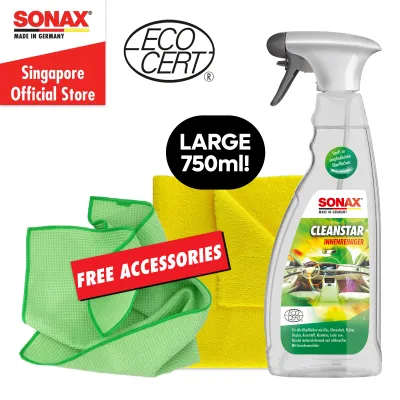
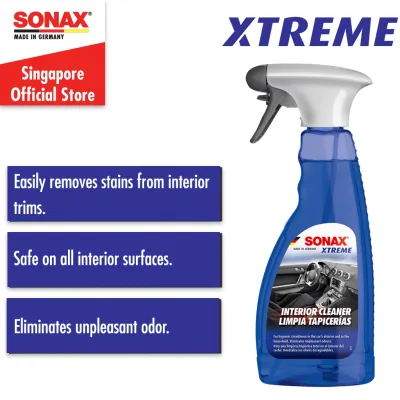
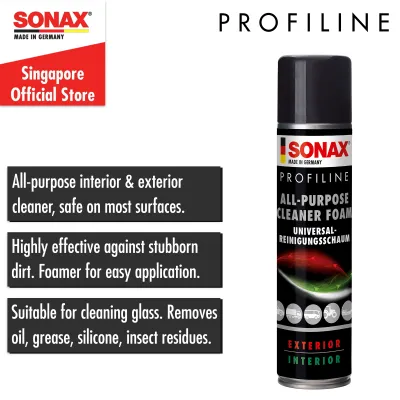
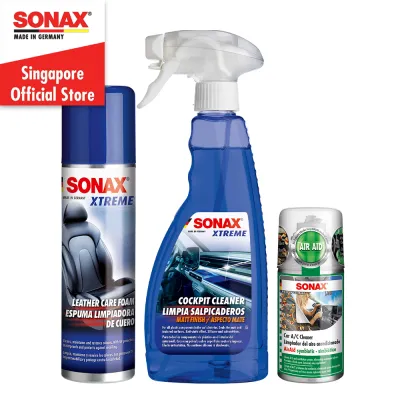
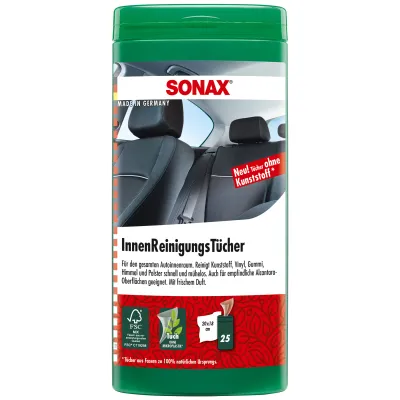
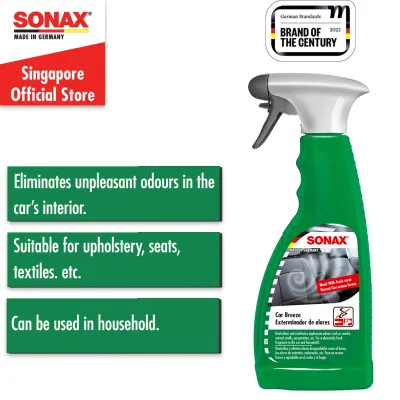
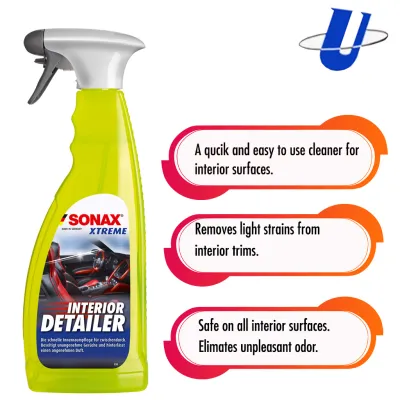
Prices are valid at publication and may change. Please refer to the product page for the latest price.
Neutral cleaners, on the other hand, are formulated to match the natural pH balance of sensitive materials or to minimize chemical stress during cleaning. These products rely on surfactants rather than raw chemical alkalinity to lift dirt. Surfactants surround soil particles, allowing them to be wiped away without chemically altering the underlying substrate. This makes neutral cleaners the preferred choice for routine maintenance, light dust removal, and delicate cabin surfaces that do not require heavy-duty degreasing.
How to Verify Sonax and Competitor pH Formulations
To make an informed comparison between Sonax and competing brands, car owners should look past marketing buzzwords and consult technical documentation. Terms like “pH balanced,” “gentle formula,” or “safe for all surfaces” are common in retail packaging, but they lack standardized scientific definitions. The most reliable way to verify the actual chemical properties of an interior cleaner is to locate its Safety Data Sheet (SDS), sometimes referred to as a Material Safety Data Sheet (MSDS).

Manufacturers are legally required to compile these documents for chemical products, and they are typically accessible via official brand websites or industrial distributor portals. Within an SDS, Section 9 details the physical and chemical properties of the substance, where the exact pH value or a narrow pH range is explicitly listed. Comparing the SDS of a Sonax interior cleaner with that of a competitor provides an objective, numerical basis for evaluation, free from marketing bias.
It is also important to recognize that the pH of a product can shift depending on how it is prepared and used. Concentrated cleaners that require dilution with water will have their final pH influenced by the dilution ratio and the local water supply. For instance, mixing a concentrate with highly alkaline tap water can slightly elevate the pH of the working solution compared to mixing it with distilled water. When comparing products, always verify whether the stated pH in the SDS refers to the concentrated formula or the ready-to-use mixture.
Matching pH Levels to Interior Materials
Modern vehicle cabins are complex environments composed of diverse materials, each reacting differently to chemical exposure. Applying a single cleaner across all surfaces without considering chemical compatibility can lead to permanent damage. Matching the pH level of your chosen cleaner to the specific material categories in your vehicle is the most effective way to balance cleaning power with long-term preservation.
Leather, Vinyl, and Synthetic Upholstery
Automotive leather is a highly sensitive material that requires careful chemical management. During the manufacturing process, leather is tanned and treated with protective topcoats to resist wear, moisture, and UV damage. These coatings, along with the natural collagen fibers of the leather, are chemically stable within a slightly acidic to neutral range, typically between pH 4.5 and 7. Using highly alkaline cleaners on leather can strip away these essential protective topcoats and leach out the natural oils, leading to a dry, brittle texture and eventual cracking.
Vinyl and synthetic upholstery are generally more resilient than natural leather, but they are still susceptible to chemical degradation. High-pH cleaners can gradually degrade the plasticizers that keep vinyl flexible, causing the material to stiffen and split under physical stress. For routine maintenance of both natural and synthetic seating surfaces, automotive manufacturers generally recommend using neutral cleaners to preserve the material’s structural integrity and appearance.
Plastics, Trim, and Touchscreens
The hard surfaces within a vehicle, including dashboard plastics, decorative trim, and electronic displays, present unique chemical compatibility challenges. Highly alkaline or acidic cleaners can react with the polymers in dashboard plastics, leading to hazing, discoloration, or a sticky residue that attracts more dust. In tropical climates like Singapore, where high cabin temperatures and intense UV exposure already stress interior plastics, chemical damage from improper pH levels can accelerate material failure significantly.
Electronic touchscreens and instrument cluster lenses are particularly vulnerable. These components are often treated with specialized anti-glare, anti-reflective, or oleophobic coatings that are easily stripped or clouded by harsh chemicals. Standard interior cleaners, especially those with elevated pH levels or containing solvents, should never be applied directly to these screens. Instead, manufacturers specify the use of strictly neutral, non-solvent formulations, or simply a dry microfiber cloth, to prevent permanent optical damage.
Comparison Framework: Evaluating Sonax Against Other Brands
When evaluating Sonax interior cleaners against other popular brands in the market, establishing a structured comparison framework ensures you select the right product for your specific detailing needs. Rather than searching for a universal “winner,” you should assess products across several key dimensions: the verified pH range, the recommended dilution flexibility, the target soil types, and the specific material safety warnings provided by the manufacturer.
A practical decision-making process begins with identifying the primary task at hand. If you are performing routine maintenance on a well-maintained vehicle with delicate surfaces, a neutral-pH product is the safest choice. If you are tackling heavy grease, deep-seated grime, or neglected upholstery, a mildly alkaline cleaner may be necessary to break down the contamination effectively. While a premium neutral cleaner might cost around S$20 to S$30 per bottle, the long-term savings from avoiding material damage far outweigh the initial expense.
Under this framework, you should choose a Sonax interior cleaner if its specific product SDS aligns with your vehicle’s material requirements and the level of soil you need to remove. For example, if the SDS of a specific Sonax multi-surface cleaner indicates a neutral pH, it is highly suitable for regular maintenance across a variety of cabin surfaces. Conversely, you should choose an alternative brand if a competitor offers a more precise pH match or a specialized formulation for a highly sensitive surface, such as a dedicated leather cleaner with a verified pH of 5.5 or a specialized touchscreen cleaner.
Always exercise extra caution and verify product compatibility first if your vehicle features aftermarket modifications. Custom leather dyes, aftermarket window tints, ceramic coatings on interior plastics, and specialized fabric protectors can react unpredictably to different pH levels. In these scenarios, consulting the aftermarket installer or product manufacturer is essential before applying any chemical cleaner.
Safe Application and Testing Protocols
Regardless of the pH level of the interior cleaner you select, implementing safe application and testing protocols is the most effective way to prevent accidental chemical damage to your vehicle’s cabin. Chemical reactions can be unpredictable, especially when dealing with aged materials or surfaces previously treated with unknown detailing products.
The first and most critical step is to perform a spot test in an inconspicuous area before applying the cleaner to visible surfaces. Select a hidden spot, such as the underside of a seat, the lower portion of a door panel, or a small section of trim inside a storage compartment. Apply a small amount of the cleaner, let it dwell for the recommended time, and wipe it away. Check the area carefully under good lighting for any signs of color transfer onto your microfiber towel, discoloration, hazing, or changes in material texture. If any adverse reactions occur, discontinue use immediately.
Always follow the manufacturer’s dilution instructions precisely. If you are using a concentrated formula, measuring the water and cleaner ratios accurately ensures the working solution remains within the intended pH range and safety margins. Over-concentrating a cleaner to boost its strength can inadvertently raise its chemical aggressiveness, risking immediate damage to sensitive surfaces.
Finally, never allow any interior cleaner to dry completely on a surface. Once the cleaner has emulsified the dirt, wipe the area thoroughly with a clean, damp microfiber towel to remove both the suspended soil and any remaining chemical residue. Leaving active surfactants or alkaline residues on interior surfaces can lead to long-term chemical degradation, especially when exposed to heat and sunlight. Finishing with a dry microfiber towel ensures a clean, residue-free finish.
Frequently Asked Questions (FAQ)
Can I use a slightly alkaline cleaner on car leather?
While a mildly alkaline cleaner can be highly effective at lifting heavy, embedded grease and oils from leather surfaces, it must be used with extreme caution. If you choose to use an alkaline product, you must follow it immediately with a thorough rinse using a damp microfiber towel to neutralize and remove the chemical residue. Additionally, applying a high-quality leather conditioner afterward is essential to restore the natural moisture balance and protective barrier of the leather, preventing it from drying out or cracking. Always defer to the leather manufacturer’s specific care guidelines before proceeding.
Does a higher pH always mean better stain removal?
No, a higher pH does not automatically guarantee superior stain removal and can often lead to unnecessary surface damage. While alkaline solutions are highly effective at breaking down organic matter like grease and proteins, other factors such as surfactant quality, dwell time, temperature, and mechanical agitation play equally critical roles in the cleaning process. Using a highly alkaline cleaner when a neutral formula with proper agitation would suffice unnecessarily exposes your vehicle’s interior materials to chemical stress and potential degradation.

Community discussion
Share your experience or ask a question. Comments are reviewed before publication.