
Choosing the right enclosure for your subwoofer speakers is just as critical as selecting the driver itself, as the box directly dictates how the speaker behaves and sounds. If you prioritize tight, accurate, and highly detailed bass while working with limited trunk space, a sealed enclosure is generally the ideal choice. Conversely, if your goal is maximum volume, deep low-frequency extension, and physical rumble for bass-heavy music, a ported enclosure is typically more suitable. Understanding how these two designs manipulate air pressure and interact with your car’s cabin will help you select the setup that matches your listening preferences and vehicle constraints.
Understanding Sealed and Ported Enclosure Designs
To understand how these enclosures shape your audio experience, it is necessary to look at their physical construction and acoustic mechanics. A sealed enclosure, often referred to as an acoustic suspension design, is an airtight box. When the subwoofer speaker’s cone moves backward, it compresses the air inside; when it moves forward, it creates a vacuum. This internal air pressure acts as a physical spring that constantly resists the cone’s movement, providing exceptional control over the cone, preventing wild, uncontrolled excursions, and allowing the speaker to return to its resting position rapidly.
A ported enclosure, also known as a bass reflex design, features a built-in vent or port that allows air to flow freely in and out of the box. Instead of trapping the rear sound wave, a ported box redirects this energy through the port. This design relies on Helmholtz resonance—the same acoustic phenomenon that occurs when you blow across the top of an open bottle. At a specific frequency determined by the port’s dimensions, the air inside the port vibrates in phase with the front of the subwoofer cone, significantly boosting the overall bass output.
Products mentioned in this guide
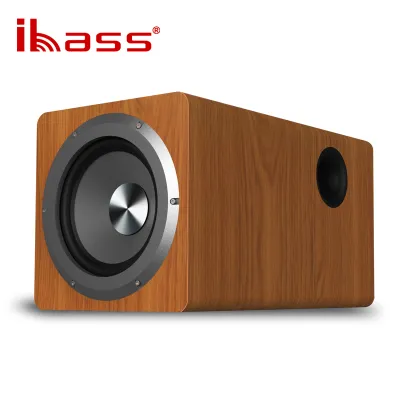
18 Lazada user ratings
No issues at all, it's a great little subwoofer! Once it's connected to the sound system, the audio quality is fantastic with excellent bass…Read full reviewShow less
No issues at all, it's a great little subwoofer! Once it's connected to the sound system, the audio quality is fantastic with excellent bass output!
The bass is pretty decent, especially when you crank up the subwoofer to the max. Music sounds good with a nice deep bass. Thumbs up!
The appearance matches the released pictures, and the sound quality is decent, but it needs high and mid-tones to be perfect.
Even though it's marked as 220v, it works just fine with 110v and pairs perfectly with a 40w soundbar.
Great value for money, definitely an improvement, and dance music sounds fantastic.
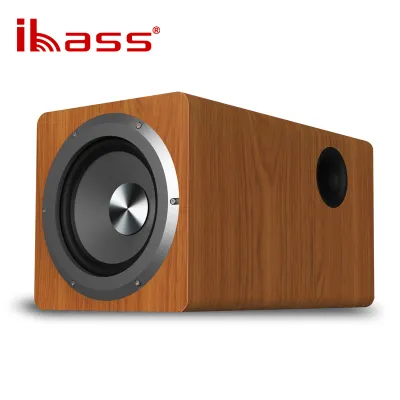
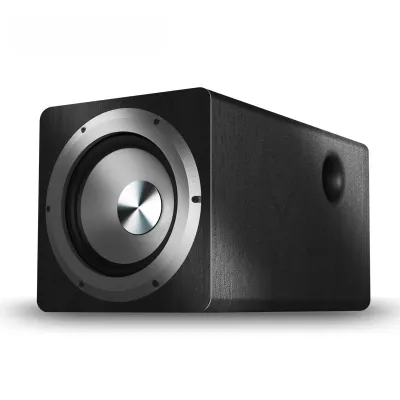
Prices are valid at publication and may change. Please refer to the product page for the latest price.
The interaction between the enclosure and the subwoofer speaker’s moving parts is fundamentally different in each setup. In a sealed box, the mechanical suspension of the woofer is heavily assisted by the pneumatic pressure of the trapped air. In a ported box, this air spring effect is absent near the port’s tuned frequency, meaning the speaker relies almost entirely on its own mechanical suspension to control cone movement. This difference in physical control directly influences the sound signature, power handling, and overall efficiency of your car audio system.
Sound Profile and Bass Performance Comparison
The acoustic differences between sealed and ported enclosures are immediately noticeable. Sealed enclosures are celebrated for their transient response, which refers to the speaker’s ability to start and stop reproducing sound in perfect synchronization with the audio signal. Because the internal air spring dampens excess cone movement, the bass notes sound incredibly tight, precise, and punchy. There is minimal “hangover” or ringing between consecutive notes, allowing you to hear the distinct texture of an acoustic bass string or the rapid-fire strike of a kick drum.

Ported enclosures trade some of this transient precision for raw output efficiency and low-frequency extension. By utilizing the acoustic energy from the rear of the cone, a ported box can deliver a substantial increase in Sound Pressure Level (SPL) compared to a sealed box using the same driver and amplifier power. This efficiency gain is most pronounced around the port’s tuning frequency, where the port does most of the work, reducing physical strain on the subwoofer cone and delivering a deeper, more physical bass response.
These characteristics are reflected in the frequency response curves of each design. A sealed box exhibits a shallow, gradual roll-off of low frequencies, typically around 12 decibels (dB) per octave. This means that while the bass may not be incredibly loud at ultra-low frequencies, it extends very deep into the sub-bass spectrum in a smooth, predictable manner. A ported box maintains a flat and highly efficient response down to its tuning frequency, below which the output drops off sharply at a rate of 24 dB per octave. If a ported box is tuned too high or constructed poorly, it can suffer from “boominess”—a peaky, muddy sound where certain frequencies are overwhelmingly loud while others are lost.
Matching the Enclosure to Your Music Genre and Listening Style
Because different music genres rely on distinct production styles and bass characteristics, your daily playlist should play a major role in your enclosure decision. Some musical styles demand rapid, articulate note changes, while others are designed to deliver sustained, low-frequency vibrations that test the physical limits of your car’s interior.
Best Genres for Sealed Enclosures
Sealed enclosures are highly suited for genres where accuracy, timing, and instrument separation are paramount. If your playlist consists of jazz, classical, acoustic, classic rock, or heavy metal, a sealed box will reproduce the natural timbre of acoustic instruments and the fast, complex rhythms of live percussion without muddying the mix. Electronic music styles that feature intricate, fast-tempo synth basslines, such as progressive house or techno, also benefit from the tight transient response of a sealed design, ensuring that each beat remains distinct and punchy.
Best Genres for Ported Enclosures
Ported enclosures excel when playing modern, bass-heavy genres that rely on sustained low-frequency tones and high-volume impact. If you primarily listen to hip-hop, trap, dubstep, drum and bass, or modern pop, a ported box will bring out the deep, rolling sub-bass sweeps and heavy synthetic kicks that define these styles. The physical rumble and high SPL capabilities of a vented design match the energetic, club-like atmosphere that these genres are produced to deliver, making the bass feel as much as it is heard.
Vehicle Cabin Size and Installation Space Constraints
Before purchasing or building an enclosure, you must evaluate the physical space available in your vehicle and how the cabin’s acoustics will interact with the bass. Sealed boxes are inherently more compact, often requiring up to 50 percent less internal volume than a ported box designed for the same subwoofer speaker. This small footprint makes sealed enclosures highly practical for compact cars, sports coupes, or trucks where trunk space is at a premium, allowing for greater placement flexibility and minimizing cargo interference.
Ported enclosures require a much larger physical footprint because they must accommodate both the larger internal air volume needed for proper tuning and the physical volume of the port itself. If you install a ported box, you must also ensure there is adequate clearance around the port opening—typically at least equal to the port’s diameter—so that airflow is not restricted, which can cause unwanted port noise or “chuffing.” This larger size can significantly reduce your trunk’s utility and add substantial weight to the rear of the vehicle.
The acoustic environment of your vehicle’s cabin, known as cabin gain or the transfer function, also plays a critical role. Small, enclosed cabins naturally amplify low frequencies below a certain threshold, typically starting around 50 to 60 Hz. Because a sealed box has a gradual low-frequency roll-off, this natural cabin gain often complements the sealed box’s curve perfectly, resulting in a surprisingly deep and flat in-car frequency response. In contrast, installing a large ported box in a very small hatchback can sometimes result in overwhelming, boomy bass that masks mid-range frequencies, whereas the same ported box might be necessary to fill the larger cabin of an SUV or minivan.
Regardless of the box type you choose, safety must be a primary consideration during installation. A heavy subwoofer enclosure can become a dangerous projectile in the event of a sudden stop or collision. Always secure the enclosure firmly to the vehicle’s chassis using heavy-duty brackets, cargo straps, or mounting bolts anchored to factory tie-down points. Additionally, if you are performing the electrical wiring yourself, disconnect the negative battery terminal before starting, use the correct wire gauge for your amplifier’s current draw, and install an inline fuse close to the battery to prevent electrical fires. If you are unfamiliar with vehicle disassembly or electrical routing, consult a qualified professional installer.
Power Requirements and Amplifier Matching
Matching your enclosure to your amplifier and understanding the electrical demands of your system is vital for preventing equipment damage and achieving clean sound. Because a ported enclosure is highly efficient near its tuning frequency, it requires less amplifier wattage to reach a specific volume level compared to a sealed enclosure. This efficiency can be advantageous if you are working with a modest amplifier or want to minimize the electrical strain on your vehicle’s alternator and battery.
In a sealed enclosure, the subwoofer speaker relies on the air spring to control the cone, but the lack of port reinforcement means you generally need more raw power to achieve high volume levels. When selecting an amplifier for a sealed setup, look for a model with a high damping factor, which represents the amplifier’s ability to control the speaker cone’s motion after the signal stops. This electrical control, combined with the physical control of the sealed air, results in the cleanest possible transient response.
Ported enclosures present a unique mechanical risk known as over-excursion. Below the port’s tuning frequency, the air inside the box no longer provides any resistance to the subwoofer cone, causing the speaker to behave as if it were playing in free air. If the amplifier sends a high-power signal at a frequency below this tuning point, the cone can easily travel past its safe physical limits, leading to mechanical failure. To prevent this, you must configure a subsonic (or infrasonic) filter on your amplifier, typically setting it to cut off frequencies roughly 3 to 5 Hz below the enclosure’s tuned frequency.
Before finalizing your setup, always consult the manufacturer specifications for your specific subwoofer speaker. Pay close attention to the Thiele/Small parameters, which are mathematical measurements of the speaker’s physical and electrical properties. Manufacturers will explicitly list the recommended range of internal volumes for both sealed and ported configurations. Attempting to force a subwoofer into an enclosure that is too small or too large relative to these specifications will result in poor performance, distorted sound, and potential mechanical failure.
Decision Framework: Which Subwoofer Enclosure Should You Choose?
To make your final decision, weigh your personal listening goals, vehicle space, and technical requirements against the characteristics of each enclosure type.
You should choose a sealed enclosure if:
- Your primary goal is high sound quality, accurate tone reproduction, and tight, punchy bass.
- You listen to a wide variety of music genres, including acoustic, rock, jazz, or fast-tempo electronic tracks.
- Your vehicle has limited trunk space, or you drive a compact car where cabin gain will naturally boost the low-end response.
- You prefer a straightforward installation with a smaller, lighter physical footprint.
You should choose a ported enclosure if:
- You want maximum volume, high SPL output, and deep, physical bass rumble that you can feel.
- Your playlist consists primarily of hip-hop, EDM, dubstep, or modern pop.
- You have ample trunk space to accommodate a larger box and can ensure proper clearance around the port.
- You want to maximize the efficiency of your amplifier and do not mind configuring a subsonic filter to protect the driver.
Before making a purchase, verify whether your specific subwoofer speaker model is optimized for one enclosure type over the other. Some subwoofers are engineered with stiff suspensions designed specifically for ported boxes, while others feature high-compliance designs that require the air spring of a sealed enclosure to function safely. Additionally, check if your subwoofer is designed exclusively for free-air (infinite baffle) applications, which do not use a traditional box at all, or if it requires a specialized bandpass enclosure to achieve its intended performance. Taking the time to match the driver, the box, and your vehicle’s physical space will ensure you get the exact bass performance you want.

Community discussion
Share your experience or ask a question. Comments are reviewed before publication.