
Selecting the right car polish machine requires balancing your technical skill, the current state of your vehicle’s paint, and your specific detailing goals. There is no single machine that serves as a universal solution for every user. While professional detailers often rely on the rapid cutting power of rotary polishers, enthusiasts and beginners generally find dual action and random orbital machines to be far safer and more forgiving. Understanding how these tools operate and how they interact with your vehicle’s clear coat is the first step toward achieving a high-quality finish without risking costly paint damage.
Understanding the Operating Mechanisms
Rotary polishers operate on a direct-drive system where the spindle spins on a single, fixed axis. This direct connection means the motor drives the pad continuously without stopping, regardless of the downward pressure you apply. The constant, high-speed circular motion generates significant friction and localized heat, making it highly efficient at leveling paint defects but also highly sensitive to minor steering errors.
Dual action (DA) polishers, specifically forced-rotation models, combine two distinct movements: a gear-driven rotation and an orbital oscillation. The pad spins on a central axis while that axis itself moves in a wider circle. Because this rotation is gear-driven, the pad will not stall under heavy downward pressure, providing consistent cutting action while distributing heat more evenly across the panel than a rotary machine.
Products mentioned in this guide
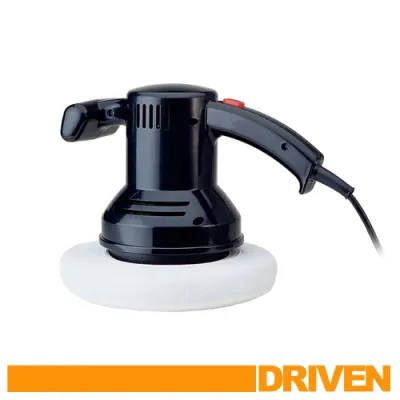
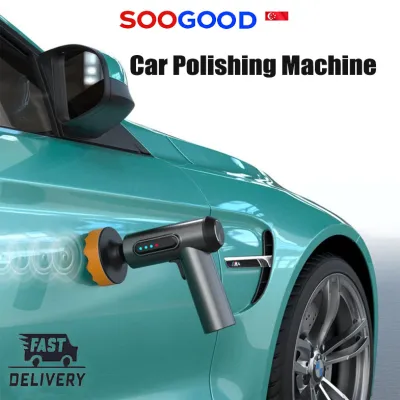
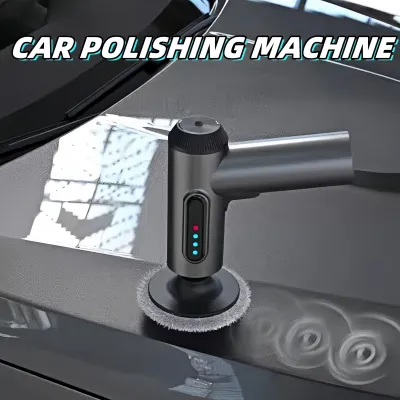
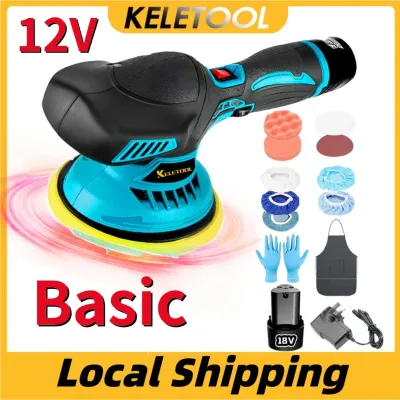
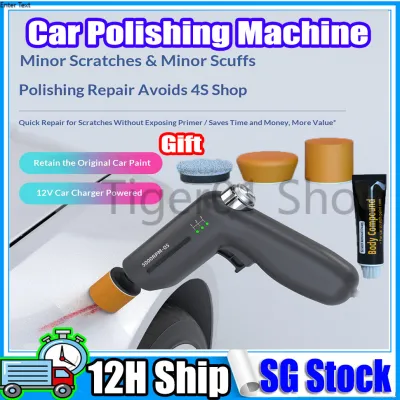
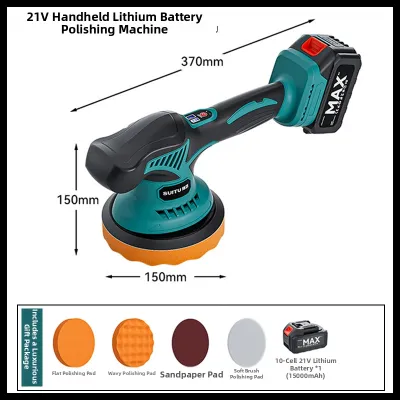
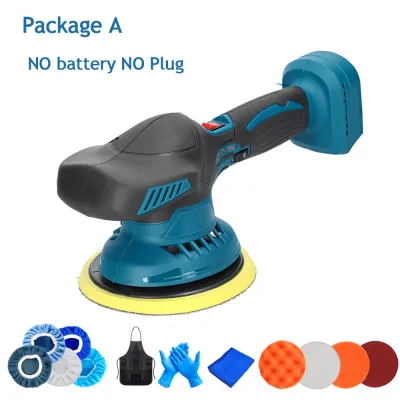
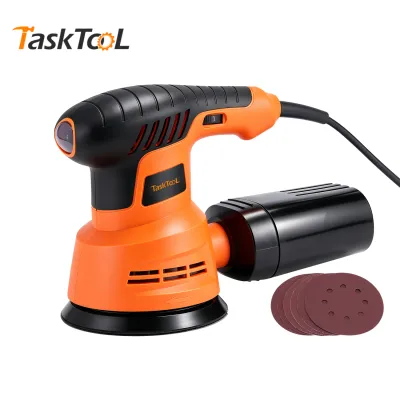
Prices are valid at publication and may change. Please refer to the product page for the latest price.
Random orbital polishers also utilize dual action, but they rely on a free-spinning mechanism rather than gears. The motor drives the orbital motion, while the rotation of the pad is driven purely by centrifugal force and friction. If you apply too much downward pressure or tilt the machine onto an edge, the rotation stops completely, leaving only the safe orbital oscillation. This safety feature prevents accidental paint damage but limits the machine’s ability to correct deep defects quickly.
These mechanical differences directly influence how polishing compounds behave on the paint surface. Diminishing abrasives, which break down into smaller polishing particles under heat and pressure, require the controlled, progressive friction of a dual action or random orbital machine to finish cleanly. Non-diminishing abrasives, which maintain their size throughout the process, perform predictably across all three types but require careful speed management on a rotary to avoid premature drying.
Assessing Paint Safety and Skill Requirements
Paint safety is directly tied to heat generation and clear coat thickness. Modern factory clear coats are remarkably thin, often measuring less than the thickness of a post-it note. A rotary polisher can generate enough localized heat to soften and burn through this clear coat in a matter of seconds, especially on sharp body lines, plastic bumpers, or panel edges where the paint is naturally thinner.

Before attempting any paint correction, it is highly recommended to verify the paint’s thickness using a digital paint depth gauge. This tool measures the total thickness of the primer, base coat, and clear coat, helping you determine if there is enough material left to safely polish. If the clear coat has been heavily corrected in the past, even a mild polishing step could risk exposing the underlying base coat.
Before applying any chemical compound, verify that the product is label-authorized for your specific paint type. A generic compound or polish name does not guarantee safety for adjacent materials like textured plastics, parking sensors, or rubber window seals, which should always be masked off with automotive tape before you begin.
The oscillating movement of dual action and random orbital polishers inherently reduces these risks. By constantly changing the path of the pad, these machines prevent heat from concentrating in a single spot. This oscillation also eliminates the risk of creating holograms—microscopic buffer trails left by the continuous circular path of a rotary polisher—making them far more forgiving for enthusiasts.
Regardless of the machine you choose, developing muscle memory is essential before working on a cherished vehicle. Practicing on a scrap body panel obtained from a local breaker’s yard allows you to safely test different speeds, downward pressures, and arm movements. This hands-on practice helps you recognize how the machine behaves on curved surfaces and transitions.
Establish clear stop conditions before starting any detailing session. If you encounter areas with thin paint, visible clear coat peeling, deep scratches that catch your fingernail, or evidence of poor previous body repairs, halt the mechanical polishing immediately. In these situations, continuing without professional paint depth analysis or specialized equipment can lead to irreversible damage that requires a costly respray.
Matching the Machine to Your Detailing Goals
Your choice of a car polish machine should align with the specific defects you need to correct. If your vehicle suffers from severe oxidation, deep random isolated scratches, or heavy sanding marks from a recent paint job, a rotary polisher provides the aggressive cutting action needed to level the paint efficiently. However, this level of correction must always be followed by a finer polishing step to restore gloss.
For moderate paint defects, such as common wash swirls, light water spots, and minor holograms, a dual action polisher is often the most practical tool. It offers sufficient cutting power to remove these imperfections in a reasonable timeframe while finishing down to a high-gloss, haze-free surface. This versatility makes it the standard workhorse for both serious enthusiasts and professional detailers.
If your primary goal is routine maintenance, such as applying paint sealants, liquid waxes, or very mild pre-wax cleaners, a random orbital polisher is highly suitable. Its gentle action ensures even product distribution without the risk of adding new swirls to a pristine finish. It allows you to complete these repetitive tasks quickly and with far less physical fatigue than working by hand.
It is important to recognize that a single machine may not comfortably handle every section of a vehicle. While a large 5-inch or 6-inch backing plate is ideal for flat, expansive areas like hoods and roofs, it is too bulky for tight pillars, complex bumper curves, and side mirrors. Many detailers find it necessary to pair their primary machine with a smaller, dedicated 3-inch mini polisher to ensure safe, even coverage across the entire vehicle.
Key Hardware Specifications to Verify Before Buying
When shopping for a car polish machine, pay close attention to the backing plate and thread specifications in the product documentation. Ensure the machine uses a standard thread size, such as 5/16″-24 for dual action polishers or M14 or 5/8″-11 for rotary units, which allows you to source replacement backing plates and compatible polishing pads easily. Using mismatched threads or poorly balanced backing plates can cause severe vibration and damage the machine’s internal bearings.
Vibration control and ergonomic design are critical for preventing hand fatigue during long detailing sessions. Look for machines equipped with counterweight systems balanced specifically for the recommended backing plate size. A variable speed dial that is easily accessible during operation allows you to adjust the speed smoothly when transitioning from flat panels to delicate edges.
Consider your workspace layout when choosing between a corded and cordless design. Corded polishers provide continuous, uninterrupted power, which is essential for multi-stage corrections, but they require a long, high-quality extension lead to navigate around the vehicle safely. Cordless models offer unmatched maneuverability and eliminate the risk of the power cord dragging across freshly polished paint, but they require a reliable supply of charged batteries to avoid downtime.
When evaluating electrical requirements, always check the product documentation for voltage compatibility and safety boundaries. If you must remove vehicle badges, trim, or camera housings to polish a panel, consult the original-vehicle service manual to avoid damaging electrical connectors or safety sensors, and seek qualified assistance if you are unsure of the disassembly process.
Finally, verify the manufacturer’s maintenance requirements and the availability of replacement parts. High-use machines rely on carbon brushes that wear down over time and must be replaced to maintain motor performance. Choosing a model that features externally accessible brush ports and includes a spare set of brushes in the box simplifies long-term maintenance and extends the service life of your tool.
Making Your Final Decision
To make your final decision, evaluate your experience level against the mechanical risks of each machine. If you are a professional detailer who understands paint dynamics and requires rapid defect removal, a rotary polisher is an indispensable tool for your workshop.
If you are an enthusiast looking to perform multi-stage paint corrections safely on your own vehicles, a dual action polisher offers the perfect balance of cutting power, safety, and finishing capability.
For beginners whose main priority is safe, stress-free maintenance, wax application, and light swirl removal, a random orbital polisher is the most logical and secure investment.
Before purchasing, always verify your workspace power limitations, check the compatibility of your existing pad collection, and inspect your vehicle’s paint condition to ensure you select the machine that best fits your detailing environment.
Frequently Asked Questions (FAQ)
Can I use the same polishing pads across all three machine types?
While some foam pads are labeled for universal use, it is highly recommended to match the pad design to the specific movement of your machine. Rotary polishers require pads that can withstand high heat and constant directional friction, often featuring a flat profile. Dual action and random orbital polishers require pads with a center cooling hole and a tapered edge to handle the lateral stress of rapid oscillation and prevent heat buildup in the center of the pad.
Do I need a specific type of polish or compound for a dual action polisher?
You must check the chemical product label to ensure the compound or polish is formulated for use with dual action or oscillating machines. Some traditional compounds are designed specifically for the high heat and sustained rotation of a rotary polisher and may not break down properly under the oscillating action of a DA machine. Modern detailing liquids are frequently formulated to work across both platforms, but verifying the manufacturer’s instructions ensures optimal abrasive performance and a cleaner finish.

Community discussion
Share your experience or ask a question. Comments are reviewed before publication.