
Choosing between a dual action (DA) and a rotary car polishing machine is the most critical decision you will make before attempting to restore your vehicle’s paint. For the vast majority of DIY detailing enthusiasts, a dual action polisher is the safer, more versatile, and highly recommended choice. A rotary polisher, while incredibly powerful, is generally reserved for professional detailers or experienced users tackling severe paint defects. Rather than guessing which tool fits your garage, you can use a systematic diagnostic approach to evaluate your specific paint correction goals, hands-on skill level, and risk tolerance before purchasing any equipment.
Assess Your Paint Defects and Correction Goals
Before buying a car polishing machine, you must inspect the current state of your vehicle’s paintwork. Paint defects range widely in severity, and matching the tool to the defect prevents unnecessary damage. Light swirl marks, minor water spots, and mild oxidation only affect the very top layer of your clear coat. These superficial imperfections are easily corrected with mild polishing compounds and do not require aggressive cutting power.
Conversely, deep scratches, severe oxidation, and heavy etching from bird droppings or environmental contaminants penetrate deeper into the clear coat. In tropical environments like Singapore, intense sunlight and high humidity can accelerate paint degradation, making clear coats more vulnerable to deep environmental etching. If your vehicle exhibits these severe defects, a standard light polish will not suffice, and you must decide whether you need a machine capable of heavy paint restoration.
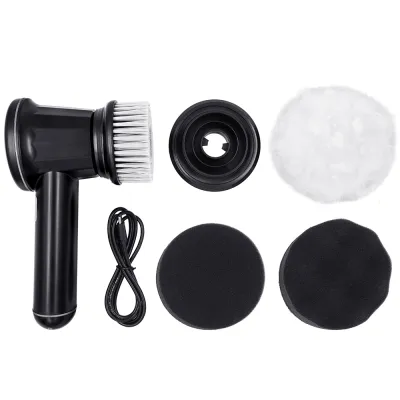
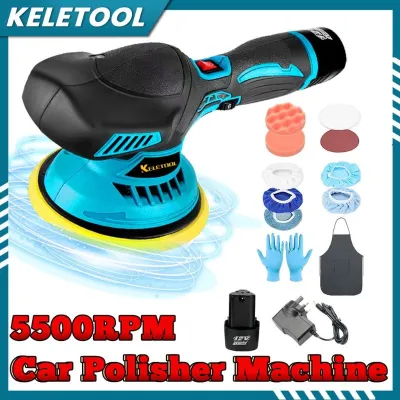
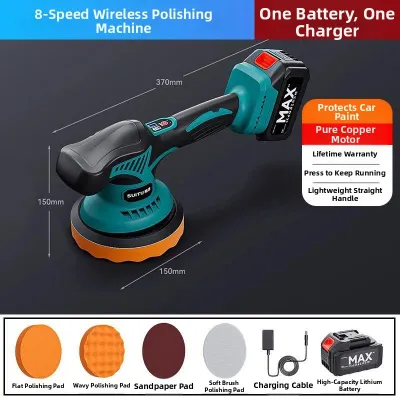
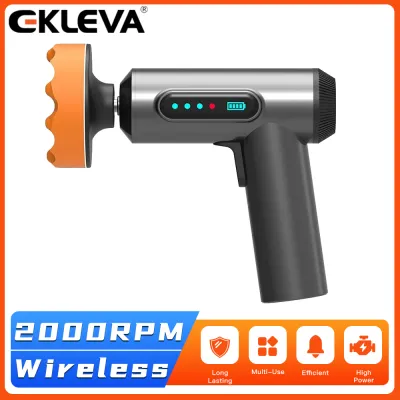
Products mentioned in this guide
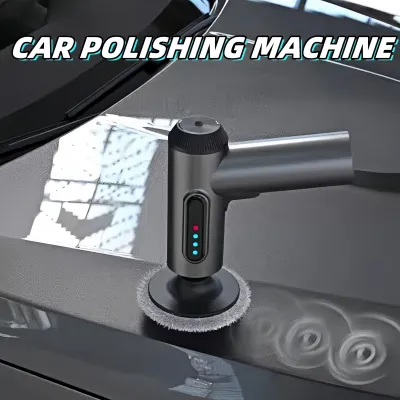
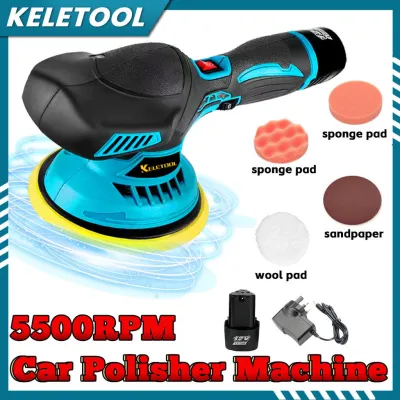
![[LOCAL SELLER] 12V Cordless Electric Polish Machine / Car Polishing / Grinding Machine / Car Waxing Polisher / Portable](https://img.lazcdn.com/g/ff/kf/Sd99a48beab3b4d9280f306c5db4911728.jpg_400x400q80.jpg_.webp)
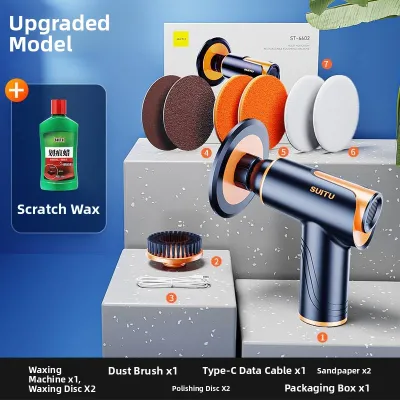
Prices are valid at publication and may change. Please refer to the product page for the latest price.
Your primary objective dictates the type of machine you should buy. If you want to perform routine maintenance, enhance gloss, and apply paint sealants or waxes, a machine with moderate cutting power is ideal. If your goal is a complete paint restoration to remove deep scratches, you will need a setup capable of aggressive correction.
Before committing to any high-cutting machine, you must inspect your clear coat thickness. Every time you polish a car, you remove a microscopic layer of the clear coat. If the paint is already thin, or if the vehicle has been polished aggressively multiple times in the past, using an aggressive machine can easily strike through the clear coat, exposing the base paint underneath. You can use a digital paint depth gauge to check the thickness, or consult a professional if you suspect the clear coat is dangerously thin.
Evaluate Your Detailing Experience and Risk Tolerance
Your hands-on experience and comfort level with power tools should heavily influence your choice of a car polishing machine. Operating a polisher requires physical control, steady pressure, and constant movement. If you have never held a machine polisher before, starting with an aggressive tool can lead to costly paint damage within seconds.

Rotary polishers carry a high risk of creating holograms, buffer trails, and clear coat burn-through. Because a rotary machine spins on a single axis at high speeds, it generates intense friction and heat very quickly. If you linger too long on a single spot, especially on plastic bumpers or sharp body lines, the heat can literally melt the clear coat. This damage is irreversible and requires a professional respray to fix.
In contrast, dual action polishers are designed with a built-in safety mechanism that makes them incredibly forgiving. If you apply too much pressure or hold the machine at an awkward angle, the rotation of the pad will stall, preventing heat buildup and minimizing the risk of burning through the paint. This safety feature makes the DA polisher the ideal learning tool for beginners and intermediate DIYers who want to achieve professional-looking results without the stress of damaging their daily driver.
Regardless of the machine you choose, practicing on a scrap car panel is highly recommended before working on your actual vehicle. You can often source a cheap, damaged hood or fender from a local scrap yard or body shop. Practicing your technique, testing different pad and compound combinations, and learning how the machine behaves on curved surfaces will build your confidence and protect your vehicle from amateur mistakes.
How Dual Action and Rotary Polishers Actually Work
To make an informed decision, it helps to understand the mechanical differences between these two types of car polishing machines. A dual action polisher operates using two simultaneous movements: the pad spins on a central spindle, and that spindle simultaneously orbits in a wider circle. This dual motion mimics the natural hand-polishing motion but at thousands of oscillations per minute, distributing friction evenly and preventing heat from concentrating in one spot.
A rotary polisher operates on a single, direct axis of rotation. The backing plate and pad spin in a continuous, high-speed circle, much like a household drill or angle grinder. This direct drive movement transfers 100% of the motor’s power directly to the paint surface, resulting in rapid cutting action and high heat generation. While this speed is highly efficient for removing deep scratches quickly, it requires constant, precise movement to avoid burning the paint.
The physical dynamics also change when navigating curved panels and tight edges. A DA polisher’s safety stall mechanism makes it safer around edges, but it can make polishing tight curves frustrating, as the pad may stop rotating when it loses flat contact with the surface. A rotary polisher will never stall, meaning it will continue to cut aggressively even on sharp body lines, which demands extreme caution and precise control from the operator.
Each machine type requires specific pad types, backing plates, and compound pairings to operate effectively. DA polishers typically pair well with foam or microfiber pads and modern diminishing-abrasive compounds. Rotary polishers often utilize heavy-cut wool pads or dense foam pads designed to withstand high heat. Always refer to the manufacturer instructions for both the machine and the polishing compounds to ensure compatibility and safe operating speeds.
Decide Your Path: Which Polishing Machine to Choose
If you are a beginner, an intermediate DIYer, or someone whose primary goal is routine maintenance and light defect correction, the dual action polisher is your clear path. It provides more than enough cutting power to handle common swirl marks and water spots while offering a safety margin that protects your vehicle’s paint from costly damage. It is the default, user-friendly choice for modern home detailing.
The rotary polisher path is reserved strictly for advanced users who have extensive experience, a steady hand, and a clear understanding of paint physics. If you are tackling severe defects, heavy oxidation, or working on exceptionally hard clear coats that resist standard polishing, a rotary machine can save you hours of labor. However, you must be prepared to follow strict safety protocols, use light pressure, and constantly monitor paint temperature.
If you are unsure of your skills but have severe paint defects to correct, consider a progressive approach. Start by purchasing a quality DA polisher to learn the basics of paint correction. If you find that the DA machine cannot fully remove a deep scratch, you can either upgrade to a rotary machine later once your technique is refined, or hire a professional detailing service to handle the heavy correction before you take over with routine DA maintenance.
Frequently Asked Questions (FAQ)
Can I use a dual action polisher for heavy scratch removal?
Yes, you can use a dual action polisher to remove moderate to heavy scratches, but it requires specific techniques and accessories. By pairing a DA machine with an aggressive microfiber cutting pad and a heavy-cut compound, you can achieve significant paint correction. However, this process will take considerably longer than it would with a rotary machine. Before attempting heavy scratch removal, perform the fingernail test: gently run your fingernail across the scratch. If your nail catches in the groove, the scratch has penetrated through the clear coat into the base paint, and no amount of polishing with any machine can safely remove it without a respray.
Do I need specific pads and backing plates for a rotary polisher?
Yes, rotary polishers require backing plates and pads specifically engineered to handle high-speed, direct rotation. Standard pads designed for DA polishers can quickly disintegrate, melt, or tear under the intense heat and rotational force of a rotary machine. When purchasing accessories, always verify the thread size of your rotary spindle (commonly 5/8-inch or M14, depending on the region and manufacturer specifications) to ensure a secure fit. Always consult the product manuals for both the machine and the backing plate to confirm compatibility before operation.
Community discussion
Share your experience or ask a question. Comments are reviewed before publication.