
The choice between retractable, foldable, and custom-fit windscreen sunshades depends on your daily routine, storage preferences, and vehicle specifications. If you want instant deployment without storing a loose panel, a retractable shade works best. For maximum portability and easy storage in tight spaces, a foldable accordion or umbrella-style shade is highly practical. If you prioritize complete coverage that matches your vehicle’s exact glass dimensions, a custom-fit shade is the ideal choice.
In Singapore’s tropical climate, parking under the intense sun can rapidly turn a car cabin into an oven. A reliable car windscreen sunshade is essential for protecting interior surfaces like the dashboard, steering wheel, and seats from heat buildup and UV degradation. Understanding how these three designs compare across daily usability, storage, and coverage will help you select the right accessory for your vehicle.
The windscreen acts as a giant greenhouse window, allowing solar radiation to enter and heat up the air and materials inside. Over time, this intense heat can cause dashboard plastics to crack, leather seats to fade, and electronic components like dashcams to malfunction.
Products mentioned in this guide
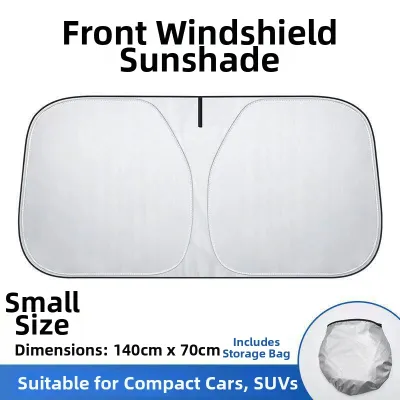
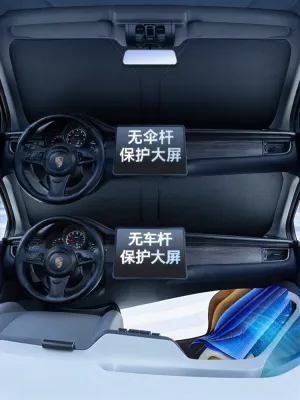
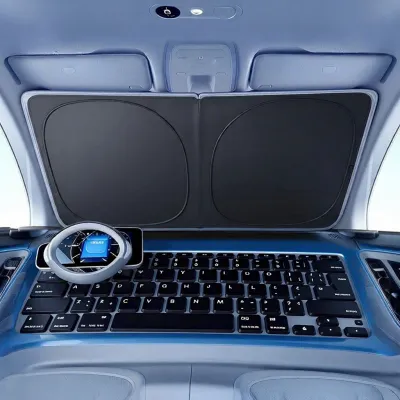
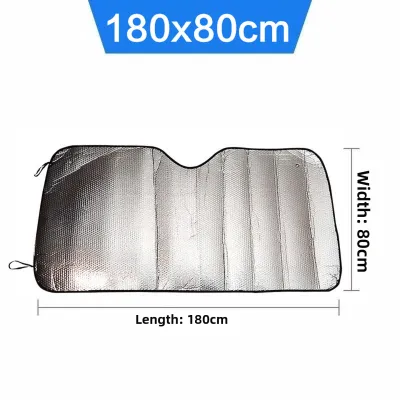
Prices are valid at publication and may change. Please refer to the product page for the latest price.
Choosing the right sunshade is not just about blocking light; it is about finding a balance between convenience and coverage. A shade that is too difficult to install will end up ignored in the boot, while one that fits poorly will let in significant amounts of heat.
By comparing the physical characteristics, installation steps, and storage requirements of each type, you can make an informed decision that fits your lifestyle and vehicle layout.
Understanding the Three Main Windscreen Sunshade Types
Retractable sunshades are semi-permanently mounted to one side of the windscreen, usually along the passenger-side A-pillar. They utilize suction cups or adhesive brackets to stay in place. When you park, you pull the shade horizontally across the glass and hook it onto a small bracket mounted on the driver’s side. When it is time to drive, a spring-loaded mechanism retracts the shade back into its compact housing.
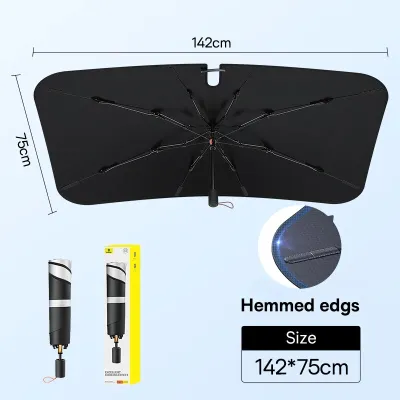
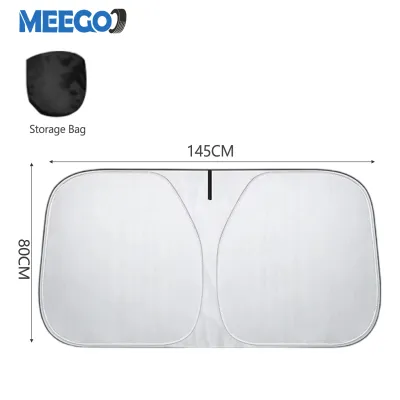
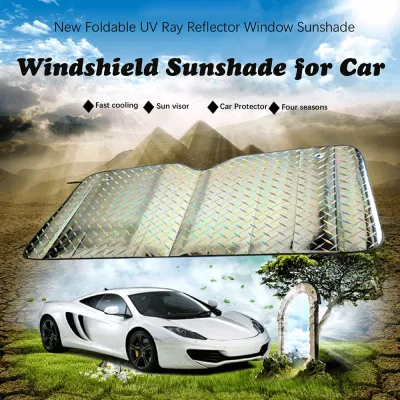
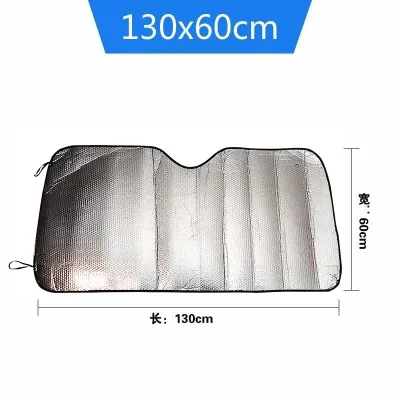
Foldable sunshades are highly popular and include two distinct styles: accordion-style panels and umbrella-style structures. Accordion shades consist of a flat, semi-rigid material with pre-formed creases that allow it to fold up like an accordion. They are typically secured with elastic bands or hook-and-loop straps when closed. Umbrella-style shades feature a collapsible metal frame covered by a reflective fabric, opening and closing using a central shaft and runner, much like a standard rain umbrella.
Custom-fit sunshades are rigid or semi-rigid panels engineered specifically for individual vehicle models. Unlike universal options, custom-fit shades are cut to match the exact dimensions and curvature of your car’s windscreen. They do not require suction cups or adhesive mounts; instead, they slide into place flush against the glass and are held secure by folding down the vehicle’s sun visors. They often feature a multi-layered construction with a highly reflective outer face and a thick insulating core.
Key Comparison Dimensions for Your Daily Drive
Deploying a sunshade should not feel like a chore, especially when making quick stops. Retractable shades offer the fastest setup, requiring only a single pull across the glass. Foldable accordion and umbrella shades require you to retrieve them from storage, unfold or open them inside the cabin, and position them manually. Custom-fit panels require a similar manual setup, which can feel slightly more cumbersome due to their rigid structure and larger physical size.

Storage footprint is a critical consideration for drivers who prefer a clean, clutter-free cabin. Retractable shades excel here because they do not require dedicated storage space; they roll up compactly against the side of the windscreen when not in use. Foldable accordion shades slide easily under seats or into the boot, while umbrella-style shades fold down into a compact sleeve that fits into door pockets or the glove compartment. Custom-fit shades, being rigid or semi-rigid, have the largest storage footprint. They often roll up or fold into large sections that must be stored in the back seat or the boot, which can be inconvenient if you frequently carry passengers.
Coverage efficiency directly impacts how much heat enters your vehicle. Custom-fit shades provide the most complete coverage because they are designed for your specific vehicle model. They leave virtually no gaps around the edges, preventing sunlight from creeping in. Universal foldable and retractable shades often leave gaps at the corners or around the rearview mirror, as they are designed to fit a wide range of windscreen sizes rather than a specific shape.
Durability varies significantly based on the mechanical complexity of each design. Retractable shades rely on spring-loaded tension mechanisms and suction cups or adhesives, which can degrade over time due to constant heat exposure. Umbrella-style foldable shades have multiple small hinges and joints that can bend or break if handled roughly. Accordion-style foldable shades are highly durable but can develop soft spots or tears along the creases after years of folding. Custom-fit shades are generally the most durable because they have fewer moving parts, though their outer reflective layers can still wear down with prolonged use.
Deploying a custom-fit shade in a cramped cabin can be awkward, especially if you have a passenger. The rigid board must be maneuvered carefully to avoid hitting the rearview mirror or knocking against passengers.
In contrast, an umbrella-style shade opens outward toward the glass, which can minimize cabin interference but requires careful handling of the central shaft to avoid scratching the dashboard or center console screen.
Aesthetic impact is another factor to consider. A retractable shade remains visible on your A-pillar even when driving, which some drivers find visually distracting or untidy. Custom-fit and foldable shades are completely removed when driving, keeping your dashboard clean and free of clutter.
While all three types help reduce cabin temperatures, their effectiveness depends heavily on how close they sit to the glass. Custom-fit shades sit flush against the windscreen, minimizing the pocket of hot air that builds up between the shade and the glass. Universal shades that sag or leave large gaps allow hot air to circulate more freely into the cabin.
Matching the Sunshade to Your Car and Lifestyle
Choose a retractable sunshade if you prioritize quick daily deployment and have a dedicated mounting area on the glass. This style is perfect for drivers who make frequent short stops and do not want the hassle of constantly packing and unpacking a shade. It is also ideal if you prefer a permanent solution that is always within arm’s reach.
Choose a foldable sunshade if you need maximum portability, share the shade between multiple vehicles, or have limited cabin storage. The compact nature of foldable shades makes them highly versatile. If you drive a compact hatchback or a sedan with minimal storage space, an umbrella-style or accordion shade can be tucked away effortlessly without cluttering the interior.
Choose a custom-fit sunshade if you want maximum glass coverage, a neat appearance, and do not mind storing a rigid panel. This option is best for car owners who park outdoors for extended periods and want the highest level of protection against heat entry. It is also suited for larger vehicles like SUVs or MPVs where universal shades often fall short in coverage.
Neither option may fit if your windscreen has complex sensor clusters or extreme curvature that interferes with standard mounting or rigid boards. Modern vehicles equipped with advanced driver-assistance systems (ADAS) often have large sensor housings behind the rearview mirror. These housings can block retractable mechanisms, prevent custom-fit shades from sitting flush, or interfere with the central shaft of umbrella-style shades.
While custom-fit shades generally carry a higher price tag due to their vehicle-specific manufacturing, they offer long-term value through superior interior protection. Foldable and retractable options are typically more budget-friendly and widely available on online marketplaces, making them accessible choices for temporary use or secondary vehicles.
If you own multiple cars or frequently rent vehicles, a universal foldable shade is highly practical. You can easily transfer it from a compact sedan to a larger SUV without worrying about exact fitment issues, whereas a custom-fit shade is locked to a single vehicle model.
What to Verify Before You Buy
Before purchasing any sunshade, measure the height and width of your windscreen from the inside. Do not rely solely on general size categories like “medium” or “large,” as windscreen angles and dimensions vary significantly between car models. For custom-fit options, double-check the exact vehicle make, model, and year to ensure a precise match.
Look for shades with multi-layered construction, such as a reflective outer aluminum layer and a heat-insulating inner layer. Verify the manufacturer’s instructions regarding heat limits and cleaning to ensure the materials can withstand high cabin temperatures without off-gassing or degrading.
Check where your dashcam is mounted. A rigid custom-fit shade or a tight-fitting retractable shade might press against the camera, altering its angle or damaging the mount. Look for shades with built-in cutouts or hook-and-loop fasteners designed to wrap around the rearview mirror stem.
Even with careful measurements, the actual curvature of your windscreen or the presence of aftermarket accessories can affect how a sunshade fits. Purchasing from sellers with clear return or exchange policies ensures you are not stuck with an unusable accessory.
For retractable shades, check the quality of the suction cups or adhesive mounts. In hot climates, cheap suction cups can lose suction and fall off the glass repeatedly. Look for high-quality silicone suction cups or heat-resistant adhesive brackets that are rated for high-temperature environments.
Ensure that any mounted components of a retractable shade do not block your forward or side vision while driving. The housing should sit snugly against the A-pillar without creating a blind spot that could compromise your safety on the road.
Frequently Asked Questions (FAQ)
Can I leave a foldable or retractable sunshade on the windscreen while driving?
No, you must never leave any windscreen sunshade in place while the vehicle is in motion. All sunshades, whether retractable, foldable, or custom-fit, completely block forward visibility and must be fully removed and stored before driving. Operating a vehicle with an obstructed windscreen is highly dangerous and illegal, as it prevents you from seeing the road, pedestrians, and other vehicles.
How do I clean and maintain the reflective surface without damaging it?
To clean your sunshade, always check the manufacturer’s care label first for specific material restrictions. Generally, you should gently wipe the reflective surface with a damp microfiber cloth to remove dust and fingerprints. Avoid using harsh chemical cleaners, abrasive scrubs, or alcohol-based sprays, as these can strip away the reflective coating or damage the folding creases over time. Allow the shade to dry completely before folding and storing it.
Will a custom-fit sunshade interfere with my car's rain sensors or dashcam?
It can, depending on the design of the shade and the placement of your accessories. Many custom-fit sunshades feature a dedicated cutout around the rearview mirror area to accommodate factory-installed rain sensors and ADAS camera housings. However, aftermarket dashcams mounted directly to the glass may still interfere with a flush fit. Before buying, verify the cutout dimensions and consider whether you need to adjust your dashcam’s mounting position to ensure the shade fits properly without putting pressure on the camera.

Community discussion
Share your experience or ask a question. Comments are reviewed before publication.