
Parking your vehicle under the intense tropical sun quickly transforms the cabin into an oven. To combat this heat, a high-quality car window shade is one of the most practical interior accessories you can buy. However, choosing the right mounting mechanism—whether suction cup, static cling, or retractable—determines not only how much solar radiation you block but also how much daily effort you must expend to set it up.
Every driver has different priorities when it comes to cabin protection. Some prefer a quick, permanent fixture that requires zero storage space, while others prioritize a flawless, edge-to-edge fit that blocks every stray beam of light. By understanding the mechanical differences, material limitations, and safety implications of each shade type, you can select the ideal option to keep your vehicle cool and protect your dashboard from UV damage.
Quick Answer: Which Windshield Shade Type Should You Choose?
Selecting the ideal car window shade depends entirely on your daily routine, your vehicle’s interior layout, and your tolerance for manual setup. There is no single universal winner, as each mounting mechanism serves a distinct driving lifestyle and budget.
Products mentioned in this guide
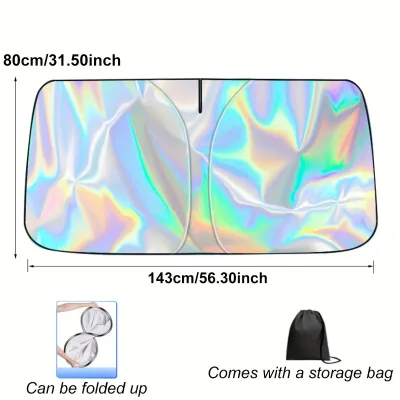
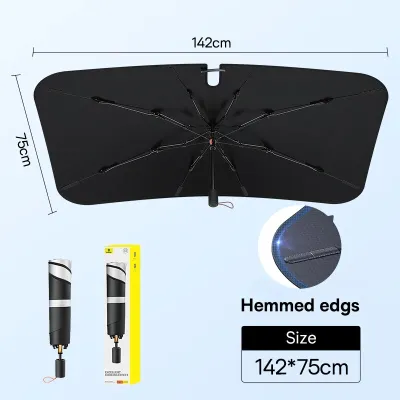
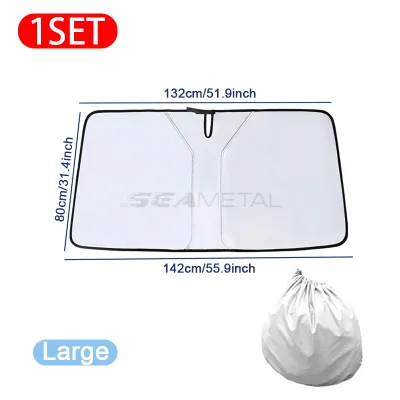
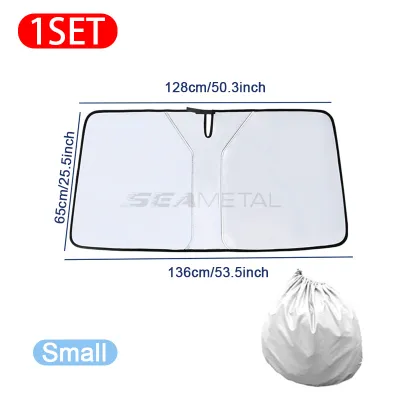
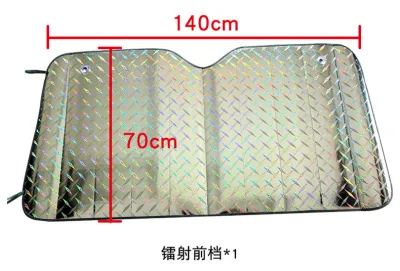
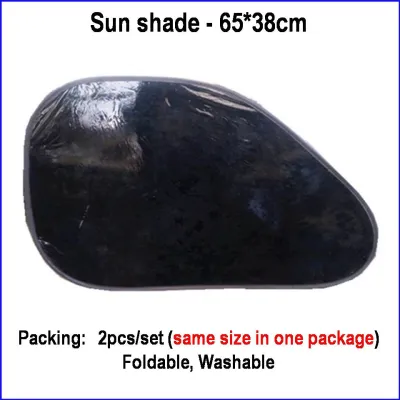
Prices are valid at publication and may change. Please refer to the product page for the latest price.
Recommend suction cup shades if you are looking for a highly budget-friendly, temporary solution. These are ideal for drivers who only use a shade occasionally, such as during weekend outings or when parking in unsheltered open-air lots, and do not mind spending a minute or two manually mounting and removing the panel.
Recommend static cling shades if you want a clean, gap-free fit for daily use and have a dedicated flat storage space in your vehicle. They are excellent for those who want to maximize coverage without dealing with mechanical parts or bulky frames, provided they are willing to keep their windshield clean to maintain the cling effect.
Recommend retractable shades if you prioritize maximum daily convenience and want a semi-permanent setup. If your dashboard has a flat, unobstructed surface that allows for installation, a retractable shade offers the fastest deployment possible, making it perfect for daily commuters who frequently park in the sun.
How Suction Cup, Static Cling, and Retractable Shades Work
To make an informed purchase, it is essential to understand the physical principles that keep each shade secured against your windshield. While all three types aim to block incoming solar energy, their mounting mechanisms differ significantly in terms of physics and physical footprint.

Suction Cup Shades
Suction cup shades utilize flexible rubber or silicone cups to adhere the protective barrier directly to the glass. When you press the cup against the windshield, you force the air out from beneath it, creating a localized vacuum. The higher atmospheric pressure on the outside of the cup holds it tightly against the smooth glass surface. This mechanism typically supports lightweight, foldable wire-frame panels or accordion-style reflective sheets. The shades are entirely non-permanent and can be pulled away instantly by releasing the vacuum tab on each cup.
Static Cling Shades
Static cling shades rely on a combination of electrostatic charge and atmospheric pressure rather than physical suction or chemical adhesives. These shades are made from highly flexible, thin vinyl or specialized PVC films that naturally carry a static charge. When pressed flat against a clean glass surface, the film expels all air pockets, allowing molecular attraction to hold the material firmly in place. Because they do not use glue, they leave absolutely no sticky residue behind. They are typically sold as pre-cut sheets or flexible mesh screens that can be rolled or folded flat when not in use.
Retractable Shades
Retractable shades feature a mechanical, spring-loaded roller housing that is semi-permanently mounted to either the passenger-side A-pillar or the base of the dashboard. The shade material, often a durable pleated polyester or reflective metallic fabric, is pulled across or up the windshield like a domestic window blind. To secure it in the open position, you hook the pull bar onto brackets mounted on the opposite side of the glass or onto the sun visors. When you are ready to drive, a quick release allows the internal spring mechanism to automatically retract the fabric back into its compact housing.
Comparing Convenience, Coverage, and Durability
The best car window shade for your vehicle must balance daily usability with long-term performance under harsh environmental conditions. In tropical climates like Singapore, where cabin temperatures can easily exceed 60 degrees Celsius when parked in direct sunlight, these physical differences become highly pronounced.
Daily Installation and Storage Convenience
Suction cup shades require a repetitive, manual setup process every time you park. You must position the shade, align the cups, and press each one firmly to ensure a secure hold. If the glass or the cups are dusty, they may fail to stick, requiring you to clean the surface first. When it is time to drive, pulling them down is quick, but folding a large accordion or spring-wire panel can be cumbersome in a cramped cabin. These shades often end up tossed onto the back seat or taking up valuable space in the boot.
Static cling shades are incredibly fast to apply once you master the technique, as you simply smooth the film onto the glass with your hands. However, they demand meticulous storage. If you fold or crease a static cling shade incorrectly, you can introduce permanent wrinkles that trap air pockets, rendering the static effect useless. They must be stored completely flat, typically slipped under a floor mat, behind a seat pocket, or flat in the boot, which can be inconvenient if your car is fully loaded with passengers or luggage.
Retractable shades offer the absolute highest level of daily convenience. Once the initial installation is complete, deploying the shade takes less than two seconds—you simply pull the handle across the windshield and slip it into the receiving bracket. There is no folding, rolling, or storage hassle because the shade retracts directly into its self-contained housing. The trade-off is the initial setup, which requires carefully aligning the mounting brackets, applying high-strength adhesive tapes, or securing mechanical clips to your vehicle’s interior trim.
Sunlight Coverage and Heat Protection
When evaluating heat protection, it is important to note that actual thermal and UV rejection depend heavily on the material specifications of the shade rather than the mounting type. Look for product labels indicating verified UV protection factors (UPF) or high-reflectivity metallic coatings. However, the mounting type directly dictates how well that material covers your glass and prevents light leaks.
Suction cup shades are generally manufactured in universal sizes, which rarely match the exact contours of your specific windshield. This mismatch leaves gaps around the edges, particularly near the A-pillars and the rearview mirror. Furthermore, as the cabin heats up, the physical material of cheaper shades can sag, widening these gaps and allowing direct sunlight to beam onto your dashboard and steering wheel.
Static cling shades offer exceptional, edge-to-edge coverage because they can be trimmed with scissors to match the exact shape of your windshield. Because the film sits completely flush against the glass, there are no physical gaps or sagging edges for light to bypass. This flush fit provides a highly uniform barrier against solar radiation, making it highly effective at protecting your dashboard leather and plastics from localized hot spots.
Retractable shades are limited by their rigid, rectangular roller designs. Windshields are naturally trapezoidal, meaning a straight roller mechanism cannot cover the entire glass surface perfectly. You will almost always experience triangular light gaps at the top corners or along the sides where the roller housing cannot reach. If your dashboard has a deep curve or a highly raked angle, finding a retractable model that fits without leaving significant gaps can be a challenge.
Long-Term Durability and Wear
Singapore’s relentless heat and high humidity act as an extreme durability test for any interior car accessory. Suction cups are highly vulnerable to these conditions. Over time, constant exposure to intense UV radiation and extreme thermal cycling causes the rubber or silicone cups to leach plasticizers. This process makes the cups stiff, yellow, and brittle, leading to a permanent loss of flexibility. Eventually, the cups will fail to hold a vacuum, requiring you to purchase replacement cups or an entirely new shade.
Static cling films are chemically stable, but they are highly sensitive to physical contamination. As dust, pet hair, and airborne oils accumulate on the cling surface, the electrostatic bond weakens. While you can restore the cling properties by washing the film with mild soap and water, repeated handling eventually takes a toll. If the film is subjected to extreme heat while creased, the vinyl can warp permanently, making it impossible to achieve the flat, airless contact required to stick to the glass.
Retractable shades feature a durable metal or high-grade plastic housing, but they rely on internal moving parts that are subject to mechanical wear. The internal torsion springs can lose their tension over time due to constant heat exposure, causing the shade to sag or fail to retract fully. Additionally, the plastic mounting brackets and receiving hooks are positioned in the direct path of incoming sunlight, making them prone to UV degradation, cracking, and snapping under physical stress.
Windshield Shade Comparison at a Glance
To help you visualize how these three mounting mechanisms stack up against each other, the table below summarizes their key practical characteristics.
| Shade Type | Installation Time | Storage Ease | Coverage Fit | Durability in High Heat | Initial Setup Effort |
|---|---|---|---|---|---|
| Suction Cup | Moderate (1-2 mins) | Poor (Bulky to store) | Moderate (Universal gaps) | Low (Cups harden/crack) | Very Low (Press and go) |
| Static Cling | Fast (Under 1 min) | Moderate (Must keep flat) | Excellent (Trim-to-fit) | Moderate (Can warp if folded) | Low (Clean glass first) |
| Retractable | Instant (2 seconds) | Excellent (Self-storing) | Moderate (Rectangular gaps) | Moderate (Springs can wear) | High (Bracket mounting) |
Safety, Visibility, and Vehicle Compatibility
Before purchasing any car window shade, you must consider critical automotive safety boundaries, legal regulations, and vehicle-specific compatibility factors. A shade that compromises your safety or damages your vehicle is a poor investment, regardless of how well it blocks the sun.
Driving Visibility & Legal Safety
Under no circumstances should any front windshield shade be deployed while the vehicle is in motion. Doing so completely obstructs your forward vision, creating an immediate and severe hazard. For retractable shades, it is absolutely vital to verify that the locking mechanism is highly secure. A low-quality retractable shade that accidentally snaps shut or slips from its bracket while you are driving can instantly block your view of the road, leading to a catastrophic accident.
Windshield Tints and Films
Most car owners in Singapore install aftermarket solar control films to comply with Land Transport Authority (LTA) light transmittance regulations while maximizing heat rejection. If your vehicle has aftermarket window tinting, you must exercise extreme caution. Suction cups apply localized pulling force to the glass; removing them repeatedly can cause the delicate tint film to bubble, crease, or peel away from the glass. Aggressive static clings can also trap moisture against the tint, leading to optical distortion. If you have expensive aftermarket solar films, a freestanding accordion shade supported by your sun visors is often a much safer alternative.
ADAS Sensors and Cameras
Modern vehicles are equipped with Advanced Driver Assistance Systems (ADAS) that rely on cameras and sensors mounted directly behind the rearview mirror. Additionally, vehicles in Singapore feature physical units like the Electronic Road Pricing (ERP) In-vehicle Unit (IU) or the newer On-Board Unit (OBU) mounted on the windscreen. When choosing a shade, you must measure these clusters carefully. A shade must not press against, bend, or obstruct these sensitive electronic housings. Look for shades with dedicated center cutouts or flexible sections that can be routed safely around your cameras and ERP units without putting physical pressure on their mounts.
Dashboard Clearance
Retractable shades require a physical footprint along the base of your windshield or your A-pillars. Before buying, inspect your dashboard for potential obstructions. Deeply curved windscreens, heads-up display (HUD) projectors, center-channel audio speakers, and prominent defroster vents can all prevent a retractable roller housing from mounting flatly. If the housing blocks your defroster vents or interferes with the deployment path of passenger airbags, you must select a different shade type.
Final Verdict: How to Choose the Right Shade for Your Car
To make your final decision, evaluate your vehicle’s specific layout and your personal driving habits against this practical framework.
Choose a Suction Cup Shade if:
- You are shopping on a tight budget and want a simple, low-cost solution (typically under S$15).
- You only park outdoors occasionally and do not mind a manual setup process.
- Your vehicle does not have delicate aftermarket window tints applied to the front windscreen.
- You have enough space in your boot or back seat to store a folded wire-frame or accordion panel.
Choose a Static Cling Shade if:
- You want a highly precise, edge-to-edge fit that blocks maximum sunlight and eliminates light leaks.
- You want to avoid bulky mechanical brackets, suction cups, or permanent dashboard fixtures.
- You have a safe, flat storage area in your car, such as under the front seats or beneath the boot floor liner.
- You are willing to keep your windshield glass clean and free of dust to maintain the electrostatic bond.
Choose a Retractable Shade if:
- You park in unsheltered areas daily and want the absolute fastest, most convenient deployment method.
- You want a clean, integrated look and want to completely eliminate the hassle of storing a loose shade.
- You have verified that your dashboard has a flat, unobstructed surface free of HUDs, speakers, or vents.
- You are comfortable spending more upfront (typically S$30 to S$60) and performing a one-time installation.
Verify first if:
- Your vehicle features a crowded sensor cluster behind the rearview mirror or an ERP unit that could be blocked.
- Your front windshield has aftermarket solar film that could be damaged by physical suction or tight adhesive brackets.
- Your dashboard contours are highly irregular, which may prevent a rigid retractable roller from fitting correctly.
Frequently Asked Questions (FAQ)
Can I use a suction cup shade on a car with aftermarket window tint?
It is generally not recommended to use suction cups directly on aftermarket window tint. The localized vacuum and the physical pulling force required to remove the suction cups can easily stretch the tint film, leading to unsightly bubbles, creases, or complete peeling. If your windshield has a solar control film, opt for a static cling shade or a freestanding accordion-style shade that rests on the dashboard and is held in place by your vehicle’s built-in sun visors.
Do retractable windshield shades block the rearview mirror?
Most premium retractable windshield shades are designed with a split center, a deep cutout, or adjustable overlapping panels specifically to accommodate the rearview mirror and its mounting stem. However, universal-fit retractable shades may not clear larger mirror housings or modern ADAS camera consoles. Always measure the clearance around your rearview mirror and compare it against the manufacturer’s product dimensions before committing to a purchase.
Will leaving a static cling shade on the glass damage it?
No, a high-quality static cling shade will not damage bare, untreated glass because it relies entirely on physical atmospheric pressure and electrostatic charge rather than chemical adhesives. It leaves absolutely no sticky residue or film behind when peeled off. However, you must never leave any shade applied to your windshield while driving, as doing so completely blocks your field of vision and is highly illegal.
Community discussion
Share your experience or ask a question. Comments are reviewed before publication.