
When shopping for a portable tire inflator, it is easy to get lost in high-pressure promises and flashy digital screens. The specifications that actually matter for reliable roadside recovery are continuous working pressure, airflow rate, power source compatibility, and duty cycle. Understanding these technical details ensures you select a tool that can safely top up your tires during a sudden pressure drop on the road rather than overheating halfway through the job.
Decoding Core Performance: PSI Ratings and Airflow Rates
Many compact inflators prominently display a maximum rating of 120 or 150 PSI (pounds per square inch) on their packaging. This peak PSI is often a marketing figure representing the maximum pressure the pump can withstand before failing, rather than its continuous working pressure limit. For standard passenger cars, you rarely need more than 30 to 35 PSI, while larger SUVs or light trucks typically require 40 to 45 PSI. Always check your vehicle’s tire information placard, usually located on the driver’s side door pillar, to verify your exact pressure requirements before operating any inflator.
The true indicator of inflation speed is the airflow rate, typically measured in liters per minute (L/min) or cubic feet per minute (CFM). A higher airflow rate means the pump moves a larger volume of air into the tire with each stroke, reducing the time you spend waiting on the roadside.
Products mentioned in this guide
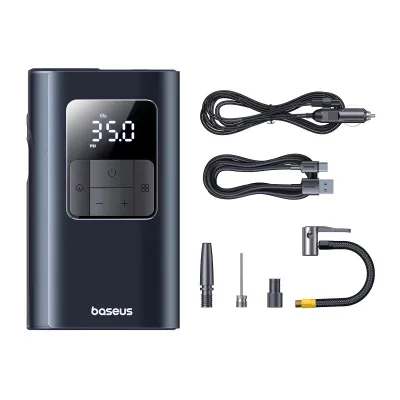
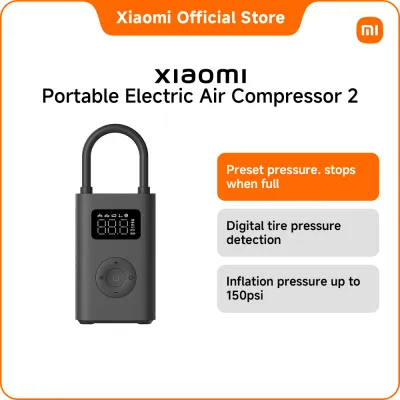
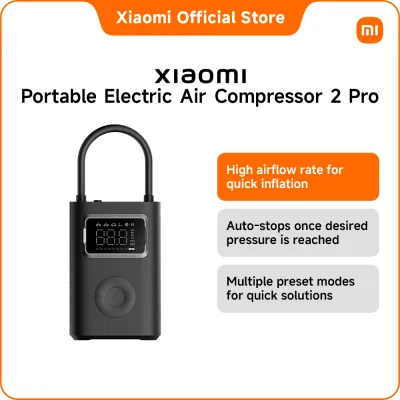
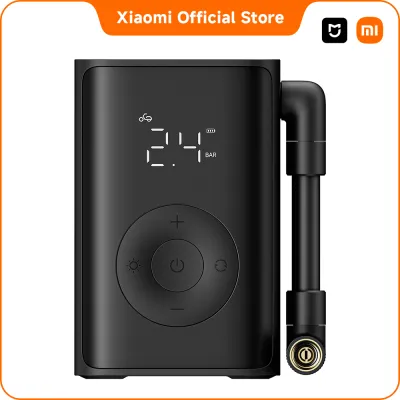
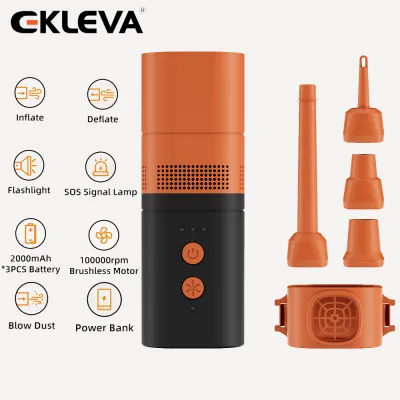
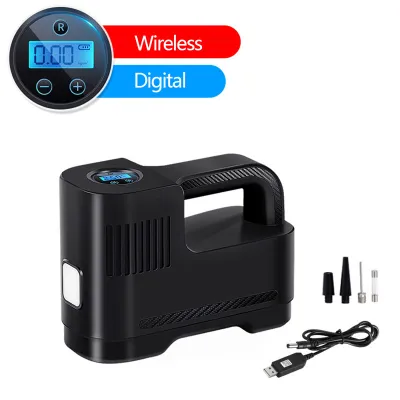
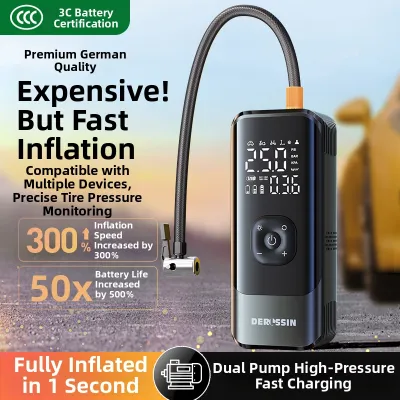
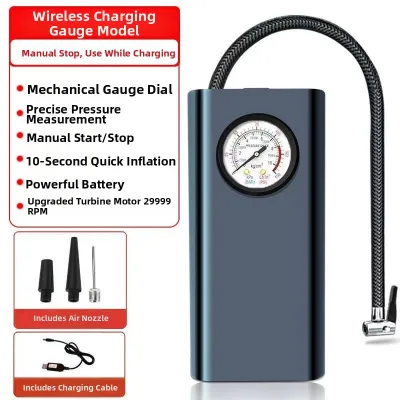
Prices are valid at publication and may change. Please refer to the product page for the latest price.
When matching these specifications to your vehicle, consider the volume of your tires. Larger SUV or light truck tires contain significantly more air volume than compact hatchback tires. A small inflator with a low airflow rate will struggle to fill a large tire, running hot and potentially shutting down before reaching the target pressure.
Power Sources and Battery Realities
Portable tire inflators generally fall into two categories: 12V DC plug-in models and cordless lithium-ion battery-powered units. A 12V DC inflator draws power directly from your vehicle’s accessory socket or connects directly to the car battery terminals using clamps. This design provides a continuous power supply, ensuring the inflator will not run out of juice mid-task, making it a highly reliable option for emergency kits.

Cordless lithium-ion models offer unmatched portability and eliminate the hassle of routing cables around your vehicle. However, their performance is strictly limited by battery capacity, measured in milliampere-hours (mAh) or Watt-hours (Wh). When evaluating cordless options, check the manufacturer’s specifications for how many tires the unit can inflate on a single charge under realistic conditions. Keep in mind that battery performance degrades over time, especially when stored in the high-temperature environment of a car boot parked in Singapore’s tropical climate.
If you choose a 12V DC model, verify your vehicle’s fuse limits against the inflator’s maximum current draw, which is measured in amperes. Many vehicle accessory outlets are fused at 10 or 15 amps; using an inflator that draws more current can instantly blow the fuse. Additionally, ensure the power cable is long enough to reach all four tires comfortably from the power source.
Smart Features: Auto-Shutoff and Digital Displays
An auto-shutoff mechanism is one of the most valuable safety features on a modern inflator. This system allows you to preset your desired target pressure; once the internal sensor detects that the tire has reached this level, the pump automatically stops. This prevents over-inflation, which can compromise tire grip and cause uneven tread wear. However, you should verify the manufacturer’s stated accuracy tolerance, as budget sensors can vary by several PSI.
Digital displays have largely replaced traditional analog dial gauges on portable inflators. Digital screens are significantly easier to read in low-light conditions or during nighttime emergencies, and they often display measurements in multiple units, such as PSI, bar, or kPa.
Secondary features like built-in LED work lights and memory functions add genuine practical value. A bright, built-in light illuminates the tire valve stem during roadside emergencies at night, keeping your hands free to secure the hose. Memory functions save your last used pressure setting, saving you from having to reprogram the target pressure every time you use the device.
Duty Cycle, Heat Management, and Safety Limits
Compressing air generates a significant amount of heat, and compact, air-cooled motors have strict physical limitations. This is defined by the “duty cycle,” which is the percentage of time an inflator can safely run before it must be switched off to cool down. For example, a unit with a 15% duty cycle might only be rated for 10 minutes of continuous operation, requiring a 50-minute rest period afterward.
Operating an inflator beyond its rated duty cycle can lead to thermal damage, melting internal seals, or even damaging your vehicle’s electrical system. Many modern units feature automatic thermal protection, which shuts down the motor if it exceeds a safe operating temperature. If your unit does not have this feature, look for physical signs of overheating, such as a hot casing, a burning smell, or a noticeable drop in motor speed, and immediately switch it off.
Always read the specific manufacturer’s guidelines regarding maximum continuous operation and stopping conditions. Never leave an operating inflator unattended, and ensure the cooling vents are clear of dirt, grass, or storage bags that could block airflow.
Building Your Specification Checklist
To choose the right portable tire inflator, match the technical specifications to your specific vehicle profile and storage space. A compact car or motorcycle has lower volume tires and can easily be serviced by a smaller, cordless unit. Conversely, larger vehicles require robust 12V DC units with higher airflow rates to ensure efficient inflation without exceeding the motor’s duty cycle.
Before purchasing, check the product specifications for hose length and valve connector types. Ensure the hose is long enough to reach the valve stem when it is positioned at the top of the wheel rotation. If you plan to inflate bicycle tires, verify if you need a Presta adapter, as most car tires use a standard Schrader valve.
For drivers in Singapore, a reliable auto-shutoff feature, a clear digital display, and a compatible 12V DC power source are non-negotiable specifications for emergency roadside use. Optional features like USB power bank outputs or multiple nozzle attachments are nice-to-have additions but should never take priority over core motor reliability.
Frequently Asked Questions (FAQ)
Can a portable tire inflator seat a completely unseated tire bead?
No, a portable tire inflator cannot safely seat a completely unseated tire bead. Seating a tire bead requires a massive, instantaneous volume of air to expand the tire carcass and force the rubber bead against the metal wheel rim. Portable units are designed for high pressure but low volume flow, meaning they cannot deliver air fast enough to overcome the gap. Attempting to seat a bead with a portable unit can damage the tire or lead to sudden pressure releases; this task requires professional shop equipment.
Does a higher motor wattage always mean faster inflation?
Not necessarily. While motor wattage indicates the electrical power consumed by the device, it does not directly translate to inflation speed or efficiency. Real-world inflation speed depends on the pump’s mechanical design, cylinder size, and overall efficiency. A poorly designed pump with a high-wattage motor may simply waste energy as heat rather than moving air efficiently. Always look at the rated airflow (L/min or CFM) rather than wattage to gauge actual performance.

Community discussion
Share your experience or ask a question. Comments are reviewed before publication.