
Choosing between Original Equipment Manufacturer (OEM) and aftermarket full-surround floor mats for your Toyota Prius Plus comes down to a choice between guaranteed out-of-the-box safety and maximum carpet coverage. OEM mats guarantee exact contour matching, factory anchor compatibility, and uncompromised pedal safety. Conversely, aftermarket full-surround options can offer more comprehensive coverage of the footwells, but only if they are vehicle-specific molded designs rather than universal, trim-to-fit alternatives. The final choice depends on your budget, desired material thickness, and your willingness to manually verify third-party safety clearances and manufacturer labels.
The Toyota Prius Plus, known in various markets as a versatile seven-seater hybrid, features a unique cabin layout that demands careful consideration when selecting interior accessories. Because the floor layout accommodates both passenger seating and hybrid drivetrain components, a poorly fitting mat can do more than just look untidy—it can slide forward and obstruct the pedals, creating a severe driving hazard. Understanding how these two categories of mats perform under daily driving conditions is the first step toward making an informed purchase.
Understanding Full-Surround Fitment for the Toyota Prius Plus
The interior geometry of the Toyota Prius Plus is distinct from standard hatchbacks due to its three-row seating configuration and hybrid battery placement. A full-surround floor mat is designed to cover not just the flat floor pan, but also to extend upward along the transmission tunnel, the side sills, and behind the pedals. This high-lip design is highly effective at containing dirt, mud, and spilled liquids, preventing them from seeping into the underlying carpet where they can cause mold or unpleasant odors. However, this extensive coverage requires highly precise manufacturing to avoid interfering with the vehicle’s moving parts.
Products mentioned in this guide
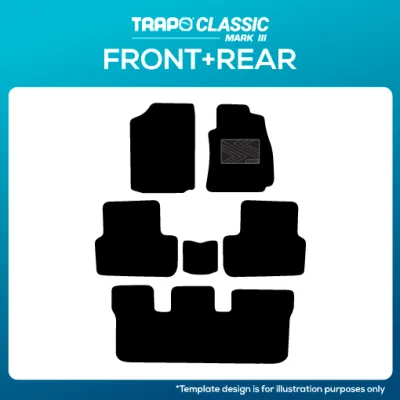
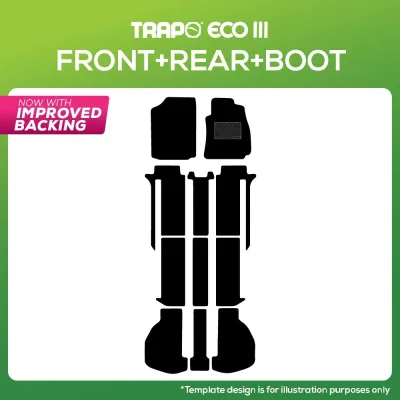
Prices are valid at publication and may change. Please refer to the product page for the latest price.
When evaluating full-surround mats, the critical safety zones are the accelerator, brake pedal, and the dead pedal area on the driver’s side. The accelerator pedal on the Prius Plus requires a specific clearance zone to ensure it can be fully depressed and, more importantly, return to its idle position without catching on the edge of the mat. Any mat that curls, shifts, or features excessively thick material near the pedal pivot points poses a direct risk of pedal entrapment.
Additionally, the Prius Plus features adjustable front seat rails and sliding mechanisms for the second-row seats to allow access to the third row. A true full-surround mat must feature precise cutouts that do not obstruct these tracks. If the mat’s vertical lips are too high or rigid, they can bind against the seat runners, preventing smooth adjustment or potentially damaging the plastic track covers.
OEM Toyota Floor Mats: Specifications and Guaranteed Compatibility
Official Toyota floor mats are engineered alongside the vehicle itself, ensuring that every curve, clip, and material choice meets strict factory standards. The primary advantage of choosing OEM mats is the guaranteed alignment with the factory retention clips. The Prius Plus floor board is equipped with specific twist-lock or clip anchors designed to keep the driver’s mat firmly in place. OEM mats utilize these exact mounting points without requiring any adapters or modifications, eliminating the risk of the mat sliding forward during sudden braking.

In terms of material quality, Toyota specifies compounds that undergo rigorous testing for odor control, UV resistance, and temperature stability. This is particularly relevant in tropical climates like Singapore, where cabin temperatures can soar when parked under the sun. OEM rubber or all-weather mats are formulated to remain odorless and retain their structural shape without warping, softening, or releasing volatile organic compounds into the enclosed cabin air.
While OEM mats offer peace of mind and guaranteed pedal clearance, they generally sit at a premium pricing tier, often represented in local S$ transactions at authorized dealerships. They also tend to feature a more conservative design, focusing on the flat floor areas rather than extending high up the side walls of the footwell. For drivers seeking total carpet coverage up to the plastic trim lines, the standard OEM catalog may feel somewhat limited in its coverage area. However, this design limitation is intentional, prioritizing safety clearance around the pedal box and seat rails.
Aftermarket Full-Surround Mats: Verification and Selection Criteria
The aftermarket industry offers a wide array of full-surround mats, often marketed as 3D, 5D, or even 7D luxury mats. These products typically feature high vertical walls designed to cover almost every square inch of the exposed carpet. However, because quality varies significantly across third-party manufacturers, buyers must exercise caution and apply strict verification criteria rather than relying solely on promotional descriptions.
The most critical distinction to make is between true vehicle-specific 3D-molded mats and generic trim-to-fit universal mats. Universal mats require the buyer to cut the material with shears to fit the footwell. This approach is highly discouraged for a vehicle with complex floor contours like the Prius Plus, as manual cutting rarely achieves the precise clearances needed around the pedals and seat tracks, and often leaves raw edges that can fray or curl over time. Instead, look for aftermarket options that are explicitly labeled as molded specifically for the Toyota Prius Plus model year.
Upon receiving any aftermarket mats, perform a thorough physical inspection before securing them in the vehicle. Lay the mats flat on a level surface to check if the edges curl upward or if the material has warped during shipping. Check the underside of the mats for robust anti-slip backing, such as nibbed rubber or specialized hook-and-loop fasteners, which prevent the mat from shifting if it does not align with the factory floor anchors.
Furthermore, review the manufacturer’s labels for material composition. In Singapore’s hot and humid climate, low-grade plastics or synthetic leathers can degrade rapidly, leading to a sticky texture or a strong chemical odor that is difficult to eliminate. High-quality aftermarket mats typically utilize Thermoplastic Elastomers (TPE) or high-grade polyurethane that can withstand high cabin temperatures without off-gassing. Never attempt to modify, cut, or shave down an aftermarket mat to force a fit; if the mat does not clear the pedals or seat tracks naturally, it should be returned to the seller.
Direct Comparison: Choosing the Right Mats for Your Needs
To help determine which option most appropriately suits your driving habits and budget, it is helpful to compare the core characteristics of OEM and aftermarket full-surround mats side by side.
| Evaluation Criteria | OEM Toyota Floor Mats | Aftermarket Full-Surround Mats |
|---|---|---|
| Fitment Guarantee | Factory-certified; exact match to floor contours and anchors. | Variable; requires verification of model-specific 3D molding. |
| Material Verification | Tested for UV resistance, low odor, and temperature stability. | Highly variable; check labels for high-grade TPE or polyurethane. |
| Price Tier | Premium pricing tier (higher S$ investment at dealerships). | Wide range; budget-friendly to premium luxury options. |
| Installation Effort | Minimal; drops directly onto factory retention clips. | Moderate; may require tucking edges and verifying clearances. |
| Pedal Clearance | Guaranteed zero interference out of the box. | Must be manually verified through full range of motion. |
Your choice should align with your specific priorities and willingness to perform safety checks. Choose OEM floor mats if you prioritize guaranteed safety, hassle-free installation, and factory-backed warranty coverage without the need for manual verification. This is often the preferred route for drivers who want a simple, reliable solution that works securely from day one.
Conversely, choose aftermarket full-surround mats if you seek maximum carpet protection against spills, prefer specific textures or color stitching to match your interior, and are prepared to carefully verify the fitment, pedal clearance, and material quality yourself. If you opt for the aftermarket route, ensure you purchase from reputable brands that offer clear return policies in case the fitment is less than precise.
For hybrid owners, there is an additional verify-first condition: ensure that the aftermarket mat’s high-lip design does not block any floor-level sensors or electrical connections under the front seats. The Prius Plus contains sophisticated hybrid management wiring beneath the cabin floor, and any mat that pinches these areas or traps excessive heat should be avoided.
Safe Installation and Maintenance Checks
Regardless of whether you select OEM or aftermarket mats, proper installation is paramount to ensuring vehicle safety. Begin by completely removing any existing floor mats from the vehicle. Stacking multiple mats on top of one another is a major safety hazard, as it raises the floor height, compromises the effectiveness of the retention clips, and significantly increases the risk of pedal interference.
Once the footwells are completely clear, place the new mat into position. For the driver’s side, align the mat’s grommets directly over the factory floor anchors and twist or click them into the locked position. Ensure the mat lies completely flat against the floor pan without any buckling or lifting at the edges.
Before driving, perform a mandatory post-installation safety check. Sit in the driver’s seat with the engine off and manually press both the accelerator and brake pedals through their entire range of motion. Verify that there is ample clearance between the pedals and the edge of the mat at every point of travel. If you feel any friction, catching, or resistance, remove the mat immediately and consult the manufacturer.
For ongoing maintenance, clean the mats according to the manufacturer’s care labels. Avoid applying silicone-based protectants or harsh chemical cleaners to the surface of the mats, as these products can leave a slippery residue that reduces shoe grip, creating a safety hazard while operating the pedals. Use mild soap and water, and allow the mats to dry completely in a shaded area before reinstalling them.
Frequently Asked Questions (FAQ)
Do full-surround mats interfere with the Prius Plus hybrid battery cooling vents?
The Toyota Prius Plus houses its hybrid battery pack beneath the center console or under the front seats, depending on the specific model year and regional configuration. The cooling vents for this battery system draw air directly from the cabin floor level to maintain optimal operating temperatures. When installing high-lip full-surround mats, it is crucial to locate these intake vents—typically found near the base of the front seats or the center console—and verify that the mat’s edges do not block or restrict airflow. Refer to your vehicle owner’s manual to identify the exact vent locations, and ensure your chosen mats leave these areas completely unobstructed to prevent battery overheating.
Can I use standard Prius floor mats in a Prius Plus?
No, standard Toyota Prius floor mats are not compatible with the Toyota Prius Plus. Although they share a similar hybrid heritage, the Prius Plus (often designated as an MPV or wagon) features a longer wheelbase, a completely different floor pan geometry, and a three-row seating layout. Standard Prius mats will not align with the floor anchors of the Prius Plus, leading to loose material that can bunch up under the pedals or leave large areas of the carpet unprotected. Always purchase mats that are explicitly designed and labeled for the Prius Plus to ensure a safe and accurate fit.

Community discussion
Share your experience or ask a question. Comments are reviewed before publication.