
The Nissan Serena C28 is a highly popular multi-purpose vehicle (MPV) in Singapore, celebrated for its spacious interior, family-friendly features, and exceptional visibility. This outstanding visibility is made possible by an expansive glasshouse, including a massive front windshield, large front quarter windows integrated into the A-pillars, and deep side windows. However, in Singapore’s intense tropical climate, this large surface area of glass acts as a greenhouse when the vehicle is parked outdoors. Solar radiation quickly penetrates the cabin, heating up the dashboard, steering wheel, and seats, which places a heavy load on the air conditioning system when you return to the car.
To combat this heat buildup and protect the interior materials from UV damage, installing high-quality sun shades is a practical and necessary step. However, finding shades that fit the Nissan Serena C28 properly requires looking beyond generic, “one-size-fits-all” options. Because of the C28’s unique dimensions, specialized ADAS camera housings, and complex sliding door mechanisms, only custom-fit or carefully selected model-specific shades will provide the edge-to-edge coverage and operational safety needed. Selecting the right shades involves understanding the specific physical constraints of the C28 chassis and matching them with the correct mounting methods.
Why Universal Sun Shades Fail on the Serena C28
Using generic, rectangular sun shades bought from general automotive accessory shops often leads to frustration when applied to the Nissan Serena C28. The primary issue is the sheer scale and unique geometry of the C28’s front glass. The windshield is exceptionally tall and features a steep rake, meaning a standard medium or even large-sized universal shade will be too short to reach from the top of the glass down to the base of the dashboard. This leaves wide gaps at the top or bottom, allowing direct sunlight to stream in and heat up the cabin.
Products mentioned in this guide
Prices are valid at publication and may change. Please refer to the product page for the latest price.
Furthermore, the C28 is equipped with an advanced suite of driver assistance systems (ADAS). The cameras and sensors for these systems are housed in a bulky plastic module mounted on the windshield directly behind the rearview mirror. Universal shades do not have a dedicated cutout or fastening system to accommodate this housing. Forcing a generic shade behind the mirror can put physical pressure on the ADAS module, potentially misaligning the cameras or damaging the plastic shroud. It also causes the shade to sag in the middle, rendering it highly ineffective.
The side windows present an even greater challenge, particularly on the passenger sliding doors. Universal shades that rely on suction cups or static cling are highly impractical here. When the power sliding doors of the Serena C28 slide backward, they pass incredibly close to the rear quarter panels of the vehicle. Any accessory protruding from the inner glass surface will rub against the outer bodywork or the rubber weatherstripping, causing the shade to rip off, damage the seals, or jam the door’s electric motor.
Additionally, the C28 is available in several trim levels, such as the e-POWER Highway Star. Higher trims may come equipped with factory-tinted privacy glass on the rear side and tailgate windows, while some versions feature manual roll-up mesh screens built directly into the sliding door cards. Understanding your specific trim’s existing features is crucial before purchasing aftermarket shades, as adding unnecessary layers can compromise rearward visibility or interfere with factory components.
Finally, when shopping for sun shades, you must verify the exact model generation. The Serena C28 was introduced globally in late 2022 and launched in Singapore in 2023, replacing the older C27 generation. Although they share a similar MPV silhouette, the C28 has completely redesigned body lines, different window shapes, and an updated windshield profile. Shades designed for the C27 or the even older C26 will not fit the C28 properly. Always look for listings on online marketplaces that explicitly state compatibility with the “Serena C28” to avoid poor fitment and light leaks.
Windshield Coverage: Custom-Fit vs. Universal Options
Custom-Fit Rigid and Folding Boards
For the front windshield, custom-fit rigid or multi-panel folding boards represent the gold standard in thermal protection. These shades are manufactured using a precise digital template of the Serena C28’s windshield glass. They feature a stiff, multi-layered construction—often consisting of a reflective outer foil layer, a foam insulating core, and a soft felt inner backing—that allows them to stand upright without sagging.

The primary benefit of a custom-fit rigid board is its edge-to-edge coverage. It fits snugly into the deep corners of the C28’s windshield and wraps perfectly around the A-pillar quarter windows. Crucially, these custom designs include a tailored cutout and a hook-and-loop strap that secures the shade around the rearview mirror and the ADAS camera housing. This ensures that the shade provides maximum coverage without putting any physical pressure on the delicate sensor modules.
The main trade-off of rigid folding boards is their storage size. Because they use stiff, insulated panels, they do not roll up or fold into a tiny package. When folded, they form a long, flat rectangle. In the Serena C28, storing this board requires placing it in the rear cargo area, sliding it under the second-row seats, or placing it in the long gap beside the third-row seats.
Before purchasing a rigid custom-fit shade, check the manufacturer’s product specifications to ensure it is rated for the C28’s specific camera housing size. When installing, gently slide the shade behind the mirror without forcing it, and secure the strap around the top. Never press the rigid edges hard against the dashboard sensors or the headliner, as this can cause scuffs or rattle noises over time.
Umbrella-Style and Generic Folding Shades
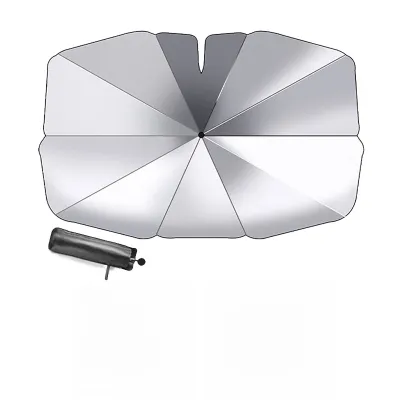
Umbrella-style sun shades have gained popularity due to their unique deployment mechanism. They feature a fabric canopy supported by flexible metal or fiberglass ribs that open and close exactly like a handheld umbrella. When closed, they collapse into a very compact form factor, making them incredibly easy to store in the Serena C28’s front door pockets or the glove compartment.
While convenient, umbrella shades carry specific risks when used in the C28. The most significant concern is the central metal shaft and handle. When the umbrella is popped open inside the cabin, the handle must rest against the dashboard to hold the shade in place. In the Serena C28, the large central infotainment touchscreen sits prominently on the dashboard. If the umbrella handle or shaft rubs against this screen, it can easily scratch the anti-reflective coating or apply localized pressure that damages the display panel.
Furthermore, the flexible, tensioned edges of an umbrella shade may not conform perfectly to the deep, raked corners of the C28 windshield. This can leave significant gaps where sunlight can penetrate, reducing the overall heat-rejection performance.
If you choose to use an umbrella-style shade, use a checklist to inspect the product before buying. Ensure the center handle is made of a soft, non-scratch silicone or rubber material, or features a flexible, bendable shaft that can be angled downward, away from the infotainment screen. Additionally, check that the tips of the support ribs are capped with soft plastic or fabric pockets to prevent them from scratching the interior A-pillar trim or the headliner.
Side and Rear Windows: Solutions for Sliding Doors and Quarter Glass
Mesh Socks and Track-Mounted Shades for Sliding Doors
Shading the side windows of the Serena C28’s sliding passenger doors requires specialized solutions due to the clearance constraints of the sliding mechanism. Standard suction-cup shades or static-cling films are highly discouraged on these doors. When the sliding door is opened, the glass pane moves outward and slides back parallel to the vehicle’s rear quarter panel, leaving a very narrow clearance gap. Any accessory attached to the inside of the glass will catch on the rubber weatherstripping, causing the shade to fall, tearing the rubber, or putting excessive load on the door’s electric motor.
One popular aftermarket solution is the mesh “sock” or sleeve. These shades are made of a stretchy, breathable mesh fabric that slips over the entire upper frame of the sliding door, covering both the inside and outside of the window. This design allows you to roll the window down while parked, permitting fresh air to flow through while keeping insects and direct sunlight out.
However, you must carefully evaluate the thickness of the mesh sock. If the fabric is too thick, it will compress the rubber weatherstripping when the door is closed, increasing friction. Over time, this can strain the electric sliding door motor, leading to premature wear or triggering the door’s safety anti-pinch sensor, which causes the door to automatically reverse and open. Ensure you choose thin, high-density mesh socks designed specifically for the C28 to maintain proper door clearance.
Alternatively, custom track-mounted roller blinds can be installed. These shades are mounted to the interior door panel and slide up and down along thin tracks adhered to the window frame. While they offer a highly integrated, factory-like appearance, they require precise installation. If you are not comfortable with DIY installation, it is highly recommended to seek professional assistance from an automotive accessory specialist in Singapore to ensure the tracks do not obstruct the window glass or interfere with the door’s mechanical latching systems.
Magnetic and Static Cling Films for Fixed Windows
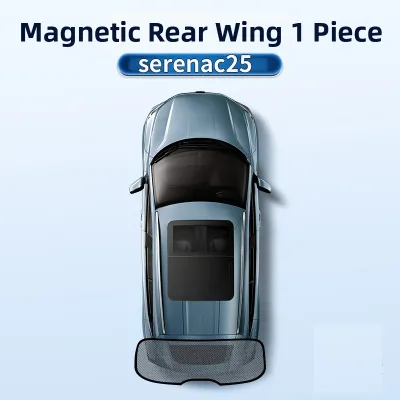
For the fixed rear quarter windows and the tailgate glass of the Serena C28, magnetic mesh screens and static-cling films are excellent options. Magnetic shades feature small, high-strength magnets sewn into the fabric border. These magnets snap directly onto the exposed metal frame surrounding the window glass, providing a clean, tool-free installation that can be removed in seconds.
Static-cling films use static electricity to adhere directly to the glass surface without any sticky adhesives. They are highly effective at blocking UV rays and reducing glare while maintaining a clean, low-profile look.
When applying static-cling films or magnetic shades, you must observe important safety and maintenance boundaries. On the rear tailgate window, ensure that the static-cling film does not trap excessive heat over the rear defogger heating lines. Trapped heat can cause localized hotspots, which may damage the defogger elements or, in extreme cases, stress the tempered glass.
Additionally, verify that any magnetic shade mounted on the tailgate does not interfere with the rear wiper motor housing or any interior dashcam wiring. The Serena C28 features a unique dual-opening tailgate (where the upper glass section can open independently of the main tailgate). If you install shades on the tailgate glass, ensure they are securely fastened so they do not fall or get caught in the latching mechanism when you open the glass hatch.
Before purchasing shades for the rear windows, assess your vehicle’s trim level. If your Serena C28 is equipped with dark factory privacy glass, adding heavy mesh shades may reduce outward visibility to an unsafe level, especially when driving at night or in heavy rain.
Evaluating Materials, Heat Rejection, and Cabin Storage
When selecting sun shades for your Nissan Serena C28, understanding the materials used is critical to achieving effective heat rejection. Sun shades generally fall into two categories: reflective and absorptive. Reflective shades, typically constructed with an outer layer of polished aluminum foil or silver-coated polyester, work by bouncing solar radiation back through the glass before it can be absorbed by the cabin’s interior surfaces. This is the most effective method for reducing heat buildup in a parked car.
In contrast, absorptive shades, such as black mesh screens or dark fabric curtains, do not reflect solar energy. Instead, they absorb the heat and block visible light to reduce glare. While they make the cabin feel darker and more comfortable visually, the absorbed heat is eventually radiated into the cabin air, making them less effective at lowering the overall temperature compared to reflective options.
To ensure genuine protection, look for product labels that specify a UPF (Ultraviolet Protection Factor) rating. A rating of UPF 50+ is highly recommended, as it blocks approximately 98% of harmful UVA and UVB rays, protecting your dashboard from cracking and your seats from fading under the harsh Singapore sun. Avoid relying on vague marketing buzzwords like “nano-tech heat block” unless the manufacturer provides verified testing data or specifications.
Cabin storage is another vital practical consideration. The Serena C28 is designed for family utility, meaning storage space must be managed efficiently. When choosing a front windshield shade, consider its folded dimensions. Multi-panel folding shades can be slid into the pockets behind the front seats or tucked into the under-floor storage compartment in the rear cargo area. Umbrella-style shades fit neatly into the lower door bins. Avoid leaving loose shades on the dashboard or passenger seats, as they can slide around during cornering or become dangerous projectiles in a sudden stop.
Driving Safety and Singapore LTA Compliance Rules
While sun shades are highly effective at keeping your parked Nissan Serena C28 cool, their use is strictly regulated when the vehicle is in motion. In Singapore, the Land Transport Authority (LTA) enforces strict guidelines regarding driver visibility and window tinting. According to LTA regulations, the front windshield and the front driver and passenger side windows must maintain a minimum visible light transmission (VLT) of 70%.
Therefore, any physical sun shades—whether custom-fit rigid boards, magnetic mesh screens, or mesh socks—must be completely removed from the windshield and the front side windows before you begin driving. Operating a vehicle with these shades installed is a traffic offense and poses a severe safety risk. The C28’s large front glass area is critical for maintaining an unobstructed view of pedestrians, cyclists, and surrounding traffic, especially when turning at junctions or navigating tight parking structures.
When installing or removing your front windshield shade, always handle it with care. The area behind the C28’s rearview mirror houses the delicate cameras and sensors for the vehicle’s advanced driver assistance systems (ADAS). Rough handling or forcing a stiff shade into place can knock the camera housing loose, damage the mounting bracket, or misalign the sensors. If the ADAS cameras are misaligned, the vehicle’s safety systems (such as emergency braking or lane-keep assist) may malfunction, requiring an expensive recalibration at an authorized service center.
For the rear side and tailgate windows, LTA regulations permit a lower VLT of 25%, allowing the use of mesh shades while driving, provided they do not completely block the driver’s view of the road behind. If you choose to keep magnetic or clip-on shades installed on the rear windows while driving, ensure they are securely mounted. A loose shade that falls off during transit can startle the driver or temporarily block the rear-view mirror, creating a dangerous distraction.
Frequently Asked Questions (FAQ)
Can I use C27 sun shades on the new Serena C28?
No, you should avoid using C27 shades on the C28. Although both are Serena models, the C28 has completely redesigned glass dimensions, a different windshield rake, revised A-pillar quarter windows, and a larger housing for the updated ADAS sensor suite. A C27 shade will not fit properly, leading to gaps, sagging, or potential pressure on the C28’s mirror assembly.
Do I need sun shades if my Serena C28 already has factory privacy glass?
Yes, supplemental shades can still be highly beneficial. Factory privacy glass is designed primarily to reduce visible light transmission (VLT) for privacy and glare reduction, but it does not always offer high infrared (IR) heat rejection. Adding an IR-blocking or highly reflective sun shade when parked will significantly reduce cabin heat buildup compared to privacy glass alone.
Will door-frame mesh socks damage the weatherstripping on the sliding doors?
They can if they are poorly fitted. High-quality, model-specific mesh socks designed for the C28’s sliding doors use soft, thin elastic bands that sit flush against the frame. However, if you use a generic, undersized mesh sock, the excessive tension will compress the rubber weatherstripping, which can cause permanent deformation, wind noise, or water leaks during heavy rain. Always remove mesh socks when they are not needed to allow the rubber seals to recover.

Community discussion
Share your experience or ask a question. Comments are reviewed before publication.