
Selecting the correct 2-stroke (2T) engine oil requires balancing your manufacturer’s viscosity requirements with your specific riding conditions and delivery system. While Motul 800 2T, Shell Advance 2T, and Castrol Power 1 2T are all prominent options, they serve distinct operational profiles. Choosing between them is not merely a matter of brand preference; it depends on whether your motorcycle uses an automated oil injection pump or a manual pre-mix system, as well as the thermal demands of your riding environment. Matching the oil’s physical properties to your engine’s design ensures optimal lubrication, prevents plug fouling, and protects critical internal components from premature wear.
Identify Your Engine's Viscosity Baseline
Before comparing specific brands, you must establish the baseline requirements set by your motorcycle’s manufacturer. The owner’s manual is the primary authority for these specifications, detailing the required viscosity characteristics and performance standards. Unlike four-stroke engine oils, which are categorized by complex multi-grade ratings like 10W-40, two-stroke oils are formulated to mix with fuel and burn cleanly while leaving a protective lubricating film on the cylinder walls and bearings.
Manufacturers typically specify two-stroke oil requirements using international standards rather than traditional SAE viscosity grades alone. The most common benchmarks are established by the Japanese Automotive Standards Organization (JASO) and the American Petroleum Institute (API). For instance, a manual might mandate a JASO FD or ISO-L-EGD certified oil.
Products mentioned in this guide
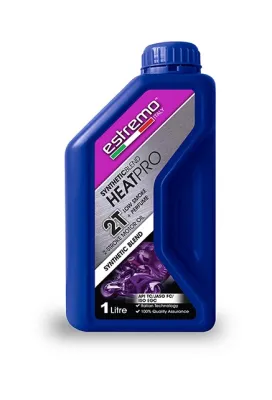
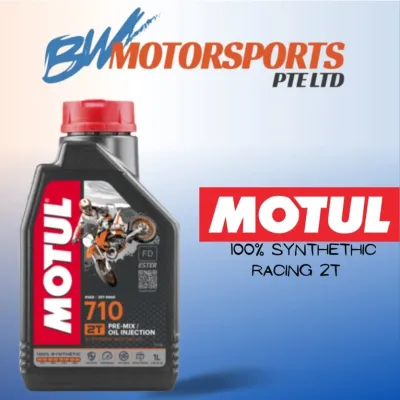
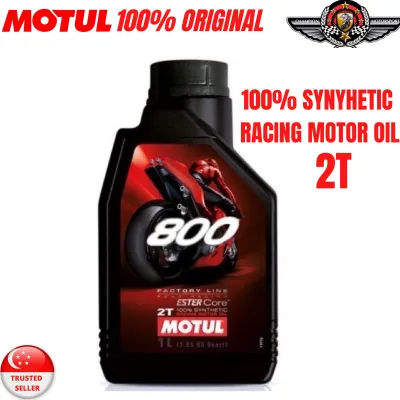
Prices are valid at publication and may change. Please refer to the product page for the latest price.
Understanding the delivery system of your engine is equally critical. Two-stroke engines utilize either a pre-mix system, where oil is manually blended into the fuel tank, or an oil injection system, which pumps oil from a dedicated reservoir directly into the intake tract or crankcase. Injection systems rely on precise pump calibrations designed for oils within a specific viscosity range. Using an oil that is too thick can restrict flow through the narrow lines and pump orifices, leading to oil starvation and catastrophic engine failure. Conversely, an oil that is too thin may not provide sufficient film strength under high thermal loads.
How to Compare Motul, Shell, and Castrol Labels
When holding bottles of Motul 800 2T, Shell Advance 2T, and Castrol Power 1 2T, you must look past marketing claims and focus on the technical specifications printed on the rear labels. The first detail to verify is the base oil composition. Fully synthetic oils, often utilizing ester or polyalphaolefin (PAO) basestocks, offer high thermal stability and film strength under extreme temperatures. Semi-synthetic (or synthetic technology) blends combine synthetic and mineral bases to offer balanced performance for daily riding, while mineral oils are generally reserved for older, low-load engines or specific break-in procedures.

Next, examine the certification marks. Look for the official JASO logo, which displays a registration number and the specific grade (such as FC or FD). A genuine JASO FD rating indicates superior detergency and low-smoke performance compared to FB or FC ratings. If your engine manufacturer specifies a JASO FD oil, verify that the bottle explicitly carries this certification rather than just claiming to “meet or exceed” the standard without official registration.
Crucially, check the label for application restrictions. For example, certain high-performance oils, such as specific formulations of Motul 800 2T (like the Factory Line Road Racing or Off Road variants), are explicitly labeled for “pre-mix only.” This means the oil’s high viscosity and chemical structure prevent it from flowing safely through automated oil injection pumps. If your motorcycle uses an oil injection pump, you must select an oil labeled as suitable for both injection and pre-mix systems, which is common for standard formulations of Shell Advance 2T and Castrol Power 1 2T.
Finally, review the recommended fuel-to-oil mix ratios printed on the label. While the motorcycle manufacturer’s manual always takes precedence, the oil label provides a reference range (such as 50:1 or 32:1) that indicates the oil’s concentration and lubricating efficiency.
Adjusting for Climate and Riding Style
While the manufacturer’s manual provides the baseline, real-world operating conditions may require you to select an oil that sits at the upper or lower limit of the recommended specifications. In tropical climates like Singapore, where ambient temperatures remain consistently high throughout the year, engines experience elevated thermal stress. High ambient heat reduces the operating viscosity of the oil film inside the crankcase and cylinder, making thermal breakdown a primary concern.
Riding style further compounds these thermal demands. Stop-and-go city traffic prevents consistent airflow across air-cooled cylinders, causing rapid heat buildup. Under these conditions, a fully synthetic oil with a high flash point and robust high-temperature viscosity is essential to maintain a protective barrier between the piston rings and cylinder wall. Conversely, sustained high-RPM riding on open roads or tracks subjects the engine to continuous mechanical stress, demanding an oil formulation that resists shearing and maintains its lubricating properties under extreme pressure.
If the manual permits a range of oils depending on ambient temperature, a tropical climate generally warrants selecting the more robust, higher-viscosity option within that approved range. Never deviate from the manufacturer’s approved viscosity limits without consulting a professional engine tuner, as running an excessively heavy oil can disrupt fuel atomization and lead to severe carbon deposits.
Decision Framework: Choosing Your 2T Oil
Choose Motul 800 2T if your motorcycle manufacturer permits a high-viscosity, fully synthetic formula and your engine utilizes a manual pre-mix system. Because Motul 800 2T is highly viscous and engineered primarily for high-load, high-RPM racing applications, it is ideal for track use or highly tuned engines where you manually mix the oil with fuel. Always verify on the bottle’s label that the specific variant matches your pre-mix ratio and that your engine does not rely on an oil injection pump, as this oil’s thickness can clog automated systems.
Choose Shell Advance 2T if you require a reliable, everyday lubricant that matches standard OEM specifications for daily commuting and urban riding. Many formulations in the Shell Advance 2T range are designed for both oil injection and pre-mix systems, offering excellent flowability through mechanical pumps. This makes it highly suitable for standard street motorcycles and scooters operating in stop-and-go city traffic, provided the specific bottle’s JASO and API ratings align with your owner’s manual.
Choose Castrol Power 1 2T if your engine requires a balanced, high-performance synthetic or semi-synthetic oil that supports both injection and pre-mix delivery. Castrol Power 1 2T formulations are typically engineered to flow easily through injection pumps while maintaining a strong protective film under moderate to high thermal loads. This makes it an excellent choice for riders seeking a versatile street-performance oil that keeps exhaust ports clean and minimizes smoke.
Verify first if your motorcycle is under an active manufacturer warranty. Using an oil that does not carry the exact JASO or API certification specified in your manual can void your warranty coverage. Additionally, if your engine is undergoing a break-in period after a rebuild, check if the builder recommends a specific mineral-based break-in fluid before transitioning to high-performance synthetics. Always confirm that your automated oil injection system is calibrated correctly for the specific viscosity of the oil you choose to prevent under- or over-lubrication.
Safe Application and Tuning Practices
Applying your chosen 2-stroke oil safely requires precise measurement and regular monitoring of engine performance. If your motorcycle uses a pre-mix system, never estimate the oil quantity. Use a graduated measuring beaker or a dedicated ratio cup to measure the exact volume of oil required for your fuel volume. Even a slight deviation from the recommended ratio (such as mixing at 40:1 instead of 50:1) can significantly alter the engine’s air-fuel ratio, leading to either a lean fuel condition or excessive oil fouling.
Monitoring your engine’s physical feedback is the most effective way to diagnose lubrication issues. Periodically inspect the spark plug; a healthy engine displays a light tan or chocolate-brown electrode, while a wet, black plug indicates excessive oil, and a dry, white electrode warns of oil starvation. Additionally, observe your exhaust smoke; while some smoke is normal, excessive, dense blue-white smoke indicates over-lubrication or poor oil combustion. If you experience engine knocking, hesitation, or unusual metallic noises, stop riding immediately and consult a qualified professional mechanic to prevent severe engine damage.
Frequently Asked Questions (FAQ)
Can I mix Motul, Shell, and Castrol 2T oils in the same tank?
Mixing different brands or formulations of 2-stroke oils is highly discouraged and can lead to severe engine damage. Each manufacturer utilizes a proprietary blend of base oils and chemical additives designed to work cohesively. When you mix different brands, such as blending a highly viscous, ester-based Motul 800 with a semi-synthetic Shell Advance or Castrol Power 1, the additive packages can react negatively. This chemical incompatibility can cause the oil to gel, separate, or precipitate out of solution, clogging fuel filters, carburetor jets, and oil injection lines. If you decide to switch brands, the safest procedure is to completely drain the existing oil from the fuel tank or injection reservoir, flush the system according to the manufacturer’s instructions, and then fill it with the new oil.
How do I know if my 2-stroke engine needs a different viscosity?
Determining if your engine requires a different oil viscosity involves analyzing observable performance indicators and physical wear patterns. If you notice excessive exhaust smoke, heavy carbon buildup on the power valve or exhaust port, and frequent spark plug fouling despite correct carburetor tuning, your oil may be too viscous or failing to burn completely at your typical operating temperatures. Conversely, if the engine runs excessively hot, exhibits a metallic pinging or knocking sound under load, or shows signs of rapid piston ring wear, the oil film may be too thin to withstand the thermal demands. Always refer to your owner’s manual’s climate chart first to see if a different viscosity is approved for your local ambient temperatures. If issues persist within the approved range, consult a professional engine tuner to inspect the mechanical tolerances and fuel delivery settings before making further changes.

Community discussion
Share your experience or ask a question. Comments are reviewed before publication.