
Choosing between Motul 7100 10W-40 and 10W-50 comes down to matching your motorcycle manufacturer’s original specifications with your specific riding conditions, engine mileage, and local climate. While both are fully synthetic ester-based lubricants designed for high-performance four-stroke engines, they behave differently once your engine reaches its normal operating temperature. The 10W-40 grade offers a lighter oil film that reduces internal drag and is ideal for modern, tight-tolerance engines operating under standard conditions. In contrast, the 10W-50 grade provides a thicker protective barrier at high temperatures, making it highly suitable for older engines, air-cooled systems, or motorcycles subjected to extreme heat and heavy loads.
To make the correct choice, you must evaluate how your motorcycle is ridden and the physical state of its internal components. Selecting an incorrect viscosity can lead to issues ranging from sluggish engine response and increased fuel consumption to accelerated wear on critical components like bearings and piston rings. Therefore, understanding the mechanical differences between these two grades is essential for maintaining your bike’s longevity and performance.
Understanding Viscosity Grades: 10W-40 vs 10W-50
To understand how these two oils differ, you must first decode the Society of Automotive Engineers (SAE) viscosity rating printed on the bottle. The rating consists of two numbers separated by the letter “W,” which stands for winter. This dual-number system indicates that the lubricant is a multigrade oil, formulated to flow effectively at low temperatures while maintaining sufficient body and thickness at high operating temperatures.
Products mentioned in this guide
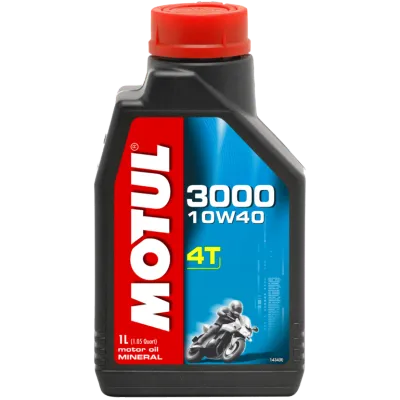
Prices are valid at publication and may change. Please refer to the product page for the latest price.
The first part of the rating, “10W,” is identical for both Motul 7100 10W-40 and 10W-50. This number represents the oil’s cold-flow characteristics when you first start the engine. A “10W” rating indicates that both oils will flow similarly during cold starts, ensuring that critical engine components receive rapid lubrication within the first few seconds of operation. Because the cold-start rating is the same, switching between these two options will not alter how your engine behaves during initial startup in moderate or warm climates.
The critical difference lies in the second number, which represents the oil’s kinematic viscosity at 100 degrees Celsius—the standard benchmark for a fully warmed-up engine. The “40” grade is thinner at operating temperature, allowing it to flow more rapidly through tight internal passages and reduce parasitic drag within the engine. This lower resistance can contribute to smoother throttle response and slightly better fuel efficiency, as the engine does not have to work as hard to pump the lubricant.
Conversely, the “50” grade is thicker at operating temperature, creating a more robust oil film between moving metal parts. This thicker film is designed to withstand higher thermal loads and mechanical shearing forces without breaking down. While it provides enhanced protection under extreme heat, the added thickness also introduces slightly more fluid resistance, which can marginally affect fuel economy and engine responsiveness in smaller-displacement motors.
Before deciding which grade to purchase, your first step should always be to consult your motorcycle’s owner’s manual. Manufacturers design engines with specific internal clearances and oil pump capacities, and they provide a chart of approved SAE viscosity grades based on ambient temperature ranges. Deviating from these recommendations without a clear mechanical reason can compromise your engine’s lubrication system.
Matching Viscosity to Engine Type, Age, and Mileage
The physical condition and design of your motorcycle’s engine play a pivotal role in determining whether a 10W-40 or 10W-50 oil is more appropriate. Modern motorcycle engines are engineered with incredibly tight tolerances and precise clearances between components such as the pistons, cylinder walls, and bearings. These tight spaces require a thinner oil, like 10W-40, to penetrate and lubricate every surface effectively. Using an excessively thick oil in a modern, low-mileage engine can restrict oil flow, increase operating temperatures, and lead to localized starvation of critical parts.

As an engine accumulates mileage, the constant friction and thermal cycles gradually wear down internal metal surfaces. This wear increases the clearances between moving parts, such as the piston rings and cylinder sleeves, or within the crankshaft bearings. When these clearances widen, a thinner oil like 10W-40 may flow through the gaps too easily, leading to a drop in oil pressure and a higher likelihood of oil burning or consumption.
In high-mileage engines, transitioning to a 10W-50 viscosity can help compensate for these increased clearances. The thicker oil film helps seal the gaps between the piston rings and cylinder walls, which can restore lost compression, reduce oil consumption, and maintain stable oil pressure throughout the system. This cushioning effect also helps dampen mechanical noise, providing a quieter ride and reducing metal-on-metal contact in worn components.
However, you should not automatically switch to a thicker oil simply because your motorcycle has crossed a certain mileage threshold. It is crucial to monitor your engine’s actual behavior, such as checking for noticeable oil consumption between service intervals or observing any drops in oil pressure. If your high-mileage engine runs smoothly, does not consume oil, and maintains proper pressure on 10W-40, there is generally no immediate need to alter the viscosity.
Any decision to deviate from the original equipment manufacturer (OEM) viscosity recommendations should be approached with caution. If you suspect your engine’s internal wear warrants a higher viscosity, consider verifying the engine’s health through a compression test or consulting a qualified motorcycle mechanic. A professional can assess whether a transition to 10W-50 is mechanically justified or if it might inadvertently restrict flow to sensitive areas like the overhead camshafts.
Evaluating Operating Temperature and Riding Conditions
Your riding environment and typical operating conditions are major factors in how engine oil performs. When a motorcycle is subjected to sustained high speeds, heavy stop-and-go traffic, or carrying heavy passenger and luggage loads, the internal engine temperature rises significantly. In tropical climates, such as Singapore, ambient temperatures remain consistently high year-round, which prevents the engine from shedding heat as efficiently as it would in cooler regions.
Under these high-temperature conditions, engine oil naturally thins out. If the oil becomes too thin, the protective film can shear or rupture, leading to direct metal-on-metal contact and accelerated engine wear. A 10W-50 oil is specifically formulated to maintain its structural integrity and viscosity under extreme thermal stress, ensuring that the protective barrier remains intact even when the engine is running hot during prolonged idling in urban traffic or high-speed highway cruising.
The design of your motorcycle’s cooling system also dictates how it manages heat. Air-cooled and oil-cooled engines experience much wider temperature fluctuations than liquid-cooled engines, as they rely entirely on ambient airflow and oil circulation to dissipate heat. Because air-cooled engines run hotter in stationary traffic, they often benefit from the extra thermal protection and shear stability offered by a 10W-50 viscosity, provided the manufacturer approves its use.
Liquid-cooled engines, on the other hand, feature a dedicated radiator and thermostat system that maintains a relatively stable operating temperature. Because these systems regulate heat more consistently, they are generally optimized for the lighter 10W-40 viscosity, which ensures rapid circulation and efficient heat transfer away from internal components. Unless you are riding in extreme conditions, a liquid-cooled engine will typically perform optimally on the manufacturer-recommended 10W-40.
Always check the temperature-viscosity chart in your owner’s manual to see how different grades align with your local climate. If you plan to use your motorcycle for track days, competitive racing, or heavy-duty touring where the engine is pushed to its absolute limits, consult the manufacturer or a professional tuner. They can help determine if the extreme operating conditions justify upgrading to a higher viscosity grade to prevent thermal breakdown.
Verifying Motul 7100 Specifications and OEM Compliance
Selecting the correct viscosity is only part of the equation; you must also ensure that the specific oil meets the performance standards required by your motorcycle’s engine and transmission. Unlike passenger cars, most motorcycles share a single oil reservoir that lubricates the engine, gearbox, and wet clutch assembly. This unique configuration requires specialized lubricants that can handle high shear forces while maintaining the correct frictional properties for the clutch.
When purchasing Motul 7100, you must verify the specifications printed on the label against the requirements listed in your motorcycle’s owner’s manual. Look for the Japanese Automotive Standards Organization (JASO) rating, such as JASO MA2. The MA2 standard indicates that the oil is formulated with specific friction modifiers that prevent clutch slippage under high loads, ensuring smooth power transfer and precise gear engagement. Using an oil that does not meet the required JASO standard can lead to clutch chatter, slippage, and premature wear of the clutch plates.
In addition to the JASO rating, check the American Petroleum Institute (API) service classification, which indicates the oil’s overall performance level and additive technology. Motul 7100 typically carries advanced API ratings, but you must confirm that these ratings are compatible with your motorcycle’s model year. Some older engines may require specific additive packages, and verifying compliance prevents compatibility issues with internal seals and yellow metals.
Because premium synthetic oils are highly sought after, it is essential to purchase your engine oil from authorized dealers or reputable retail outlets. Before opening the bottle, inspect the packaging carefully to verify its authenticity. Check that the safety seal is intact, the labeling is clear and free of printing errors, and look for any batch codes or expiration dates stamped on the container. Using counterfeit or improperly stored oil can cause catastrophic engine damage.
If you are performing the oil change yourself, always follow the manufacturer’s instructions for draining the old oil, replacing the oil filter, and filling the crankcase to the correct level. Never overfill the engine, as excess oil can lead to aeration, increased internal pressure, and oil leaks through seals and breathers. If you are unsure about any part of the maintenance process, seek assistance from a qualified professional.
Decision Framework: Choosing Between 10W-40 and 10W-50
To finalize your decision, you can use a structured framework based on your motorcycle’s specifications, age, and riding environment. This approach ensures you select the viscosity that offers the best balance of protection, performance, and efficiency for your specific situation without relying on generalized assumptions.
You should choose Motul 7100 10W-40 if your motorcycle’s owner’s manual explicitly specifies this grade as the primary recommendation. This viscosity is ideal if your engine is relatively new, has low to moderate mileage, and operates within normal tolerances. It is also the preferred choice for daily commuting, mixed riding in moderate climates, and for liquid-cooled engines where maintaining rapid oil circulation and maximizing fuel efficiency are priorities.
You should choose Motul 7100 10W-50 if your owner’s manual lists it as an approved alternative for warmer climates or high-temperature operations. This grade is highly suitable if your motorcycle has high mileage and exhibits signs of minor oil consumption or lower oil pressure. Additionally, it is the appropriate choice for air-cooled engines, heavy-duty touring, carrying heavy loads, or if you frequently ride in extreme heat or stop-and-go traffic where engine temperatures soar.
Keep in mind that neither of these options may be suitable if your motorcycle’s manufacturer specifies a completely different winter grade, such as 5W-40 or 20W-50, based on local climate charts. Always prioritize the winter rating to ensure adequate lubrication during cold starts, especially if you ride in regions that experience freezing temperatures.
Finally, verify your motorcycle’s warranty status before changing viscosity grades, as using an unapproved oil can void your coverage. If your motorcycle has undergone aftermarket modifications, such as an upgraded cooling system or engine tuning, consult with the builder or a qualified technician to determine if your oil requirements have changed.
Frequently Asked Questions (FAQ)
Can I mix Motul 7100 10W-40 and 10W-50 during an oil top-up?
In an emergency situation where your oil level is dangerously low, mixing Motul 7100 10W-40 and 10W-50 is acceptable to prevent engine damage from oil starvation. Because both products belong to the same fully synthetic ester line, their base oils and additive packages are highly compatible, minimizing the risk of chemical separation or adverse reactions. However, mixing them will alter the overall viscosity profile of your engine oil, resulting in a blend that sits somewhere between a 40-weight and a 50-weight. While this is fine for a temporary top-up, you should plan a complete oil and filter change as soon as possible to restore the consistent, manufacturer-specified viscosity grade.
Does switching from 10W-40 to 10W-50 void my motorcycle's warranty?
Switching to a viscosity grade that is not approved by your motorcycle’s manufacturer can potentially void your engine warranty if a lubrication-related failure occurs. Motorcycle manufacturers design and test their engines using specific oil weights, and they outline these approved grades in the owner’s manual. If you experience an engine issue and the dealership discovers you used an unapproved 10W-50 oil instead of the required 10W-40, they may deny your warranty claim. To protect your investment, always review your warranty booklet and consult with an authorized dealership before deviating from the primary recommended viscosity grade on a new or warranted motorcycle.

Community discussion
Share your experience or ask a question. Comments are reviewed before publication.