
When selecting a 10W-40 engine oil, vehicle owners often find themselves choosing between industry giants like Motul, Shell, and Castrol. No single brand universally outperforms the others across all parameters. Instead, the right oil is the one that matches your vehicle’s specific engineering requirements, your driving habits, and your maintenance budget.
To determine which brand is right for your engine, you must look beyond the logo on the bottle. The performance of a 10W-40 oil is dictated by its base oil formulation, its industry certifications, and its manufacturer approvals. Comparing a premium, high-performance line from one brand to an entry-level line from another will lead to inaccurate conclusions.
This guide breaks down how to evaluate Motul, Shell, and Castrol 10W-40 oils objectively. By understanding how to read oil labels and match them to your vehicle’s needs, you can make an informed decision that ensures optimal engine protection and longevity.
Products mentioned in this guide
![🇸🇬 MOTUL 7100 4T 10W40 10W50 15W50 100% Synthetic Ester Engine Oil Motorcycle Oil [1L]](https://img.lazcdn.com/g/p/00450279a13a350708397ff343c39c19.png_400x400q80.png_.webp)
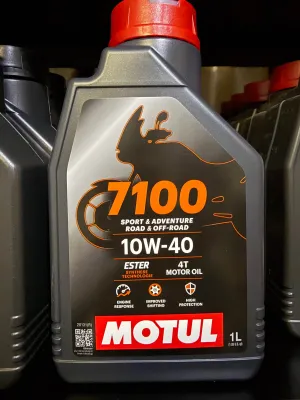
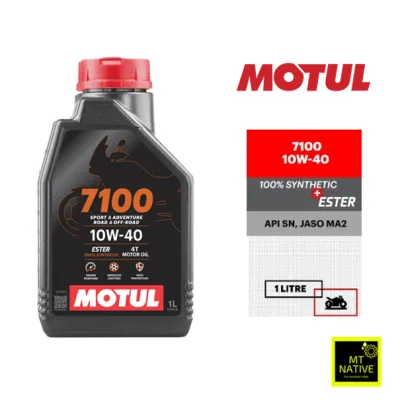
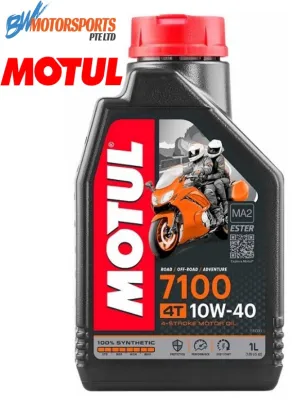
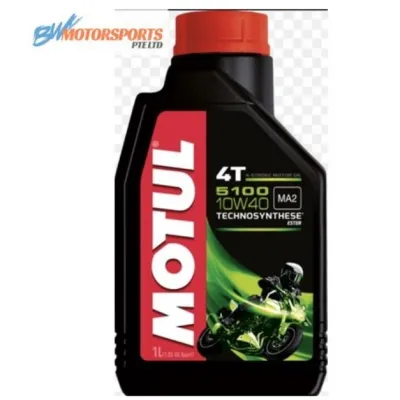
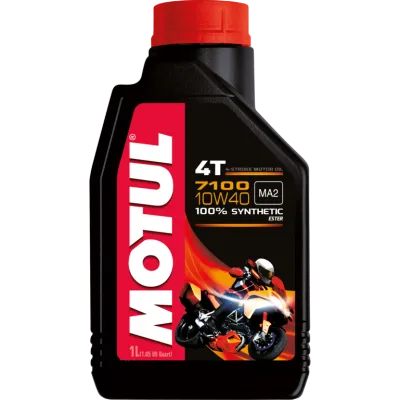
Prices are valid at publication and may change. Please refer to the product page for the latest price.
Understanding 10W-40 Viscosity and Your Engine's Needs
Engine oil viscosity is measured using a dual-grade system established by the Society of Automotive Engineers (SAE). The “10W” portion designates the oil’s low-temperature flow characteristics, where the “W” stands for winter. The “40” portion indicates the oil’s kinematic viscosity at the engine’s normal operating temperature, typically measured at 100 degrees Celsius.
In Singapore’s tropical climate, cold starts do not involve freezing temperatures, but the low-temperature rating remains highly relevant. When an engine sits overnight, the oil drains back into the oil pan. Upon ignition, the oil pump must rapidly circulate the fluid to the top of the engine to prevent metal-on-metal wear. A 10W oil provides sufficient fluidity to flow quickly through narrow oil passages during initial startup, while the 40-weight rating ensures the oil remains thick enough to maintain a protective barrier under high operating temperatures and heavy stop-and-go traffic.
Always consult your vehicle’s owner’s manual to verify the required viscosity grade. Using a 10W-40 oil in an engine designed for a thinner grade, such as 0W-20 or 5W-30, can lead to increased internal drag, reduced fuel efficiency, and inadequate lubrication in modern engines with extremely tight clearances. Conversely, using an oil that is too thin in an engine designed for 10W-40 can result in oil consumption and accelerated wear.
It is also important to recognize that viscosity is a standardized physical property. If Motul, Shell, and Castrol all manufacture a 10W-40 oil that meets the exact same industry standards, their basic flow characteristics and thickness at operating temperatures will be virtually identical. The differences in performance lie not in the viscosity grade itself, but in the quality of the base oils and the proprietary additive packages blended into each product.
Comparing Base Oil Formulations Across Brands
To make a fair comparison between Motul, Shell, and Castrol, you must look at the base oil formulation of the specific product you are purchasing. Engine oils are generally categorized into three main types: mineral, semi-synthetic (often labeled as synthetic technology or synthetic blend), and fully synthetic. Within the 10W-40 viscosity grade, all three brands offer products across these different formulation tiers.

Motul is highly regarded for its focus on synthetic lubricants, particularly its proprietary ester-based technology found in its high-performance lines. However, Motul also offers semi-synthetic 10W-40 options under its Technosynthese range, which blends synthetic and mineral base stocks to balance performance and cost. Shell utilizes its proprietary gas-to-liquid technology, branded as PurePlus, to create highly pure synthetic base oils from natural gas, which are featured in its premium Helix range. Castrol offers its Magnatec and GTX lines in the 10W-40 grade, utilizing synthetic technology to provide active protection against engine wear during the critical warm-up phase.
When shopping, always check the product label for explicit terms describing the formulation rather than relying solely on brand reputation. A bottle labeled “Synthetic Technology” or “Synthetic Blend” is a semi-synthetic oil, which offers a middle ground in performance and price. A “Fully Synthetic” oil provides the highest level of thermal stability, oxidation resistance, and shear protection under extreme operating conditions.
To ensure an accurate comparison, you must compare equivalent tiers. Comparing a premium, fully synthetic Motul oil against a standard semi-synthetic Shell or Castrol oil will yield skewed results. If your driving conditions demand a fully synthetic oil, ensure you are comparing Motul’s fully synthetic options directly against Shell’s and Castrol’s fully synthetic equivalents. If a semi-synthetic oil is sufficient for your vehicle’s service intervals, compare the semi-synthetic offerings from each brand.
Decoding Industry Specifications and OEM Approvals
When independent laboratory test data is unavailable, the most reliable and objective method to compare engine oils is by examining their industry specifications and Original Equipment Manufacturer (OEM) approvals. These credentials are listed on the back label of every oil bottle and indicate that the fluid has passed rigorous standardized testing.
The American Petroleum Institute (API) and the European Automobile Manufacturers’ Association (ACEA) set the primary global standards for engine oils. For gasoline engines, look for the API service category, which is represented by a two-letter code starting with “S” (such as SP, SN, or SM). The second letter indicates the performance generation, with “SP” being the most current and stringent standard, designed to protect against low-speed pre-ignition and timing chain wear. For European vehicles, the ACEA ratings (such as A3/B4 for high-performance gasoline and light-duty diesel engines) are critical, as they dictate specific shear stability and high-temperature performance limits.
Beyond general industry standards, vehicle manufacturers establish their own proprietary OEM approvals to ensure compatibility with their specific engine designs and emissions systems. Examples include Volkswagen’s VW 502 00/505 00, Mercedes-Benz’s MB 229.3 or MB 229.5, and BMW’s Longlife approvals. These specifications require the oil to pass specialized tests that address specific wear mechanisms, seal compatibility, and deposit control unique to those engines.
The brand that carries the exact, up-to-date OEM approval required by your vehicle manufacturer is always the superior choice, regardless of marketing claims or brand prestige. If your European car requires an MB 229.5 approved oil, and only one of the three brands offers a 10W-40 product carrying that explicit approval, that specific product is the correct choice. Never assume an oil is compatible simply because it is a premium brand; always verify the exact specification codes on the bottle.
Evaluating Pricing, Availability, and Drain Intervals
Choosing between Motul, Shell, and Castrol also involves practical considerations such as retail pricing, local availability, and recommended drain intervals. These factors directly impact your long-term vehicle maintenance costs and convenience.
In the local market, retail prices for 10W-40 engine oils can vary significantly depending on the formulation and the retail channel. It is advisable to check current prices (in S$) at authorized workshops, official brand stores, or reputable online marketplaces. Generally, Motul’s specialized or high-performance synthetic lines command a premium price point compared to equivalent offerings from Shell and Castrol. Shell and Castrol benefit from massive global distribution networks, which often translates to more competitive pricing and wider availability at neighborhood workshops across Singapore.
The formulation type of the oil you select directly dictates its recommended drain interval. Fully synthetic 10W-40 oils offer superior resistance to thermal breakdown and oxidation, allowing for longer service intervals, typically up to 10,000 kilometers or one year, depending on your vehicle manufacturer’s guidelines. Semi-synthetic options, while more affordable upfront, generally require more frequent oil changes, often recommended between 5,000 and 7,000 kilometers. When calculating long-term maintenance costs, consider whether the extended service life of a premium synthetic justifies its higher initial purchase price.
Additionally, because Motul, Shell, and Castrol are highly popular premium brands, they are occasionally targeted by counterfeiters. Purchasing counterfeit engine oil poses a severe risk of catastrophic engine damage due to inadequate lubrication and thermal breakdown. To mitigate this risk, avoid purchasing oil from unverified online sellers or parallel importers offering prices that seem unusually low. Always purchase your engine oil from authorized distributors, official brand storefronts, or reputable workshops that can verify the authenticity of their inventory.
Decision Framework: Which 10W-40 Should You Buy?
To select the right 10W-40 engine oil for your vehicle, apply a structured decision framework based on your vehicle’s specifications, driving conditions, and budget.
First, prioritize manufacturer requirements. Check your owner’s manual for the required viscosity grade, API/ACEA specifications, and any specific OEM approvals. If your vehicle requires a highly specific manufacturer-backed approval that only one of the three brands explicitly lists on its label, that brand is your default choice.
Second, consider Motul if your vehicle’s manual permits its use and you prioritize specialized, high-performance formulations. Motul is an excellent choice for high-stress driving environments, modified engines, or older performance vehicles where maximum thermal stability and shear resistance are desired, and you are willing to pay a premium price. Ensure the specific Motul product line you select matches your required OEM specifications.
Third, choose Shell or Castrol if you are looking for an oil that meets your vehicle’s required API/ACEA specifications and OEM approvals at a more accessible price point. Both brands offer highly reliable, technologically advanced 10W-40 formulations that provide excellent daily engine protection. Their widespread availability makes them highly convenient options for routine maintenance at local workshops.
Frequently Asked Questions (FAQ)
Can I mix Motul 10W-40 with Shell or Castrol?
While mixing different brands of 10W-40 engine oil will not cause immediate, catastrophic engine failure in an emergency, it is generally discouraged as a standard practice. Each brand utilizes a proprietary blend of base oils and chemical additives designed to work cohesively. Mixing brands introduces different additive packages that can interact unpredictably, potentially diluting the effectiveness of the wear inhibitors, detergents, and dispersants in the oil. For optimal engine protection, perform a complete oil drain and filter replacement when switching from one brand to another.
Is 10W-40 suitable for high-mileage vehicles?
A 10W-40 viscosity grade is frequently recommended for older or high-mileage engines because its slightly thicker operating viscosity helps seal the wider clearances that develop between moving parts over time. This can help reduce oil consumption, minimize internal leaks, and maintain stable oil pressure. However, you must still verify that a 10W-40 grade is permitted by your vehicle’s manufacturer. For older engines, choosing a product specifically formulated for high-mileage vehicles—which contains specialized seal conditioners to restore elasticity to worn gaskets—is often more beneficial than simply switching to a thicker viscosity grade.

Community discussion
Share your experience or ask a question. Comments are reviewed before publication.