
To find the best sunshade for your Kia Niro, you must choose between custom-fit options designed specifically for the vehicle’s unique cabin dimensions and highly adjustable universal alternatives. The Kia Niro features a sweeping windshield and distinct side window geometries that vary across its model generations, making precise fitment essential for effective thermal protection.
Verifying your exact model year and trim level is the most critical step before making a purchase. A sunshade that fits a first-generation Niro perfectly may not align with the redesigned glass and sensor housings of the second-generation model.
Selecting the right material involves balancing your parking environment with your daily routine. Reflective metallic foils excel at blocking intense, direct sunlight during long outdoor parking sessions, while high-density mesh fabrics offer glare reduction and privacy for passenger windows.
Products mentioned in this guide




Prices are valid at publication and may change. Please refer to the product page for the latest price.
Custom-Fit vs. Universal: Choosing the Right Fit Type
Custom-fit sunshades are engineered using precise laser measurements of a specific vehicle’s interior. For the Kia Niro, this means the shade is cut to match the exact angle of the windshield, the curvature of the A-pillars, and the dimensions of the rearview mirror mounting area. This precise alignment ensures edge-to-edge coverage, leaving virtually no gaps for sunlight to penetrate.
Universal sunshades are designed to fit a wide range of vehicle classes, typically categorized by broad sizes like small, medium, or large. While they are highly flexible and can be transferred between different cars, they often leave significant gaps at the corners of the Niro’s wide windshield. These gaps allow sunlight to stream in, creating localized hot spots on your dashboard and steering wheel.
In terms of daily deployment, custom-fit options are generally much easier to position. Because they match the physical boundaries of the window frame, they often snap directly into place or require only minimal support from the vehicle’s built-in sun visors. Universal options frequently rely on suction cups or tension wires that can sag over time, requiring constant adjustment to stay upright.
The financial investment varies noticeably between these two categories. Universal shades are highly budget-friendly, often retailing between S$10 and S$25 in Singapore. Custom-fit shades represent a premium tier, typically ranging from S$40 to S$120 or more for a complete set, reflecting the specialized manufacturing and superior coverage they provide.
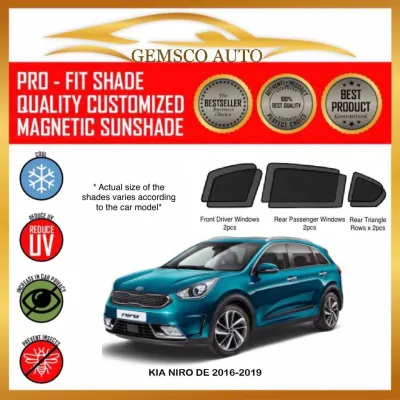
For the side windows, custom-fit options are almost always necessary. The Kia Niro has a distinct rear door shape and a small quarter-glass panel that universal rectangular shades cannot cover adequately. A model-specific side shade set will use magnetic frames or exact-fit tension clips to seal the entire window frame, preventing light leakage and maintaining a clean interior aesthetic.
Material and Design Comparison: Reflective vs. Fabric Options
Reflective foil sunshades utilize a multi-layered construction, typically featuring an outer layer of reflective aluminum or metallic film bonded to a foam or bubble-wrap core. This design works by reflecting radiant heat away from the vehicle before it can pass through the glass and warm the cabin air. They are highly rigid and usually fold in an accordion style or roll up for storage.

Fabric and mesh sunshades are generally made from high-density polyester or static-cling materials. Instead of reflecting all light, they absorb and diffuse it, significantly reducing glare and heat transfer while still allowing some degree of outward visibility. These are particularly popular for side windows because they allow passengers to see outside while remaining protected from direct sunlight.
Umbrella-style sunshades represent a newer design trend, featuring a folding metal frame covered in reflective fabric that opens inside the cabin like a standard umbrella. While they are incredibly fast to deploy and fold down to a very compact size, you must exercise caution when opening them in a Kia Niro. The central shaft can press against the sensitive infotainment screen or dashboard trim if not positioned carefully.
When comparing materials, it is important to look past vague marketing terms. Specific performance claims, such as exact temperature reductions or precise ultraviolet protection factors, should always be verified through official manufacturer specifications and independent material testing. Focus on observable physical traits, such as the thickness of the insulation layer and the quality of the edge binding, to gauge overall durability.
Pre-Purchase Checklist: Verifying Model and Trim Compatibility
To ensure your selected sunshade fits your Kia Niro perfectly, follow this systematic verification checklist before finalizing your purchase:
- Identify the Generation: The Kia Niro transitioned from its first generation (DE series, produced up to 2022) to its second generation (SG2 series, 2023 to present). The windshield dimensions, rake angle, and side window shapes changed completely between these two generations.
- Check the Powertrain Variant: The Niro is available in Hybrid (HEV), Plug-in Hybrid (PHEV), and fully Electric (EV) variants. While many body panels are shared, minor interior trim differences near the dashboard or A-pillars can occasionally affect how a rigid custom sunshade sits.
- Locate the ADAS Sensor Housing: Modern Kia Niro models feature a bulky plastic housing behind the rearview mirror that contains the Advanced Driver Assistance Systems (ADAS) cameras and sensors. Ensure the sunshade has a dedicated cutout, a deep collar, or a flexible hook-and-loop strap designed to wrap securely around this housing.
- Avoid Generic Size Labels: Do not rely on generic retail labels such as "compact SUV" or "mid-size crossover." These categories are too broad to account for the Niro's specific windshield width and the depth of its dashboard.
Daily Usage: Safe Installation and Storage Practices
Deploying your sunshade safely protects both the accessory itself and your vehicle’s delicate interior components. When sliding the shade into position across the windshield, guide it gently over the dashboard surface. Avoid dragging rough edges or exposed metal tension wires across the soft-touch plastics, leatherette trim, or the housing of your center touchscreen, as this can cause permanent scuffs.
Pay close attention to the rearview mirror and any aftermarket accessories, such as dashcams or electronic toll readers, mounted on the glass. Forcing a stiff sunshade into place can easily knock your dashcam out of alignment or put unnecessary stress on the rearview mirror mount. Always slide the top of the shade behind the mirror carefully, securing it with the sun visors only once it is fully centered.
Proper folding techniques are essential to preserve the structural integrity of your sunshade. For accordion-style shades, fold them along their natural crease lines rather than stuffing them hastily into the footwell. Forcing a shade into unnatural shapes can permanently crease the reflective foil, causing it to lose its rigidity and sag during future uses.
Store your sunshade in a cool, dry location when it is not in use. Excellent storage spots include the front passenger footwell, the seatback pockets, or the dedicated under-floor storage compartment in the Niro’s trunk. Avoid leaving the shade loose on the rear parcel shelf, where it can block your rearward visibility or become a dangerous projectile in the event of sudden braking.
Where to Buy and How to Inspect Your Delivery
When sourcing a sunshade for your Kia Niro, prioritize authorized automotive accessory retailers, official brand stores, or reputable online marketplaces that offer clear return policies. Buying from sellers with robust buyer protection ensures you can easily exchange the product if you accidentally select the wrong model year or if the fit is not as precise as expected.
As soon as your sunshade arrives, perform a thorough physical inspection before discarding the packaging:
- Verify the Label: Check the product packaging to ensure the label explicitly lists compatibility with your specific Kia Niro model year.
- Inspect the Construction: Look for any shipping damage, such as deep punctures in the reflective layers, bent internal wire frames, or loose stitching along the fabric borders.
- Check for Odors: High-quality sunshades should not emit strong chemical smells. If you notice an intense plastic or adhesive odor, let the shade air out in a well-ventilated space before installing it in your closed vehicle.
Once the initial inspection is complete, perform a test fit inside your vehicle. Park in a shaded area and gently position the shade against the windshield and side windows. Verify that it covers the glass completely without requiring you to force it against the A-pillars or the ADAS sensor housing. If the shade fits snugly and stays in place without excessive pressure, it is ready for daily use.
Frequently Asked Questions (FAQ)
Do I need separate sunshades for the front and rear side windows?
Yes, front and rear side windows require different types of sunshades due to safety regulations and physical design differences. Front side windows must remain unobstructed while driving to ensure the driver has a clear view of the side mirrors and the road. Consequently, you should never use opaque or highly restrictive shades on the front windows while the vehicle is in motion.
Rear side windows can accommodate darker mesh or static-cling shades to protect rear passengers from glare and heat. When purchasing side window shades, ensure they are designed specifically for the Niro’s rear door geometry to guarantee complete coverage and a secure fit.
Will a windshield sunshade interfere with the Kia Niro's ADAS sensors?
A properly designed custom-fit sunshade will not interfere with the Kia Niro’s ADAS sensors. These safety cameras and sensors are mounted directly against the windshield glass inside a sealed plastic housing located behind the rearview mirror.
To avoid interference, choose a sunshade that features a dedicated cutout or a flexible fabric zone that wraps around this housing. Never use a stiff, universal shade that forces its way over the plastic housing, as the physical pressure could potentially misalign the camera system or damage the mounting brackets.

Community discussion
Share your experience or ask a question. Comments are reviewed before publication.