
Determining whether Castrol 10W-40 is the correct oil for your motorcycle requires matching your engine’s design with the oil’s specific certifications and viscosity ratings. While 10W-40 is one of the most versatile and widely used motorcycle oil grades, it is not a universal fit. You must verify your owner’s manual and check the specific JASO rating on the bottle before pouring it into your crankcase.
Using the wrong oil can lead to clutch slippage, accelerated engine wear, or even void your manufacturer’s warranty. By understanding how to read oil labels, evaluate your riding environment, and assess your engine’s mechanical condition, you can make an informed decision that keeps your motorcycle running smoothly.
Check Your Manufacturer's Viscosity and Certification Requirements
Before purchasing any engine oil, your first step should always be to consult your motorcycle’s owner’s manual. This document is the ultimate authority for your specific make, model, and year of manufacture. Within its technical specifications, you will find the recommended viscosity grades, the exact oil capacity required for a standard change, and the necessary performance certifications.
Products mentioned in this guide
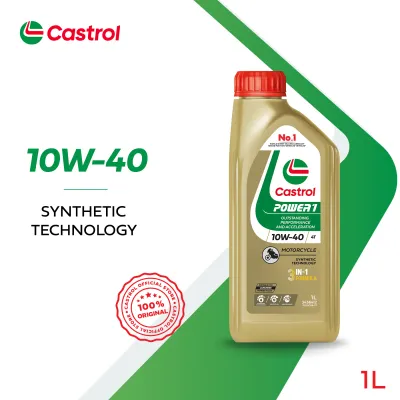
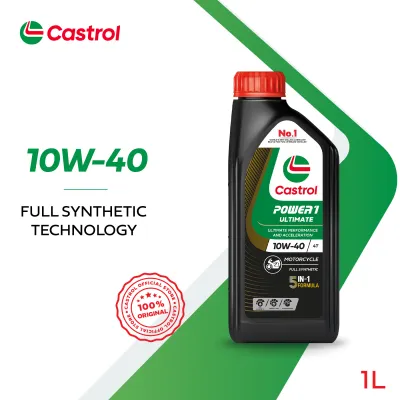
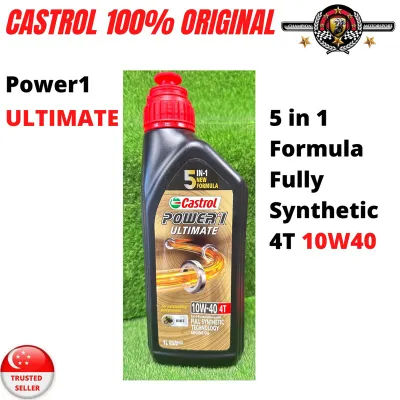
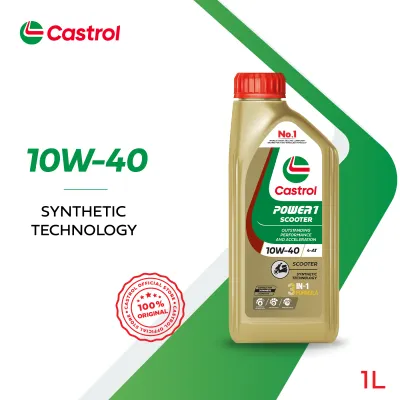
![[TWIN PACK] Castrol POWER1 ULTIMATE 4T 10W-40 (1L) Motorcycle Full Synthetic API SP JASO MA2](https://img.lazcdn.com/g/p/f764729b4d79cf52e77b76d49e4d78ec.jpg_400x400q80.jpg_.webp)
![[TWIN PACK] Castrol POWER1 4T 10W-40 (1L) Motorcycle Synthetic Technology API SP JASO MA2](https://img.lazcdn.com/g/p/304692cfde138b9d79f0458621b9567b.jpg_400x400q80.jpg_.webp)
Prices are valid at publication and may change. Please refer to the product page for the latest price.
Motorcycle manufacturers design engines with precise tolerances, operating temperatures, and oil pump flow rates. The manual will typically display a temperature chart showing which viscosity grades are acceptable for your local climate. If 10W-40 is listed within the approved range for your typical operating temperatures, it is a viable candidate for your machine.
Beyond viscosity, you must identify the required performance standards. The American Petroleum Institute (API) rating indicates the oil’s chemical performance and wear protection levels, usually designated by letters such as SG, SH, SJ, SL, SM, or SN. Ensure the Castrol 10W-40 bottle you choose meets or exceeds the API rating specified by your manufacturer.
Equally critical is the Japanese Automotive Standards Organization (JASO) certification. Because most motorcycles share a single oil supply between the engine, transmission, and wet clutch, they require specialized oil formulations. The JASO standard distinguishes between oils designed for wet clutches (JASO MA, MA1, and MA2) and those designed for dry clutches or automatic scooters (JASO MB).
Using an oil that falls outside these parameters carries significant risks. If you use an oil with incorrect friction characteristics, you may experience severe clutch slippage or harsh gear shifting. Over time, inadequate lubrication can lead to accelerated wear on the piston rings, camshafts, and transmission gears, potentially resulting in costly mechanical failures and voiding any active vehicle warranties.
Match the Viscosity to Your Riding Conditions and Climate
An oil’s viscosity rating, such as 10W-40, describes how the fluid flows at both low and high temperatures. The “10W” portion represents the cold-start flow rating, where the “W” stands for winter. The “40” portion represents the oil’s resistance to thinning at the engine’s normal operating temperature, measured at 100 degrees Celsius.

In a tropical climate like Singapore, where ambient temperatures remain consistently warm year-round, the cold-start rating is less about freezing temperatures and more about rapid oil circulation during initial startup. A 10W rating ensures the oil is fluid enough to reach the top of the cylinder head within seconds of pressing the starter button, minimizing dry-start wear.
The “40” high-temperature rating is particularly well-suited for warm environments. It provides a robust, stable oil film that protects vital engine components under intense heat. This thermal protection is crucial when riding in dense, stop-and-go urban traffic, where limited airflow over the engine can cause operating temperatures to spike rapidly.
Your typical riding patterns also dictate your oil needs. If your daily commute consists of short, stop-and-go trips through city streets, your engine experiences frequent temperature cycles and localized hot spots. This demanding environment requires an oil with high shear stability to prevent the viscosity from breaking down prematurely under mechanical stress.
Conversely, sustained high-speed highway riding subjects the engine to continuous high RPMs, which generates consistent, elevated thermal loads. A high-quality 10W-40 oil is designed to maintain its protective film under these conditions, preventing metal-to-metal contact in the valve train and transmission.
There are scenarios where an alternative viscosity might be more appropriate. If you ride a modern motorcycle with exceptionally tight internal clearances, your manufacturer might recommend a lighter 10W-30 oil to optimize fuel efficiency and rapid oil flow. On the other hand, if you ride an older, air-cooled motorcycle or carry heavy loads in extreme heat, a thicker 20W-50 oil might be recommended to provide a heavier protective cushion, provided it is explicitly approved in your manual.
Read the Castrol Product Label for Exact Formulation Matches
Once you confirm that 10W-40 is the correct viscosity grade, you must carefully examine the Castrol product label to select the right formulation. Castrol produces several distinct product lines within the 10W-40 viscosity range, each tailored to different engine designs, performance demands, and budgets.
These product lines generally fall into three categories: fully synthetic, semi-synthetic (often labeled as synthetic technology), and mineral-based oils. Fully synthetic formulations offer the highest level of thermal stability, resistance to oxidation, and shear protection, making them ideal for high-performance, high-revving sportbikes.
Semi-synthetic formulations blend synthetic and mineral base oils to offer a balanced combination of enhanced protection and cost-effectiveness, suitable for daily commuters and mid-range motorcycles. Mineral-based oils provide basic lubrication and are often preferred for older classic motorcycles or during the initial break-in period of a newly rebuilt engine.
Flip the bottle over to inspect the technical specifications printed on the back label. You must verify the presence of the correct JASO rating. If your motorcycle has a manual transmission with a wet clutch, look for the JASO MA or JASO MA2 rating. The JASO MA2 standard offers the highest friction performance, ensuring precise clutch engagement and preventing slippage under high torque.
If you ride a modern automatic scooter with a continuously variable transmission (CVT) and a dry clutch, look for the JASO MB rating. JASO MB oils contain friction modifiers designed to reduce internal drag and improve fuel economy. These friction modifiers are highly detrimental to wet clutches, so matching this rating to your specific clutch design is non-negotiable.
Additionally, check the label for any specific manufacturer approvals or formulation notes. Some Castrol products are optimized for specific engine architectures, such as high-torque V-twins or high-revving inline-four engines. Ensuring these details align with your motorcycle’s mechanical layout guarantees optimal performance and longevity.
Assess Your Engine's Current Health and Mileage Needs
Your motorcycle’s physical condition and mileage should also influence your oil selection and maintenance routine. As engines age and accumulate mileage, internal clearances between moving parts can gradually increase due to normal wear and tear.
Look for observable signals of high-mileage engine wear. If you notice your motorcycle is consuming oil between scheduled changes, or if you hear increased mechanical noise such as valve ticking or piston slap, your engine’s internal tolerances may have widened. While a high-quality 10W-40 oil can help cushion these worn components, a rapid increase in oil consumption indicates it is time for a closer inspection.
During your scheduled oil changes, take the time to inspect the condition of the drained oil. Pouring the used oil into a clean pan allows you to check for warning signs of internal engine distress. Normal used oil will appear dark brown or black, which indicates that the oil’s detergent additives are successfully keeping soot and combustion byproducts in suspension.
However, if you observe shiny metallic particles or flakes reflecting in the light, this indicates severe wear on internal bearings, gears, or cylinder walls. A milky, frothy, or light-brown emulsion in the oil suggests that coolant is leaking into the engine crankcase, which requires immediate attention. A strong smell of raw gasoline in the oil indicates fuel dilution, which thins the oil and drastically reduces its lubricating capability.
If you encounter any of these abnormal oil conditions, or if your engine continues to make unusual mechanical noises after refilling it with fresh Castrol 10W-40, you should pause your DIY maintenance. These symptoms point to underlying mechanical issues that cannot be resolved by an oil change alone. Seek a professional diagnostic inspection from a qualified motorcycle mechanic to prevent catastrophic engine failure. A professional diagnostic inspection, which may cost upwards of S$50 to S$100 depending on the workshop, can identify the root cause before major damage occurs.
Frequently Asked Questions (FAQ)
Can I mix Castrol 10W-40 with another brand or a different viscosity?
Mixing different brands or viscosities of motorcycle oil is generally not recommended. Every oil manufacturer uses a proprietary blend of base oils and chemical additives, including anti-wear agents, detergents, and friction modifiers, which are carefully balanced to achieve specific performance standards.
When you mix different formulations, you risk disrupting this delicate chemical balance. This can lead to reduced lubrication efficiency, accelerated additive depletion, or altered friction characteristics that can cause your wet clutch to slip or grab unevenly.
If you find yourself in an emergency with a low oil level and no matching Castrol 10W-40 available, it is safer to top up with any clean motorcycle oil of a similar viscosity than to run the engine dry. However, treat this as a temporary fix and perform a complete oil and filter change as soon as possible.
How often should I change Castrol 10W-40 in my motorcycle?
You should always establish your baseline oil change interval according to the mileage and time limits specified in your motorcycle’s owner’s manual. These intervals are calculated by the manufacturer to ensure the oil continues to protect the engine under normal operating conditions.
However, you must adjust this schedule if you regularly ride under severe conditions. Severe conditions include frequent short trips under 10 kilometers where the engine never reaches its full operating temperature, prolonged idling in heavy traffic, riding in highly humid or dusty environments, or operating under heavy loads.
Under these demanding conditions, moisture, unburnt fuel, and combustion byproducts accumulate in the oil much faster. This accelerates the breakdown of the oil’s viscosity and depletes its protective additives. If your daily riding matches these patterns, consider shortening your oil change interval to ensure continuous engine protection.
Is 10W-40 suitable for both scooters and manual-clutch motorcycles?
A 10W-40 viscosity grade can be suitable for both scooters and manual-clutch motorcycles, but you must never use the exact same bottle of oil interchangeably unless it carries the specific certification required for each vehicle’s clutch design.
Manual-clutch motorcycles typically feature a wet clutch system where the clutch plates are submerged in the engine oil. These engines require an oil certified to JASO MA or JASO MA2 standards, which contains specific friction characteristics that allow the clutch plates to grip securely without slipping.
In contrast, most automatic scooters use a dry clutch and a continuously variable transmission (CVT) that is physically separated from the engine crankcase. Scooters typically require JASO MB certified oils, which contain friction-reducing additives designed to minimize internal drag and maximize fuel efficiency. Using a JASO MB oil in a wet-clutch manual motorcycle will cause severe clutch slippage and rapid wear of the clutch plates.

Community discussion
Share your experience or ask a question. Comments are reviewed before publication.