
A car cup holder mount offers a stable, drill-free way to secure your smartphone, but it is only the right choice if your vehicle’s console layout, your phone’s physical dimensions, and your driving habits align. While these mounts keep your dashboard and windshield clear, they require a compatible cup holder location and a willingness to look downward for navigation. Evaluating these physical and behavioral factors before purchasing prevents a mismatched setup that could interfere with gear shifting or compromise road safety.
Check Your Car's Cup Holder Dimensions and Layout
To determine if a car cup holder mount will work, you must first measure the physical dimensions of your vehicle’s cup holder. Most mounts feature an expandable base that twists to lock against the inner walls of the holder. Use a ruler or caliper to measure the inner diameter of your cup holder, ensuring it falls within the expansion range specified by the manufacturer, which typically spans from 65 mm to 100 mm.
Depth is equally critical for stability. A cup holder that is too shallow, such as those measuring less than 50 mm deep, may not provide enough vertical support, causing the mount to tip over during sudden stops or sharp turns. Conversely, extremely deep storage bins or recessed cup holders might swallow the base entirely, requiring a mount with an exceptionally long neck to bring the phone to a usable height.
Products mentioned in this guide
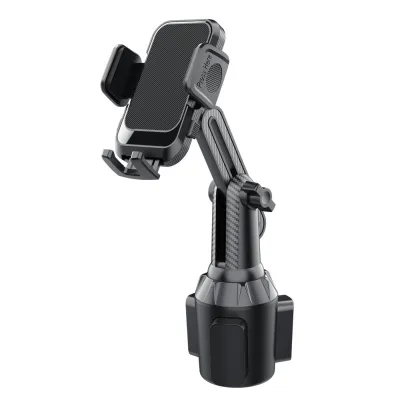
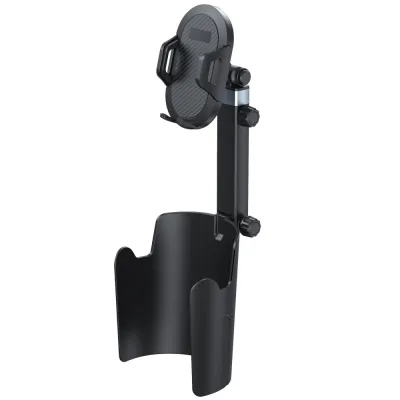
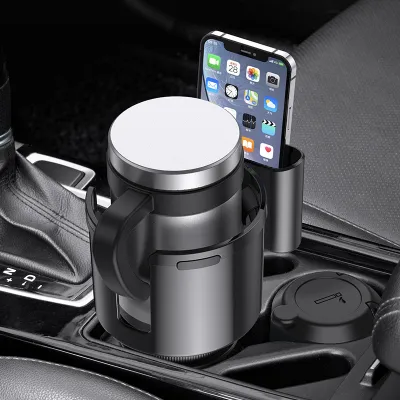
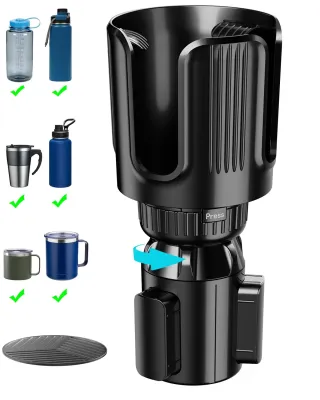
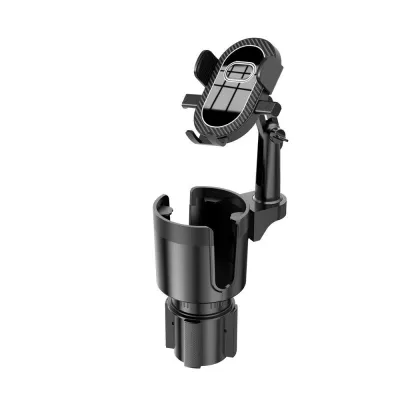
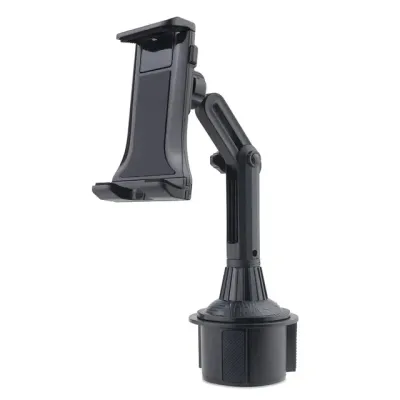
Prices are valid at publication and may change. Please refer to the product page for the latest price.
Beyond the dimensions of the individual slot, you must analyze the surrounding layout of your center console. Note the proximity of the cup holder to your gear shifter, handbrake, and climate controls. If the cup holder sits directly in front of the shifter, a tall mount may block your hand movements or obstruct your view of the dashboard console.
Physical obstructions like sloping center consoles, low-hanging dashboards, or folding armrests can also limit how you position the mount. If your vehicle features a sliding cover or a dual-cup-holder divider, verify that these components can remain open or be temporarily adjusted without compromising the structural integrity of the console.
Evaluate Your Phone Size and Weight Constraints
Once you have verified your vehicle’s console dimensions, you must assess whether the mount can securely hold your specific smartphone. Start by measuring the total width of your phone while it is inside its daily protective case. Rugged, heavy-duty cases or those with integrated wallet slots and finger rings add significant thickness that might exceed the maximum clamp depth of standard mounts.

The combined weight of your phone and its case directly impacts the stability of the mounting system. Heavy devices, particularly ultra-large smartphones or foldable models, exert substantial leverage on the mount’s neck. If you choose a model with a flexible gooseneck, a heavy phone can cause the arm to sag or bounce continuously while driving.
Review the manufacturer’s specifications for weight limits and maximum clamp width before making a purchase. If you use a heavy device, look for mounts that feature rigid, jointed plastic arms with locking knobs rather than flexible goosenecks. These rigid designs distribute weight more effectively and maintain their position under heavy loads.
For foldable devices, check whether the clamp mechanism supports the phone in both its folded and unfolded states. Some clamps are designed only for standard aspect ratios and may pinch buttons or block charging ports on wider, unfolded screens.
Assess Your Driving Habits and Visibility Needs
Choosing a car cup holder mount requires a careful look at where your eyes go while driving. Because cup holders are located on the center console, using one means your phone will sit significantly lower than your dashboard or windshield. This lower position keeps your forward field of view clear, which many drivers prefer for reducing nighttime glare and windshield clutter.
However, this lower placement forces you to look down and away from the road to check navigation prompts. If you drive frequently in unfamiliar areas or busy urban environments that require constant GPS updates, this downward glance can create a safety hazard. Consider whether you can safely rely on voice prompts or if you require a mount that keeps the screen closer to your natural line of sight.
Stationary usability is another factor to consider. When your vehicle is safely parked, a cup holder mount positions the phone within easy arm’s reach, making it highly convenient for adjusting music playlists, answering hands-free calls, or managing charging cables.
If you decide that looking down is too distracting, you may need to prioritize safety over console convenience. Drivers who rely heavily on visual turn-by-turn navigation often find that eye-level mounting options are better suited to their daily driving habits.
Compare Alternative Mounting Styles if Cup Holders Fail
If your vehicle’s layout or your visibility preferences rule out a cup holder mount, several alternative styles can secure your phone. Air vent mounts are a popular choice for preserving dashboard space. They clip directly onto the vent slats, keeping your phone closer to eye level, though they can block airflow and expose your device to hot air from the heater.
Dashboard suction or adhesive mounts offer highly customizable placement options. These mounts attach to the top of the dashboard or the windshield, keeping the phone directly in your peripheral vision. However, they require a smooth, non-porous surface to adhere properly, and extreme cabin temperatures can cause the suction cups or adhesive backing to degrade over time.
For older vehicles equipped with a CD player, a CD slot mount provides a highly stable, mid-level alternative. These mounts insert directly into the unused CD slot, offering a sturdy anchor point that is higher than a cup holder but lower than a windshield mount. This position often strikes an excellent balance between visibility and control access.
Each alternative comes with distinct trade-offs regarding stability, installation difficulty, and interior aesthetics. Evaluating these options ensures you find a solution that fits your vehicle’s unique cabin architecture if your cup holders are unsuitable.
Final Decision Checklist: Should You Buy a Cup Holder Mount?
To finalize your decision, review this quick diagnostic checklist to see if your vehicle and habits match the requirements of a cup holder mount.
You should buy a cup holder mount if:
- Your vehicle has deep, sturdy cup holders (at least 50 mm deep) that are not blocked by the gear shifter.
- You prefer a completely clear windshield and dashboard, free from suction cups or vent clips.
- You primarily rely on audio navigation prompts or only check your screen when the vehicle is stationary.
- Your phone and case combination fits within standard clamp widths and does not exceed weight limits.
You should avoid a cup holder mount if:
- Your cup holders are shallow, flimsy, or located directly beneath low-hanging console controls.
- You require eye-level visual navigation to drive safely in heavy traffic.
- You cannot afford to lose a functional cup holder slot for beverages.
- Your phone is exceptionally heavy or uses an oversized, thick protective case that prevents secure clamping.
Before purchasing, always verify the return policy of your chosen online marketplace. Because cup holder shapes and console angles vary widely between vehicle makes and models, trying the mount in your physical car is often the only way to ensure a secure, rattle-free fit.
Frequently Asked Questions (FAQ)
Will a cup holder mount block my gear shifter or armrest?
A cup holder mount can block your gear shifter or armrest if the cup holder is positioned close to these controls. To prevent physical interference, measure the clearance between the center of your cup holder and the path of your gear shifter throughout its full range of motion. If space is tight, look for mounts that feature adjustable, offset bases or articulated joints, which allow you to angle the phone away from your hand controls and armrest hinges.
Are gooseneck cup holder mounts stable on bumpy roads?
Gooseneck mounts with long, highly flexible arms are generally more prone to vibration and bouncing on uneven road surfaces. The leverage of a heavy phone on a flexible arm can cause the screen to wobble, making it difficult to read. If you frequently drive on rough roads, check product specifications for rigid, heavy-duty necks or reinforced aluminum cores, which offer significantly more stability than standard plastic goosenecks.

Community discussion
Share your experience or ask a question. Comments are reviewed before publication.