
Wiring a power inverter directly to a car battery is the most reliable way to run high-wattage AC appliances inside a vehicle. Standard 12-volt accessory outlets cannot handle the high current demands of larger inverters, making a direct-to-battery connection essential. This installation requires careful planning, the correct wire gauge, proper overcurrent protection, and safe cable routing through the vehicle’s firewall. By following a systematic approach, you can establish a stable power supply while protecting your vehicle’s electrical system from damage.
Preparation and Safety Precautions
Working on automotive electrical systems involves handling high-current DC circuits. A short circuit can cause severe burns, damage sensitive vehicle electronics, or trigger an electrical fire. Before starting, always park the vehicle on a flat surface, engage the parking brake, and remove the ignition key. Wear safety glasses to protect your eyes from potential sparks or battery acid, and remove any metal jewelry, such as rings or watches, which can conduct electricity if they accidentally bridge a live terminal. Always disconnect the negative battery terminal first to isolate the electrical system and prevent accidental shorts while working on the positive connections.
Consult both the power inverter’s installation manual and your vehicle’s owner’s manual to understand specific electrical limits, alternator capacity, and warranty conditions. Gather professional-grade tools, including insulated hand tools, wire strippers, heavy-duty crimpers, and heat shrink tubing to seal connections. If you are uncomfortable working with high-current wiring or modifying vehicle grommets, consult a qualified automotive electrician before proceeding.
Products mentioned in this guide
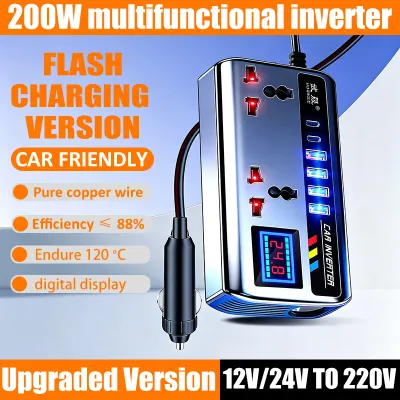
5 Lazada user ratings
I have received the 24V inverter used for the truck. I have tested it and found that it is quite stable with small appliances. The socket ho…Read full reviewShow less
I have received the 24V inverter used for the truck. I have tested it and found that it is quite stable with small appliances. The socket holes are also sufficient.
When traveling by truck, there are also many mobile phones and charging ports needed, so you no longer have to worry about not having enough…Read full reviewShow less
When traveling by truck, there are also many mobile phones and charging ports needed, so you no longer have to worry about not having enough plugs
Solid workmanship, fine workmanship, thick wires, reliable quality, strong adaptability, compact size, very good
The item is intact and undamaged. The logistics is very fast, and it will be used for all shipments
The quality is very good, I bought a few, the charging is fast, safe and reliable
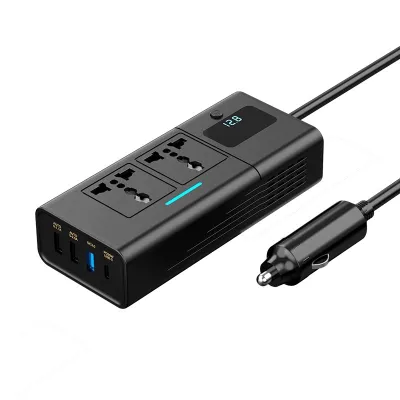
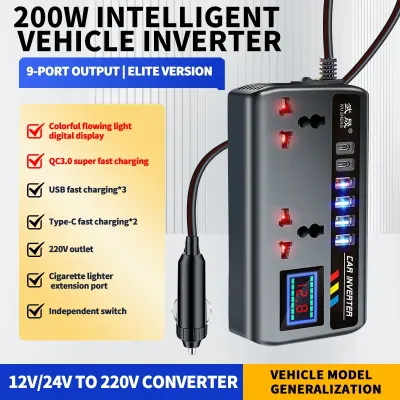
35 Lazada user ratings
Item came as described. Quick test seems to work OK for the USB charging. the Orange USBA shows Fast Charging, but the Type C ports show cha…Read full reviewShow less
Item came as described. Quick test seems to work OK for the USB charging. the Orange USBA shows Fast Charging, but the Type C ports show charging only (little disappointed). Yet to test charing multi devices at same time and the 230V 3 pin power point.
👌Ease of Use:Yes 🔧Durability:Haven't tested yet Compact and portable, Easy to carry in car, hopefully it's works smoothly.
label sticker is abit off, hopefully it is safe to use
Usb output ok, but no 220V AC output.
functional but made cheaply
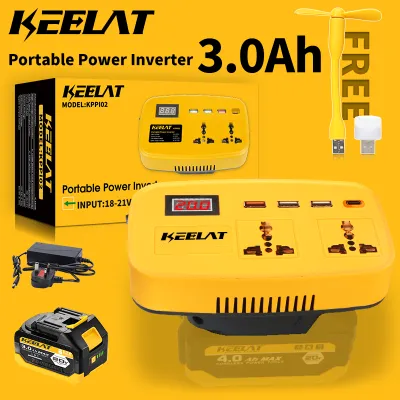
5 Lazada user ratings
👜Portability:Portable 🔧Durability:Built quality is good
7 Lazada user ratings
Heat dissipation structure good, surface not scalding
Clear digital screen, voltage data visible directly
Ideal for road trip, solves outdoor power trouble
Multiple ports, charge several devices together
Digital display clearly shows real-time voltage
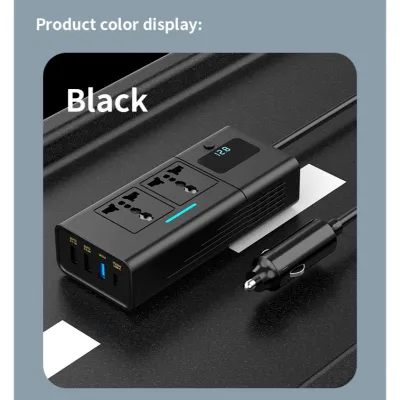
7 Lazada user ratings
Quick delivery. Product as described
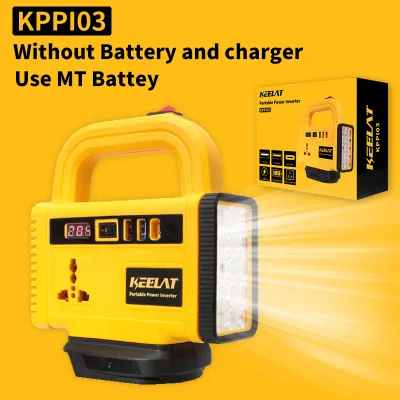
17 Lazada user ratings
Portable and lightweight, Perfect for camping, High power output, Great for emergency, Fast delivery in SG,
portable inverter can be used for emergency and outgoing. LED is very bright. Tested and working.
Try it on a table fan, Not even half an hour journey, battery flat. Battery Life:very poor
Great! Good product!
Nice product 👍
9 Lazada user ratings
Fast shipping from Singapore, Perfect for camping, Durable lithium battery, Pure sine wave inverter, High power output.
good and fast delivery can buy thanks Yet to try but the sound was gokd and smooth, seems good quality with 2 bettery.
Safety: confident easy for weak battery to charger
Prices are valid at publication and may change. Please refer to the product page for the latest price.
Selecting the Correct Cables and Fuses
The thickness of your power cables directly impacts safety and performance. Using cables that are too thin causes a voltage drop, which reduces inverter efficiency and generates dangerous heat. To select the correct American Wire Gauge (AWG), you must refer to the manufacturer’s specifications, which correlate the inverter’s continuous wattage rating with the total length of the cable run. Longer runs require thicker cables to minimize resistance.

When purchasing cables, look for high-quality copper conductors with durable, heat-resistant insulation, such as SGX or welding cable rated for automotive engine bay temperatures. Additionally, you must install an inline fuse on the positive cable to protect the vehicle’s wiring harness from short circuits. The fuse type (such as ANL or MIDI) and its exact amperage rating must strictly match the inverter manufacturer’s instructions. Never bypass this fuse or install a higher-rated fuse than recommended, as doing so risks catastrophic damage to your vehicle’s electrical system. Finally, verify that the cable lugs and ring terminals match the exact stud sizes on both your battery terminals and the inverter’s input posts to ensure a secure, low-resistance connection.
Step-by-Step Wiring and Routing Process
Physically routing heavy-gauge cables from the engine bay to the vehicle’s cabin requires a clear plan. You must map out a path that keeps the cables away from moving parts, such as steering columns, throttle linkages, or wiper mechanisms, and high-heat components like the exhaust manifold or engine block. Heat and physical friction are the primary causes of cable insulation failure, which can lead to a direct short circuit. Secure the cables along this path using automotive-grade, heat-resistant zip ties or mounting clamps to prevent chafing and vibration damage over time. If the cable must pass near any sharp metal edges, protect it with split-loom tubing or protective sleeving to prevent the insulation from wearing through.
Routing Cables Through the Firewall
To bring the positive power cable into the passenger cabin, you must pass it through the vehicle’s firewall. Never drill a new hole through the metal firewall unless absolutely necessary, as this can lead to rust, water leaks, and potential damage to hidden components like air conditioning lines or factory wiring looms. Instead, locate an existing rubber firewall grommet, which is typically used by the factory wiring harness.
Use a wire fish tape or a stiff but flexible guide wire to carefully thread through the grommet, then secure the inverter cable to the guide wire and pull it through. To ease the passage of heavy-gauge wire through tight rubber seals, apply a small amount of silicone spray or dielectric grease. Avoid using petroleum-based lubricants, which can degrade the rubber over time. Once the cable is through, ensure the grommet is properly seated and reseal any modifications with automotive-grade silicone sealant to prevent moisture, engine fumes, and noise from entering the cabin.
Connecting to the Battery and Grounding
The electrical connections must be made in a precise sequence to ensure safety. First, prepare the positive cable by installing the inline fuse holder. This fuse holder must be positioned as close to the positive battery terminal as practically possible—typically within 30 to 45 centimeters—to protect the entire length of the cable run. Do not install the fuse into the holder yet. Connect the positive cable securely to the battery’s positive terminal.
Next, address the grounding of the inverter. Rather than running a long negative cable back to the battery, ground the inverter inside the cabin to a solid, unpainted metal chassis point. Locate a factory ground bolt or seat frame bolt, and use sandpaper to remove any paint, primer, or rust from the contact area to ensure bare metal contact. Secure the negative cable to this ground point. Once all connections are tight, reconnect the vehicle’s negative battery terminal. Finally, apply an automotive anti-corrosion spray to all exposed battery posts and cable lugs to prevent oxidation.
Testing and Final Verification
Before plugging in any appliances, perform a thorough system check. Insert the main fuse into the inline holder. Turn on the vehicle’s engine to ensure the alternator is charging the battery, then switch on the power inverter without any load connected. Verify that the inverter powers up normally, the status lights indicate a healthy state, and any built-in voltage display matches the expected battery voltage (typically around 13.8 to 14.4 volts with the engine running).
Next, connect a moderate electrical load, such as a small tool or appliance within the inverter’s continuous rating. Let the system run for several minutes while monitoring the temperature of the cables, the inline fuse holder, and the chassis ground point. These components should remain cool or only slightly warm to the touch; any excessive heat indicates a loose connection or insufficient wire gauge. Check for any abnormal alarm codes or warning lights on the inverter, confirm that the cooling fan operates correctly, and double-check that all cable ties remain secure.
Frequently Asked Questions (FAQ)
Can I connect a high-wattage inverter to the cigarette lighter socket?
Standard 12-volt accessory sockets, often referred to as cigarette lighter sockets, are typically limited by a 10-amp or 15-amp fuse in the vehicle’s fuse box. This limits the safe power draw to approximately 120 to 180 watts. Attempting to run a high-wattage inverter through this socket will quickly blow the vehicle’s fuse or, in worse cases, overheat and melt the factory wiring harness behind the dashboard. Low-wattage devices like phone chargers or small laptop adapters can safely use accessory socket inverters, but any device requiring more than 150 watts must be hardwired directly to the battery using appropriately rated cables and fuses.
Why does my car battery drain when the inverter is switched off?
Even when a power inverter is switched off via its faceplate, it can still draw a small amount of standby current from the battery. This parasitic draw is caused by internal monitoring circuits, remote control receivers, or LED indicators that remain active. Over several days of vehicle storage, this continuous drain can deplete the car battery, leaving you stranded. To prevent this, you should install a heavy-duty manual battery cutoff switch or a voltage-sensitive secondary battery isolator on the positive cable. This allows you to completely disconnect the inverter from the electrical system when the vehicle is parked for extended periods.

Community discussion
Share your experience or ask a question. Comments are reviewed before publication.