
Installing a car hanging hook near your dashboard or center console is a practical way to keep small items like keys, charging cables, or small takeaway bags within arm’s reach. However, finding a suitable spot requires balancing convenience with driving safety. The ideal placement keeps your items accessible without obstructing your view of the road, blocking essential controls, or interfering with critical safety systems like airbags. By carefully evaluating your vehicle’s interior layout and choosing the right mounting method, you can create a highly functional storage solution that enhances your daily commute.
Identify Safe Mounting Zones Around the Dashboard and Console
To find the safest and most convenient locations for a car hanging hook, you must first conduct a thorough visual and physical assessment of your vehicle’s cabin. The center console sides, lower dashboard edges, and the passenger side of the transmission tunnel are often the most practical zones. These areas keep items low and within easy reach of either the driver or the front passenger. When evaluating these spots, sit in the driver’s seat and simulate your normal driving movements to ensure that any hung item will not interfere with your hands or legs.
Clearance is the most critical factor when selecting a mounting point. You must verify that the hook and any hanging items will not block your physical access to the steering wheel, gear shifter, handbrake, or climate controls. Additionally, ensure that hung items do not obscure your view of the infotainment screen, instrument cluster, or side mirrors. Even a small bag swinging near the gear selector can create a distraction or physically impede your ability to shift gears quickly in an emergency.
Products mentioned in this guide
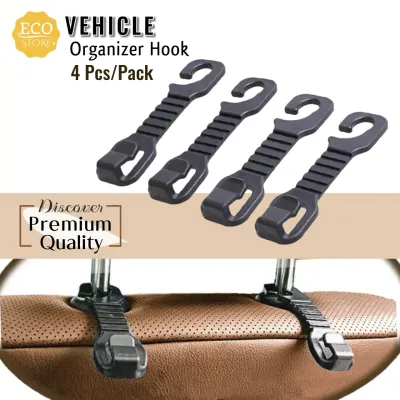
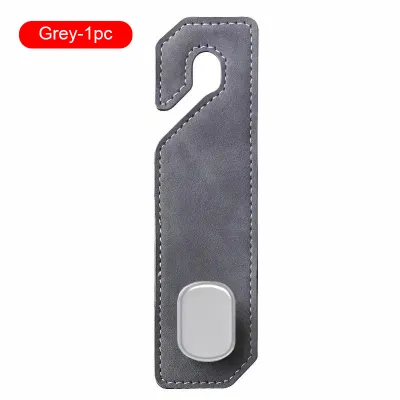
![[SG STOCK] 2/4 Pcs Universal Car Seat Hanger Hook Holder](https://img.lazcdn.com/g/p/e6027d8aeb82ad0d076aef7c18d1a70b.jpg_400x400q80.jpg_.webp)

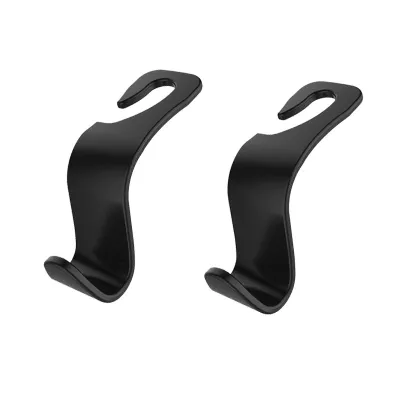
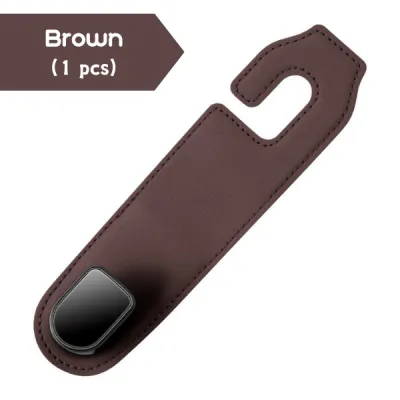

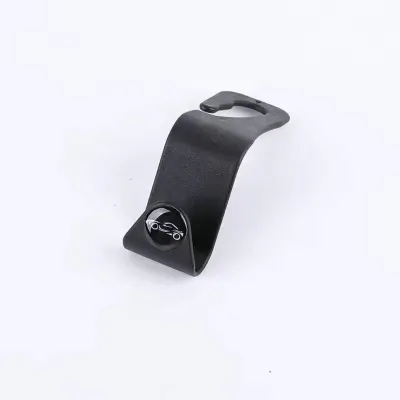
Prices are valid at publication and may change. Please refer to the product page for the latest price.
Safety systems must always take absolute priority over convenience. You must identify and strictly avoid active airbag deployment zones, which typically include the center of the steering wheel, the passenger-side dashboard panel, the side pillars, and the outer edges of the front seats. Mounting any accessory on or near an airbag cover can prevent the airbag from deploying correctly or turn the hook into a high-speed projectile during a collision. Always consult your vehicle’s owner’s manual to locate the exact boundaries of all interior airbags before finalizing your installation spot.
Match the Hook Mounting Type to Your Interior Surfaces
Once you have identified a safe zone, you must match the hook’s mounting mechanism to the specific material of your vehicle’s interior. Car hanging hooks generally fall into two categories: adhesive-backed hooks and clip-on hooks. Adhesive-backed hooks are highly versatile and work well on smooth, hard plastics commonly found on the sides of the center console or the lower dashboard. In contrast, clip-on hooks are designed to attach to specific structural elements, such as air vent louvers or headrest posts, offering a non-permanent alternative that requires no sticky residue.

Before purchasing or installing a hook, check the manufacturer’s labels and product instructions for surface compatibility and material restrictions. Many adhesive hooks require a completely flat, non-porous surface to establish a secure bond. If your dashboard features soft-touch materials, wrapped leather, suede, or heavily textured plastics, standard adhesives will likely fail to adhere properly. Furthermore, applying strong adhesives to delicate materials like leather or vinyl can cause permanent discoloration, tearing, or peeling when the hook is eventually removed.
If your preferred mounting surface is unsuitable for adhesives, you must select an alternative mounting style or location. For instance, if your dashboard is entirely covered in textured leather, a clip-on hook designed for the air vents or a headrest-mounted hook for the front seats may be a much safer and more reliable choice. Recognizing these material limitations early prevents damage to your vehicle’s interior and ensures that your hook remains securely in place under daily use.
Step-by-Step Installation for Secure and Accessible Placement
Achieving a secure and long-lasting mount requires a methodical installation process, particularly when using adhesive-backed hooks. Begin by thoroughly cleaning the target surface to remove any oils, dust, fingerprints, or interior detailing sprays, which can severely compromise adhesive performance. Use an appropriate automotive interior cleaner that is explicitly labeled as safe for your specific dashboard material. Avoid using harsh household chemicals or glass cleaners that can dry out plastics or leave behind a slippery residue. Once cleaned, wipe the area with a dry microfiber cloth and allow it to dry completely.
Next, prepare to apply the hook strictly according to the product’s specific instructions. If using an adhesive hook, peel off the protective backing and position the hook precisely over the cleaned area. Press the hook firmly against the surface, applying even pressure across the entire base for at least thirty seconds to help the adhesive bond with the plastic. Most automotive adhesives require a specific curing period—often up to twenty-four hours—before they can support any weight. Avoid hanging any items during this curing window, as premature loading is the primary cause of adhesive failure.
For clip-on hooks, the installation process focuses on gentle alignment rather than adhesive bonding. When attaching a hook to an air vent, carefully slide the clip onto the vent louver without forcing it. Applying excessive pressure can bend or snap the delicate plastic louvers or scratch the surrounding trim. If installing a headrest hook, raise the headrest slightly, slide the hook collar around the metal post, and lower the headrest back down to lock it in place. Ensure the hook is fully seated and does not rattle or slide excessively.
Once the installation is complete and any required adhesive curing time has passed, perform a simple stability test. Gently pull on the hook with your fingers to verify that it is firmly attached. Next, test the hold with a very light load, such as an empty reusable shopping bag or a lightweight charging cable. If the hook remains stable without shifting, peeling, or bending, you can gradually begin using it for slightly heavier everyday items.
Hang Items Safely to Maintain Visibility and Pedal Clearance
How you load and use your car hanging hook is just as important as where you install it. To maintain a safe driving environment, always keep hanging items low, compact, and as close to the mounting surface as possible. Bulky or excessively long items can swing during turns, sudden braking, or acceleration, creating a visual distraction and potentially knocking against your knees or the gear shifter. Choosing compact bags with short straps helps minimize this pendulum effect and keeps your cabin organized.
In right-hand drive vehicles, such as those driven in Singapore, you must pay extra attention to the driver’s footwell on the right side of the cabin. Ensure that bag straps, loose cords, or long items hanging from the center console do not drop down into the footwell or drift near the brake and accelerator pedals. A loose strap wrapping around a pedal can prevent you from braking or accelerating safely, leading to an extremely dangerous situation. Regularly check that the path between your feet and the pedals remains completely unobstructed.
If you frequently carry multiple items, consider distributing the weight evenly by installing and using multiple hooks rather than overloading a single mount point. Overloading a single hook can exceed its physical capacity, causing the adhesive to fail suddenly while you are driving. Additionally, secure any loose or heavy items inside your hanging bag. Shifting weight inside a bag can create sudden downward forces that weaken the adhesive bond over time, increasing the risk of the hook detaching unexpectedly.
Monitor Adhesive Bonds and Remove Hooks Safely
Over time, environmental factors inside your vehicle can affect the integrity of your hanging hooks. In tropical climates like Singapore, parked cars can experience extreme cabin temperatures and high humidity, which can gradually soften adhesives and weaken plastic clips. Establish a routine to periodically inspect the condition of your hooks. Check for early signs of failure, such as peeling edges around the adhesive tape, stretching or sticky residue seeping from the sides, or loose, slipping clips on your air vents. If you notice any of these signs, remove the hook immediately to prevent it from falling while you are driving.
When it is time to replace or permanently remove an adhesive hook, doing so safely is essential to protect your vehicle’s interior finish. Never attempt to rip or pry the hook off forcefully, as this can tear soft dashboard plastics or peel away vinyl wraps. Instead, apply a gentle, controlled heat source, such as a hair dryer on a low setting, to soften the adhesive backing. Once the adhesive becomes pliable, slowly peel the hook away from the surface at a shallow angle.
After removing the hook, you may find a sticky residue left behind on the dashboard. Clean this residue thoroughly using a mild, automotive-safe adhesive remover or a microfiber cloth dampened with soapy water. Always test any adhesive remover on an inconspicuous area first to ensure it does not discolor or damage the plastic. Wipe the area clean and dry it completely to restore your dashboard’s original, clean finish.
Frequently Asked Questions (FAQ)
Can I install a hanging hook on the steering wheel or airbag cover?
No, you must never install a hanging hook or any other accessory on the steering wheel, horn button, or any airbag cover. Airbags deploy with immense force in a fraction of a second. If a hook or a hanging item is positioned over an airbag cover, the deploying airbag will launch the object directly at the vehicle occupants, potentially causing severe or fatal injuries. Additionally, mounting hooks on the steering wheel can interfere with your hand placement, block your view of the instrument cluster, or restrict your ability to steer smoothly during an emergency. Always keep these critical safety areas completely clear of all aftermarket accessories.
What is the maximum weight a standard dashboard hook can hold?
The maximum weight capacity varies significantly depending on the hook’s design, mounting type, and the quality of the adhesive used. You must always check the specific product packaging or manufacturer specifications to determine the exact weight limit for your hook. While some heavy-duty hooks claim to support several kilograms, typical dashboard adhesive hooks are designed for lightweight items under 1 kg, such as face masks, keys, or small trash bags. Keep in mind that high cabin heat, humidity, and textured surfaces can drastically reduce this holding capacity over time. To ensure long-term reliability and prevent damage to your dashboard, treat the manufacturer’s limit as an absolute maximum and aim to hang lighter loads whenever possible.

Community discussion
Share your experience or ask a question. Comments are reviewed before publication.