
Matching a portable car tyre pump to your vehicle requires balancing your tyre’s physical volume and pressure requirements against the pump’s mechanical and electrical limits. Choosing an underpowered pump can lead to overheating, blown vehicle fuses, or extremely long inflation times, while an incompatible power interface might leave you stranded when you need a top-up most. By understanding how your vehicle’s tyre specifications translate into mechanical demands, you can select a portable inflator that operates safely and efficiently.
Checking Your Vehicle's Tyre Pressure and Size Requirements
Before comparing portable pumps, identify your vehicle’s baseline tyre specifications. Locate the manufacturer’s recommended cold inflation pressure on the driver’s side door jamb sticker or in the owner’s manual. It is critical to distinguish this recommended pressure from the maximum pressure rating moulded on the tyre’s sidewall. The sidewall figure represents the absolute safety limit the tyre can physically withstand, not the pressure required for daily driving.
Next, read the tyre size code printed on the sidewall, such as 215/60R16. This code indicates the tyre’s width, aspect ratio, and wheel diameter, which collectively determine the total internal air volume. A wider tyre with a taller sidewall, common on SUVs and MPVs, holds a significantly larger volume of air than a compact hatchback tyre. Even if both tyres require a similar operating pressure of 32 PSI, the larger tyre requires a much greater mass of air to reach that pressure.
Products mentioned in this guide
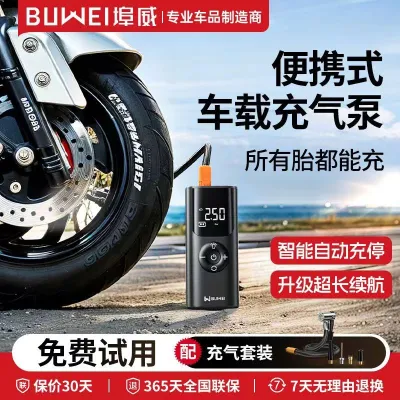
![[SG Stock] Air Pump Car Inflator Compressor Portable Ball Bike Bicycle Rechargeable Basketball Soccer Volleyball Tyre Wheel Tire 12V LED Fast Auto Shut-off Emergency](https://img.lazcdn.com/g/p/cc7d92c566c3860fbbfa1d535cc6f3bb.jpg_400x400q80.jpg_.webp)
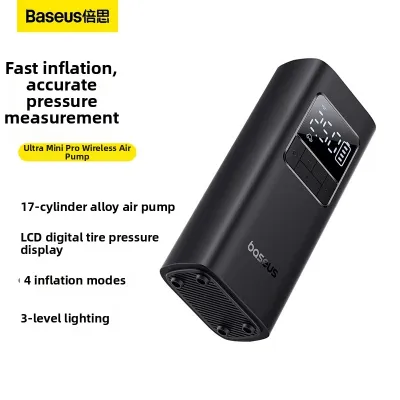
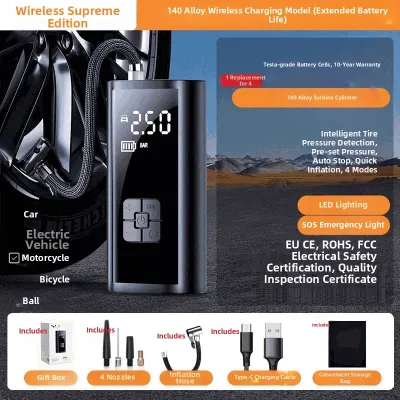
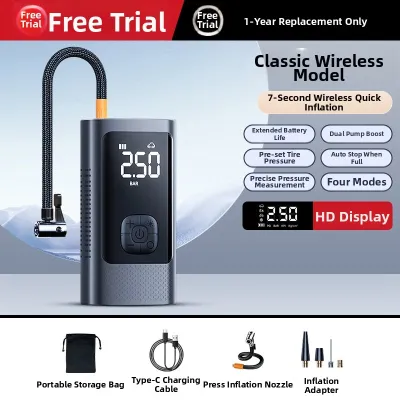
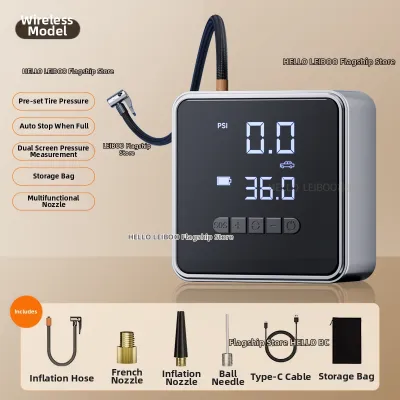
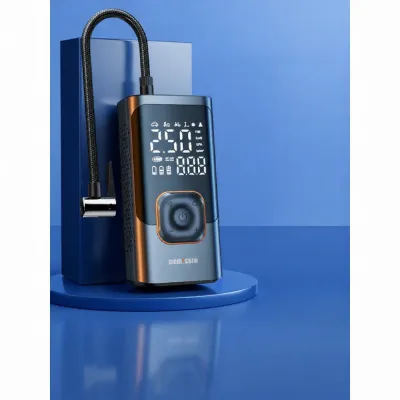
Prices are valid at publication and may change. Please refer to the product page for the latest price.
Understanding this volume difference is essential because it dictates the type of inflation task you will perform. Routine maintenance usually involves simple top-ups, where you add only 2 to 3 PSI to compensate for natural pressure loss. However, inflating a completely flat tyre from zero pressure demands continuous, high-volume output. A pump that easily handles a quick top-up on a small car may struggle, overheat, or fail when tasked with filling a large, completely flat tyre.
Decoding Portable Tyre Pump PSI and Flow Rate Specs
When evaluating a portable tyre pump, the two primary performance specifications are maximum pressure (PSI) and airflow rate (usually measured in litres per minute, or LPM). It is common to see compact pumps advertising maximum pressures of 120 PSI or 150 PSI. However, you must differentiate between this theoretical maximum capability and the pump’s practical operating pressure. For standard passenger cars requiring 30 to 35 PSI, a pump rated for 100 PSI is more than adequate, as it provides a comfortable safety margin. Operating a pump close to its absolute limit causes rapid wear and excessive heat.

Airflow rate determines how quickly your tyre will inflate. A higher flow rate means the pump can move more air into the tyre per minute, reducing your waiting time on the roadside. For small to medium passenger cars, a flow rate of 20 to 30 LPM is generally sufficient for routine top-ups. Larger tyres, such as those on light trucks or larger family vehicles, benefit from pumps with flow rates of 35 LPM or higher. If you use a low-flow pump on a high-volume tyre, the inflation process will take a long time, which can push the pump past its safe operating limits.
Additionally, consider how the pump measures and controls this pressure. Most modern portable pumps feature a built-in digital or analogue pressure gauge. Because accurate inflation is vital for vehicle handling and tyre wear, verifying the gauge’s accuracy is highly recommended. Many digital pumps include an auto-shutoff feature, which allows you to pre-set your desired PSI. Once the pump detects that the tyre has reached this target, it automatically stops running, preventing accidental over-inflation and protecting both the tyre and the pump’s motor from unnecessary strain.
Understanding Duty Cycle and Power Source Limits
The duty cycle of a portable tyre pump is a critical safety specification that is often overlooked. Duty cycle refers to the amount of time a pump can run continuously before it must be turned off to cool down, usually expressed as a percentage or a specific time limit. For example, a pump with a 10-minute duty cycle requires a matching rest period of 10 to 15 minutes after 10 minutes of continuous operation. Small, budget-friendly portable pumps often have short duty cycles, making them suitable for single-tyre top-ups but prone to overheating if you attempt to inflate four large tyres consecutively.
Power delivery is another area where compatibility must be verified. Portable pumps generally fall into any of two categories: 12V DC models that plug into your vehicle’s accessory socket (cigarette lighter) and cordless models powered by internal rechargeable lithium-ion batteries. If you choose a 12V DC pump, check its maximum current draw, measured in amperes (amps), against your vehicle’s accessory socket fuse rating. Many vehicle accessory sockets are fused at 10A or 15A. If a high-power pump draws 15A or more at peak load, it will quickly blow the vehicle’s fuse, leaving you without power.
To prevent electrical issues and physical damage, look for pumps equipped with built-in thermal overload protection. This safety feature automatically shuts down the motor if internal temperatures reach unsafe levels. Even with thermal protection, you should always plan for manual cooling periods during extended use. If the pump’s body feels hot to the touch, turn it off and let it cool completely before continuing. This practice preserves the internal seals and extends the overall lifespan of the device.
Building Your Spec-Matching Checklist
To ensure you select a portable tyre pump that perfectly matches your vehicle’s requirements, compile a structured checklist before making a purchase. Start by writing down your vehicle’s specific tyre data: the recommended cold inflation pressure, the tyre size code, and the maximum current rating of your car’s 12V accessory socket (found in your owner’s manual). Having these numbers on hand allows you to quickly filter out incompatible pump models.
Next, cross-reference your vehicle’s data against the candidate pump’s nameplate specifications. Ensure the pump’s maximum operating pressure exceeds your target pressure by at least 20 PSI. Check that the current draw is safely below your vehicle’s fuse limit, and verify that the duty cycle is long enough to handle your expected usage scenario. If you own a larger vehicle, prioritize a higher flow rate (LPM) to keep inflation times reasonable.
Finally, do not overlook physical and practical compatibility. Confirm that the pump’s valve connector matches your tyre’s valve stems. Most passenger cars use standard Schrader valves, but the connector style—whether a secure screw-on brass chuck or a quick-release thumb-lock lever—can affect ease of use. Additionally, assess the physical dimensions and weight of the pump. It should fit comfortably within your vehicle’s boot storage compartment or under-seat storage area, ensuring it is always accessible when needed without taking up valuable passenger space.
Frequently Asked Questions (FAQ)
Can I use a high-PSI portable pump on standard passenger car tyres?
Yes, you can safely use a high-PSI portable pump on standard passenger car tyres, provided you monitor the inflation process closely. High-PSI pumps are designed to handle higher pressures, but they function perfectly fine at lower pressures like 32 PSI. The primary risk is over-inflation if the pump lacks a reliable auto-shutoff feature. Always verify the accuracy of the pump’s pressure gauge against a dedicated, high-quality tyre pressure gauge, and ensure the pump is set to the correct target pressure before starting.
Why does my 12V tyre pump keep blowing the car's fuse?
A 12V tyre pump typically blows the car’s fuse because the pump’s electrical current draw exceeds the rating of the vehicle’s accessory socket fuse. This mismatch often occurs during startup, when the electric motor requires a brief surge of high current to begin spinning, or when the pump is working against high backpressure. To resolve this, check your vehicle’s owner’s manual to find the exact amperage rating of the accessory socket (usually 10A or 15A) and ensure any portable pump you purchase has a maximum current draw that falls safely below this limit.

Community discussion
Share your experience or ask a question. Comments are reviewed before publication.