
Selecting the right portable tyre pump requires matching the device’s technical capabilities with your vehicle’s specific tyre dimensions and pressure requirements. Many drivers assume any portable pump can inflate any tyre, but using an underpowered unit can lead to overheating, slow inflation times, or complete device failure. To make an informed decision, you must evaluate the pump’s maximum pressure output, airflow rate, and power source against your vehicle’s tyre volume and recommended cold inflation pressure.
In Singapore’s warm, humid climate, maintaining correct tyre pressure is essential for safety, fuel efficiency, and tyre longevity. Under-inflated tyres generate excessive heat on hot asphalt, increasing the risk of a blowout, while over-inflated tyres reduce traction and cause uneven wear. Carrying a compatible portable tyre pump in your boot or storage compartment ensures you can adjust your tyre pressure whenever necessary, whether you are dealing with a slow leak or routine pressure drops.
Identify Your Vehicle's Recommended Tyre Pressure and Volume
Before comparing portable tyre pumps, you must determine the exact inflation specifications for your vehicle. The recommended cold tyre pressure is typically listed on a placard inside the driver’s door jamb, on the inside of the fuel filler flap, or in the vehicle owner’s manual. This figure is calculated by the vehicle manufacturer to ensure optimal handling, braking, and load capacity under normal driving conditions.
Products mentioned in this guide
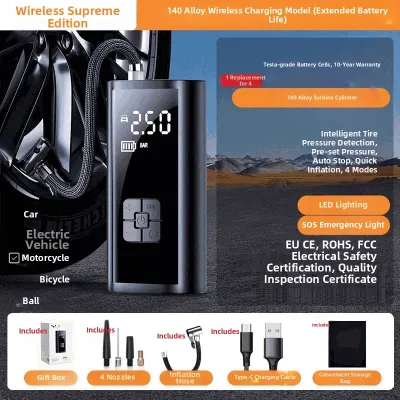
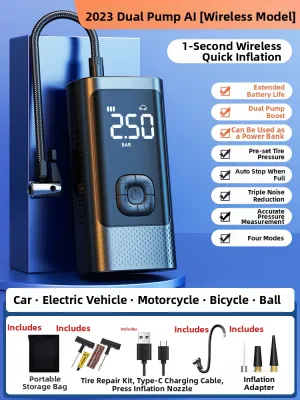
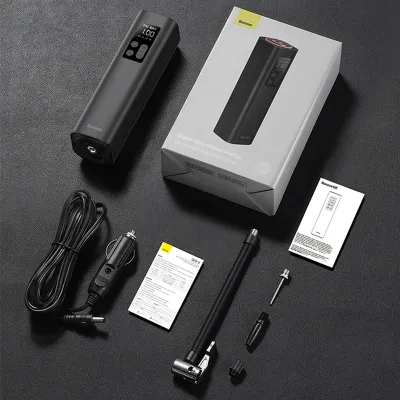
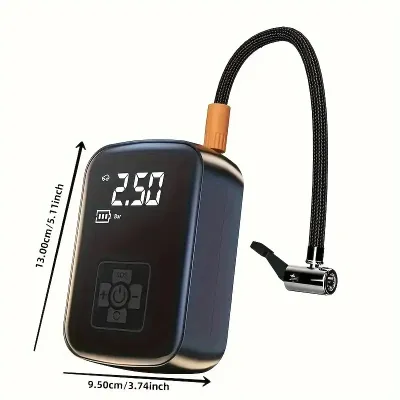
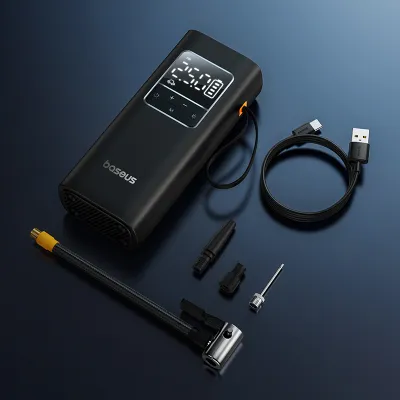
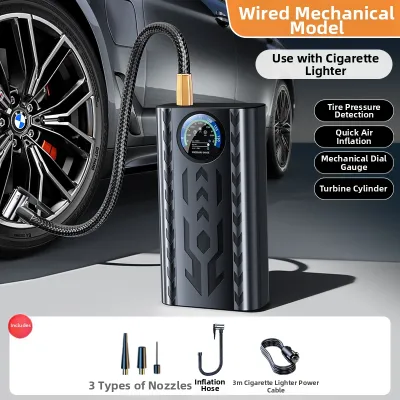
![[SG Stock] Air Pump Car Inflator Compressor Portable Ball Bike Bicycle Rechargeable Basketball Soccer Volleyball Tyre Wheel Tire 12V LED Fast Auto Shut-off Emergency](https://img.lazcdn.com/g/p/cc7d92c566c3860fbbfa1d535cc6f3bb.jpg_400x400q80.jpg_.webp)
Prices are valid at publication and may change. Please refer to the product page for the latest price.
It is crucial to distinguish this recommended cold pressure from the maximum pressure rating moulded onto the tyre sidewall. The sidewall figure represents the absolute maximum pressure the tyre can safely hold under maximum load, not the daily operating pressure. Inflating your tyres to this maximum limit can result in a harsh ride, reduced grip, and accelerated wear on suspension components. Always use the manufacturer’s recommended cold pressure as your target inflation metric.
Tyre volume, which is determined by the tyre’s width, aspect ratio, and wheel diameter, dictates the total amount of air required to fill the tyre. For example, a large SUV tyre and a narrow road bicycle tyre may both require a target pressure of 35 PSI, but the SUV tyre contains a vastly larger volume of air. A pump with a low airflow rate will take significantly longer to fill a high-volume tyre, potentially exceeding its operational limits before reaching the target pressure.
Physical compatibility with your tyre valves is another critical factor to verify before purchasing a pump. Most passenger cars, motorcycles, and utility vehicles use Schrader valves, which are wide and threaded. Many bicycles, particularly road bikes, use narrower Presta valves, while some older or specialized models use Dunlop valves. Ensure the portable pump you select includes the correct valve attachments or adapters to secure an airtight seal during inflation.
Read and Compare Portable Tyre Pump Performance Labels
When shopping for a portable tyre pump, you must carefully read the technical specifications on the product packaging or manufacturer’s datasheet. The maximum pressure rating, expressed in pounds per square inch (PSI) or bar, indicates the peak pressure the pump’s motor can generate. For standard passenger cars and SUVs, a pump rated up to 80 or 100 PSI is generally sufficient, while high-pressure bicycle tyres may require a pump rated up to 120 PSI or higher.

Airflow rate, often measured in litres per minute (L/min), is a more critical indicator of real-world performance than motor wattage or maximum PSI. A higher airflow rate means the pump can deliver a larger volume of air in less time, which is essential for inflating large tyres quickly. When comparing pumps, look for the airflow specification at a specific pressure, as flow rates typically decrease as the internal pressure of the tyre increases.
The power source of the portable pump determines its convenience, portability, and operational limits. Many models plug directly into a vehicle’s 12V auxiliary power outlet (cigarette lighter socket), drawing power from the vehicle’s battery. While these models offer unlimited run-time as long as the vehicle’s engine is running, you must verify that your vehicle’s socket fuse rating matches or exceeds the pump’s current draw, which is typically 10 to 15 amps.
Alternatively, cordless battery-powered pumps offer greater portability and do not require a physical connection to the vehicle’s power outlet. However, these models are limited by their internal battery capacity, which is measured in milliampere-hours (mAh) or watt-hours (Wh). If you choose a battery-powered pump, verify that the battery capacity is sufficient to inflate at least one flat tyre or top up all four tyres on a single charge, and check the manufacturer’s stated continuous run-time before a thermal cooldown is required.
Match Pump Specifications to Your Specific Vehicle Type
Different vehicle types present distinct inflation challenges, requiring you to align the pump’s specifications with your specific driving or riding habits. For passenger cars, crossovers, and SUVs, you should prioritise pumps with higher airflow rates and robust thermal management. Large SUV tyres contain a high volume of air, meaning the pump must run continuously for several minutes to make a noticeable difference in pressure.
When selecting a pump for a car or SUV, you must also consider the physical reach of the device. Ensure the 12V power cable and the air hose are long enough to reach from the power outlet inside the cabin to all four tyres, including the spare tyre if it is mounted externally. For larger vehicles, a pump with a short cable may require an extension cord or a battery-powered design to reach the rear tyres comfortably.
For motorcycles, scooters, and vespas, storage space is at a premium, making compact dimensions and lightweight designs the primary selection criteria. Motorcycle tyres require moderate pressure and volume, meaning a smaller, battery-powered pump is often a highly practical choice. Look for a model that can fit easily under the seat or inside a pannier, ensuring you have a reliable inflation source during long rides or daily commutes.
Bicycle riders must choose a pump based on the specific type of riding they do. Road cyclists require high-pressure capabilities, often up to 100 or 120 PSI, to inflate narrow tyres, which requires a pump with a high-pressure piston design. Conversely, mountain bikers require high-volume output at lower pressures to seat tubeless tyres and fill wide casings quickly. Ensure the pump includes a secure Presta valve adapter and a clear, accurate gauge that can read low pressures precisely.
Verify Safety Features and Operational Limits Before Buying
Before finalizing your purchase, you must evaluate the safety mechanisms and operational limits of the portable tyre pump to prevent damage to your tyres or the pump itself. An automatic shut-off feature is highly desirable, allowing you to preset your target pressure so the pump stops automatically when that limit is reached. This prevents over-inflation, which can damage the tyre structure and compromise vehicle safety.
However, you should not rely solely on the pump’s built-in digital display for absolute accuracy. Digital sensors on portable pumps can drift over time or be affected by the heat generated during operation. It is a recommended practice to verify the final tyre pressure using a dedicated, calibrated standalone tyre pressure gauge, which provides a more reliable and independent reading of the cold tyre pressure.
Every portable tyre pump has a maximum duty cycle, which is the amount of time the pump can run continuously before it must be turned off to cool down. Many compact pumps have a duty cycle of 10 to 15 minutes, after which they require a cooldown period of equal or greater duration. Operating a pump beyond its rated duty cycle can cause the motor to overheat, melting internal seals or permanently damaging the compressor.
Inspect the build quality of the pump’s hose connections and fittings before buying. Thread-on brass connectors offer a highly secure and airtight connection to the tyre valve, minimizing air loss during attachment and removal. Quick-release thumb-lock connectors are faster to use but can wear out over time, leading to leaks. Additionally, ensure the pump’s power cable includes an inline fuse to protect your vehicle’s electrical system from sudden current surges.
Frequently Asked Questions (FAQ)
Can I use a low-flow portable pump for large SUV tyres?
Yes, you can physically connect a low-flow pump to a large SUV tyre, but it is not recommended for routine use or major inflation tasks. Because SUV tyres contain a massive volume of air, a low-flow pump will take a very long time to reach the target pressure, which can easily exceed the pump’s maximum continuous run-time. This risks overheating the motor and triggering the thermal cutoff before the tyre is fully inflated. If you must use a low-flow pump, monitor the temperature closely and allow the unit to cool down frequently.
Does a higher maximum PSI rating mean the pump inflates faster?
No, a higher maximum PSI rating does not equate to faster inflation speed. The maximum PSI rating simply indicates the peak pressure the pump can generate to overcome resistance, which is important for high-pressure bicycle tyres. The speed of inflation is determined by the pump’s airflow rate, measured in litres per minute (L/min). A pump with a high airflow rate but a moderate maximum PSI of 80 will inflate a car tyre much faster than a pump with a low airflow rate and a maximum PSI of 150.

Community discussion
Share your experience or ask a question. Comments are reviewed before publication.