
Finding the perfect sunshade for your Toyota Sienta requires looking beyond generic “one-size-fits-all” options. Because this popular multi-purpose vehicle (MPV) features an exceptionally large, steeply raked front windshield and unique side window geometries, a standard universal shade often leaves large gaps or slips out of place. To secure a flush fit that effectively blocks out harsh sunlight and protects your interior, you must identify your Sienta’s specific generation, measure the glass area from the inside, and select a mounting style that accommodates your window tint and daily usage habits.
Identify Your Toyota Sienta Generation and Window Specs
The Toyota Sienta has evolved significantly over several generations, with each iteration bringing distinct changes to the cabin shape, glass curvature, and overall window dimensions. Before browsing online marketplaces or visiting local automotive accessory shops, confirm your vehicle’s exact manufacturing year and model code. This information is easily located on your vehicle registration documents, the owner’s manual, or the manufacturer’s chassis plate typically found on the door pillar.
For instance, the second-generation Sienta (XP170 series) features a highly swept-back windshield and curved side windows with prominent black borders. In contrast, the third-generation Sienta (MXPL10 series) introduces a more upright cabin silhouette with altered window frames and different rearview mirror housing dimensions. Because of these structural variations, a sunshade designed for an older Sienta model will not align correctly with the glass perimeter of a newer version. The differences in the rearview mirror mounting area are particularly critical, as a shade without the correct cutout will bulge in the center and fail to stay flush against the glass.
Products mentioned in this guide

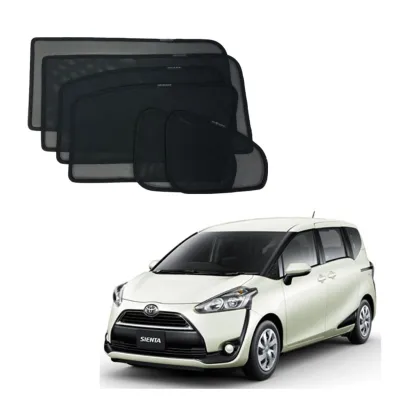

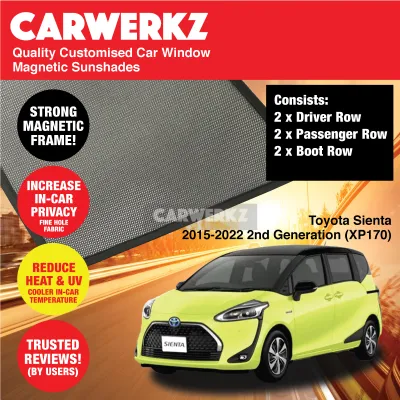
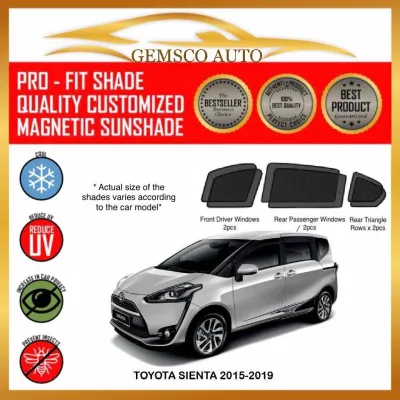
Prices are valid at publication and may change. Please refer to the product page for the latest price.
Relying on broad labels like “MPV sunshade” is a common pitfall. Universal shades are designed as simple rectangles or ovals that do not account for the Sienta’s signature sloping A-pillars or the specific placement of its front quarter windows. To avoid the hassle of returns, always treat your Sienta’s generation as the primary filtering criterion when searching for interior accessories.
Measure Your Windshield and Windows Accurately
Taking physical measurements of your vehicle’s glass is the most reliable way to guarantee a perfect fit. To do this accurately, sit inside the vehicle with a flexible measuring tape. Measuring from the inside is essential because sunshades are installed internally, and the interior trim slightly reduces the usable surface area compared to the exterior glass dimensions.

When measuring the front windshield, record both the maximum width and the maximum height. For the width, measure along the bottom edge near the dashboard, across the middle, and along the top edge near the headliner, as the windshield tapers significantly toward the top. For the height, measure from the base of the glass where it meets the dashboard up to the top edge near the sun visors. Be sure to measure the usable coverage area from the inner edge of the rubber weatherstripping to the opposite edge, rather than stopping at the visible glass line.
For the side windows, particularly the sliding door windows and the rear quarter glass, the process is similar but requires extra attention to the irregular shapes. Measure the tallest vertical section and the widest horizontal section of each window pane. Once you have these physical measurements, compare them directly against the nominal dimensions listed on the product packaging or online specification sheets. If a product listing only provides a general compatibility list without explicit width and height measurements, contact the seller to verify the exact dimensions before purchasing.
Compare Sunshade Types and Mounting Mechanisms
Choosing the right sunshade involves balancing daily convenience, storage space, and mounting stability. Foldable accordion-style shades and roll-up wire-ring shades are the most common choices for the front windshield. Accordion shades made of thick, reflective foil offer excellent rigidity and are easy to prop up using the vehicle’s built-in sun visors, but they can be bulky to store when passengers are occupying the rear seats. Wire-ring shades, which twist and fold into a compact circle, are highly space-efficient and can easily slide into the seatback pockets or door bins, though they require a bit of practice to fold quickly.
For the side and rear windows, static cling and magnetic mounting mechanisms are highly popular. Magnetic sunshades feature small magnets sewn into the fabric border that adhere directly to the metal frame of the window. This design allows you to roll down the windows for ventilation while keeping the shade in place. However, you must verify whether your Sienta’s window frames are made of exposed metal or are covered by plastic interior trim, as magnets will not adhere to plastic surfaces. Static cling shades use a specialized film that sticks to the glass without adhesives, making them incredibly easy to install and reposition, though they must be removed before lowering the windows.
When evaluating different options, check if the sunshade edges feature a light-blocking black border or an elastic wire ring. These design elements allow the shade to flex and adapt to the Sienta’s curved window frames, minimizing light leaks around the perimeter. Additionally, consider the safety of your vehicle’s interior surfaces. If you have aftermarket window tint installed, avoid low-quality suction cups that require high pressure to stick, as the constant pulling force during removal can eventually cause the tint film to bubble or peel away from the glass.
Verify Fitment and Avoid Common Sizing Mistakes
Once you have purchased and installed your sunshade, perform a quick inspection to verify the fitment. Sit in the vehicle during peak daylight hours and look for noticeable light leaks around the edges. A well-fitting sunshade should cover at least 95% of the glass surface, with minimal gaps around the A-pillars and the rearview mirror. If you notice significant bulging in the center, the shade is likely too large for the frame, which puts unnecessary stress on the mounting points and may cause it to collapse unexpectedly.
Another crucial test is stability. Park your vehicle on a slight incline and firmly close the front and sliding doors. A properly fitted sunshade should remain securely in place without slipping, sagging, or falling onto the dashboard. If the shade relies on the sun visors for support, ensure that folding the visors down holds the shade flat against the glass without leaving a large gap near the top of the windshield.
To prevent buying errors, never assume that a product labeled “universal MPV size” will automatically fit your Sienta. The Sienta’s windshield is exceptionally tall relative to its width compared to standard sedans or larger SUVs. A universal shade designed for a standard sedan will often be too short, leaving a wide gap at the top or bottom, while a shade designed for a large SUV may be too wide, causing it to bunch up and block your rearview mirror or dashcam. Always prioritize custom-fit specifications that explicitly mention your Sienta’s model year.
Maintain and Store Your Sunshades Properly
Proper maintenance and storage are key to preserving the shape and effectiveness of your sunshades over time. When folding wire-ring or accordion shades, always follow the manufacturer’s original creases or twisting instructions. Forcing the shade into an incorrect shape or bending the internal metal wire frame can cause permanent warping, which ruins the tension required to keep the shade flush against the window frame.
When the sunshade is not in use, store it in a dedicated storage bag or tuck it neatly under the front seats or inside the door pockets. Leaving a folded sunshade loose on the dashboard or rear parcel shelf exposes it to continuous, intense heat and UV radiation, which can degrade the reflective coatings and weaken the internal structural materials prematurely.
Regular cleaning also ensures that your mounting mechanisms remain effective. Dust and cabin oils can accumulate on static cling surfaces and suction cups, reducing their adhesive strength and causing the shades to fall off repeatedly. Periodically wipe down the suction cups and static cling films with a damp microfiber cloth and mild soapy water, allowing them to air dry completely before reinstallation. Avoid using harsh chemical cleaners or abrasive pads, as these can scratch the reflective surfaces or damage the delicate materials of the shade.
Frequently Asked Questions (FAQ)
Will a universal MPV sunshade fit my Toyota Sienta?
While some universal MPV sunshades might physically cover a portion of the glass, they rarely provide a satisfactory fit for the Toyota Sienta. The Sienta features a unique windshield angle and a highly tapered window profile that standard rectangular or oval universal shades cannot accommodate. This mismatch often results in large gaps along the edges, allowing heat and light to enter, or causes the shade to slip and sag. To ensure complete coverage and reliable stability, it is highly recommended to choose custom-fit sunshades designed specifically for your Sienta’s exact generation and model year.
Can sunshades damage my car's window tint?
Certain types of sunshades can potentially damage aftermarket window tint if not chosen or used carefully. Suction cups, especially those made of rigid plastic or those that use strong suction mechanisms, can pull on the tint film during removal, leading to bubbling, creasing, or peeling over time. To protect your window tint, opt for static cling sunshades, magnetic shades that attach to the metal frame rather than the glass, or foldable shades with soft, non-abrasive fabric borders that rest gently against the window trim. When removing any suction-based shade, always release the suction tab gently instead of pulling the shade directly off the glass.

Community discussion
Share your experience or ask a question. Comments are reviewed before publication.