
Finding the perfect car curtain is one of the most effective ways to shield your vehicle’s interior from intense tropical heat and damaging ultraviolet rays. However, a sunshade that is even slightly too small will let in piercing shafts of sunlight, rapidly heating up your cabin, while an oversized shade will sag, slip, or fail to mount securely. Achieving a seamless, gap-free fit requires a systematic approach to measuring your vehicle’s glass surfaces and understanding how different mounting styles interact with your car’s interior trim. By taking precise measurements of your front windshield and side windows, you can confidently select a car curtain that provides maximum thermal protection and remains securely in place.
Tools and Preparation for Accurate Window Measurement
To get started, gather a few basic tools to ensure your measurements are highly accurate. You will need a flexible measuring tape—such as a tailor’s fabric tape—which easily conforms to the curved glass surfaces of modern vehicles. A standard steel tape measure is also useful for straight spans, but be careful not to scratch the glass or interior plastics with its metal edges. Keep a notepad and pen handy, or use a note-taking app on your smartphone to record each dimension immediately.
Before you begin, park your vehicle in a safe, level, and well-shaded area, such as an HDB multi-storey carpark or a sheltered garage. Measuring your windows inside a hot, sun-drenched cabin can lead to rushed work and inaccurate readings. Finally, take a moment to clean the interior glass surfaces with a microfiber cloth and a dedicated glass cleaner. Removing dust, grease, and suction cup residue ensures your measuring tape can lie flat against the glass and prepares the surface for a secure curtain installation later.
Products mentioned in this guide

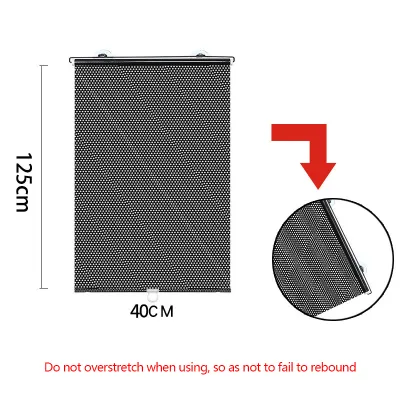
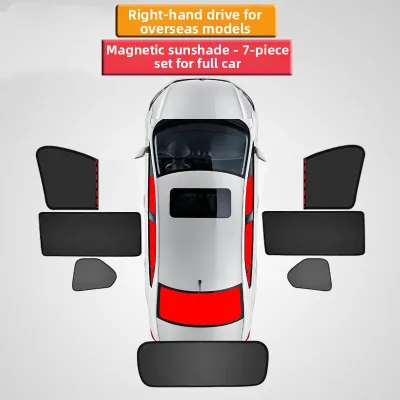
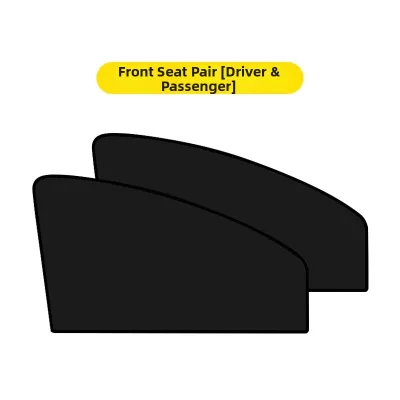
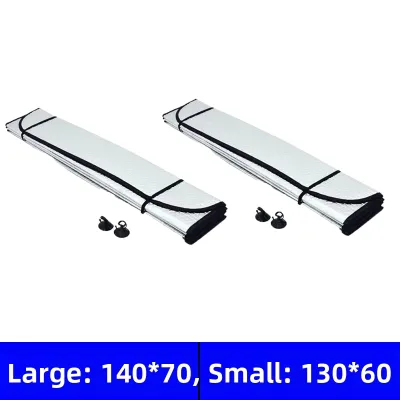
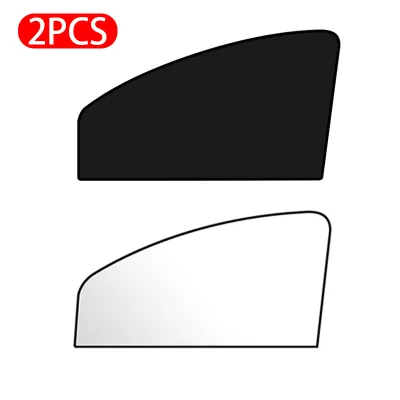
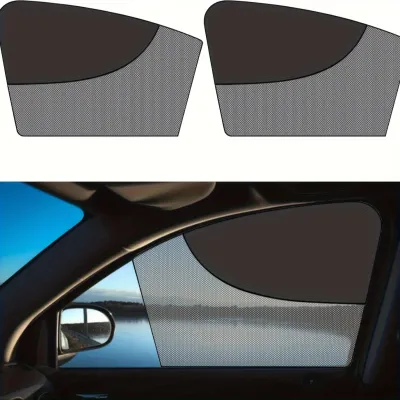
Prices are valid at publication and may change. Please refer to the product page for the latest price.
Step-by-Step Guide to Measuring the Front Windshield
Measuring a front windshield requires extra care because the glass is rarely a perfect rectangle. Due to aerodynamic designs, windshields are highly curved and taper significantly from the bottom to the top. To capture this geometry accurately, you must take three separate horizontal width measurements and three separate vertical height measurements.

For the width, measure across the very top edge near the sun visors, across the middle section directly over the rearview mirror mount, and along the bottom edge where the glass meets the dashboard. For the height, measure vertically on the far-left side, down the exact center line, and on the far-right side. Once you have recorded these six dimensions, identify the smallest width and the smallest height.
If you are purchasing a universal, non-adjustable shade, these minimum dimensions will prevent the curtain from bunching up or overlapping the interior A-pillars. However, if you are opting for a flexible wire-frame shade that springs into place, you will want a size that closely matches the maximum dimensions to ensure complete coverage.
During this process, pay close attention to the area surrounding your rearview mirror. Many modern vehicles house rain sensors, forward-facing safety cameras, and dashcams in a bulky plastic console behind the mirror. Measure the width and depth of this console, as well as the clearance on either side. You will need to choose a car curtain that features a dedicated cutout or a hook-and-loop fastening split at the top to accommodate these electronics without putting pressure on their mounts or blocking their field of view.
Step-by-Step Guide to Measuring Side Windows
Side windows present a different set of challenges because they often feature complex angles, tapering frames, and operational mechanisms that move the glass up and down. To measure the front side windows, start by measuring the maximum width along the bottom weatherstripping where the glass meets the door panel. Next, measure the width at the top edge of the window frame. Because front side windows usually slope downward toward the side mirrors, these two numbers will differ significantly.
For the height, measure at the tallest point (typically near the B-pillar) and the shortest point (near the side mirror). Rear side windows are generally more rectangular but still require top, bottom, and center height measurements to ensure a precise fit.
To guarantee that your chosen curtain does not interfere with the window’s operation, you must account for the window tracks and rubber seals. If you plan to use a curtain that mounts inside the window channel, measure the inner dimensions of the frame where the glass slides. If you prefer a magnetic curtain that clings to the door frame, measure the exposed metal surrounding the window rather than the glass itself.
For highly irregular or trapezoidal windows, it is highly beneficial to measure the diagonal distances from the top-left corner to the bottom-right corner, and from the top-right to the bottom-left. Comparing these diagonal measurements against product specifications will help you verify if a pre-made curtain will align correctly with your window’s unique geometric shape.
Choosing the Right Car Curtain Size and Mounting Style
Once you have a complete set of measurements, you can evaluate the different types of car curtains available on the market. The primary decision is choosing between custom-fit curtains and universal adjustable shades. Custom-fit curtains are engineered using 3D laser scans of specific vehicle makes, models, and production years. They offer an exact match to your window’s dimensions, leaving virtually zero gaps for sunlight to penetrate, though they generally carry a higher price tag. Universal shades are highly versatile, budget-friendly options—often costing between S$15 and S$40—that can be transferred between different vehicles, but they often require overlapping or may leave small gaps along the edges.
Next, consider the mounting mechanism that best suits your vehicle’s materials and your daily usage patterns. Suction cups are incredibly easy to install and remove, making them ideal for temporary use, but they can lose their grip and fall off when exposed to intense heat and high humidity over long periods. Static cling shades rely on electrostatic charge to adhere directly to the glass; they leave no sticky residue and allow for a clean look, but they require a pristine, dust-free surface to stay attached.
Magnetic frames are an increasingly popular choice for side windows because they snap instantly onto the exposed metal frame of the door, allowing you to roll the window down for fresh air while keeping the shade in place. However, you must verify that your vehicle’s door frames are made of steel; aluminum or plastic-clad frames will not attract magnets. Finally, always read the manufacturer’s product dimension labels carefully before purchasing. Check whether the curtain is designed to be trimmed to size or if it allows for overlapping. Some fabric curtains feature adjustable tension rods or elastic borders that can accommodate a range of sizes, while rigid wire-frame shades cannot be altered without destroying their structural integrity.
Installation, Fit Verification, and Safety Checks
Installing your new car curtains correctly is essential for achieving maximum heat rejection and maintaining a safe driving environment. When fitting the curtains, start from one corner and work your way across, ensuring the edges sit flush against the window frame to eliminate any light leaks.
Once installed, perform a thorough operational check on all side windows. Slowly roll each window down and up to confirm that the curtain fabric, mounting clips, or magnetic frames do not catch on the rubber weatherstripping or get pulled into the door cavity. A curtain that snags can damage your vehicle’s window regulator motor, tear the shade, or scratch your window tinting film.
Above all, you must establish a strict safety boundary regarding visibility. Any curtain installed on the front windshield or the front side windows must be completely removed or fully retracted while the vehicle is in motion. Obstructing your forward view or your line of sight to the side mirrors is extremely dangerous and violates traffic safety laws. Keep these front shades stored safely in your door pockets or glove compartment while driving, and deploy them only when your vehicle is safely parked to keep the cabin cool.
Frequently Asked Questions (FAQ)
Can I use a front windshield curtain while driving in Singapore?
No, you must never use a front windshield curtain or any front side window shades while driving in Singapore. Under local traffic regulations, drivers must maintain a clear, unobstructed view of the road ahead and the surrounding traffic at all times. Front windshield curtains are strictly designed for stationary use to block out the sun while your car is parked. Before moving your vehicle, ensure all front shades are fully removed and stored securely so they do not slide under the pedals or distract you while driving.
How do I clean and store my car curtains to prevent damage?
To prolong the lifespan of your car curtains, clean them regularly by wiping the fabric with a damp microfiber cloth and a mild soap solution. Avoid using harsh chemical cleaners, bleach, or abrasive brushes, as these can degrade the UV-resistant coatings and damage the delicate mesh material. When it comes to storage, always follow the manufacturer’s instructions. For wire-frame shades, fold them using the recommended twisting motion to avoid bending or snapping the internal metal band. Store them flat in their protective sleeve, away from direct sunlight and heavy objects that could crush them.
What should I do if my universal car curtain leaves gaps at the edges?
If your universal car curtain leaves gaps, start by adjusting its mounting position to cover the areas where sunlight enters most aggressively, such as the upper corners. For fabric curtains, you can use small, non-damaging adhesive hook-and-loop tabs to secure loose edges directly to the plastic interior trim. Alternatively, you can overlap two smaller universal shades to achieve complete coverage. If these adjustments do not provide a satisfactory fit, consider upgrading to a custom-fit magnetic shade designed specifically for your vehicle’s make and model to ensure a seamless, gap-free seal.
Community discussion
Share your experience or ask a question. Comments are reviewed before publication.