
Finding the best custom-fit sun shades for your Hyundai Kona requires matching the accessory to your vehicle’s specific generation, model year, and windshield sensor configuration. Because the Kona has undergone significant design changes across its generations, a truly effective sun shade must be engineered to hug the exact glass curvature and clear the central Advanced Driver Assistance Systems (ADAS) camera housing. Prioritizing custom-fit options over generic, one-size-fits-all alternatives ensures complete edge-to-edge coverage, prevents light leakage, and protects your cabin from intense heat and UV exposure.
Understanding Custom-Fit vs. Universal Shades for the Kona
The Hyundai Kona features a distinctive interior layout with a steeply raked windshield and a relatively compact cabin volume. When parked under the intense equatorial sun, this large glass area acts as a greenhouse, rapidly elevating cabin temperatures and exposing dashboard materials to degrading ultraviolet rays. Universal sun shades, which rely on generic rectangular shapes, rarely conform to the Kona’s specific windshield geometry. They often leave significant gaps along the A-pillars and the upper edge near the headliner, allowing direct sunlight to penetrate and heat up the steering wheel, seats, and dashboard.
In contrast, custom-fit sun shades are patterned directly from the Kona’s cabin dimensions. This precise engineering ensures edge-to-edge coverage, virtually eliminating light leakage around the perimeter of the glass. By blocking nearly all direct sunlight, custom shades significantly reduce the thermal load on your vehicle’s air conditioning system, allowing the cabin to cool down much faster once you start driving. This is particularly beneficial in tropical climates like Singapore, where parking in open-air HDB carparks or shopping mall rooftops can turn the interior into an oven within minutes.
Products mentioned in this guide

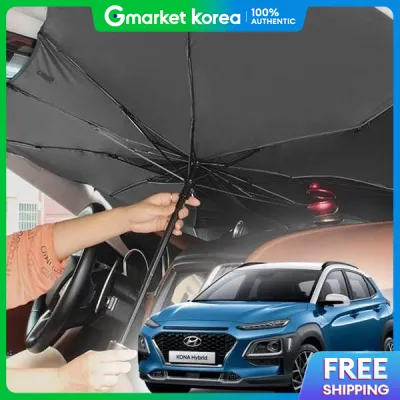
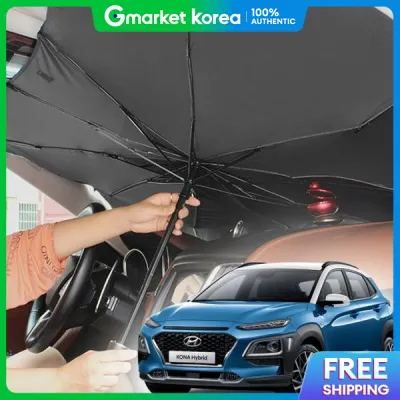
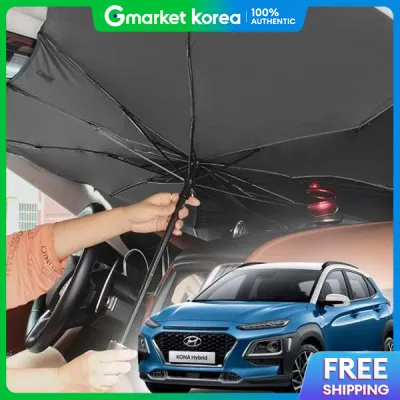
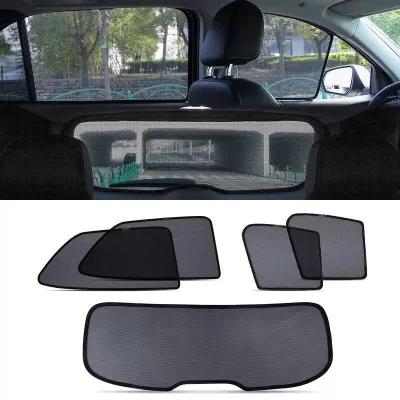

Prices are valid at publication and may change. Please refer to the product page for the latest price.
Furthermore, universal shades often cause physical interference with critical cabin components. The Kona’s rearview mirror assembly, overhead console, and any mounted dashcams require dedicated physical clearance. Forcing a generic shade into place can bend or misalign your rearview mirror, put undue stress on the overhead console trim, or knock your dashcam out of its optimal viewing angle. A custom-fit shade features a tailored cutout that slips neatly around these components, providing maximum protection without risking damage to your vehicle’s interior electronics or safety systems.
Verifying Exact Fitment for Windshield and Side Windows
To ensure a perfect fit, you must first identify the exact generation and model year of your Hyundai Kona. The first-generation Kona (produced from 2017 to 2023) features a completely different windshield size and dashboard profile compared to the second-generation Kona (introduced from 2023 onwards). Accessories designed for the older generation will not fit the newer model, as the newer generation boasts a wider stance, a larger glass area, and a redesigned interior console. Always verify your vehicle’s manufacturing year and chassis code before finalizing any accessory purchase.

Beyond the model year, pay close attention to the trim level and the presence of advanced safety features. Higher-trim Kona models are equipped with a comprehensive suite of driver assistance sensors, which are housed in a large plastic pod behind the rearview mirror. This ADAS camera housing varies in size depending on the specific safety package installed. When shopping for a custom-fit windshield shade, look for product listings that explicitly state compatibility with your specific trim’s sensor configuration. A shade designed for a base model without these sensors will lack the necessary cutout, making it impossible to install correctly against the glass.
Side window dimensions also require careful verification, especially if you are purchasing a complete multi-piece shade set. The Kona’s side profile features a rising beltline, meaning the rear door windows are significantly smaller and shaped differently than the front door windows. If you are opting for magnetic or friction-fit side shades, ensure the set is labeled specifically for either the front or rear doors, or purchase a complete vehicle set that accounts for these geometric differences. Always ensure that any side window shades are removed before driving to maintain full visibility and comply with local road safety regulations.
When purchasing these accessories from online marketplaces or specialized automotive retailers, always review the seller’s return and exchange policies. Even with careful research, minor variations in aftermarket dashcam mounts or toll readers can occasionally interfere with a shade’s fit. Choosing a seller that offers straightforward returns for fitment issues provides peace of mind and protects your investment if the shade requires a slight adjustment or exchange.
Comparing Materials and Heat Rejection Capabilities
Sun shades are available in several material compositions, each offering distinct trade-offs in terms of heat rejection, durability, and ease of handling. Reflective foil shades typically feature a multi-layered construction with a highly reflective outer metallic layer and a bubble-wrap or foam core. This design is highly effective at bouncing solar radiation away from the glass, keeping the cabin noticeably cooler. However, these shades tend to be bulkier and stiffer, requiring more storage space when not in use.
Opaque fabric shades, often made from high-density polyester with a silver reflective coating, offer a more flexible alternative. These shades are typically built around a flexible spring-steel wire frame that allows them to be twisted and folded down into a compact circular pouch. While they are incredibly easy to store in the seatback pocket or under the passenger seat, they may not offer the same level of rigid insulation as a thick foam-core shade. When evaluating fabric options, check the manufacturer’s specifications for verified UV-blocking ratings, such as UPF 50+, to ensure adequate protection for your leather seats and soft-touch dashboard plastics.
For side windows, mesh shades are the most common choice. These shades use a fine, dark mesh fabric that reduces glare and heat while still allowing some visibility through the glass. This is particularly useful for rear passengers or children, as it softens the harsh sunlight without completely blocking the view. When selecting side shades, ensure the frame is sturdy enough to maintain its shape within the window channel without sagging over time.
It is also crucial to consider material safety and durability under extreme heat. The interior of a parked car can reach temperatures exceeding 60 degrees Celsius. Low-quality materials may undergo off-gassing, releasing unpleasant chemical odors or leaving a hazy residue on the inside of your windshield. Furthermore, some cheap reflective coatings can degrade or flake off over time, creating a mess in your cabin. Opt for reputable accessory brands that use automotive-grade, high-temperature-resistant materials to ensure long-term durability and a healthy cabin environment.
Evaluating Daily Usability, Storage, and Installation
A sun shade is only useful if you actually use it, making daily usability and storage critical factors in your decision. Accordion-style folding shades are quick to deploy and pack away, but their rigid panels mean they must be stored as a long, flat package. In the compact cabin of the Kona, storing a long accordion shade can be awkward, often requiring you to place it in the boot or along the rear footwell. If you frequently carry passengers, a collapsible twist-to-fold fabric shade might be more practical, as it can easily slip into the door pocket or glove compartment.
During installation, you must navigate around the Kona’s sun visors and overhead console. The correct technique for installing a custom-fit shade involves placing the bottom edge of the shade against the base of the windshield near the dashboard, gently sliding the upper cutout around the rearview mirror assembly, and then flipping down both the driver and passenger sun visors to hold the top of the shade securely against the glass. Avoid forcing the shade or bending the edges excessively, as this can damage the internal wire frame or scratch the delicate plastic trim of your A-pillars.
Safe removal is just as important as proper installation. When taking the shade down, fold it carefully within the cabin to avoid striking your dashcam, rearview mirror, or passengers. If your shade uses suction cups for attachment, never pull directly on the shade body to remove it; instead, use the release tabs on the suction cups to break the vacuum seal gently. This prevents stretching the shade material and avoids putting unnecessary stress on the glass.
To prolong the lifespan of your custom-fit sun shades, establish a basic cleaning routine. Dust and airborne oils can accumulate on the reflective surface over time, reducing its effectiveness. Periodically wipe both sides of the shade with a clean, damp microfiber cloth. Avoid using harsh chemical cleaners, solvents, or abrasive pads, as these can strip away the reflective coatings or damage the fabric backing. Allow the shade to dry completely before folding and storing it to prevent mold or mildew growth.
Your Pre-Purchase Verification Checklist
Before completing your purchase, run through this quick checklist to ensure you are selecting the correct sun shade for your Hyundai Kona:
- Confirm the Generation: Double-check if your Kona is a first-generation (2017-2023) or second-generation (2023+ / SX2) model, as the windshield sizes are completely different.
- Verify Sensor Cutouts: Ensure the product description explicitly mentions compatibility with your specific trim's ADAS camera housing and rain sensors.
- Assess Aftermarket Accessories: Take note of any dashcams, phone mounts, or electronic toll readers mounted on your windshield that might require extra clearance.
- Choose the Right Material: Decide between a rigid, highly insulating foam-core shade or a flexible, easy-to-store twist-to-fold fabric shade based on your daily storage preferences.
- Check Side Window Attachment: If buying side shades, verify if they use magnetic frames, friction-fit clips, or suction cups, ensuring they are compatible with your window trim.
- Review Return Policies: Confirm that the seller offers a clear return or exchange policy in case of minor fitment discrepancies.
Frequently Asked Questions (FAQ)
Will a custom-fit windshield shade block my Kona's ADAS sensors?
The advanced driver assistance systems (ADAS) camera on the Hyundai Kona is mounted directly against the windshield glass inside a sealed plastic housing behind the rearview mirror. A properly designed custom-fit sun shade is engineered to fit around this plastic housing rather than covering it. Because the camera looks directly through the glass from inside this sealed unit, the sun shade will not block or interfere with the camera’s field of view while the vehicle is parked. However, it is vital to ensure that the shade does not put physical pressure on the housing during installation or removal, as this could potentially misalign the sensitive camera sensors. Always prioritize safety and follow the manufacturer’s instructions to avoid compromising your vehicle’s safety systems.
Can I use sun shades if my Kona has aftermarket window tint?
Yes, you can use sun shades on tinted windows, but you must choose the attachment method carefully to avoid damaging the tint film. Aftermarket window tint is applied to the inside of the glass and can be scratched or peeled by abrasive edges, sharp metal frames, or strong adhesives. Avoid using sun shades that rely on suction cups or adhesive strips directly on the tinted surface, as the suction and adhesive can cause the film to bubble or peel over time. Instead, opt for friction-fit or magnetic side window shades that hold themselves in place against the rubber window channels or the metal door frame rather than the glass itself. Additionally, if you have recently installed new window tint on your Kona, allow the film to cure completely—typically three to seven days depending on local humidity—before using any window shades.

Community discussion
Share your experience or ask a question. Comments are reviewed before publication.