
To compare full-surround car floor mat brands effectively, you must look past marketing claims and evaluate three critical pillars: material composition, vehicle-specific fit, and safety clearances. A high-quality car floor mat set must protect your vehicle’s footwell from moisture and debris while remaining securely anchored, completely clear of the pedals, and free from chemical odors. By focusing on verifiable specifications, retention mechanisms, and physical clearances, you can select a set that offers long-term durability and driving safety.
Rather than relying on brand reputation alone, a systematic comparison requires checking how different manufacturers handle edge coverage, backing materials, and wear resistance. Because full-surround mats cover a much larger surface area than traditional flat mats—often extending up the sides of the footwell and transmission tunnel—any defect in design or material quality is magnified. Evaluating these products through a structured framework ensures you invest in a set that enhances your cabin without compromising safety.
Evaluating Material Quality and Weather Resistance
When comparing different brands, the material composition of the car floor mat set is the most significant factor determining its lifespan and performance. The three most common materials used in full-surround mats are Thermoplastic Elastomer (TPE), Polyvinyl Chloride (PVC), and layered Cross-linked Polyethylene (XPE) finished with a synthetic leatherette (polyurethane) surface. Each material behaves differently under daily wear, moisture exposure, and high cabin temperatures.
Products mentioned in this guide

![Premium Customized Single Color Coil Car Mats (Available for Single Driver & Whole Sets [Front and Rear])](https://img.lazcdn.com/g/p/920b43741a30b013c3a5cddef1a906cf.jpg_400x400q80.jpg_.webp)
![Premium Customized Honey Comb Car Mats (Available for Single Driver & Whole Sets [Front and Rear])](https://img.lazcdn.com/g/p/c14fd77f48c34f21d090238bb4db8744.png_400x400q80.png_.webp)
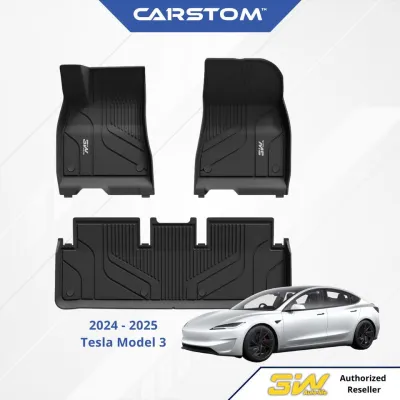
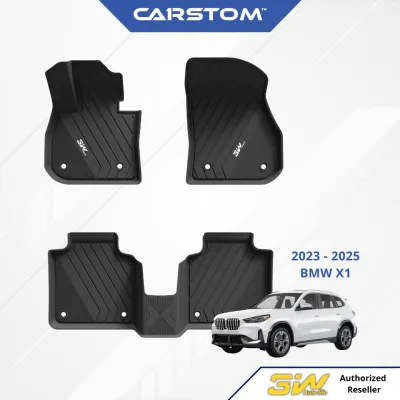
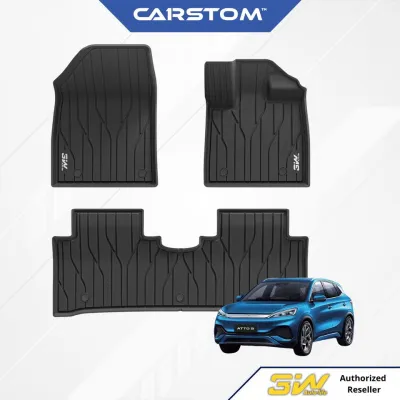
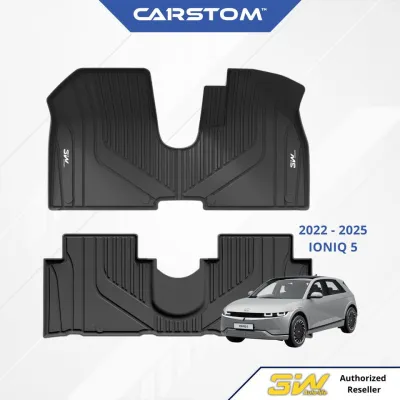
Prices are valid at publication and may change. Please refer to the product page for the latest price.
In warm, humid climates like Singapore, interior vehicle temperatures can rise dramatically when parked outdoors. Under these conditions, low-grade PVC mats can release volatile organic compounds (VOCs), resulting in a strong, unpleasant chemical odor inside the cabin. When comparing brands, look for manufacturers that explicitly specify medical-grade or food-grade TPE, which is inherently odorless, highly flexible, and resistant to thermal degradation.
Layered XPE mats with a leatherette surface offer a more luxurious, cushioned feel underfoot and provide excellent sound-dampening properties. However, you must verify the manufacturer’s specifications regarding the bonding process of these layers. High-quality brands use heat-press lamination rather than toxic glues, which prevents the layers from delaminating when exposed to moisture and cabin heat over time.
Waterproofing and stain resistance are critical for protecting your vehicle’s original carpet from spills, mud, and wet umbrellas. Do not assume a mat is fully waterproof based on the material name alone; instead, check the product labels for certified waterproof ratings and stain-resistant coatings. The surface texture should feature deep channels or raised patterns designed to trap liquids, preventing them from sloshing onto the exposed carpet during cornering or braking.
Additionally, pay close attention to the edge binding of the mats. Some brands use stitched fabric borders, which can absorb water, harbor mold, and eventually fray. Premium molded mats often feature raised, seamless walls (often referred to as 3D or 5D edges) that physically block liquids from spilling over the sides, providing superior containment compared to flat-edged alternatives.
Checking Exact Fit and Pedal Clearance
A full-surround car floor mat set must fit your vehicle’s footwell with absolute precision. There is a critical distinction between vehicle-specific 3D-molded sets and universal trim-to-fit options. Universal mats are designed to be cut down to size, but they rarely provide adequate coverage for full-surround designs and often leave dangerous gaps or bunch up under the pedals.

For maximum safety, prioritize brands that use 3D laser scanning technology to map the exact footwell dimensions of your specific vehicle make, model, and year. A properly molded mat will contour perfectly to the floorboard, transmission tunnel, and side walls without requiring any trimming or forcing. This precise fit is not just an aesthetic preference; it is a fundamental safety requirement.
Before driving with a new mat set, you must perform a physical verification checklist for pedal clearance. With the engine off, fully depress the accelerator, brake, and clutch pedals (if applicable) to ensure they operate through their entire range of motion without catching on the edge of the mat. The pedals must return to their resting positions instantly and smoothly without any physical resistance or interference.
Beyond the pedals, you must identify other potential interference points within the cabin. Check that the mats do not block the movement of the front seats along their adjustment rails, which can strain the seat motor or prevent manual adjustment. Ensure the mats do not obstruct the center console storage doors, lower air conditioning vents, door sills, or floor-mounted fuel door and trunk release levers.
If you observe any lifting, warping, or interference with vehicle controls during this physical check, do not drive the vehicle. A mat that catches a pedal can lead to sudden acceleration or loss of braking capability, making exact fitment the single most important safety boundary when comparing brands.
Assessing Anti-Slip and Retention Mechanisms
Even a perfectly molded car floor mat set can become a hazard if it shifts during driving. Reliable brands design their mats to lock securely into place using a combination of active retention clips and high-friction backing materials. When comparing options, always verify that the aftermarket mats are fully compatible with your vehicle’s factory floor mat anchor points.
Most modern vehicles feature floor-mounted pegs, hooks, or twist-locks designed to hold the driver’s mat in place. High-quality aftermarket brands include matching retention grommets or clips built directly into the mats, allowing them to snap securely onto the factory anchors. Avoid brands that rely solely on gravity or generic clips that do not lock onto the original vehicle hardware.
The backing material of the mat plays a vital role in preventing lateral movement, especially on the passenger side and rear rows where factory anchors may not be present. Look for backing technologies that feature microscopic anti-slip fibers, hook-and-loop fasteners, or dense rubberized nibs. These textures should grip the underlying carpet fibers firmly without causing damage or pulling up the carpet pile when the mats are removed for cleaning.
The driver’s mat is subjected to constant friction, particularly under the heel of your right foot as you pivot between the accelerator and brake pedals. Over time, this localized friction can wear a hole through standard mat materials, compromising both protection and safety. Compare brands based on whether they include a reinforced heel pad in this high-wear zone.
These heel pads are typically made of thick, textured rubber, brushed aluminum, or reinforced polymer plates that are riveted or heat-welded to the driver’s mat. A robust heel pad prevents premature wear-through, ensures your heel does not slip while operating the pedals, and significantly extends the overall lifespan of your car floor mat set.
Comparing Maintenance and Long-Term Durability
The ease of cleaning and the long-term durability of a car floor mat set will determine your satisfaction over years of ownership. Before purchasing, review the manufacturer’s care instructions to understand the required maintenance routine. Some materials allow for quick and easy cleaning, while others demand more delicate handling to avoid damage.
All-weather TPE mats are generally the easiest to maintain, as they can be completely removed from the vehicle, hosed down with water, scrubbed with a mild detergent, and dried with a microfiber towel in minutes. In contrast, layered leatherette mats often require a more careful approach. They typically cannot be soaked or pressure-washed, as water can penetrate the stitched seams, leading to mold growth, unpleasant odors, and internal delamination of the XPE foam core.
When comparing the structural durability of different brands, look for common engineering weak points. Stitched edges, particularly those using low-grade nylon thread, are highly susceptible to unraveling when exposed to friction from shoes and vacuum nozzles. Seamless, heat-molded edges are far more durable and eliminate the risk of thread rot caused by trapped moisture.
To ensure your mats remain safe and functional, establish a routine inspection checklist to perform during every car wash. Inspect the mats for curling edges that could catch on your shoes when entering or exiting the vehicle. Check for cracking in high-flex areas, permanent staining from spilled chemicals, or any signs that the anti-slip backing is beginning to crumble or lose its grip.
If you notice that the driver’s mat has developed deep cracks, a worn-through heel pad, or curling edges that interfere with pedal travel, it has reached the end of its useful life. Replacing a worn mat set promptly is essential to maintain a safe driving environment and protect your vehicle’s interior value.
Building Your Final Comparison Shortlist
To make an informed decision, you can synthesize these technical features into a practical, condition-based selection framework. Your choice should align with your driving environment, aesthetic preferences, and maintenance habits. By matching your specific needs to the right material and design specifications, you can narrow down the market to the best options for your vehicle.
If you frequently deal with wet weather, outdoor activities, or daily commutes with children and pets, prioritize a heavy-duty, all-weather TPE car floor mat set. This option offers maximum liquid containment, easy hosing maintenance, and exceptional resistance to wear. If you prefer a premium, executive cabin aesthetic and want to reduce road noise, a layered XPE set with a textured leatherette finish may be more suitable, provided you are willing to commit to gentle wipe-down maintenance.
Before finalizing your purchase, verify the seller’s authorization, warranty terms, and return policies. Reputable brands typically offer a clear manufacturer warranty against warping, cracking, and manufacturing defects. Ensure the retailer has a reliable return policy that allows you to test-fit the mats in your vehicle and return them if you detect any clearance issues or manufacturing flaws.
Use this final pre-purchase checklist to cross-reference your vehicle’s exact specifications with the product listing:
- Confirm the exact vehicle make, model, and manufacturing year.
- Verify the transmission type (manual transmissions often require different pedal clearances than automatics).
- Check for drivetrain variations, such as hybrid or electric models, which often have different floor pan shapes due to under-floor battery placement.
- Ensure the mat set is designed for your specific steering configuration (Right-Hand Drive for Singapore).
Frequently Asked Questions (FAQ)
Do full-surround mats affect the deployment of side airbags?
Improperly fitted or excessively thick full-surround mats can potentially interfere with the deployment of seat-mounted side airbags. Some modern vehicles feature side airbags housed in the lower outer plastic trim of the front seats or within the seat bolsters themselves. If a full-surround mat extends too high up the sides of the footwell or center console, it can physically block or alter the designed trajectory of the deploying airbag. Always check your vehicle owner’s manual for airbag clearance zones and verify that the mat manufacturer’s specifications state that the design does not obstruct any safety systems.
Can I install a full-surround mat set over the factory carpet mats?
No, you must never install a full-surround car floor mat set over existing factory carpet mats. Stacking mats creates a highly dangerous driving condition by significantly reducing the clearance between the floor and the pedals, which can cause the accelerator or brake pedal to catch on the mat. Additionally, the anti-slip backing of the aftermarket mat cannot grip the factory carpet mat securely, leading to severe sliding and shifting. Always remove all original floor mats from the vehicle before installing your new full-surround set, and store the factory mats in a dry place to preserve them.

Community discussion
Share your experience or ask a question. Comments are reviewed before publication.