
Finding the right sunshade size for your Mazda CX-5 is essential to protect your SUV’s interior from intense solar heat and UV damage. Because the CX-5 has undergone significant design updates across its production generations, a one-size-fits-all approach rarely provides the seamless coverage needed to keep your cabin cool. To secure a perfect fit without annoying light gaps, you must identify your vehicle’s specific generation, take precise physical measurements of the glass, and choose a design that accommodates the advanced sensor arrays mounted near your rearview mirror.
Identify Your Mazda CX-5 Generation and Window Specs
The Mazda CX-5 spans two distinct generations, each featuring unique windshield dimensions, glass angles, and interior mirror configurations. The first generation (KE) ran from model years 2012 to 2016, while the second generation (KF) debuted for the 2017 model year and has received subsequent mid-cycle updates. To establish a baseline for your search, locate your Vehicle Identification Number (VIN) on the driver’s side dashboard or your registration documents to confirm your exact model year.
Windshield dimensions and rake angles changed noticeably between these two eras. The second-generation CX-5 features a sleeker, more swept-back windshield profile that alters how a sunshade rests against the glass compared to the more upright first-generation cabin. Additionally, mid-cycle facelifts often introduce subtle interior trim adjustments around the headliner and A-pillars that can affect how a rigid sunshade wedges into place.
Products mentioned in this guide


Prices are valid at publication and may change. Please refer to the product page for the latest price.
Consulting your owner’s manual is an excellent starting point to check for any documented glass specifications or interior accessory guidelines. While the manual may not list the exact physical dimensions of the glass surface, it will detail the locations of sensitive cabin components that you must avoid disturbing during installation.
Modern Mazda CX-5 models are equipped with the i-Activsense safety suite, which houses cameras, rain sensors, and laser sensors in a plastic pod directly behind the rearview mirror. The size of this sensor housing varies dramatically depending on your trim level and model year, with newer models sporting larger, more complex assemblies. Any sunshade you select must feature a corresponding cutout or a highly flexible top-center section to wrap around this housing without putting pressure on the mirror mount or obstructing the camera’s view of the road when parked.
Measure Your Windshield and Side Windows Accurately
Relying solely on online compatibility charts can lead to frustrating fitment issues, making manual measurement the most reliable path to a perfect fit. To get started, grab a flexible steel measuring tape or a soft tailor’s tape and sit inside your parked vehicle. Measuring from the inside is crucial because sunshades are deployed against the interior glass surface, which is slightly smaller than the exterior windshield area due to the surrounding trim and dashboard overlap.

To measure the windshield, start by recording the maximum width along the bottom edge where the glass meets the dashboard. Next, measure the width across the top edge near the sun visors, as the windshield tapers significantly as it rises toward the roofline. For the height, measure vertically from the deepest point of the dashboard cowl up to the headliner, taking measurements at both the far left, far right, and center points to account for the glass curvature.
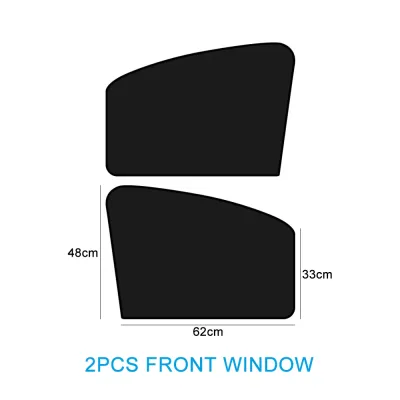
Side windows require a different approach due to their irregular, geometric shapes. For the front side windows, measure the maximum horizontal length along the window sill and the vertical height at the tallest point near the B-pillar. Note how the front glass tapers downward toward the side mirrors, which requires a sunshade with a matching angled profile. For the rear side windows, measure the width and height of the main roll-down glass, and take separate measurements of the small, fixed rear quarter glass if you plan to cover the entire rear passenger area.
Pay close attention to the clearance around the rearview mirror and its mounting stem. Measure the width and depth of the sensor housing pod to determine how large of a cutout your sunshade needs. Write down all your measurements in both centimeters and inches, as aftermarket manufacturers use different units on their product packaging and online sizing charts.
Compare Sunshade Fit Types and Materials
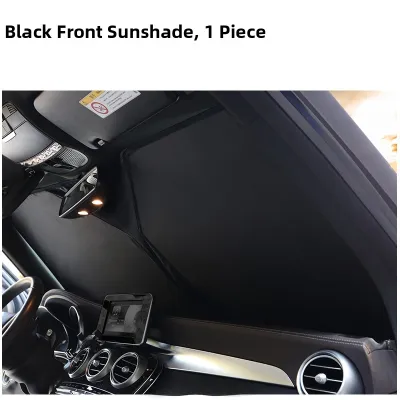
When shopping for a Mazda CX-5 sunshade, you will primarily choose between custom-fit and universal-fit options. Custom-fit sunshades are computer-designed and laser-cut to match the exact contours of your specific CX-5 generation’s windshield. These shades offer edge-to-edge coverage, leaving virtually no gaps for sunlight to penetrate, and are rigid enough to stand upright without sagging over time. While they represent a higher initial investment, their ability to block maximum thermal energy makes them highly effective for hot climates.
Universal-fit sunshades are designed to fit a wide range of SUVs and crossovers, relying on overlapping dimensions to cover the glass. While they are highly budget-friendly and widely available at local automotive shops, they often leave noticeable gaps at the corners or around the rearview mirror. If you choose a universal option, select a size that is slightly larger than your measured dimensions so you can tuck the excess material securely into the edges of the A-pillars and dashboard.
The deployment style of the sunshade directly impacts your daily convenience and storage options. Foldable accordion-style shades are highly popular because their rigid panels fold down quickly and can be secured using your vehicle’s built-in sun visors. Roll-up shades, typically made of flexible reflective materials, are easy to deploy but can develop a persistent curl over time, making them harder to press flat against the glass. For side windows, magnetic mesh shades are an excellent choice as they snap directly to the metal door frames, allowing you to roll the windows down for ventilation while maintaining shade.
Material composition is the primary driver of a sunshade’s thermal performance. Look for multi-layered construction featuring a highly reflective outer layer, such as metallized polyester or aluminum foil, to bounce solar radiation away from the cabin. The middle layer should consist of an insulating barrier, like closed-cell foam or air-bubble cushioning, to prevent heat transfer. The inner layer should be a soft, dark fabric that absorbs residual heat and prevents blinding glare when you remove the shade. Always check product labels for verified UV protection ratings to ensure the material blocks both UVA and UVB rays.
Verify the Fit and Coverage Before Final Installation
Once your new sunshade arrives, perform a test installation in a safe, parked environment before relying on it for daily use. Gently unfold or unroll the shade inside the cabin and press it flat against the windshield glass. Flip down both the driver and passenger sun visors to pinch the top edge of the shade against the headliner, which provides the primary support to keep the shade upright.
Inspect the entire perimeter of the installed sunshade from the front seats, looking for any visible light leaks. Pay close attention to the areas around the A-pillars, the bottom corners near the dashboard, and the central cutout around the rearview mirror. Even small gaps can allow concentrated beams of sunlight to enter, significantly raising the cabin temperature and exposing localized areas of your dashboard to UV damage.
Ensure that the sunshade does not put physical pressure on your rearview mirror, dashcam, or the plastic housing of your i-Activsense safety sensors. Pushing too hard against these components can misalign sensitive cameras or damage the adhesive mounts. If the shade features a hook-and-loop strap at the top, wrap it securely around the mirror stem to close the gap without straining the assembly.
Finally, practice folding or rolling the sunshade while sitting in the driver’s seat to ensure it is easy to manage in daily use. A sunshade that is too difficult to fold or too bulky to store will likely end up unused in your boot. Confirm that the collapsed shade fits comfortably in your door pockets, under the front passenger seat, or in the seatback pockets for quick access.
Frequently Asked Questions (FAQ)
Do I need different sunshades for the front and rear side windows?
Yes, the front and rear side windows of the Mazda CX-5 have completely different dimensions, angles, and shapes. The front side windows feature a sloping top edge that tapers down toward the side mirrors to maintain driver visibility, while the rear side windows are more rectangular and are accompanied by a small, separate rear quarter glass panel. Because of these geometric differences, a front side window shade will not fit a rear window properly.
When shopping, look for side window sunshade sets that are explicitly labeled for either the front or rear doors, or purchase a complete multi-piece kit designed specifically for your CX-5’s cabin layout. Matching the specific contour of the rear quarter glass is especially important if you want to prevent light leaks in the back seat, which is highly beneficial if you frequently carry young children or pets.
Will a universal sunshade fully cover the Mazda CX-5 windshield?
A universal sunshade will rarely provide 100% coverage for a Mazda CX-5 windshield due to the vehicle’s unique glass curvature and the large sensor pod behind the rearview mirror. Universal shades are designed as simple rectangles or ovals, meaning they often leave triangular gaps at the upper corners near the A-pillars and struggle to fit snugly around the central mirror mount.
If you must use a universal shade, choose a medium or large size based on your physical measurements and look for a model with flexible wire rings that can overlap in the center. This flexibility allows you to tuck the excess material into the edges of the windshield frame. However, for complete light blockage and maximum heat reduction, a custom-fit sunshade tailored to your CX-5’s exact model year remains the most effective choice.

Community discussion
Share your experience or ask a question. Comments are reviewed before publication.