
Selecting the ideal sunshade for your Toyota Harrier is more than just a matter of finding a generic car accessory. As a premium SUV with a spacious cabin and a large, sweeping windshield, the Harrier is particularly susceptible to solar heat gain. In tropical climates like Singapore, where vehicles are frequently parked under direct sunlight, interior temperatures can rise rapidly, putting immense strain on your air conditioning system and accelerating the wear on leather upholstery and dashboard electronics.
A high-quality sunshade acts as a critical thermal barrier, preserving the pristine condition of your vehicle’s interior while ensuring a comfortable cabin temperature when you return to the driver’s seat. However, because of the Harrier’s unique windshield geometry and integrated safety technology, choosing the wrong shade can lead to poor coverage, physical damage to interior trim, or interference with driver assistance systems. Understanding how to evaluate fit, materials, and coverage types will help you make an informed decision that protects your investment.
Understand Your Toyota Harrier's Window Dimensions
The Toyota Harrier has evolved through several generations, most notably the XU30, XU60, and the modern XU80. Each generation features distinct styling cues, body shapes, and windshield angles that directly affect window dimensions. For instance, the XU80 generation boasts a highly raked, aerodynamic windshield that is significantly different in curvature and surface area compared to the more upright glass of the older XU30 models.
Products mentioned in this guide

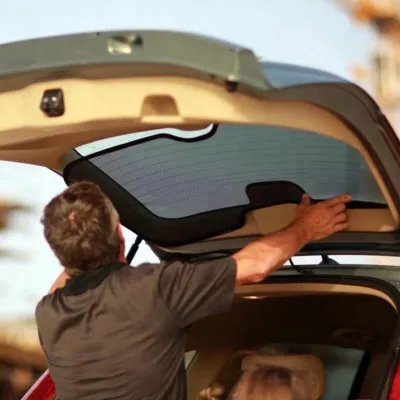
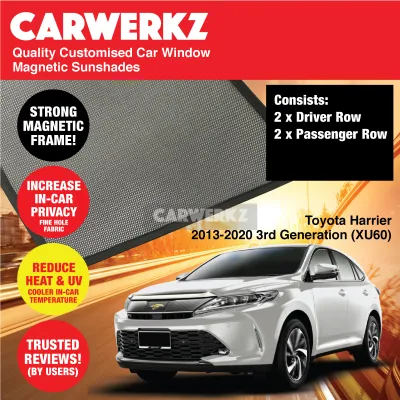
Prices are valid at publication and may change. Please refer to the product page for the latest price.
Because of these structural variations, relying on a “one-size-fits-all” universal sunshade often leads to disappointing results. These generic options frequently leave substantial gaps along the A-pillars and the top edge of the glass, allowing direct sunlight to penetrate the cabin and heat up the dashboard. Furthermore, a loose-fitting shade can slip out of place, rendering its thermal protection ineffective during long parking sessions.
Modern Harriers also feature advanced driver assistance systems (ADAS), with camera and sensor arrays mounted directly behind the rearview mirror. A universal shade that does not account for this bulky sensor housing can press against the plastic casing, potentially misaligning the cameras or straining the mounting brackets. To avoid these issues, always verify your Harrier’s exact manufacturing year, trim level, and market specification before purchasing a sunshade.
Compare Sunshade Materials and Heat Rejection Properties
When evaluating sunshade materials, you will generally choose between reflective foil, woven fabric, and insulated foam-core designs. Reflective foil shades utilize a metallic outer layer to bounce visible light and infrared radiation away from the vehicle. These shades often incorporate a middle layer of plastic bubble wrap to create a thermal break, preventing heat from transferring through the glass and into the cabin air.

Woven fabric shades, typically made from high-density polyester or nylon, rely on specialized UV-resistant coatings to block solar energy. These shades are highly flexible and easy to fold, making them convenient for daily use, though they tend to absorb some heat rather than reflecting it entirely. Insulated foam-core designs offer a premium compromise, featuring a reflective outer film bonded to a dense foam center that provides excellent structural rigidity and thermal resistance.
Durability is a key consideration, as constant exposure to intense UV radiation can cause low-quality materials to degrade rapidly. Over time, cheap plastics can become brittle, leading to flaking reflective coatings and frayed edges that leave unsightly debris on your dashboard. Additionally, repeated folding can create permanent creases in rigid shades, causing them to sag and lose their form over time.
Material safety is equally important when selecting an accessory that will be subjected to extreme heat. Low-grade adhesives and plastics can release volatile organic compounds (VOCs) when heated, resulting in a greasy film on the inside of your windshield and unpleasant chemical odors. Look for manufacturers that specify heat-stable, non-toxic materials to ensure your cabin air quality remains safe and clean.
Evaluate Coverage Types: Windshield vs. Full Window Sets
Deciding between a front-windshield shade and a comprehensive full-window set depends largely on your typical parking habits and passenger needs. A front-windshield sunshade is the most practical option for daily commuters, offering rapid deployment and targeted protection for the steering wheel, instrument cluster, and front seats. Since the windshield is the largest source of solar heat entry, protecting this area provides the most significant immediate temperature reduction.
For drivers who frequently park in open-air lots or carry passengers in the rear seats, a full window set offers superior protection. Side-window and rear-windshield shades block lateral sunlight, protecting the leather door panels and rear upholstery from fading and cracking. These sets are particularly beneficial for families, as they keep the rear cabin cool and reduce glare for children during daytime journeys.
However, full window sets come with distinct trade-offs in terms of cost, storage, and daily effort. While a front-only shade is relatively inexpensive and easy to tuck away, a complete set of six or eight shades requires a larger financial investment, often ranging from S$80 to over S$150. Additionally, installing and removing multiple shades every time you park can become tedious, and storing the bulky set can clutter your Harrier’s cargo area.
Check Installation Features and Storage Convenience
The practicality of a sunshade is heavily influenced by its folding mechanism and how easily it can be stored within the Harrier’s cabin. Accordion-fold shades are highly rigid and quick to set up, requiring you to simply unfold them across the dash and secure them with the sun visors. However, their stiff structure means they remain long and awkward when folded, often requiring you to store them in the boot or along the passenger footwell.
Roll-up designs, usually made of flexible foam, offer excellent durability and a snug fit against the glass. The downside is that they must be rolled tightly and secured with a strap, which can be cumbersome to manage from the driver’s seat, especially when passengers are present. Spring-wire pop-up shades twist and fold into a compact circle, making them incredibly easy to store in the seatback pockets or door bins, though they can be springy and slightly tricky to fold initially.
Securing mechanisms also vary, with options including suction cups, static cling, and magnetic frames. Suction cups are common but can lose their grip under intense heat, leaving circular residue marks on your clean glass. Magnetic frames are highly convenient for side windows, snapping directly onto the metal window frame of the Harrier, though you must ensure the magnets are securely stitched into the fabric to prevent scratching the paintwork.
Step-by-Step Guide to Measuring and Verifying Fit
To ensure you purchase a sunshade that fits your Toyota Harrier perfectly without leaving gaps, follow this systematic measurement and verification process.
Step 1: Use a flexible tape measure to take accurate dimensions of your windshield from inside the cabin. Measure the maximum width along the bottom edge near the dashboard, as well as the width near the top edge close to the sun visors. Next, measure the vertical height from the base of the glass to the headliner, taking care to note the dimensions of the rearview mirror assembly and any sensor housings.
Step 2: Compare your recorded measurements against the manufacturer’s product specifications. If you are purchasing a custom-fit shade, verify that the product listing explicitly mentions your Harrier’s specific generation (such as the XU60 or XU80) and trim level. Allow for a tiny margin of error if using a flexible fabric shade, but ensure a rigid foam shade matches your measurements precisely to prevent bending.
Step 3: Before finalizing your purchase on any online marketplace, carefully review the retailer’s return policy and fitment guarantees. Because safety sensor configurations can vary between different trim levels of the same model year, having the option to exchange or return the shade ensures you will not be stuck with an accessory that does not clear your vehicle’s safety camera pod.
Frequently Asked Questions (FAQ)
Will a windshield sunshade interfere with the Harrier's safety sensors?
Modern Toyota Harriers are equipped with advanced driver assistance cameras and radar sensors mounted behind the rearview mirror. A properly designed sunshade must feature a dedicated cutout or a flexible hook-and-loop strap that allows the shade to fit snugly around the mirror base without putting physical pressure on the sensor housing. Never force a rigid sunshade over or behind the camera pod, as this can misalign the safety systems or trap excessive heat against the electronics, potentially causing system malfunctions. Always consult your vehicle’s owner’s manual for specific guidelines regarding windshield accessories.
How do I clean and maintain my car sunshade to prevent odors?
In humid climates like Singapore, car sunshades can accumulate dust, moisture, and skin oils, which can lead to musty odors and mold growth over time. To clean your sunshade, gently wipe both sides with a soft microfiber cloth dampened with warm water and a mild, pH-neutral soap. Avoid using harsh chemical solvents, bleach, or abrasive brushes, as these can strip away reflective metallic coatings and damage UV-resistant fabrics. Allow the sunshade to air-dry completely in a shaded, well-ventilated area before folding and storing it to prevent moisture from being trapped inside.

Community discussion
Share your experience or ask a question. Comments are reviewed before publication.