
Adding a car convex mirror is one of the most practical ways to minimize blind spots and improve your situational awareness on busy roads. However, selecting the wrong size or curvature can lead to severe visual distortion, making it difficult to judge the speed and distance of approaching vehicles. Finding the right balance requires understanding how mirror specifications interact with your vehicle’s original equipment and your daily driving environment. To make an optimal choice, you must evaluate the curvature radius, measure your existing mirror housing accurately, and select materials that withstand local weather conditions.
Understanding Mirror Curvature and Field of View
The curvature of a car convex mirror is designated by its radius value, represented by the letter “R” followed by a number in millimeters, such as R800, R1000, or R1200. This number represents the radius of the sphere from which the curved mirror is sectioned. A smaller radius, such as R800, indicates a more pronounced curve, which compresses a wider field of view into the mirror surface.
While a smaller radius significantly reduces blind spots, it makes objects appear much smaller and farther away than they actually are. This distortion can make lane changes risky if you rely solely on the convex mirror to judge gaps in traffic.
Products mentioned in this guide
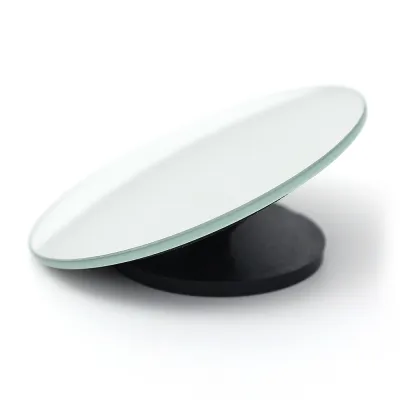
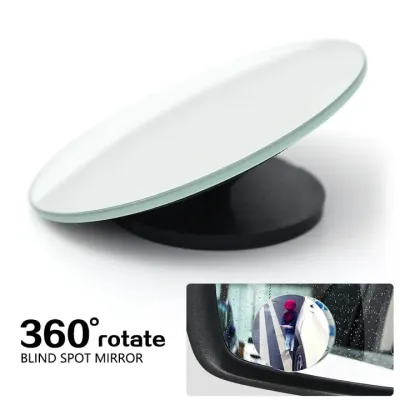
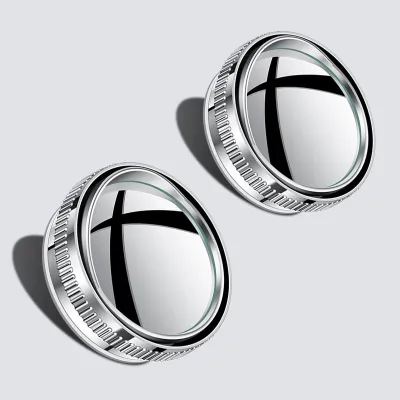
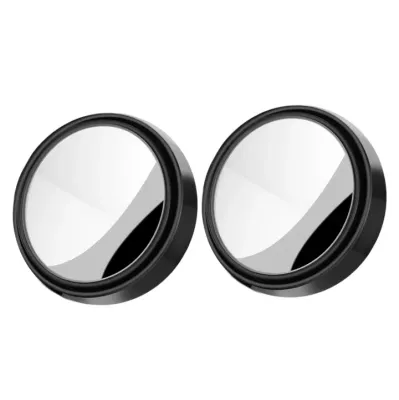
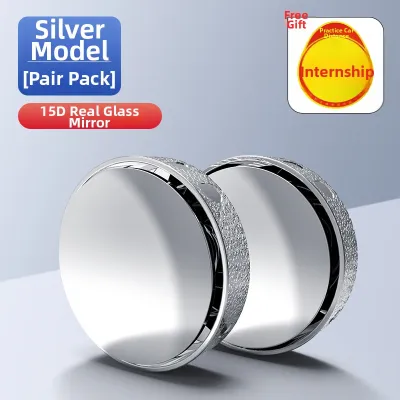
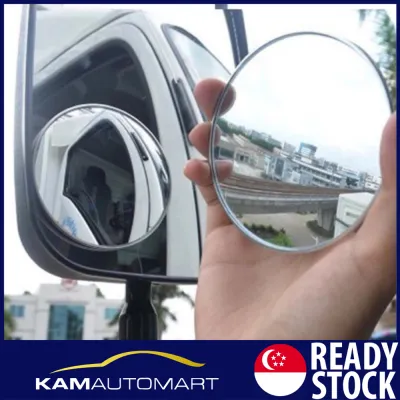
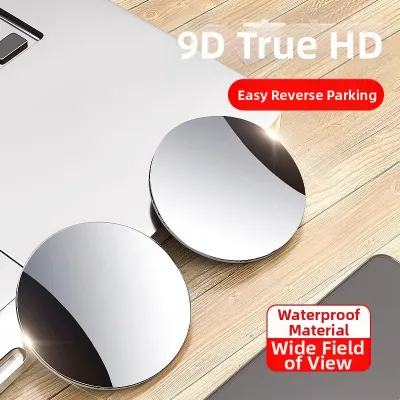
Prices are valid at publication and may change. Please refer to the product page for the latest price.
Conversely, a larger radius like R1200 offers a flatter surface. This profile provides a more realistic representation of distance and speed, but it limits the overall width of your blind-spot coverage. Drivers must balance these characteristics based on their primary driving environments, such as navigating tight urban expressways versus cruising on open highways.
Before purchasing any aftermarket glass, always consult your vehicle manufacturer’s specifications and owner’s manual. Some modern vehicles feature integrated blind-spot monitoring systems or specialized factory mirror glass that may be incompatible with highly curved aftermarket overlays. If you are unsure about compatibility or safety impacts, consult a qualified automotive professional before making any modifications.
Matching Mirror Dimensions to Your Vehicle
Selecting the correct physical dimensions is critical to ensure the aftermarket mirror fits securely and does not obstruct your primary line of sight. To begin, use a precise measuring tape to find the length, width, and diagonal dimensions of your existing mirror glass. Measure the flat surface of the glass itself, rather than the outer plastic housing, to determine the maximum usable area.

The physical size you choose depends heavily on whether you are installing a full-replacement lens or a small, add-on blind spot mirror. Full-replacement lenses must match the exact shape, mounting interface, and contour of your vehicle’s original mirror housing to snap or adhere correctly into place. Even a discrepancy of a few millimeters can prevent the replacement lens from seating properly, leading to vibration or detachment.
If you opt for add-on blind spot mirrors, which are typically small circular or wedge-shaped attachments, you must ensure they do not block too much of your main mirror’s reflection. A common rule of thumb is to choose an add-on that occupies no more than one-quarter of the main mirror’s surface area. This preserves your standard rearward vision while still providing a dedicated zone for blind-spot detection.
Additionally, consider the weight and mounting method of the accessory. Heavy clip-on mirrors or oversized glass overlays put extra strain on the motorized adjustment mechanisms inside your side mirror housing. Over time, excessive weight can wear out these delicate motors or cause the entire assembly to sag, especially when driving at highway speeds.
Evaluating Material and Safety Features
Car convex mirrors are generally manufactured from either glass or acrylic, each offering distinct advantages for daily driving. Glass mirrors provide superior optical clarity and are highly resistant to surface scratches from road debris or cleaning cloths. However, glass is heavier and can shatter upon impact, which presents a potential safety hazard during a collision.
Acrylic mirrors serve as a lightweight, shatterproof alternative that reduces the load on your mirror adjustment motors. While modern acrylic options feature advanced hard-coats to resist scratching, they are generally more susceptible to fine abrasions over time than traditional glass. Drivers must weigh the durability of glass against the safety and weight benefits of acrylic based on their specific vehicle setup.
Specialized surface coatings can also greatly improve visibility under challenging driving conditions. Anti-glare coatings, often characterized by a subtle blue tint, reduce the blinding reflection of high-beam headlights from vehicles behind you during night driving. Hydrophobic or water-repellent coatings are equally valuable, helping rainwater bead up and roll off quickly to maintain a clear view during heavy tropical downpours.
Finally, verify that any aftermarket mirror modification complies with local vehicle standards and road safety regulations. In many regions, modifications must not alter the vehicle’s overall width or compromise the driver’s mandatory field of vision. Choosing certified products ensures your vehicle remains road-legal and safe for all road users.
Installation Checks and Adjustment Tips
Proper installation is just as important as choosing the right specifications. Before applying any adhesive or mounting clips, thoroughly clean the original mirror surface using an approved automotive glass cleaner to remove road grime, wax, and oil. Any leftover residue will weaken the adhesive bond, increasing the risk of the mirror detaching while you are driving.
Once the surface is clean and dry, carefully plan the placement of your convex mirror. For adhesive add-on mirrors, positioning them on the outer, lower corner of your side mirror housing typically provides the best balance. This placement keeps the main portion of your mirror clear for standard distance viewing while dedicating the outer edge to monitoring your blind spots.
Always perform your initial mirror adjustments while the vehicle is safely parked on a flat surface. Sit in your normal driving position and adjust the main side mirrors so you can just see the edge of your own car. Then, adjust the convex mirror to cover the area immediately adjacent to that view, creating a seamless visual transition as a passing vehicle moves from your rearview mirror to your side mirror, and finally into your peripheral vision.
After the initial setup, conduct a slow test drive in a safe, low-traffic environment to fine-tune the angles. Observe how vehicles pass through your field of view and make minor adjustments as needed. Never attempt to adjust your mirrors while driving at high speeds or in heavy traffic, as this diverts your attention away from the road.
Frequently Asked Questions (FAQ)
Are add-on convex mirrors legal for all vehicles in Singapore?
Yes, add-on convex mirrors are generally legal, provided they do not compromise your primary field of vision or exceed the vehicle’s maximum lateral dimensions. The Singapore Land Transport Authority (LTA) regulates vehicle modifications to ensure they do not pose a hazard to other road users. It is essential that any added mirror is securely mounted, does not protrude past the widest part of the original side mirror housing, and does not completely block the view required by standard safety regulations.
How should I clean a convex mirror to protect its coating?
To protect specialized coatings like anti-glare or hydrophobic layers, you should only clean the mirror using mild, non-abrasive automotive glass cleaners and a clean microfiber cloth. Avoid using household cleaning products that contain ammonia, vinegar, or harsh abrasive chemicals, as these can strip away protective coatings and scratch the surface. Gently wipe the mirror in a circular motion without applying excessive pressure, especially if you are cleaning an acrylic mirror which is more prone to scratching.

Community discussion
Share your experience or ask a question. Comments are reviewed before publication.