
Choosing the right parking mirror for your vehicle is a practical way to navigate tight spaces, such as narrow HDB multi-storey carparks and compact parallel parking bays, without risking costly scrapes. The ideal accessory should address your specific visibility gaps while preserving your primary line of sight. By matching your vehicle’s physical dimensions with your daily driving environment, you can select a mirror that enhances spatial awareness and keeps your wheels clear of low curbs.
Assess Your Current Blind Spots and Parking Challenges
Before purchasing any aftermarket accessories, sit in your usual driving position and map out the limitations of your factory-installed side and rearview mirrors. Adjust your seat to your standard driving height and observe what is visible without straining or leaning forward. You will likely notice that while your flat side mirrors provide an accurate sense of distance for vehicles behind you, they leave significant gaps close to the rear wheels and lower bodywork.
Identify the specific pain points you encounter during your daily commute and parking routines. For many drivers, the primary challenge is judging the exact distance between the rear passenger-side wheel and high concrete curbs. Navigating the tight, winding ramps of older multi-storey carparks also requires a clear view of low-lying yellow-and-black bollards that sit below the beltline of modern hatchbacks, sedans, and SUVs.
Products mentioned in this guide
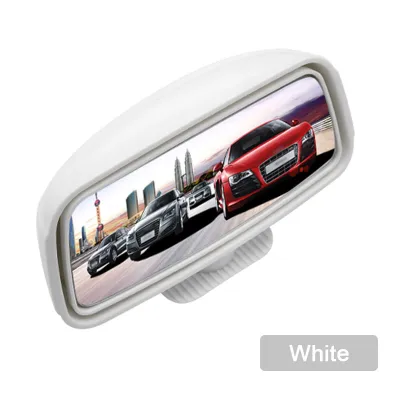
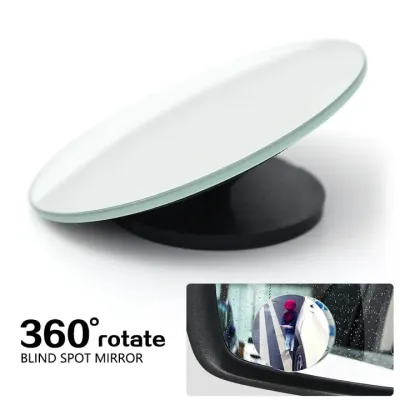
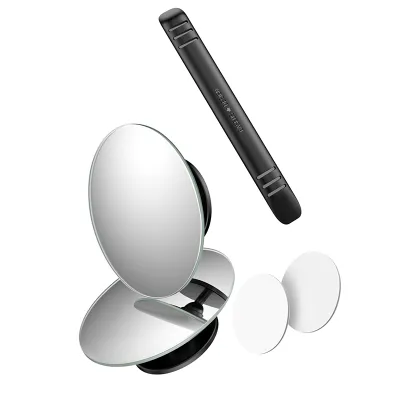
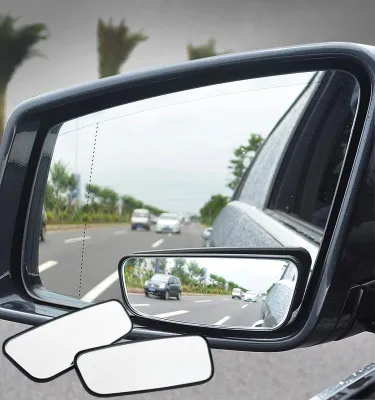
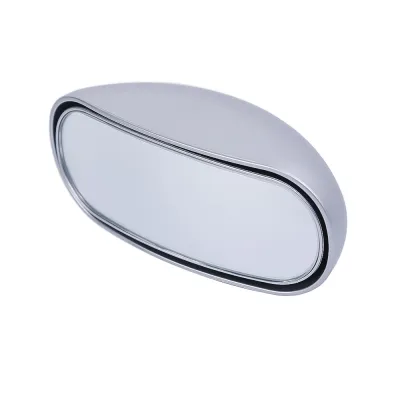
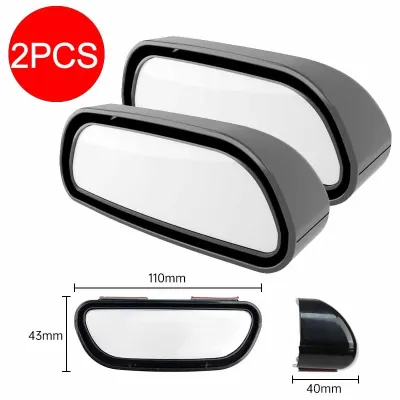
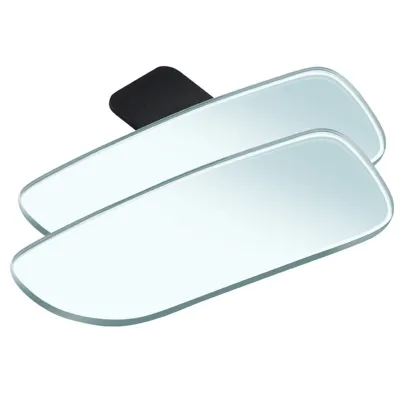
Prices are valid at publication and may change. Please refer to the product page for the latest price.
It is crucial to distinguish between side blind spots and lower blind spots, as they require different visual solutions. Side blind spots occur in the adjacent lanes and are typically resolved by angling mirrors outward or using wide-angle glass. Lower blind spots involve obstacles near the ground, such as wheel stops, low curbs, and drains, which require a downward-angled view to prevent tire and rim damage.
Understand the Main Types of Parking Mirrors
Aftermarket parking mirrors generally fall into two main categories: small stick-on convex mirrors and wide-angle rearview mirror replacements. Stick-on convex mirrors are compact, budget-friendly additions designed to attach directly to your existing side mirror glass. They are highly effective for targeting specific trouble spots, such as the rear tire area, without taking up too much space on your primary mirror surface.

In contrast, wide-angle rearview mirror replacements clip over your existing interior rearview mirror to provide a broader view of the entire cabin and rear window area. While these replacements offer an expansive field of view, they can introduce significant distance distortion. This distortion makes vehicles and obstacles behind you appear much further away than they actually are, which can complicate precise reversing maneuvers in tight spaces.
You will also need to choose between framed and frameless designs for your auxiliary mirrors. Frameless options offer a sleek, modern aesthetic and maximize the usable glass surface area, making them popular for compact side mirrors. Framed options, however, often provide better protection against moisture ingress and physical impacts, which can extend the lifespan of the reflective backing in humid climates.
Keep in mind the fundamental trade-off of any convex glass accessory. Because the glass curves outward, it compresses a wider field of view into a small surface area. While this allows you to see obstacles that would otherwise remain hidden, it alters your depth perception, meaning you must rely on your primary flat mirrors to judge actual distances accurately.
Determine the Right Size and Curvature for Your Vehicle
When selecting a parking mirror, proportion is key to maintaining overall driving safety. An auxiliary mirror that is too large for your side mirror housing will block your primary flat mirror, reducing your ability to monitor highway traffic safely. Measure the height and width of your factory glass surface before shopping, and ensure any stick-on accessory leaves at least two-thirds of the original mirror unobstructed.
The degree of curvature, often indicated by an “R” rating on product packaging (such as 1000R or 1500R), dictates both the width of the field of view and the level of image distortion. A lower number indicates a tighter curve and a wider field of view, but it also results in greater visual distortion. Refer to the manufacturer’s product labels and specifications to find a balance that allows you to see the ground clearly without making objects look excessively warped.
Always check the manufacturer’s stated vehicle compatibility list or size recommendations on the packaging before making a purchase. Some auxiliary mirrors are specifically contoured for flat glass, while others are designed to fit the curved outer edges of modern side mirrors. Verifying these details beforehand prevents purchasing an accessory that fails to adhere properly or sits at an awkward, non-adjustable angle.
Evaluate Mounting Options and Installation Conditions
Mounting methods generally split between semi-permanent adhesive backings and removable clip-on or suction mechanisms. Adhesive-mounted mirrors offer a low-profile, integrated look and are highly resistant to wind resistance and car washes when applied correctly. However, they are difficult to reposition once the adhesive cures, making precise initial placement critical.
Clip-on and suction-cup options allow for easy removal and adjustment, making them ideal if you share a vehicle with other drivers who prefer different viewing angles. The trade-off is that these mounts are often bulkier, can introduce noticeable vibration while driving, and may gradually lose suction over time.
Before installing any accessory on your side mirrors, consult your vehicle’s owner manual to identify built-in electronic features. Many modern vehicles feature heated glass, auto-dimming layers, blind-spot monitoring indicator lights, or auto-folding mechanisms. Placing an adhesive mirror directly over these sensors or heating elements can cause permanent damage or render important safety features useless. If your vehicle has complex integrated electronics, seek qualified professional installation.
For adhesive options, proper surface preparation is essential for a secure bond. Clean the mounting area thoroughly with a dedicated automotive glass cleaner or isopropyl alcohol to remove all road grime, wax, and oil residues. Ensure the surface is completely dry, and verify the manufacturer’s recommended application temperature, as applying adhesive in extremely cold or damp conditions can lead to premature failure.
When to Adjust, Upgrade, or Rely on Existing Systems
Before buying any aftermarket accessories, attempt to optimize your factory setup using standard geometric alignment techniques. Many drivers position their side mirrors so they can see the side of their own car, which actually duplicates the view provided by the interior rearview mirror. By adjusting your side mirrors outward until the flank of your vehicle just disappears from view, you can significantly reduce natural blind spots without spending anything.
If your vehicle is equipped with modern driver assistance systems, evaluate whether they already provide the necessary coverage. A properly calibrated 360-degree camera system, rear parking sensors, or factory-installed blind-spot monitoring can often guide you into tight spaces more accurately than an add-on mirror. Relying on these integrated systems keeps your exterior clean and preserves your vehicle’s original aerodynamics.
There are situations where you should stop a DIY installation and consult a qualified automotive accessory professional. If your vehicle features complex, motorized mirror housings, or if you are unsure how an aftermarket addition might affect your warranty or electronic sensors, professional guidance is the safest path. A specialist can help you integrate auxiliary mirrors or electronic parking aids without compromising your car’s electrical system.
Frequently Asked Questions (FAQ)
What should I check regarding local traffic rules before installing aftermarket mirrors?
Before installing any aftermarket mirror, consult the official guidelines of your local transport authority regarding vehicle modifications and exterior accessories. Ensure that any added mirror does not obstruct your primary forward or side field of view from the driver’s seat. Additionally, verify that the accessory does not cause your vehicle to exceed legal width limits or feature sharp, protruding edges that could pose a hazard to pedestrians or other road users.
How do I safely remove adhesive parking mirrors without damaging the glass?
To remove a stick-on mirror safely, refer to the adhesive manufacturer’s specific removal instructions and use a standard automotive adhesive remover. Apply gentle heat from a hair dryer to soften the adhesive backing, then use a soft plastic scraper or dental floss to saw through the softened tape. Avoid using metal blades or screwdrivers, which can easily scratch or shatter the glass. If your factory mirror has specialized anti-glare coatings, heating elements, or integrated sensors, stop immediately and consult a professional technician to avoid costly damage.

Community discussion
Share your experience or ask a question. Comments are reviewed before publication.