
Selecting the right motorcycle chain lubricant for your maintenance toolkit is a critical decision that directly impacts your bike’s performance, safety, and longevity. The ideal choice is not a one-size-fits-all product; instead, it depends on your motorcycle’s specific chain design, your typical riding environment, and your personal maintenance habits. By matching the lubricant formula to these variables, you ensure that your drivetrain operates with minimal friction, remains protected against corrosion, and avoids the premature wear that leads to costly replacements.
A dedicated chain lubricant does more than simply make the chain slippery. It must penetrate the tight tolerances of the chain links, protect the delicate rubber seals found in modern sealed chains, and resist the immense centrifugal forces generated at highway speeds. Whether you are assembling a comprehensive home garage workshop or packing a compact emergency tool roll for long-distance touring, understanding the nuances of different lubricant types allows you to maintain optimal drive efficiency and ride with confidence.
Why Your Motorcycle Toolkit Needs a Dedicated Chain Lube
The motorcycle drive chain is a highly stressed mechanical component operating under extreme tension, rapid rotational speeds, and constant exposure to the elements. Unlike enclosed gearboxes that bathe their components in protective oil, a motorcycle chain is completely open to the environment. This exposure makes a dedicated, high-quality chain lubricant an indispensable addition to any rider’s maintenance toolkit. The primary mechanical role of this lubricant is to minimize metal-on-metal friction between the chain rollers, bushings, and sprocket teeth, which directly reduces heat buildup and power loss.
Products mentioned in this guide
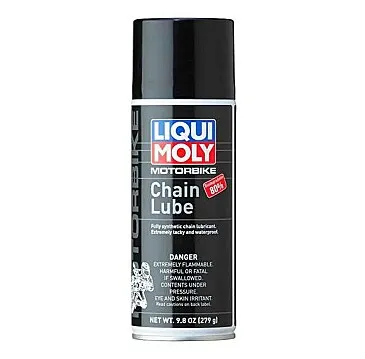
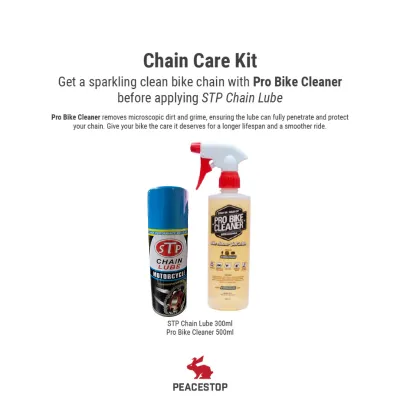
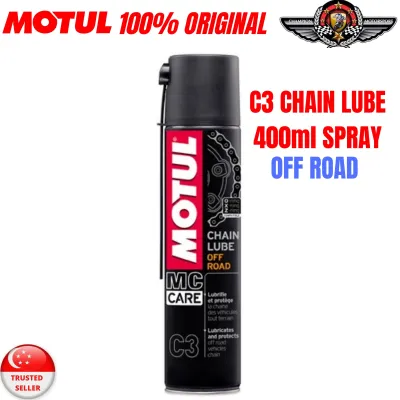
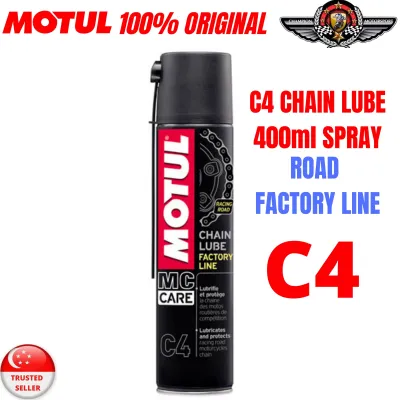
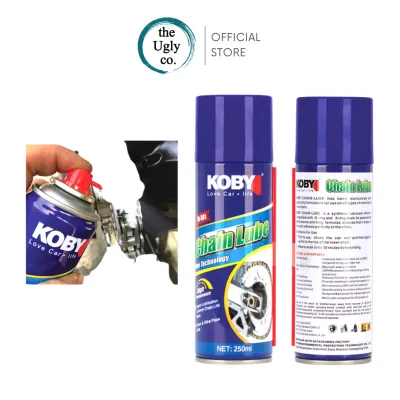
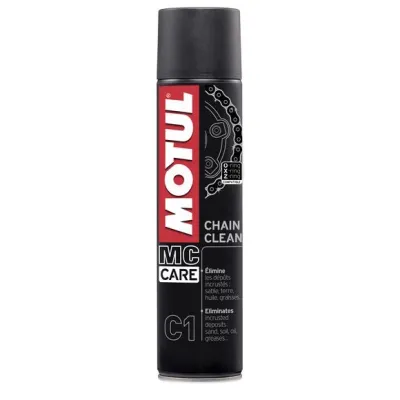
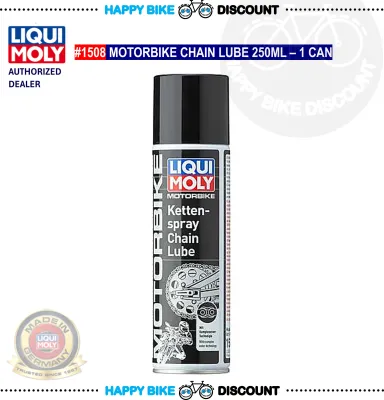
Prices are valid at publication and may change. Please refer to the product page for the latest price.
Modern motorcycles typically utilize sealed chains, commonly referred to as O-ring, X-ring, or Z-ring chains. These designs feature tiny rubber seals that lock specially formulated grease inside the internal pin-and-bushing assembly during manufacturing. For these chains, the external lubricant’s primary job is to keep the rubber seals pliable, moist, and intact, while also lubricating the contact points between the rollers and the sprocket teeth. If these rubber seals dry out, crack, or tear, the factory grease escapes, water and dirt enter the internal joints, and the chain will rapidly develop tight spots and fail.
Using improper lubricants—such as motor oil, household penetrating sprays, or general-purpose grease—poses significant risks to your motorcycle’s drivetrain. Penetrating sprays are often too thin to provide lasting lubrication and can actually wash away the essential factory grease behind the rubber seals. Conversely, heavy general-purpose greases are highly tacky and act as a magnet for road grit, sand, and dust. This mixture of grease and debris forms an abrasive grinding paste that rapidly erodes the metal rollers and sprocket teeth. Furthermore, non-dedicated lubricants lack the necessary adhesion properties, causing them to fling off the chain at high speeds and coat your rear tire, brake discs, and swingarm, creating a severe safety hazard.
Consistent and correct chain lubrication is one of the most cost-effective maintenance practices a rider can perform. By maintaining a thin, protective barrier of dedicated lubricant, you prevent surface rust from forming after wet rides or washes. Rust weakens the metal structure of the chain and causes links to bind, leading to uneven power delivery and increased vibration. Ultimately, a well-lubricated chain distributes the mechanical load evenly across the sprocket teeth, significantly extending the operational lifespan of both the chain and the sprockets, saving you from premature and expensive drivetrain replacements.
Key Factors to Evaluate Before Buying Chain Lube
Before purchasing a chain lubricant to add to your toolkit, you must evaluate several critical factors to ensure the product aligns with your motorcycle’s specifications and your riding habits. The first and most important dimension is chain type compatibility. You must inspect your motorcycle’s chain and consult the manufacturer’s documentation to determine if you have a sealed (O-ring, X-ring) or non-sealed chain. Many lubricants contain solvents or propellants that can cause rubber seals to swell, degrade, or dissolve. Always verify that the product label explicitly states it is safe for O-ring and X-ring chains before application.

Your typical riding environment plays a decisive role in selecting the right formula. Riders who commute daily through unpredictable weather, heavy rain, or high humidity require a lubricant designed to resist water washout. Conversely, riders who frequent dry, dusty, or sandy environments need a formula that dries completely to avoid attracting airborne particulates. Matching the lubricant to your local climate and road conditions prevents the rapid accumulation of abrasive grime, which is just as damaging to the chain as a lack of lubrication.
Fling-off resistance is another crucial performance characteristic to consider. When a motorcycle accelerates, the chain spins at incredibly high velocities, generating strong centrifugal forces. A high-quality chain lubricant must possess excellent adhesive properties to cling to the metal surfaces rather than flinging off onto the motorcycle’s bodywork, rear wheel, or brake components. However, there is often a trade-off: highly tacky formulas that resist fling-off exceptionally well also tend to attract more road dirt. Balancing these two characteristics requires assessing your tolerance for frequent chain cleaning versus your desire for a clean rear wheel.
Finally, you must evaluate the application format that best fits your toolkit’s physical constraints and your maintenance preferences. Aerosol sprays are the most common and convenient option, utilizing pressurized propellants to atomize the lubricant and force it deep into the chain links. However, aerosols can be bulky to store in a compact travel kit and carry a risk of overspray onto the rear tire or brake rotor. Drip bottles and squeeze tubes offer precise, link-by-link application without the risk of overspray, making them highly portable and ideal for roadside maintenance, though they require more time and patience to apply. Brush-on pastes provide a thick, controlled layer of protection but can be messy to store and apply on the go.
Understanding the Main Types of Motorcycle Chain Lubricants
To make an informed decision, it is essential to understand how different lubricant base formulas interact with your chain’s components and the surrounding environment. Chain lubricants are generally categorized into three main types: wet, dry, and ceramic or wax-based. Each category utilizes distinct chemical compositions to achieve specific performance characteristics, offering unique advantages and trade-offs depending on how and where you ride.
Wet Chain Lubricants
Wet chain lubricants, often formulated with heavy mineral oils or synthetic fluids, remain in a liquid or semi-liquid state after application. These formulas are engineered for maximum durability and exceptional water resistance, making them the traditional choice for riders who face wet, humid, or rainy conditions. The wet barrier effectively repels water, preventing moisture from reaching the metal surfaces and causing rust, even during prolonged rides through heavy downpours.
The primary trade-off of wet lubricants is their high tackiness, which naturally attracts road dust, sand, and grime. Over time, this accumulation forms a dark, sticky paste that must be regularly cleaned off to prevent accelerated wear on the chain and sprockets. If you choose a wet lubricant for your toolkit, you must be prepared to perform more frequent and thorough chain cleanings. This type is highly suited for long-distance touring riders, daily commuters in wet climates, and those who do not mind a more rigorous maintenance schedule in exchange for robust, long-lasting wet-weather protection.
Dry Chain Lubricants
Dry chain lubricants utilize a volatile solvent carrier that evaporates shortly after application, leaving behind a dry, solid lubricating film—often containing PTFE (polytetrafluoroethylene) or graphite. Because the resulting barrier is completely dry and non-tacky, it does not attract dust, sand, or road debris. This makes dry lubricants highly effective for riding in arid, dusty, or sandy environments, keeping your drivetrain remarkably clean and free of abrasive buildup.
However, the main limitation of dry lubricants is their susceptibility to water washout. Because the protective film is thin and dry, it can be easily stripped away by heavy rain, wet roads, or during a motorcycle wash. Consequently, dry formulas require much more frequent reapplication, often after every wet ride or wash, to maintain adequate protection. If your toolkit is configured for dry-weather riding, desert touring, or off-road trail riding in dry conditions, a dry lubricant is an excellent choice, provided you are diligent about reapplying it regularly.
Ceramic and Wax-Based Options
Ceramic and wax-based lubricants represent advanced formulation technologies designed to offer a middle ground between wet and dry properties. Wax-based lubricants are applied as a liquid that quickly cures into a hard, waxy protective layer. This wax barrier provides excellent friction reduction and resists dirt attraction while offering better water resistance than traditional dry lubricants. Ceramic lubricants incorporate microscopic ceramic particles that fill in surface imperfections on the metal rollers, creating an incredibly smooth, low-friction boundary layer that enhances power transfer.
Applying these advanced formulas requires strict adherence to specific procedures to achieve their intended performance. The chain must be completely clean and free of any previous oil- or grease-based lubricants before application, as the wax or ceramic particles cannot adhere properly to a dirty or oily surface. Additionally, many wax-based formulas require a curing period—sometimes several hours or overnight—and are sensitive to application temperatures. If applied in cold conditions or ridden immediately after application without curing, the wax layer may fail to bond and quickly flake off, leaving the chain unprotected.
How to Match the Lube to Your Riding Style and Chain Type
Selecting the perfect chain lubricant for your toolkit requires a systematic approach that matches the product’s characteristics to your specific riding profile. For daily commuting and long-distance touring, your primary goals are longevity, weather versatility, and minimal maintenance intervals. Commuters and tourers often encounter unpredictable weather, from sudden rainstorms to dry highway stretches. For these scenarios, a high-quality wet lubricant or a durable wax-based formula is highly suitable, as they provide the long-lasting protection needed to cover hundreds of kilometers between applications without drying out.
If your riding style leans toward off-road, dual-sport, or adventure riding through dirt, mud, and sand, your priority shifts to preventing abrasive buildup. Applying a wet, sticky lubricant in these environments is highly detrimental, as sand and dirt will quickly adhere to the chain, creating a destructive paste that ruins the sprockets and chain seals. Instead, off-road riders should opt for dry lubricants or specialized off-road wax formulas. These products keep the chain clean and allow dirt to shed off easily, preserving the integrity of the drivetrain during rugged trail rides.
For track days or high-performance sport riding, the focus is on minimizing frictional power loss and ensuring stability under extreme temperatures. Performance riders often select specialized ceramic or synthetic racing lubricants that offer exceptionally low rolling resistance. These formulas are engineered to withstand the high heat generated by rapid acceleration and high-speed cornering without breaking down or flinging off. However, these high-performance lubricants often prioritize low friction over long-term durability, requiring reapplication after every track session or high-speed run.
Regardless of your riding style, the final and most critical step before applying any lubricant is verification. You must cross-reference the chosen lubricant’s product label with your motorcycle owner’s manual. Ensure that the manufacturer of your motorcycle does not explicitly prohibit certain chemical bases or solvents that could damage your specific chain seals. Never assume compatibility based solely on the product category; always verify the explicit seal-safe certifications printed on the lubricant container to protect your investment.
Safe Application and Storage in Your Toolkit
Integrating a chain lubricant into your motorcycle maintenance toolkit requires careful consideration of safety, storage, and application techniques. If you choose an aerosol spray, you must store the pressurized container safely within your garage or travel kit. Aerosols are highly sensitive to temperature fluctuations and must be kept away from direct sunlight, open flames, and heat sources, such as your motorcycle’s exhaust pipe or engine block. Ensure the storage area is well-ventilated and that the container is secured against puncturing or crushing, especially when packed in soft luggage for a long trip.
Before applying any new lubricant, it is essential to clean the chain thoroughly using a dedicated motorcycle chain cleaner and a soft-bristled chain brush. Applying fresh lubricant over a layer of old grease and road grime simply traps the abrasive particles against the metal rollers and rubber seals, accelerating wear. Spray the dedicated cleaner onto the chain, scrub gently to break up the grime, and wipe the chain completely dry with a clean, lint-free rag. Allow any remaining cleaning solvents to evaporate fully before applying the new lubricant, as residual cleaner will break down and neutralize the fresh lube.
When you are ready to apply the lubricant, safety must be your top priority. Always ensure the motorcycle’s engine is completely turned off and the transmission is in neutral. Never, under any circumstances, run the engine and put the bike in gear to spin the rear wheel while applying lubricant or cleaning the chain; this extremely dangerous practice can easily lead to severe finger or hand injuries if caught in the spinning sprocket. Instead, place the motorcycle on a center stand, paddock stand, or use a wheel roller, and rotate the rear wheel slowly by hand.
During application, direct the lubricant spray or drip nozzle at the inside run of the chain—the side facing the sprockets—just before it wraps around the rear sprocket. Aim specifically at the inner and outer plates where the rubber seals are located, as well as the center rollers. Take extreme care to prevent the lubricant from overspraying or dripping onto the rear tire tread, brake discs, or brake pads. Any lubricant contamination on these braking surfaces will drastically reduce stopping power and create an immediate, highly dangerous riding hazard. If any overspray occurs, clean the affected braking components immediately with a dedicated brake cleaner and a clean cloth. After application, wipe away any excess lubricant from the outside of the chain plates with a clean rag to minimize subsequent fling-off, and allow the lubricant to cure for the manufacturer-recommended time before riding.
Frequently Asked Questions (FAQ)
How often should I reapply chain lube?
The frequency of chain lubrication depends heavily on your riding conditions, mileage, and the type of lubricant used. As a general guideline, most manufacturers recommend lubricating the chain every 500 to 800 kilometers under normal riding conditions. However, you should always use physical indicators as your primary guide; inspect your chain regularly for signs of dryness, unusual squeaking or metallic noise, or the appearance of light surface rust. If you ride through heavy rain, wet roads, or extremely dusty off-road trails, you must reapply the lubricant much sooner, often immediately after the ride or after washing the motorcycle, to ensure continuous protection.
Can I use general-purpose grease instead of dedicated chain lube?
No, you should never use general-purpose grease, automotive chassis grease, or household penetrating oils as a substitute for dedicated motorcycle chain lubricant. General-purpose greases are too thick to penetrate the tight tolerances between the chain rollers and bushings, and they lack the specific chemical formulation required to protect delicate O-ring and X-ring rubber seals. Furthermore, these heavy greases are highly tacky and will rapidly attract road grit, forming an abrasive paste that accelerates wear. They also lack the necessary fling-off resistance, meaning they will quickly spin off the chain at high speeds, potentially coating your rear tire and brakes, which poses a severe safety risk. Always use a product explicitly labeled by the manufacturer as safe for motorcycle drive chains.
Does chain lube expire in the toolkit?
Yes, chain lubricants can degrade over time, and their effective shelf life depends on the formula type and storage conditions. Aerosol cans are particularly susceptible to losing their propellant pressure over several years, making it difficult or impossible to spray the product evenly, even if the lubricant inside is still chemically stable. Liquid and paste formulas can experience chemical separation, where the active lubricating agents settle out of the solvent carrier. Always check the manufacturer’s packaging for an expiration or production date, and inspect the product before use; if you notice significant separation that does not resolve after vigorous shaking, a change in consistency, or a loss of aerosol pressure, the lubricant should be replaced. To maximize shelf life, store your lubricants in a cool, dry place away from extreme temperature fluctuations.

Community discussion
Share your experience or ask a question. Comments are reviewed before publication.