
Protecting your car’s interior from relentless tropical heat is a constant challenge, especially when parking in open-air carparks across Singapore. While traditional sun shades often rely on suction cups that degrade and lose their grip under intense heat, magnetic car sun shades offer a modern, secure alternative. These shades use integrated magnets to cling tightly to your vehicle’s metal frame, providing a flush fit that blocks out harsh sunlight and keeps your cabin significantly cooler.
Choosing the right magnetic sun shade for your front windshield requires more than simply picking a generic size off a shelf. Because the front windshield is your car’s largest entry point for solar radiation, securing a precise fit and selecting high-performance materials are critical steps. By understanding how to measure your glass, evaluate material specifications, and verify your vehicle’s frame compatibility, you can make an informed decision that protects your dashboard, electronics, and upholstery from premature aging.
Quick Selection Criteria for Magnetic Front Windshield Sun Shades
When shopping for a magnetic front windshield sun shade, understanding the core advantages of magnetic attachment is the first step. Unlike suction cups that leave unsightly rings on your glass and inevitably fail as the cabin temperature rises, magnetic frames snap directly onto the metal perimeter of your window frame. This eliminates sagging, prevents light leaks around the edges, and allows for rapid installation and removal without leaving any sticky residue behind.
Products mentioned in this guide
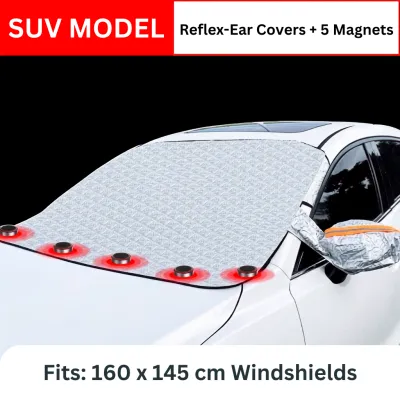
Prices are valid at publication and may change. Please refer to the product page for the latest price.
To find a shade that delivers reliable performance, you must focus on three non-negotiable checks before making a purchase:
- Exact Windshield Dimensions: Avoid relying on generic "small, medium, or large" labels, as windshield angles and shapes vary dramatically between car models.
- Material Heat and UV Specifications: Look for verified technical ratings rather than aesthetic features to ensure the material can actually block solar energy.
- Frame Magnetic Compatibility: Confirm that your vehicle's interior frame contains enough exposed steel to support magnetic attachment.
Setting the right expectations is key to a successful purchase. A proper, snug fit and verified material quality will always matter more than generic “universal fit” claims. A poorly fitting shade with gaps around the edges allows heat to bypass the barrier, rendering even the most advanced reflective materials highly inefficient.
Measuring Your Windshield for an Exact Fit
Achieving edge-to-edge coverage requires precise physical measurements of your front windshield. Do not rely on online databases or vehicle make and model assumptions, as minor trim variations or model years can alter the actual glass dimensions. To get started, grab a flexible measuring tape and sit inside your vehicle to measure from the interior side, where the shade will actually be installed.

Begin by measuring the width of the glass at three distinct points: the very top edge near the headliner, the middle section across the center of the glass, and the bottom edge where the windshield meets the dashboard. Windshields are naturally trapezoidal, meaning the top width is almost always narrower than the bottom. Next, measure the vertical height from the base of the glass to the top edge. When taking these measurements, explicitly exclude the thick rubber seals and plastic trim surrounding the glass; your goal is to measure only the exposed glass area where the shade must sit flush.
Once you have these dimensions, you must account for any mounted accessories that occupy windshield real estate. In Singapore, this almost always includes the In-Vehicle Unit (IU) or the newer On-Board Unit (OBU) used for electronic road pricing, alongside dashcams and automatic rain sensors. These devices can prevent a stiff, single-piece sun shade from sitting flat against the glass. Measure the clearance around your rearview mirror assembly and these mounted units so you can look for a shade that features a corresponding cutout or a flexible, split design.
Finally, compare your personal measurements directly against the manufacturer’s detailed product specification sheet. If a manufacturer only lists compatible car models without providing exact physical dimensions in centimeters or inches, treat this as a warning sign. Choosing a shade based on verified physical dimensions ensures you avoid the common frustration of buying a product that is either too small to block the light or too large to fit within your car’s A-pillars.
Evaluating Heat and UV Protection Materials
The primary job of a front windshield sun shade is to mitigate thermal buildup and block damaging ultraviolet rays. To choose a shade that can handle intense, direct sunlight, you must understand the difference between reflective materials and light-absorbing fabrics. Reflective materials, such as silver-coated polyester or multi-layered aluminum foil laminates, work by bouncing solar radiation back out through the windshield glass before it can heat up your dashboard. Light-absorbing fabrics, like high-density black mesh, absorb the solar energy instead; while they block glare, they can still radiate heat into the cabin if the vehicle is left parked for extended periods.
When evaluating product descriptions, look for specific, manufacturer-verified UV blockage percentages and thermal insulation ratings. High-quality shades often carry a UPF (Ultraviolet Protection Factor) rating of 50+ or explicitly state that they block up to 99% of UVA and UVB rays. These technical specifications are far more reliable than vague marketing terms like “heat-proof” or “solar-shielding.”
It is also important to debunk the common myth that material thickness or dark colors automatically guarantee effective heat reduction. A thick, heavy fabric without a reflective backing will simply absorb heat and slowly release it into your car’s cabin, creating a greenhouse effect. Conversely, advanced thin materials engineered with microscopic reflective particles can offer exceptional thermal protection while remaining highly flexible. Choosing a lightweight, high-performance material not only keeps your cabin cooler but also makes the shade much easier to fold, roll, and store in your door pockets or glove compartment.
Verifying Magnetic Mounting and Frame Compatibility
Before committing to a magnetic sun shade, you must verify that your vehicle’s front windshield frame can actually support magnetic attachment. While many vehicles feature steel structural pillars, some modern cars utilize aluminum, carbon fiber, or heavy plastic trim moldings along the interior A-pillars and roofline. If the metal frame is buried too deeply beneath thick plastic cladding, the magnetic pull may not be strong enough to hold the shade in place.
To test your vehicle’s compatibility, perform a simple diagnostic check using a standard household magnet, such as a refrigerator magnet. Run the magnet along the interior perimeter of your front windshield frame, focusing on the A-pillars on either side and the metal header above the sun visors. If the magnet clings firmly to these areas, your vehicle is fully compatible with magnetic shades.
If your vehicle has a non-magnetic frame, you do not necessarily have to abandon the idea of a magnetic shade. Many manufacturers provide alternative mounting solutions, such as small, adhesive-backed metal tabs that you can stick onto your plastic trim to create secure magnetic contact points. However, you must verify if these auxiliary clips are included in the package or if you need to purchase them separately. Additionally, assess the strength and placement of the shade’s built-in magnets. High-quality options feature multiple strong neodymium magnets sewn securely into the hem; cheap alternatives often use weak, sparse magnets that allow the shade to slip, sag, or detach under its own weight.
Building Your Shortlist: Pre-Purchase Checks and Limitations
As you finalize your shortlist of potential magnetic sun shades, there are several practical checks and safety boundaries to keep in mind. First and foremost is the critical safety rule: front windshield sun shades are strictly designed for stationary, parked vehicles. Never attempt to install, adjust, or use a front windshield shade while the vehicle is in motion, as it completely blocks your forward line of sight and presents an extreme safety hazard.
Because windshield curvatures and interior accessory layouts vary so widely, always prioritize sellers who offer a clear, hassle-free return or exchange policy. If you receive the shade and find that it puts pressure on your dashcam mount or leaves a significant gap near your OBU, having the ability to exchange it for a different size or design is invaluable.
Next, verify that the shade’s frame does not interfere with your vehicle’s Advanced Driver Assistance Systems (ADAS). Many modern cars house sensitive cameras and sensors in a plastic pod directly behind the rearview mirror. The sun shade should fit neatly around this housing without pressing against it or misaligning the sensors. Finally, take the time to read user reviews on online marketplaces or automotive forums. Look specifically for feedback from owners who drive the exact same car make, model, and year as yours. Their real-world experiences will provide the most accurate picture of how well the shade fits, how easy it is to install around local accessories, and how well the magnets hold up over time.
Frequently Asked Questions (FAQ)
Can I use a magnetic sun shade if my car has a rain sensor or dashcam?
Yes, you can use a magnetic sun shade with these devices, but it requires careful planning. Before purchasing, measure the physical clearance around your rearview mirror, rain sensor housing, and dashcam mount. Look for shades specifically designed with a central split, velcro closures, or flexible wire frames. These features allow you to wrap the shade securely around your mounted accessories without putting physical pressure on the brackets or wires, ensuring full coverage without damaging your equipment.
Will the magnets damage my car's interior or electronic components?
No, the small, low-intensity magnets integrated into car sun shades are not strong enough to affect modern automotive electronics, digital instrument clusters, touchscreens, or key fobs. However, to protect your vehicle’s physical interior, you should check the construction of the shade. Ensure that the magnets are fully enclosed within a soft fabric hem or protective silicone sleeves. This prevents the hard metal surfaces of the magnets from scratching your windshield frame’s paint or scuffing the plastic interior trim during installation and removal.

Community discussion
Share your experience or ask a question. Comments are reviewed before publication.