
When choosing a microfiber drying towel for your car, look for a GSM (grams per square meter) rating between 400 and 800. This range provides the ideal balance of water absorption, softness, and ease of handling for most passenger vehicles.
In Singapore’s hot and humid climate, drying your car quickly is essential. Tap water left on automotive paint evaporates rapidly under the tropical sun, leaving behind mineral deposits and water spots that can etch into your clear coat over time. A high-quality drying towel prevents this by lifting water away before it can dry naturally.
However, selecting the right towel involves more than simply picking the highest number on the label. Understanding how fabric weight interacts with your vehicle’s size and your own maintenance routine will help you choose a tool that protects your paint while keeping your car care routine manageable.
Products mentioned in this guide
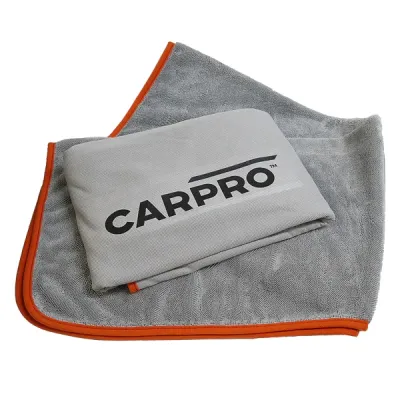
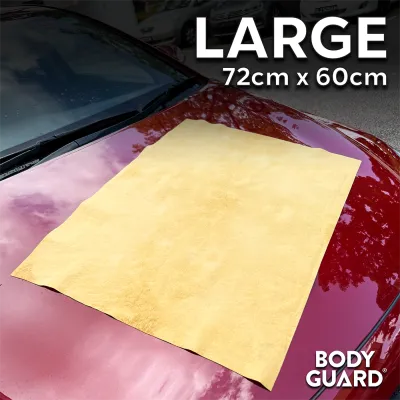
Prices are valid at publication and may change. Please refer to the product page for the latest price.
Understanding GSM in Microfiber Drying Towels
GSM stands for grams per square meter, which measures the density, thickness, and weight of a microfiber fabric. In simple terms, it tells you how much material is packed into a specific area of the towel.
A higher GSM typically indicates a thicker towel with longer loops or a denser pile, allowing it to hold a larger volume of water. This makes high-GSM towels highly appealing for drying tasks, as they can absorb significant amounts of moisture without becoming instantly saturated.
Despite this benefit, a higher GSM does not automatically make a towel superior for every situation. As fabric density increases, the towel becomes heavier and stiffer when wet, making it significantly harder to wring out by hand during a wash session.
To get a complete picture of a towel’s performance, evaluate its GSM alongside its physical dimensions. A large, medium-GSM towel can often hold as much total water as a small, ultra-high-GSM towel, while being much easier to maneuver around tight body lines and side mirrors.
Matching GSM Ranges to Your Drying Needs
Low to medium GSM towels, typically ranging from 300 to 500, are lightweight, flexible, and exceptionally easy to wring out. While they may saturate too quickly to dry an entire vehicle exterior on their own, they are perfect for targeted tasks such as drying door jambs, wheels, exhaust tips, and glass surfaces.

Medium to high GSM towels, falling between 500 and 800, represent the most versatile and balanced choice for standard passenger cars, hatchbacks, and sedans. These towels offer excellent water retention, allowing you to dry most of the vehicle’s paintwork in a single pass without needing to stop and wring out the fabric repeatedly.
Ultra-high GSM towels, rated at 800 and above, are designed for maximum water capacity and are highly suited for larger vehicles like SUVs, MPVs, or commercial vans. These plush towels can absorb massive amounts of water, reducing the risk of dragging dry fibers across your paint.
However, these ultra-thick towels come with practical trade-offs. Once fully saturated, an 800+ GSM towel becomes incredibly heavy and difficult to wring out by hand, requiring significant physical effort. Additionally, they take up substantial space in your washing machine and require much longer to dry completely, which can be a challenge in humid laundry environments.
Ultimately, there is no single perfect GSM for every car owner. Your choice should align with your vehicle’s overall surface area, your physical strength, your storage space, and your home laundry setup.
Beyond GSM: Other Specs That Affect Drying Performance
While GSM is a helpful guide, several other physical specifications directly influence how safely and efficiently a drying towel performs on your car’s paintwork.
Edge design is one of the most critical factors for preventing micro-scratches and swirl marks on delicate clear coats. Standard polyester threads used to sew towel borders can be abrasive; therefore, look for towels with edgeless designs, ultrasonic-cut borders, or soft silk and suede edge bindings.
The fiber blend ratio, usually expressed as a percentage of polyester to polyamide (such as 80/20 or 70/30), also plays a major role. Polyamide is the component responsible for softness and rapid water absorption, while polyester provides structural durability. A 70/30 blend is generally preferred for drying paint because it offers superior softness and water absorption compared to standard blends.
Weave patterns also change how a towel handles water. Twisted loop weaves feature long, twisted fibers that rapidly pull water away from the surface with minimal drag, making them highly popular for drying paint. Waffle weave towels use a unique textured pattern that excels at cleaning glass without leaving streaks, while plush pile towels offer a traditional, soft feel but may drag more when fully wet.
Before making a purchase, always check the manufacturer’s product labels and specific instructions to ensure the towel’s weave and blend are recommended for automotive drying.
Care and Maintenance to Preserve Towel Softness
Proper care is essential to preserve the softness and absorbency of your microfiber drying towels, ensuring they do not damage your vehicle’s paint over time.
When washing your towels, always wash them separately from other household laundry, especially cotton items, to prevent cotton lint from clogging the microscopic fibers. Use a dedicated microfiber wash solution or a mild, dye-free liquid detergent, and strictly avoid fabric softeners, bleach, or powdered detergents, which can coat the fibers and permanently ruin their absorbency.
To dry your towels, air dry them in a clean, dust-free indoor area or tumble dry them on a low-heat or no-heat setting. High heat can melt the delicate synthetic fibers, turning a soft towel into a rough, scratchy cloth that is unsafe for automotive paint.
Establish clear stopping conditions for your drying towels. If a towel becomes stiff, loses its absorbency, or traps stubborn grit that cannot be removed during washing, stop using it on your car’s paint immediately. Instead, downgrade the towel for dirtier tasks such as cleaning wheels, engine bays, or wiping down interior plastics.
Frequently Asked Questions (FAQ)
Can I use a high GSM towel for wiping off wax or polish?
Thick, high-GSM drying towels are specifically engineered to absorb water, not to remove dense chemical residues like wax or polish. Using a plush, high-pile drying towel for buffing often leads to smearing, linting, and premature clogging of the long fibers, making the job much harder. For removing wax or polish, a lower GSM towel (typically 300 to 400) with a short-pile or closed-loop weave is far more effective at cutting through residue to leave a streak-free finish. Always consult the manufacturer’s label to verify if a towel is rated for detailing chemicals or if it is strictly designed for water absorption.
Does a heavier towel mean it will scratch my car paint?
A higher GSM or heavier weight does not inherently cause scratches on your vehicle’s paint. Scratches are almost always caused by trapped dirt, road grit, poor edge construction, or contaminated fibers being dragged across the clear coat. A heavy, clean, high-quality microfiber towel is perfectly safe for automotive paint, provided it features soft edges—such as an edgeless or silk-bound design—and is kept completely free of debris. To maintain paint safety, always wash your drying towels thoroughly after every use and store them in a clean, sealed container.

Community discussion
Share your experience or ask a question. Comments are reviewed before publication.