
Choosing the right car drying towel is not a matter of finding a single, universally superior option. Instead, the right choice depends on your specific washing setup, the condition of your vehicle’s paint, and your preferred drying technique. The decision typically comes down to a choice between two distinct weave structures: waffle weave and plush microfiber. Each design offers a different balance of water absorption speed, capacity, and paint safety.
Waffle weave towels are engineered with a distinct grid-like pattern that excels at rapid water absorption with minimal surface friction. This structure allows the towel to glide easily across panels, making it highly efficient for quick drying sessions. However, because of its flatter profile, a waffle weave towel has a lower overall liquid capacity compared to its plush counterparts.
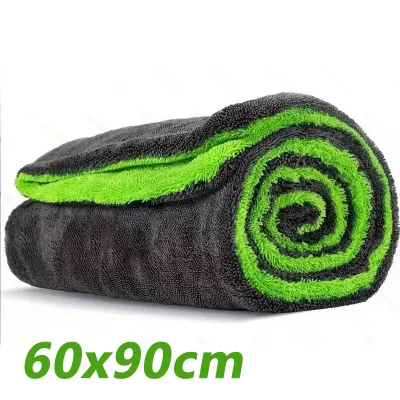
Plush microfiber towels feature dense, high-pile fibers that can hold a large volume of water within their deep structure. This makes them excellent for drying large vehicles without needing to wring the towel out frequently. The trade-off lies in their weight and handling; when fully saturated, plush towels become heavy and require careful management to prevent them from dragging on the ground or trapping abrasive debris.
Products mentioned in this guide

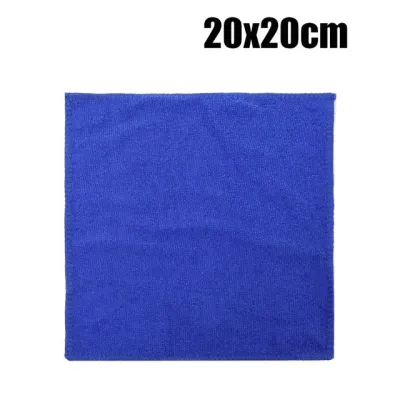
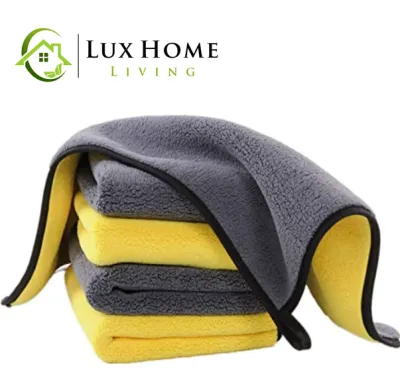
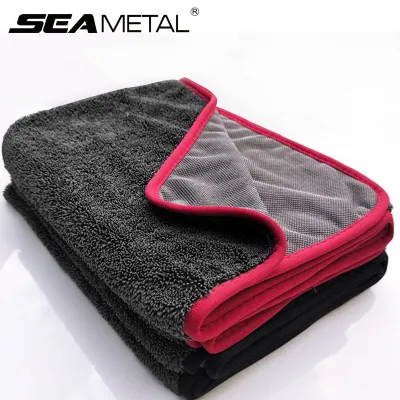
Prices are valid at publication and may change. Please refer to the product page for the latest price.
Core Differences in Weave Structure and Absorption
To understand how these towels perform on your vehicle, it is essential to look at their physical construction. The waffle weave towel gets its name from its raised, square-like pattern, which resembles a kitchen waffle. This recessed design increases the overall surface area of the fabric without adding bulk. As you slide the towel across a wet surface, the raised edges act like miniature squeegees, channeling water into the recessed pockets where capillary action quickly draws the moisture into the core fibers.
In contrast, plush microfiber towels rely on a high-pile construction, where thousands of individual fiber loops stand upright. This creates a thick, cushion-like barrier between your hand and the vehicle’s paint. The sheer density of these long fibers allows the towel to act like a sponge, trapping water deep within the pile rather than just on the surface. This high-pile design is what gives plush towels their high total water-holding capacity.
The difference in construction directly impacts how these towels feel and maneuver during a detailing session. A waffle weave towel remains relatively light and easy to handle even when damp, allowing you to navigate tight body lines, side mirrors, and door jambs with precision. A plush microfiber towel, while incredibly soft, absorbs so much water that it can become heavy and cumbersome when saturated. This added weight can make vertical panels more challenging to dry and increases the physical effort required during a full-vehicle wipe-down.
Paint Safety and Scratch Risk Evaluation
Maintaining a swirl-free finish requires careful consideration of how each towel interacts with residual dirt. Even after a thorough wash, microscopic particles of road grime can remain on the paint surface. A waffle weave towel has a flatter profile, which means it has less depth to hide or encapsulate these particles. If you drag a waffle weave towel over a missed spot of dirt, there is a risk that the particle will be pressed against the paint, potentially causing fine scratches or marring.

Plush microfiber towels offer a different safety mechanism due to their deep pile. The long, loose fibers are designed to absorb and encapsulate small particles, pulling them away from the paint surface and deep into the fabric. This cushioning effect provides an extra layer of safety if the surface is not completely clean. However, this deep pile also acts as a magnet for larger debris; if you accidentally drop a plush towel on the ground, it will easily trap twigs, leaves, or small pebbles that are extremely difficult to wash out completely.
To maximize paint safety, always check the manufacturer’s specifications for secondary safety indicators before purchasing. Look for towels with edgeless designs or those finished with soft silk or microfiber banding, as rough polyester edges can easily scratch delicate clear coats. Additionally, pay attention to the GSM (grams per square meter) rating on the product label. A higher GSM generally indicates a denser, softer towel, which is safer for delicate paint finishes but may require more effort to wash and dry.
Matching the Towel to Your Drying Technique
Your choice of towel should align with how you physically dry your vehicle. For plush microfiber towels, the “pat and drag” or “lay and pull” method is highly recommended to minimize friction. To execute this, lay the large plush towel flat across a horizontal panel, such as the hood or roof, and gently pull it toward you by the corners. This technique allows the weight of the towel and its high-pile fibers to absorb the water naturally without requiring you to apply downward pressure, which could grind residual dirt into the clear coat.
Waffle weave towels are better suited for a gliding or wiping motion. Because of their low-friction design, you can easily sweep them across both horizontal and vertical panels in straight, overlapping lines. This squeegee-like action is particularly effective on glass surfaces, where a waffle weave towel can leave a streak-free finish much faster than a thick, plush towel that might leave behind tiny lint fibers.
Regardless of the weave structure you choose, using a dedicated drying aid or spray detailer is a crucial step in any safe drying routine. Spraying a light mist of detailer onto the wet panel before wiping provides essential lubrication, reducing the friction between the towel and the paint. This lubrication helps the towel glide smoothly while adding a temporary layer of gloss and protection to the vehicle’s finish.
Decision Framework: Choosing Your Car Drying Towel
Selecting the right towel involves matching the fabric’s characteristics to your specific detailing environment and vehicle type. In high-humidity environments like Singapore, where water spots can form quickly under the tropical sun, matching the towel to your workflow is essential for a spotless finish.
Choose a waffle weave towel if you prioritize speed, maneuverability, and glass clarity. This option is ideal for those who dry their cars in covered areas or HDB multi-storey car parks where wind-blown dust is minimal. It is also the preferred choice for drying windows, side mirrors, and intricate trim pieces, as it leaves behind virtually no lint and glides easily into tight gaps.
Choose a plush microfiber towel if your vehicle has large, flat panels, such as an SUV or a station wagon, and you want to complete the drying process with as few towels as possible. The high water capacity of a plush towel allows you to dry entire sections of the vehicle without stopping to wring out the fabric. It is also well-suited for enthusiasts who prefer a soft, cushioned feel and want a greater safety margin against minor washing imperfections.
Verify first that your wash preparation is thorough before committing to any contact drying method. If you do not use a pre-wash foam cannon or a strict two-bucket wash method with grit guards, residual dirt will remain on the paint. In such cases, dragging any towel across the surface—regardless of whether it is waffle weave or plush—can lead to paint marring. Ensure the surface is completely clean before letting any drying towel touch your vehicle’s clear coat.
Frequently Asked Questions (FAQ)
Can I use the same microfiber towel for drying and applying wax?
No, you should never use the same towel for both drying and applying wax or polish. Drying towels must remain dedicated solely to water removal to maintain their absorbency. If wax, sealant, or polish residues get embedded into the fibers of a drying towel, they can clog the material, making it hydrophobic and significantly reducing its ability to absorb water. To prevent cross-contamination, organize your detailing kit by separating your towels by color or storing them in clearly labeled, dust-free containers.
How should I wash and maintain my car drying towels?
To preserve the softness and absorbency of both waffle weave and plush microfiber towels, wash them using a dedicated microfiber detergent or a mild, liquid laundry detergent free of dyes and perfumes. Never use fabric softeners or bleach, as these chemicals coat the fibers and ruin their static charge and water-absorbing capabilities. Always wash your microfiber towels separately from cotton towels or other lint-producing fabrics. When drying, either air-dry them in a clean, dust-free indoor area or tumble-dry them on a no-heat or very low-heat setting, as high heat can melt the delicate synthetic fibers.
Community discussion
Share your experience or ask a question. Comments are reviewed before publication.