
Finding the right front windshield sun shade for your Toyota Yaris Cross requires balancing precise dimensional coverage, ease of daily deployment, and compatibility with the vehicle’s advanced safety sensors. Because the Yaris Cross features a distinct windshield rake and a compact but highly contoured dashboard, standard off-the-shelf options often leave gaps that let heat and ultraviolet rays penetrate the cabin.
In tropical climates like Singapore, where vehicles parked in open-air multi-storey car parks face intense, prolonged solar exposure, an ill-fitting shade does little to protect the interior. Selecting the right accessory involves understanding the structural differences between custom-fit and universal options, evaluating material layers, and ensuring the shade does not interfere with windshield-mounted equipment like driver-assist cameras or electronic toll payment units.
Understanding Toyota Yaris Cross Windshield Dimensions and Fit
The Toyota Yaris Cross, a popular compact crossover, features a windshield design optimized for aerodynamics and forward visibility. This results in a glass surface that is relatively tall and steeply angled compared to traditional hatchbacks or larger SUVs. Because of this specific geometry, a sun shade must match both the height and the lateral curvature of the glass to provide effective thermal protection.
Products mentioned in this guide
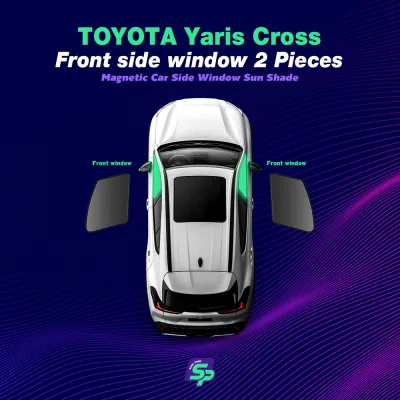
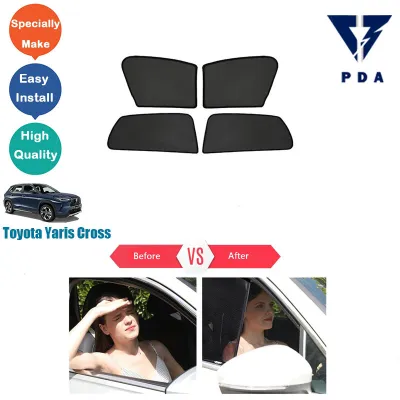
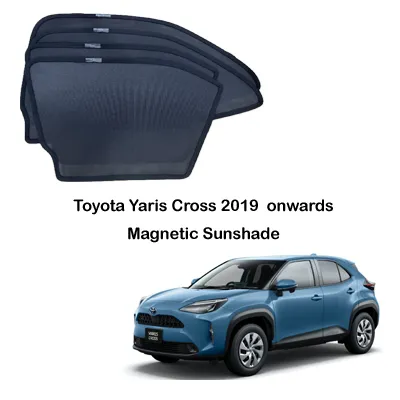
Prices are valid at publication and may change. Please refer to the product page for the latest price.
Relying on generic size categories such as “compact SUV” or “medium sedan” can lead to significant fitment issues. A shade that is too small will slide down, leaving the upper portion of the dashboard and the rearview mirror area exposed to direct sunlight. Conversely, an oversized shade will bunch up at the pillars, preventing the sun visors from securing it properly and potentially putting pressure on the delicate plastic trim of the A-pillars.
To find the exact dimensions required for your specific model year, the most reliable method is direct physical measurement or consulting the vehicle’s official documentation. Measure the maximum height from the base of the windshield where it meets the dashboard to the top edge near the headliner, and the width along both the top and bottom edges. Keep in mind that the presence of the safety sensor housing behind the rearview mirror significantly alters the required cutout shape at the top center of the shade.
Custom-Fit vs. Universal Sun Shades
When shopping for Toyota Yaris Cross accessories, you will primarily choose between custom-fit and universal sun shades. Custom-fit shades are engineered using precise digital templates of the cabin. These shades match the exact perimeter of the windshield, including the specific angle of the A-pillars and the complex contours around the central sensor array and rearview mirror mount.

The primary advantage of a custom-fit shade is its edge-to-edge coverage. By minimizing gaps around the perimeter, these shades prevent “light leaks”—areas where direct sunlight can bypass the barrier and heat up localized spots on the steering wheel, dashboard, or leather seats. Additionally, custom-fit options are typically rigid enough to stand flat against the glass, maximizing the dead air space between the shade and the windshield, which acts as an insulating barrier.
Universal sun shades, on the other hand, rely on flexible materials, overlapping panels, or spring-wire loops that bend to fit a wide range of vehicles. While these are often more budget-friendly and widely available on online marketplaces, they rarely provide a seamless fit for the Yaris Cross. You may find yourself folding over the edges or struggling to keep the center from sagging. A universal shade is highly suitable as a temporary or secondary option, but for daily protection against intense tropical heat, a tailored fit offers more consistent coverage and easier deployment.
Comparing Structural Designs: Folding, Umbrella, and Roll-Up
Sun shades come in several distinct structural designs, each offering a different balance of deployment speed, storage convenience, and long-term durability. Understanding how these designs function in the compact cabin of the Yaris Cross is essential for choosing a practical daily accessory.
Accordion-folding shades are constructed from rigid, segmented panels that fold flat against one another. They are highly durable, maintain their shape exceptionally well over years of use, and can be deployed or packed away in seconds. However, because they do not bend easily, storing them in the Yaris Cross can be a challenge. They typically must be placed on the rear floorboards or in the boot, as they are too bulky for the glovebox or door side pockets.
Umbrella-style shades use a collapsible metal frame similar to a rain umbrella. When opened, the fabric stretches across the windshield, and the handle rests against the center console or dashboard for support. They fold down into a highly compact cylinder that easily fits into the door bins or the passenger-side footwell. The trade-off lies in durability; the small metal ribs and hinges can bend or break under heavy use, and the central handle must be positioned carefully to avoid scratching the infotainment screen or dashboard trim.
Roll-up shades, made from flexible, high-density foam with a reflective backing, are rolled into a cylinder and secured with a strap. They offer excellent insulation and are highly resistant to wear since they lack mechanical hinges or joints. However, they tend to retain a curved memory over time, which can cause the edges to curl away from the windshield during use. Like folding shades, their rolled dimensions require dedicated storage space along the side of the center console or in the rear passenger area.
Key Features to Evaluate for Maximum Coverage and Protection
To ensure a sun shade delivers effective thermal and UV protection, you must look beyond basic dimensions and evaluate the materials and construction features listed in product descriptions.
High-quality shades utilize a multi-layer construction. The outermost layer should feature a highly reflective material, such as an aluminum foil laminate or a specialized silver-coated polyester, designed to bounce infrared and ultraviolet radiation back through the glass. Beneath this reflective surface, look for an insulating core—often made of closed-cell foam or bubble-pack air pockets—which slows down the transfer of heat into the cabin air. A dark, non-reflective inner layer helps absorb any residual heat and prevents glare inside the vehicle.
A shade that sags in the middle creates a pocket of superheated air that easily escapes into the cabin. Look for options with built-in structural supports, such as fiberglass rods or stiffened board cores, that keep the panel taut against the windshield. This rigidity ensures the shade remains securely in place even when subjected to the rising temperatures of a closed vehicle.
Consider how the shade is held against the glass. Many custom-fit designs are held in place simply by flipping down the vehicle’s primary sun visors. Others rely on suction cups, hook-and-loop fasteners around the rearview mirror, or tension-fit frames. If choosing a model with suction cups, ensure they are made of high-grade, heat-resistant silicone, as cheap rubber suction cups can degrade, lose suction, or leave stubborn residue on the glass under intense heat.
How to Verify Compatibility Before You Buy
Before finalizing your purchase of any Toyota Yaris Cross accessories, it is critical to perform a thorough compatibility check to avoid the hassle of returns or poor performance.
First, cross-reference the exact model year and trim level of your Yaris Cross with the product specifications. Automotive manufacturers often update windshield dimensions, rearview mirror mounts, or sensor housings during mid-cycle refreshes. A shade designed for an older model year might not accommodate the updated sensor array of a newer version.
Second, pay close attention to the area around the rearview mirror. The Yaris Cross is equipped with advanced driver-assistance systems that utilize cameras and sensors mounted directly against the upper windshield. The sun shade must have a precise cutout that allows it to fit snugly around this sensor housing without putting physical pressure on the plastic casing or blocking the camera’s field of view. Additionally, if you have installed an aftermarket dashcam, an electronic toll collection unit, or a parking transponder, verify that the shade’s design provides enough clearance to avoid dislodging these devices.
Finally, review the return and exchange policies of the online marketplace or local retailer. Because physical fitment is the most critical factor in a sun shade’s effectiveness, you should have a clear path to return the product if you discover any unexpected gaps, sagging, or interference with your vehicle’s interior components upon initial installation.
Installation, Storage, and Maintenance Tips
Proper handling of your sun shade not only extends its lifespan but also protects your Yaris Cross’s interior surfaces from accidental wear and tear.
When installing the shade, always unfold or open it carefully within the cabin to avoid striking the infotainment screen, rearview mirror, or passengers. Position the bottom edge of the shade as close to the base of the windshield as possible, sliding it gently behind any mounted transponders or dashcams. Once the bottom is aligned, press the top of the shade against the glass and lower your vehicle’s sun visors to lock it into position. Avoid forcing a tight fit, as rough handling can scratch the soft-touch dashboard materials or loosen the adhesive mounts of windshield accessories.
For storage, always follow the manufacturer’s intended folding or rolling pattern. Forcing an accordion shade to fold incorrectly or bending a rigid roll-up shade can crease the reflective outer layer, leading to micro-cracks that compromise its heat-reflecting capabilities. Store the shade in a dry, cool spot within the vehicle—such as under a seat or in the boot—when not in use, keeping it away from heavy cargo that could crush or deform its frame.
To maintain the shade’s performance, clean the reflective surface periodically. Dust and airborne oils from the cabin air conditioning system can accumulate on the outer layer, reducing its reflectivity over time. Wipe the surface gently with a damp microfiber cloth using only water or a mild, pH-neutral soap solution authorized for automotive interior fabrics. Avoid harsh chemical cleaners or abrasive pads, which can strip away the reflective coating or damage the insulating core. Allow the shade to air-dry completely before folding and storing it to prevent mold or mildew growth.
Frequently Asked Questions (FAQ)
Will a universal sun shade fully cover the Yaris Cross windshield?
While a universal sun shade can provide basic coverage, it is highly unlikely to fit the Toyota Yaris Cross windshield perfectly. Universal designs typically leave noticeable gaps along the sides, near the A-pillars, and around the central rearview mirror assembly. These gaps allow sunlight to stream directly onto the dashboard, significantly reducing the shade’s overall cooling efficiency. For temporary use, a universal shade is a functional stopgap, but a custom-fit option is highly recommended for complete thermal protection.
Can a sun shade damage the windshield or interior sensors?
An improperly designed or carelessly installed sun shade can potentially cause minor damage to your vehicle’s interior. Rigid frames with exposed metal or sharp plastic edges can scratch the dashboard trim, the headliner, or the plastic housing of the advanced driver-assistance system sensors. Additionally, forcing a shade into place can put stress on windshield-mounted accessories, such as dashcams or electronic toll transponders, potentially causing them to fall off. Choosing a shade with soft, fabric-bound edges and a dedicated sensor cutout will prevent these issues.

Community discussion
Share your experience or ask a question. Comments are reviewed before publication.