
Choosing the right car pump requires matching the inflator’s pressure output and airflow rate to your vehicle’s specific tire dimensions and recommended inflation levels. A pump that works perfectly for a compact hatchback may struggle, overheat, or fail entirely when tasked with inflating a large SUV or off-road tire. By understanding your tire’s volume requirements and verifying the pump’s technical specifications, you can select a reliable tool that ensures safe, efficient inflation during routine maintenance or roadside emergencies.
Understanding Your Vehicle's Pressure and Volume Needs
To choose an appropriate car pump, you must first identify your vehicle’s specific tire pressure requirements. This information is located on the tire information placard, typically found on the driver’s side door jamb, or inside the owner’s manual. This recommended cold tire pressure is the optimal setting determined by the vehicle manufacturer for safety, handling, and fuel efficiency. It is important to distinguish this from the maximum pressure stamped on the tire sidewall, which represents the absolute limit the tire can safely hold under maximum load, not the daily operating target.
Tire dimensions—specifically width, aspect ratio, and rim diameter—dictate the total volume of air the pump must displace. A wider tire with a taller sidewall holds a significantly larger volume of air than a low-profile passenger tire, even if both require the same operating pressure of 32 PSI. The larger the internal cavity of the tire, the more air molecules are needed to fill it to the correct pressure level.
Products mentioned in this guide
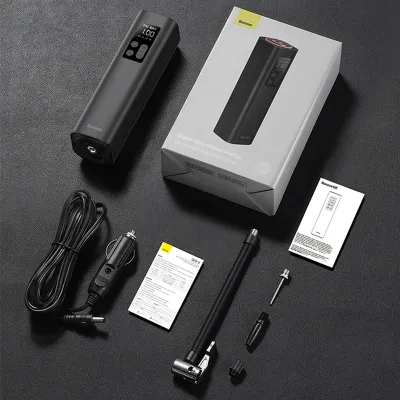
![[SG Stock] Air Pump Car Inflator Compressor Portable Ball Bike Bicycle Rechargeable Basketball Soccer Volleyball Tyre Wheel Tire 12V LED Fast Auto Shut-off Emergency](https://img.lazcdn.com/g/p/cc7d92c566c3860fbbfa1d535cc6f3bb.jpg_400x400q80.jpg_.webp)
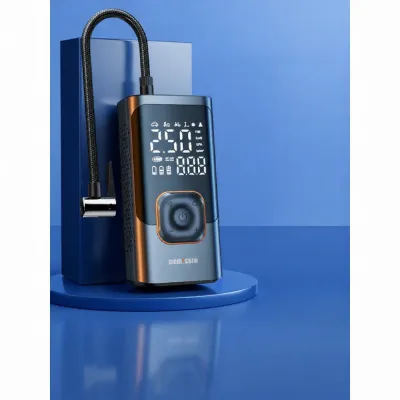
![[SG 24H Ship]12000mAh Nitrogen Cordless Car Air Pump 150PSI Portable Tire Inflator for Car Motorcycle Bike](https://img.lazcdn.com/g/p/db8d65465d4e56efe7ecd2e3046fe2d8.jpg_400x400q80.jpg_.webp)
![[SG Seller]Portable Car Electric Inflator portable air pump car electric pump wireless air pump car electric pump汽车充气泵](https://img.lazcdn.com/g/p/11d7062f8a657612c19945cd3cdafcdb.jpg_400x400q80.jpg_.webp)
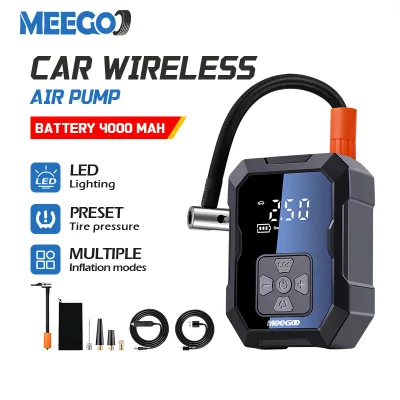
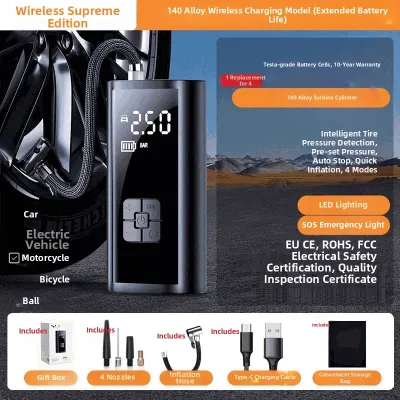
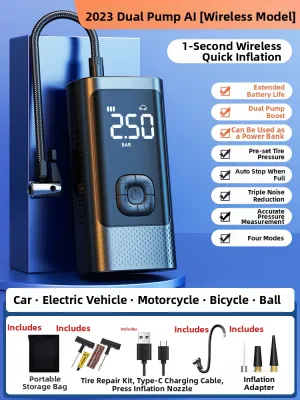
Prices are valid at publication and may change. Please refer to the product page for the latest price.
Standard passenger car tires have relatively low air volume, meaning a basic portable pump can inflate them quickly without excessive strain. In contrast, larger light truck, van, or SUV tires require a much larger volume of air. Inflating these larger tires with an underpowered pump increases inflation time and subjects the pump’s internal motor to prolonged strain, which can lead to premature wear or overheating.
Matching Pump Specifications to Your Tires
When evaluating a car pump, the maximum PSI rating is a key specification to consider. Most portable car pumps list a maximum pressure rating, often ranging from 100 to 150 PSI. While standard passenger vehicle tires typically require only 30 to 35 PSI, choosing a pump with a higher maximum rating provides a safe operating margin. This ensures the pump does not run at its absolute limit during normal operation, which helps preserve the motor’s lifespan.

Airflow metrics, typically measured in Litres per minute (L/min) or Cubic Feet per Minute (CFM), directly correlate with inflation speed. A higher airflow rating means the pump can displace more air in less time, resulting in faster inflation. For small to mid-sized vehicles, a pump delivering 25 to 30 L/min is generally sufficient, while larger SUV or commercial tires benefit from pumps rated at 50 L/min or higher to avoid tedious wait times.
The duty cycle refers to the amount of time a compressor can run continuously before it must be turned off to cool down, usually expressed as a percentage or a specific number of minutes. Portable compressors generate significant heat during operation, especially in hot and humid climates. Exceeding the recommended duty cycle can melt internal seals or burn out the motor, making it critical to check these limits against the time required to inflate your specific tires.
Selecting the Power Source and Form Factor
Portable car pumps generally rely on either 12V DC power or rechargeable cordless batteries. 12V DC pumps plug directly into the vehicle’s cigarette lighter socket or clip onto the battery terminals. While cigarette lighter plugs are highly convenient for light top-ups, they are limited by the vehicle’s accessory fuse rating, which is typically 10 to 15 amps. Heavy-duty pumps draw more current and must connect directly to the battery terminals using alligator clamps to avoid blowing fuses.
Cordless battery-powered pumps offer excellent portability and eliminate the hassle of routing cables around the vehicle. They are ideal for quick pressure checks and minor adjustments. However, their runtime is limited by battery capacity, and they may not have enough charge to fully inflate multiple flat tires, especially on larger vehicles.
Before purchasing, verify that the combined length of the power cable and air hose can comfortably reach from the power source to all four tires. This is particularly important for longer wheelbase vehicles, such as family multi-purpose vehicles (MPVs) or large station wagons. A pump with an insufficient reach will force you to stretch the cables, potentially damaging the connectors or the vehicle’s interior trim.
In urban environments where private garage space with wall outlets is unavailable, such as multi-storey car parks, ultra-compact emergency inflators are highly practical. They are easy to store in a glovebox or under-seat compartment. However, they typically feature smaller motors and lower duty cycles. Larger, more robust portable units or garage-style compressors offer superior speed and continuous runtime but require dedicated storage space in the boot.
Essential Features for Safe and Accurate Inflation
An automatic shutoff feature allows you to preset your desired target pressure before starting the pump. Once the sensor detects that the tire has reached this level, the pump automatically stops. This prevents accidental over-inflation, which can compromise tire grip, cause uneven tread wear, and increase the risk of a blowout.
Accurate pressure readings are vital for maintaining vehicle safety and fuel efficiency. Digital gauges are generally easier to read than analog dials and often display measurements in multiple units, such as PSI, bar, or kPa. Look for a backlit screen to ensure you can read the pressure clearly during nighttime emergencies or in dimly lit multi-storey car parks.
Most passenger vehicles use standard Schrader valves. Ensure the pump’s chuck connects securely to this valve type, either through a screw-on connector or a quick-release thumb lock. Additionally, check if the pump includes adapters for other inflation needs, such as Presta valves for bicycles or needles for sports equipment, to maximize the tool’s utility.
Always refer to your vehicle’s official owner’s manual for specific instructions regarding tire maintenance and electrical system limits. If you are unsure about connecting a high-draw pump directly to your battery terminals, or if your vehicle has a specialized electrical system, consult a qualified automotive professional before operating the equipment.
Frequently Asked Questions (FAQ)
Can I use a standard car pump for heavy-duty off-road tires?
Standard portable 12V pumps are generally not recommended for heavy-duty off-road tires. These tires hold a massive volume of air, which requires a compressor to run continuously for an extended period. A standard pump will likely exceed its duty cycle and overheat before completing the inflation. If you frequently deflate and reinflate large off-road tires, look for a heavy-duty compressor with a 100% duty cycle and thermal overload protection.
Why does my car pump keep shutting off before reaching the target pressure?
This issue is commonly caused by the pump’s built-in thermal overload protection, which automatically shuts down the motor when it gets too hot to prevent permanent damage. Alternatively, it could be due to a loose 12V connection, a blown accessory fuse in your vehicle, or a restrictive valve connection that tricks the pump’s pressure sensor into reading an artificially high PSI. To resolve this, check all electrical connections, ensure the valve chuck is securely attached, and allow the pump to cool down completely before resuming.

Community discussion
Share your experience or ask a question. Comments are reviewed before publication.