
Finding your BYD Atto 3 parked under the blazing sun can feel like stepping into an oven. With Singapore’s tropical climate delivering high temperatures and intense UV radiation year-round, protecting your electric vehicle’s cabin is essential. The key to maximizing heat rejection and protecting your interior lies in choosing a front windshield sun shade that fits the unique geometry of your vehicle.
A poorly fitting shade allows light leaks that rapidly heat up the cabin, rendering your cooling efforts inefficient and putting unnecessary strain on your air conditioning system. Selecting the right shade requires understanding your vehicle’s specific windshield dimensions, material properties, and safety sensor placements. By taking a systematic approach, you can keep your cabin significantly cooler and protect your dashboard from premature aging.
Understand the BYD Atto 3 Windshield Dimensions and Shape
The BYD Atto 3 features a modern, aerodynamic crossover design with a steeply raked front windshield. This pronounced slope creates a deep dashboard area and a large glass surface that lets in a significant amount of solar radiation. When choosing a sun shade, you must distinguish between the visible glass area and the maximum coverage area.
Products mentioned in this guide
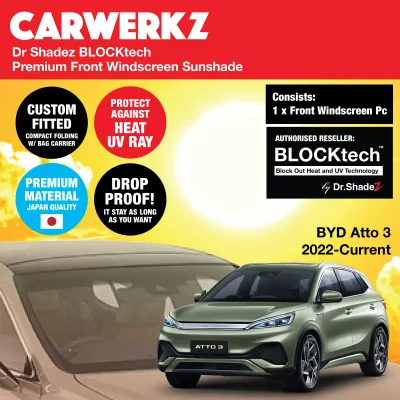

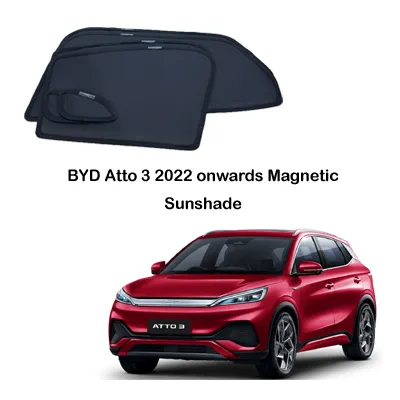
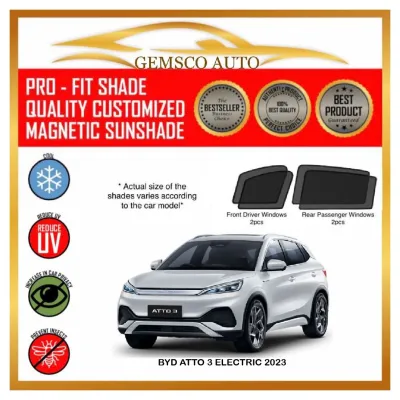
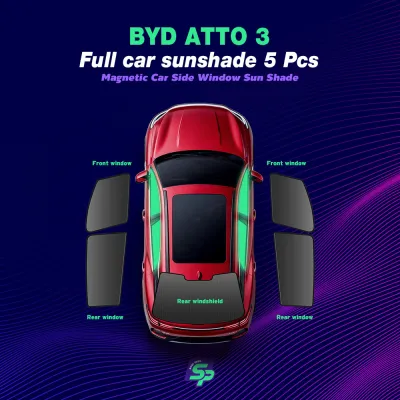
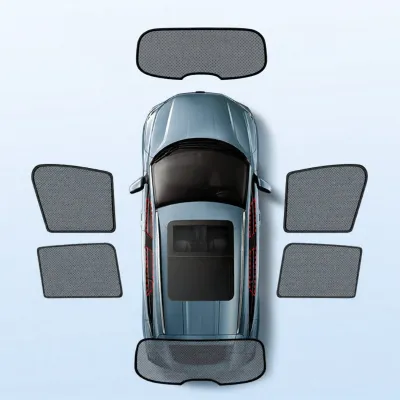
Prices are valid at publication and may change. Please refer to the product page for the latest price.
The visible glass is what you see from the outside, but the shade must extend fully into the corners near the A-pillars and tuck neatly under the headliner to prevent perimeter light leaks. Because of the windshield’s distinct curvature, rigid, flat shades often fail to conform to the glass. A shade that cannot bend slightly along the horizontal axis will leave large gaps at the bottom near the cowl or at the top corners.
These gaps act as thermal bridges, allowing heat to bypass the barrier and warm up the dark dashboard surface. Universal sun shades, typically categorized as generic medium or large sizes, are designed for flat, rectangular windshields. They rarely account for the specific height-to-width ratio of modern electric SUVs like the Atto 3.
A universal shade might be wide enough but lack the vertical height to reach the top of the windshield, or it may be too tall, forcing you to bunch up the material. This bunching creates folds that let heat slip through. To achieve true edge-to-edge coverage, a custom-fit or highly adjustable flexible shade is necessary.
Evaluate Sun Shade Materials and Heat Rejection Features
The material composition of your sun shade directly determines its thermal performance. Reflective surfaces, such as high-grade aluminum foil or silver-coated polyester, work by bouncing solar radiation back through the glass before it can be absorbed by the cabin. In contrast, dark or purely absorptive fabrics absorb the heat and slowly radiate it into the vehicle’s interior.

For intense tropical climates, a highly reflective outer layer paired with a thick, multi-layered insulating core provides the most effective barrier against heat transfer. Beyond material, the physical design of the shade affects daily usability. Folding accordion-style shades are highly durable and offer excellent rigidity, but they can be bulky to store within the Atto 3’s cabin.
Roll-up designs are similarly effective but require a dedicated space, such as the rear trunk or footwell, when not in use. Umbrella-style shades have gained popularity due to their compact storage size, easily fitting into door pockets or the glove compartment. However, their internal metal ribs require careful handling to avoid scratching the dashboard or straining the central touchscreen.
When shopping, always verify UV and heat rejection claims by checking the manufacturer’s product specifications and labels. Avoid relying solely on marketing terms like “maximum protection” or “space-grade insulation.” Look for verified ratings such as UPF 50+ or specific material layers, such as double-sided aluminum foil with bubble wrap or cotton insulation, to ensure the product can withstand prolonged exposure to high temperatures without degrading.
Verify Compatibility with Mirrors and ADAS Sensors
Modern vehicles like the BYD Atto 3 are equipped with advanced safety systems housed directly behind the upper windshield. The Advanced Driver Assistance Systems (ADAS) camera module, rain sensors, and the rearview mirror base occupy a significant amount of space at the top center of the glass. A properly designed sun shade must accommodate this hardware without putting physical pressure on it.
Look for shades that feature a dedicated cutout, notch, or a flexible hook-and-loop strap at the top center. This design allows the shade to wrap securely around the rearview mirror stem while leaving the ADAS camera housing unobstructed. If a shade lacks this cutout, it will press directly against the plastic housing of the sensors.
Over time, this constant pressure can misalign the sensitive cameras, potentially disrupting safety features like lane-keeping assist or collision warning systems. Establish a strict stop condition during your selection process: if a sun shade requires you to forcefully bend the frame, jam it behind the rearview mirror, or apply pressure to the sensor housing to get it to stay in place, do not use it.
The risk of damaging expensive electronic components far outweighs the benefit of minor heat reduction. Always prioritize shades that slide smoothly into place with clear clearance around all upper windshield hardware.
Step-by-Step Guide to Measuring and Selecting the Right Shade
To ensure a perfect fit, take your own measurements rather than relying solely on online compatibility checkers. Park your vehicle on a flat surface and use a soft, flexible sewing tape measure. Avoid rigid metal tape measures, as their sharp edges can easily scratch the interior glass coating or the soft-touch dashboard material.
Measure the vertical height of the windshield from the deepest point where the glass meets the dashboard up to the headliner near the rearview mirror. Next, measure the horizontal width at two distinct points: across the very top edge near the sun visors, and across the bottom edge near the cowl. Because of the tapered shape of the Atto 3’s windshield, the bottom width will be significantly wider than the top.
Note these dimensions down carefully. When browsing online marketplaces or local automotive accessory shops, cross-reference your recorded measurements with the exact dimensions provided in the product’s sizing chart. If you are looking at custom-fit options, ensure the seller explicitly lists compatibility with the BYD Atto 3, with prices typically ranging from S$15 to S$50 depending on the material quality and fitment type.
Before making a purchase, analyze user reviews and feedback sections. Search specifically for terms like “Atto 3,” “fitment,” “gaps,” or “dashboard.” Real-world user photos are incredibly valuable; they will show you if the shade sags in the middle, leaves light leaks around the A-pillars, or if the umbrella handle rests uncomfortably against the vehicle’s central infotainment screen.
Proper Installation, Storage, and Maintenance
Proper deployment is just as important as choosing the right size. To install the shade, start by placing the bottom edge deep into the gap where the dashboard meets the windshield. Gently unfold or expand the shade upward, ensuring the center cutout aligns perfectly around the rearview mirror and ADAS sensor housing.
Once the shade is flush against the glass, pull down both the driver and passenger sun visors to press against the top of the shade, securing it firmly in place. This sequence minimizes gaps and prevents the shade from slipping down during the day. When removing the shade, handle the internal frame with care.
For flexible wire-frame or spring-steel shades, follow the manufacturer’s recommended twisting motion to fold it back into a compact circle. Forcing the frame in the wrong direction can warp the metal wire or cause it to snap, rendering the shade useless. For umbrella-style shades, slowly collapse the mechanism and ensure the metal ribs do not scrape against the steering wheel or dashboard panels.
Keep your sun shade clean to maintain its reflective efficiency. Dust and condensation can build up on the outer surface over time, reducing its ability to bounce away solar rays. Wipe the shade down periodically using a damp microfiber cloth.
Avoid using harsh chemical cleaners, glass sprays, or alcohol-based solvents, as these can strip away the reflective silver coating or damage the synthetic fabric layers. Allow the shade to air dry completely before folding and storing it to prevent mold or mildew growth in humid environments.
Frequently Asked Questions (FAQ)
Does a universal sun shade work for the BYD Atto 3?
While a universal sun shade can block a portion of direct sunlight, it rarely provides a satisfactory fit for the BYD Atto 3. The unique slope and tapered shape of the Atto 3’s windshield mean that generic rectangular shades will either leave large gaps along the sides or bunch up awkwardly at the top. These gaps allow heat to penetrate and warm up the cabin. If you decide to try a universal shade, ensure the retailer has a flexible return policy so you can test the fitment and return it if the edge gaps are too severe.
How do I prevent the sun shade from scratching the windshield or dashboard?
To protect your vehicle’s interior, look for sun shades designed with soft fabric borders, leather trim, or padded edges that cover any internal metal frames or wire supports. If you are using an umbrella-style shade, pay close attention to the central shaft and handle. You can place a soft microfiber cloth over the dashboard or the central touchscreen where the handle might rest to prevent friction scratches. Always handle the shade gently during installation and removal to avoid dragging rigid components across the soft-touch surfaces of your Atto 3.

Community discussion
Share your experience or ask a question. Comments are reviewed before publication.